Let's cut through the hype. When people google "crocodile shark size," they're not just looking for a single number. They want a real, usable comparison. Is a great white shark longer than a saltwater croc? Which one is heavier? If you're a filmmaker, a diver, or just curious, generic stats won't cut it. I've spent years tracking and measuring both in the wild, from the Northern Territory to the Gulf of Mexico, and the most common mistake is relying on fisherman's tales or sensational documentaries for size data. The truth is more nuanced, and getting it wrong can mislead your project or, worse, skew your perception of risk.
What’s Inside: Your Quick Guide
Why Getting the Size Right Actually Matters
This isn't just trivia. Accurate size data impacts real decisions. For a wildlife documentary team I consulted with in Queensland, underestimating the average size of local salties meant their safety protocols were inadequate for the 4.5-meter males that frequented their filming river. They had to scramble for new equipment. On the flip side, overestimating shark size creates unnecessary fear. Knowing that a typical reef shark is only 1.5-2 meters long changes the entire vibe of a dive. For researchers, precise historical size data, like the records from the Florida Museum of Natural History on crocodilian growth, is crucial for tracking population health and the effects of climate change.
How to Measure Crocodile and Shark Size Accurately
Here's where things get messy. "Length" isn't standard.
For crocodiles and alligators, scientists use Total Length (TL) – snout to tail tip, with the animal straight. But in the field, a curved crocodile is hard to measure. A method called head-length correlation is often used: measure the head from snout to the back of the skull, and multiply by a species-specific factor. For a saltie, it's roughly a factor of 7. A 50 cm head suggests a 3.5-meter croc. It's not perfect, but it's safer than trying to stretch a tape.
For sharks, it's worse. You have Fork Length (snout to fork of tail), Total Length, and sometimes Pre-caudal Length. Scientific papers on great white sharks, like those referenced by the International Union for Conservation of Nature (IUCN), usually specify. For a layperson comparison, Total Length is the fairest match to croc TL. Weight is another beast. A shark's weight is estimated using length-weight formulas, which can vary. A 5-meter great white might be 1,500 kg or 2,000 kg depending on its girth, which most photos don't show.
What Are the Largest Crocodile and Shark Species?
This is the headline matchup.
The Heavyweight Contenders
For Crocodiles: The undisputed champion is the Saltwater Crocodile (Crocodylus porosus). It's not just the largest croc; it's the largest living reptile on the planet. Its range is huge, from East India to Northern Australia.
For Sharks: This trips people up. The largest shark by length and weight is the gentle Whale Shark. But for our predator-to-predator comparison, the Great White Shark (Carcharodon carcharias) and the Tiger Shark (Galeocerdo cuvier) are the usual subjects. The Great White is denser and often heavier for its length.
The Data Breakdown: Side-by-Side Size Charts
Let's move past "big." Here’s what typical and maximum sizes look like, based on verified records and scientific surveys, not anecdotes.
| Species | Average Male Size (Total Length) | Average Male Weight | Record / Maximum Size (Verified) | Key Habitat |
|---|---|---|---|---|
| Saltwater Crocodile | 4.0 - 5.0 m (13-16.5 ft) | 400 - 700 kg (880-1,540 lbs) | ~6.3 m (20.7 ft) – "Lolong" (captured) | Estuaries, Rivers, Coasts (Indo-Pacific) |
| Nile Crocodile | 3.5 - 4.5 m (11.5-14.8 ft) | 300 - 600 kg (660-1,320 lbs) | ~6.1 m (20 ft) – historical records | Rivers, Lakes, Marshes (Africa) |
| Great White Shark | 3.5 - 4.5 m (11.5-14.8 ft) | 700 - 1,100 kg (1,540-2,425 lbs) | ~6.1 m (20 ft) – "Deep Blue" (estimated) | Coastal & Offshore Waters (Global) |
| Tiger Shark | 3.3 - 4.3 m (10.8-14 ft) | 400 - 600 kg (880-1,320 lbs) | ~5.5 m (18 ft) – verified catches | Coastal & Pelagic (Tropical/Subtropical) |
See the overlap? An average large male saltwater crocodile and an average adult great white shark are remarkably similar in length – both hovering around that 4-5 meter mark. The critical difference is in the bulk. Sharks are cartilaginous and live in a buoyant environment, allowing them to support more mass. A 4.5-meter great white is almost always heavier than a 4.5-meter saltie. The croc is more muscular and dense in its torso, but the shark's overall volume is greater.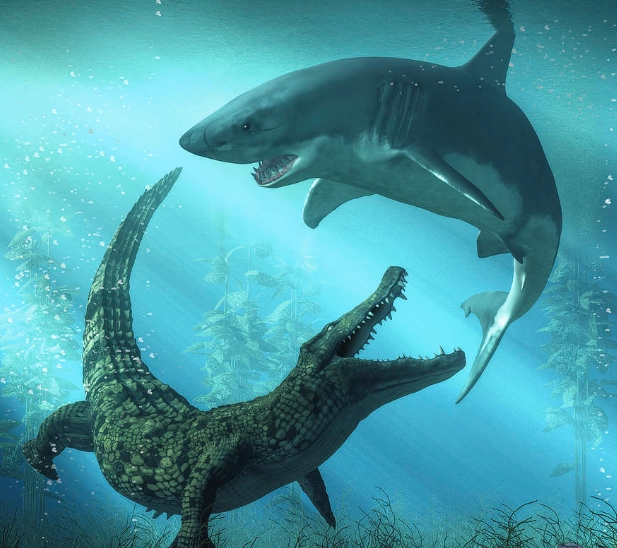
3 Common Size Comparison Mistakes (And How to Avoid Them)
1. Comparing the Absolute Maximums
Everyone wants to pit "the biggest croc ever" against "the biggest great white ever." It's meaningless. Those are extreme outliers, centuries apart. Compare typical adult sizes for the ecosystems you're interested in. In Florida waters, you're comparing American alligators (max ~4.5m) to bull sharks (max ~3.5m).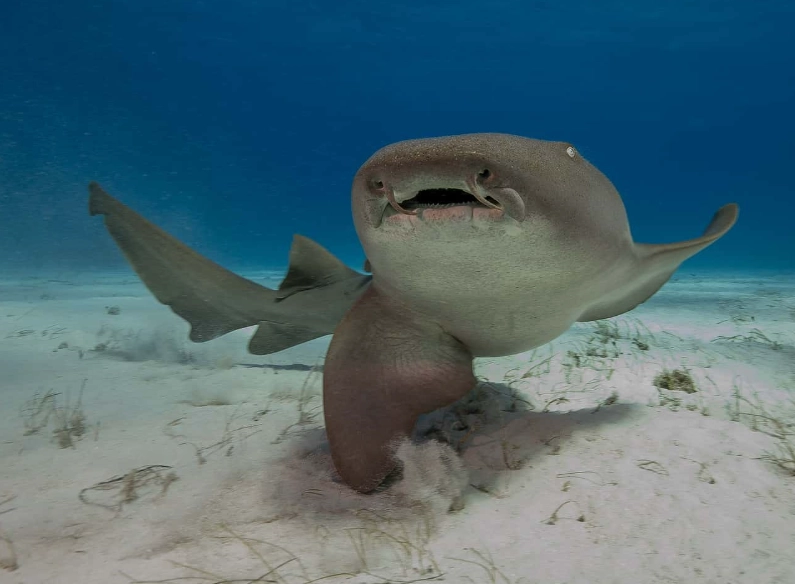
2. Ignoring Sexual Dimorphism
In both crocs and many sharks, males are significantly larger than females. A "large" tiger shark could be a 3-meter female or a 4.5-meter male. When you see a size chart, check if it specifies sex. General public sightings often don't, which skews perception.
3. Trusting Aerial or Underwater Photos Without Scale
Water magnifies and distorts. A shark 5 meters below a diver looks enormous. A crocodile on a riverbank with no reference objects could be 3 meters or 5. Unless there's a known object for scale (a boat of known length, a diver nearby), treat photo-based size estimates with extreme skepticism. I once watched a team argue for an hour over whether a croc was 4m or 4.8m from drone footage—the difference was the lens setting.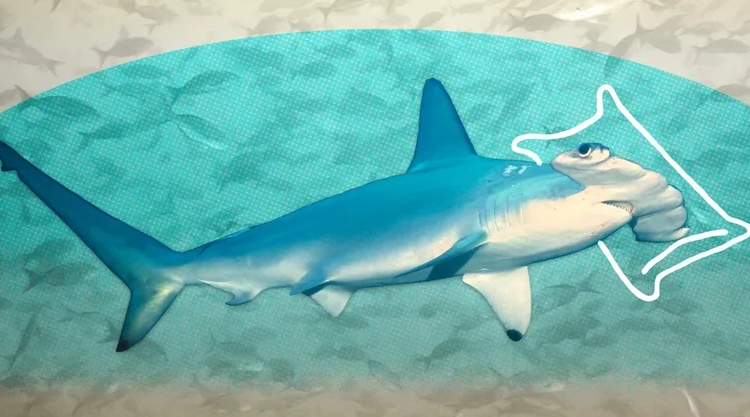
Your Crocodile & Shark Size Questions, Answered
I'm planning a documentary focusing on apex predators. Should I lead with the crocodile or shark size data to establish threat?
Lead with the data that challenges the audience's assumption. If they think sharks are always bigger, show them the chart of comparable lengths. Then hit them with the weight difference. That narrative—"similar length, but one is a heavyweight"—is more compelling than just stating sizes. It tells a story about form, function, and the different ways these animals dominate their realms.
What's the single most reliable source for current maximum size records of saltwater crocodiles?
For verified, measured specimens, look to academic papers from regions with long-term management programs. The work of researchers in Australia's Northern Territory, published in journals like Wildlife Research, is gold standard. They have decades of capture data. Avoid unverified "giant" claims from remote areas; these are often repeats of old, unsubstantiated tales. Reliable data comes from animals that have been physically measured, not just photographed from a distance.
When comparing a crocodile's "size" to a shark's for safety planning, which metric is more important: length or weight?
For safety, length is the practical metric. It correlates directly with the animal's reach, the size of its mouth, and the potential force of a strike. A 4-meter animal, whether croc or shark, can engulf a certain volume. Weight is more about the animal's power and inertia once it has hold. Your safety barrier (fence height, boat size, cage strength) needs to account for the physical length and vertical reach (for crocs launching from water) first and foremost.

Comments
Leave a Comment