What You’ll Learn
Let's cut to the chase. You've probably seen a headline, maybe a clickbait-y one, about a "monster rat" the size of a cat discovered in a remote jungle. Your mind jumps to images of aggressive, disease-ridden city vermin, but super-sized. The immediate question forms: is the Bosavi rat dangerous? Should I be worried? It's a natural reaction. We're hardwired to be cautious of large rodents, thanks to centuries of bad PR from their urban cousins.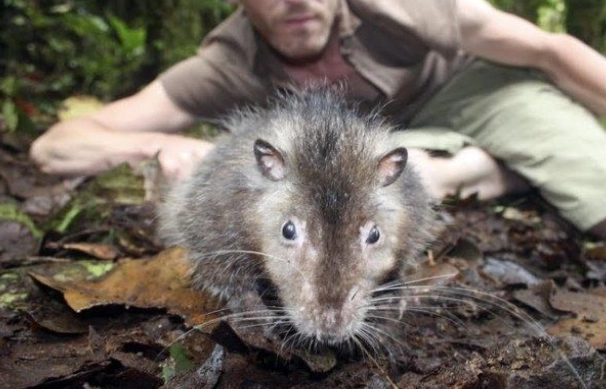
I remember first seeing the photos from the 2009 BBC expedition that brought this creature into the global spotlight. Honestly, my initial thought wasn't far from yours. It looked like something out of a low-budget creature feature. But after digging past the sensational headlines and actually talking to biologists and reading the expedition reports, a much more fascinating—and far less terrifying—picture emerged.
This article isn't here to hype up fear or downplay real risks. It's here to do what the internet often fails to do: provide a clear, factual, and nuanced look at the Bosavi woolly rat (*Mallomys sp.*). We'll separate the documentary facts from the internet fiction, assess any real danger it might pose (to you, to ecosystems), and answer every question a curious or concerned person might have. Because when it comes to the question "Bosavi rat dangerous?", the truth is more interesting than the myth.
What Exactly Is the Bosavi Rat?
Before we can judge if something is dangerous, we need to know what it is. And the Bosavi rat is a seriously cool animal that gets a bad rap from its name alone.
It's not a "rat" in the way you think of the brown rat (*Rattus norvegicus*) scurrying in a subway. It's a giant woolly rat, a completely different genus (*Mallomys*), native exclusively to the highland forests of New Guinea. The individual that sparked global interest was found in the extinct volcanic crater of Mount Bosavi in Papua New Guinea—hence the nickname. This crater is a lost world, isolated for millions of years, leading to the evolution of unique species found nowhere else.
Key Facts at a Glance:
- Scientific Name: Likely a new species within the genus *Mallomys* (often called *Mallomys sp.* nov. or "Bosavi woolly rat"). Formal description can be a slow process.
- Appearance: Thick, silverish-brown fur (hence "woolly"), a blunt nose, and a notably placid demeanor. It looks more like a giant, fluffy guinea pig than a street rat.
- Size: This is the shocker. It measures about 82 cm (32 inches) from nose to tail tip and weighs around 1.5 kg (3.3 lbs). Yes, cat-sized is an accurate comparison.
- Habitat: Pristine, moist montane forests between 1,000 and 2,000 meters elevation. It's a specialist of this cool, dense environment.
The team from the BBC Natural History Unit and scientists from the Smithsonian Institution and the University of Papua New Guinea were the ones who documented it. You can still find clips from their "Lost Land of the Volcano" documentary online. The animal they encountered was so unperturbed by humans that it calmly sat and ate vegetation while being filmed. That behavior alone tells you a lot about its perceived Bosavi rat danger level—or lack thereof—in its own world.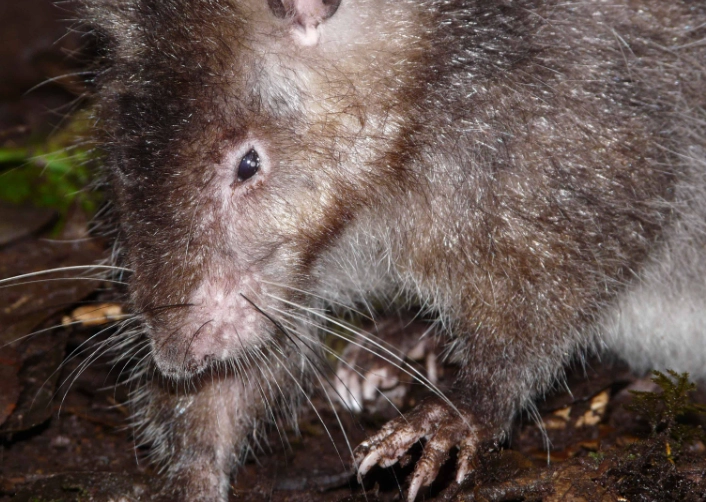
The Core Question: Is the Bosavi Rat Dangerous to Humans?
Alright, let's address the elephant in the room—or the giant rat in the jungle. Based on everything observed by scientists and the indigenous people who live in the region, the Bosavi woolly rat presents virtually no direct physical threat to humans.
Here’s the breakdown of why the idea of a dangerous Bosavi rat is largely a myth:
Diet and Temperament: Not a Predator
This is the most critical point. The Bosavi rat is a **herbivore**. Its diet consists of leaves, fallen fruits, roots, and other plant material it finds on the forest floor. It doesn't hunt. It has no need to develop aggressive predatory instincts. Its teeth are designed for grinding vegetation, not tearing flesh. The explorers noted its remarkably docile and curious nature. It didn't flee or attack; it investigated. An animal that has never encountered humans—and has no evolutionary reason to fear them as predators—often shows curiosity, not aggression.
Defense Mechanisms: Flight, Not Fight
In the animal kingdom, danger often correlates with an animal's primary defense strategy. Predators fight. Prey animals flee or hide. The Bosavi rat is firmly in the latter category. Its first and only line of defense against a perceived threat (like a python, its likely natural predator) is to disappear into the dense undergrowth. It lacks claws or offensive weaponry. Its size is likely more about surviving in a cool climate (Bergmann's rule) and having few competitors in its isolated niche than about being a fighter.
Human Interaction History
The indigenous peoples living around Mount Bosavi, like the Bosavi Kalu, have known about this animal long before Western scientists. In their oral history and knowledge, it is not classified as a dangerous animal. It is part of the forest fauna, sometimes hunted for food. There are no tales of unprovoked attacks or it being a significant nuisance. This traditional ecological knowledge is a crucial piece of evidence when assessing risk. If an animal co-existing with people for millennia isn't considered a threat, that speaks volumes.
So, can a Bosavi rat be dangerous? Any wild animal, if cornered, terrified, or directly threatened, can bite or scratch in self-defense. A 1.5 kg animal could deliver a painful bite. But the key is that it would be an extreme, defensive last resort, not a sign of an inherently aggressive creature. The baseline danger is extremely low.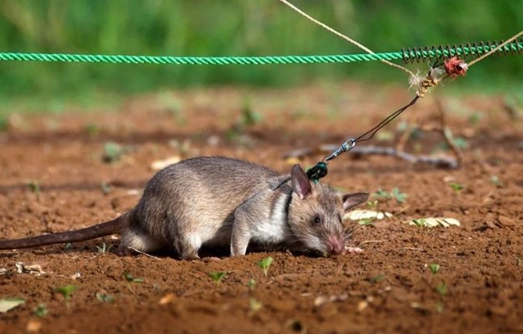
Comparative Danger: Bosavi Rat vs. Actual Dangerous Rodents
To really put the Bosavi woolly rat danger in perspective, it helps to compare it to rodents that genuinely pose significant risks. This table lays it out clearly.
| Rodent Species | Primary Danger | Aggression Level | Notes on Risk |
|---|---|---|---|
| Bosavi Woolly Rat | Extremely Low. Defensive bite only if severely provoked. | Very Low (Docile/Curious) | Risk is negligible. A greater danger to it from humans. |
| Black Rat / Roof Rat (Rattus rattus) | High (Disease Vector) | Low (Skittish, but lives close to humans) | Historically linked to plague (via fleas), typhus, leptospirosis. Damages infrastructure and food supplies. |
| Norway Rat / Brown Rat (Rattus norvegicus) | High (Disease Vector & Infrastructure) | Moderate (Can be aggressive when cornered) | Carries similar diseases as black rats. Known to bite infants or the infirm in rare cases. Causes billions in damage. |
| Capybara | Very Low | Very Low (Gregarious and calm) | World's largest rodent. Like the Bosavi rat, its size is not an indicator of aggression. Generally harmless herbivores. |
| Gambian Pouched Rat | Low (but can be an invasive threat) | Low | Trained to detect landmines and tuberculosis! However, an introduced population in Florida caused ecological concerns. |
See the pattern? The real dangerous rats are the commensal ones—the species that have evolved to live in and off human environments. They are dangerous because of the diseases they carry and their impact on our food and homes. The Bosavi rat is the polar opposite: an isolated wilderness specialist that wants nothing to do with human settlements.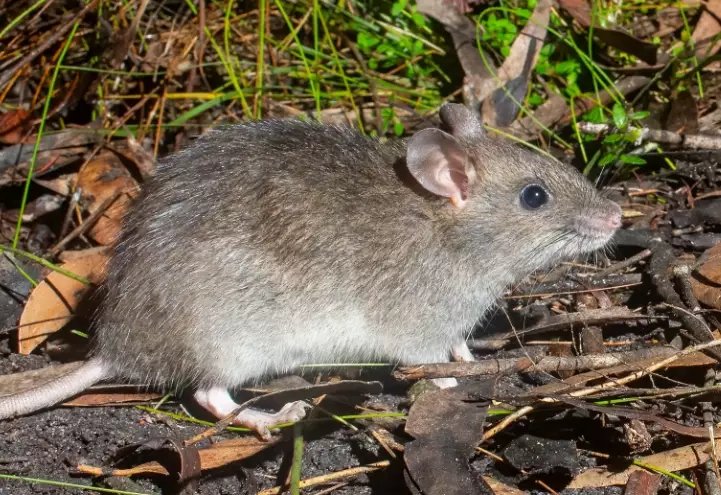
Where the Real "Danger" Lies (It's Not What You Think)
If we shift the meaning of "danger" from "direct threat to humans" to "potential for negative impact," the conversation changes. The real Bosavi rat dangerous scenario isn't about it attacking people. It's about two other things: disease (in a specific context) and, more importantly, the danger *we* pose *to it*.
Disease Risk: A Theoretical Concern
Any wild mammal can be a reservoir for zoonotic diseases (diseases that jump from animals to humans). This is a standard precaution for any wildlife. The Bosavi rat, in its pristine, isolated habitat, likely hosts a unique suite of parasites and pathogens. However, the risk of transmission to humans is astronomically low because of the lack of contact. The danger would only hypothetically increase if:
- Humans encroached deeply into its habitat, increasing contact points.
- The rat was hunted and handled without proper precautions.
- Pathogens jumped species barriers (always a rare, unpredictable event).
This is a far cry from the constant, high-risk disease exchange that happens with urban rodent populations. The World Health Organization (WHO) outlines risks associated with rodent-borne diseases, but these primarily concern the peridomestic species (*Rattus* spp.), not isolated wilderness rodents like the Bosavi rat.
Personal Aside: I've done field work in tropical areas. The disease protocols are always about mosquitoes, water, and general hygiene first. Worrying about a specific, rare, non-commensal rodent for disease was never on the checklist. Your risk from a mosquito bite in that same jungle is orders of magnitude higher than from the Bosavi rat.
The Ecological and Conservation Danger
This is the most profound flip of the script. The true danger is the potential for the Bosavi rat to become endangered or for its ecosystem to be damaged. Its entire existence is threatened by human activity, not the other way around.
- Habitat Loss: Logging, mining, and agricultural expansion in Papua New Guinea are massive threats. The Bosavi crater is remote, but not immune.
- Climate Change: Altering the delicate temperature and moisture balance of its montane forest home could make it uninhabitable.
- Invasive Species: This is a big one. If non-native rats, cats, or diseases were introduced to the crater (e.g., by mining camps), they could devastate the naive native fauna, including the Bosavi rat. An introduced black rat could be more dangerous to the Bosavi rat than the Bosavi could ever be to us.
The International Union for Conservation of Nature (IUCN) hasn't assessed this specific population yet, but species with such tiny, specialized ranges are almost always vulnerable. The danger isn't the rat; it's the rat's precarious situation.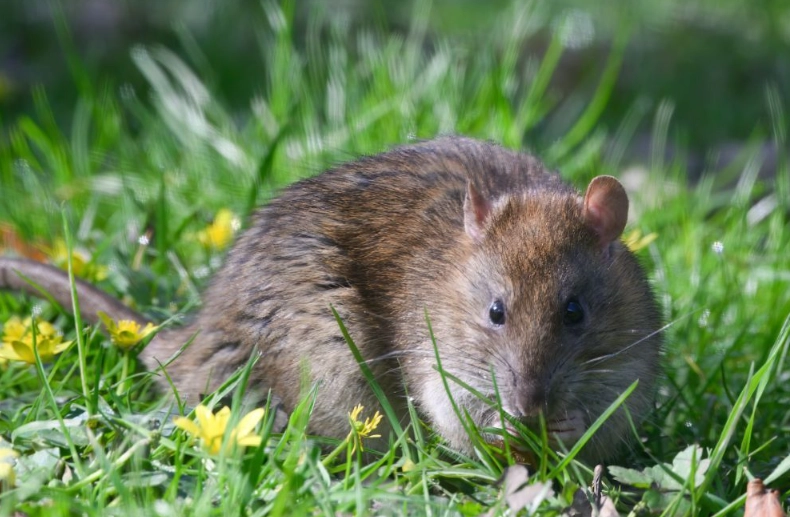
Your Bosavi Rat Questions, Answered (FAQ)
Let's tackle the specific questions swirling in your head. This is the stuff you'd type into Google after the first headline caught your eye.
Could a Bosavi rat kill a human?
Absolutely not. There is no conceivable scenario where a herbivorous, solitary, forest-dwelling rodent would hunt and kill a human. Its physiology and behavior make it incapable of such an act. This is pure sensationalism.
Is it related to the "Giant Rat" found in other places?
The name "giant rat" is used for several large rodents worldwide (e.g., the Gambian pouched rat, giant cloud rats in the Philippines). They are not closely related. They are examples of convergent evolution (unrelated animals evolving similar traits, like large size, in similar isolated habitats). The Bosavi rat is a unique product of New Guinea's evolution.
Can you keep a Bosavi rat as a pet?
No. Ethically, legally, and practically, this is a terrible idea.
Ethically: It's a wild animal adapted to a specific, complex forest environment. Captivity would cause it immense stress.
Legally: Papua New Guinea has laws protecting its native wildlife. Exporting it would be illegal.
Practically: Its dietary and environmental needs would be impossible to replicate in a home. The idea stems from seeing its docile nature on film, but that was in its home, not a cage.
What should I do if I ever encounter one?
First, congratulations—you'd be one of a handful of outsiders to ever see one! The protocol is simple: Observe from a respectful distance. Do not attempt to touch, feed, or chase it. Take photos if you can without disturbing it. Appreciate the moment of seeing a remarkable and rare creature, and then let it go about its business. Your goal is to leave zero impact.
Are there other animals in the Bosavi crater more dangerous than the rat?
Yes. While the crater ecosystem isn't known for large predators, it has venomous snakes, insects with painful stings or bites, and the general risks of any remote, rugged tropical environment (e.g., falls, getting lost). A venomous pit viper or a swarm of hornets in the crater presents a far more tangible danger than the gentle giant rodent.
The Bottom Line: Reframing the "Danger" Narrative
So, after all this, is the Bosavi rat dangerous? The direct, physical answer is a resounding no. The notion of a dangerous Bosavi rat is a media-generated myth that plays on our primal fears but collapses under scientific and observational scrutiny.
The animal is a docile, herbivorous wonder of island evolution—a testament to the incredible biodiversity that evolves in isolation. Its size is awe-inspiring, not fear-inducing.
Final Verdict: The Bosavi woolly rat poses less direct danger to a human than a stray domestic cat. Its perceived threat is a classic case of judging a book by its cover—or in this case, judging a unique wilderness specialist by the name "rat."
The real story here isn't about danger; it's about discovery, fragility, and conservation. The danger lies in habitat loss, climate change, and invasive species. The animal itself is a vulnerable treasure of Papua New Guinea's natural heritage.
My hope is that the next time someone sees that headline and asks "Bosavi rat dangerous?", they find this article and come away with a sense of wonder instead of fear, and a understanding that we are the ones who hold the power to be dangerous to its future, not the other way around.
If you're interested in the scientific exploration that discovered it, the BBC's original documentary footage and reports from conservation organizations like the Wildlife Conservation Society (Papua New Guinea) are fantastic resources. For broader context on rodent-borne diseases, the WHO fact sheets provide reliable public health information. And to understand the conservation status of New Guinea's unique fauna, the IUCN Red List is the global authority.
Comments
Leave a Comment