If you've ever watched fiddler crabs on a muddy shore, the first thing that grabs your attention is the male's absurdly large claw. It looks comical, almost impractical. But that claw, and the crab's overall size, is the key to understanding everything about them – from their daily battles to their evolutionary success. Talking about fiddler crab size isn't just measuring millimeters; it's decoding a language of survival, competition, and adaptation. Most guides will tell you they're "small," but that's missing the point entirely. The real story is in the proportions, the variations between species, and what those measurements reveal about the crab's life. After years observing them from Costa Rica's mangroves to Florida's estuaries, I've learned that misjudging their size means misjudging their world.
In This Article, You'll Discover:
Why Fiddler Crab Size is More Than a Statistic
Forget thinking of size as just a physical trait. For a fiddler crab, its carapace width – the distance across its back – is its passport. It determines the burrow it can defend, the mates it can attract, and the fights it can win or must avoid. A difference of just 2-3 millimeters can separate a dominant male from a subordinate one. Researchers like those publishing in journals such as Behavioral Ecology have shown that size is the primary predictor of contest outcomes in males. Larger crabs almost always win disputes over territory.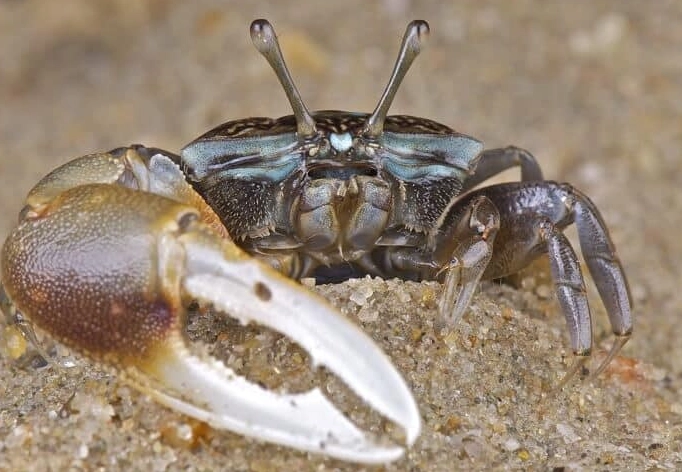
For females, size is closely linked to fecundity. A larger female can produce more eggs. So when you're looking at a colony, you're not just seeing a bunch of crabs. You're looking at a highly structured social hierarchy written in dimensions. The big males hold the prime real estate near the water's edge, while smaller ones and females are pushed to the periphery. Understanding this size-based social structure is the first step to really seeing them.
The Right (and Wrong) Way to Measure a Fiddler Crab
Here's where most beginners, and even some online resources, get it subtly wrong. They talk about "size" vaguely. In science, and for accurate identification, you need to be specific.
The Standard Measurement: Carapace Width (CW). This is the gold standard. You measure the width of the crab's main body shell (the carapace) at its widest point, excluding any spines. This is usually done with digital calipers for precision. Don't include the legs or eyes. Just the solid, central shield. This measurement is consistent and comparable across studies.
Measuring the Major Claw (Cheliped). For males, the giant claw's size is crucial. The key measurement here is the propodus length – that's the length of the large, immovable "hand" part of the claw, from its hinge with the arm to the tip. Sometimes researchers also measure claw weight, as it's a huge energetic investment. I use a simple method in the field: I compare the length of the major claw to the crab's entire carapace width. In many species, the claw can be nearly as long as the crab's body is wide, sometimes longer.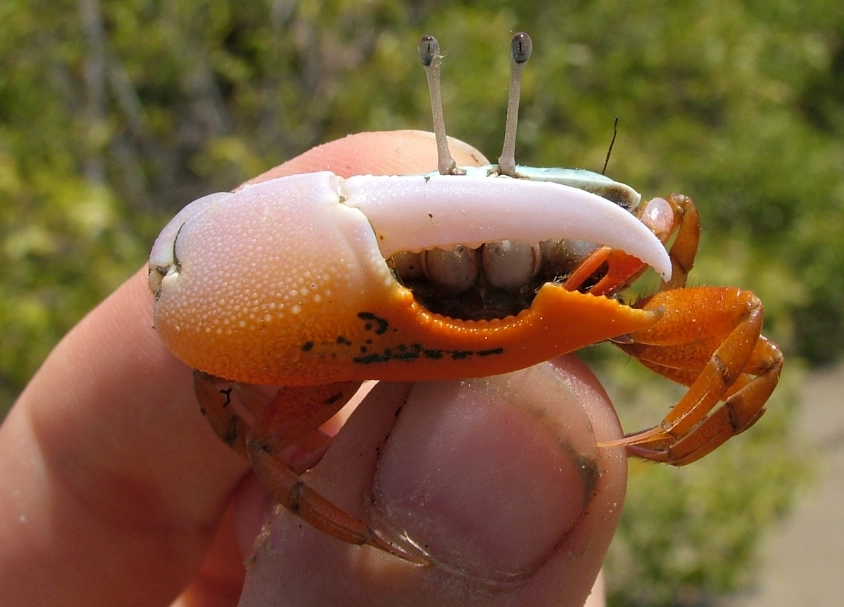
Size Ranges: From Tiny Minuta to the Burly Mjoebergi
"Fiddler crab" refers to over 100 species in the genus Uca, and their sizes vary significantly. You can't apply one number to all. Here’s a breakdown of some common and notable species, based on data from sources like the Smithsonian Marine Station and peer-reviewed species descriptions.
| Common Name (Species Example) | Typical Carapace Width Range | Notable Size Feature | Where You Might Find Them |
|---|---|---|---|
| Atlantic Sand Fiddler (Uca pugilator) | 10 – 22 mm | One of the most common in the SE USA. Males have a moderately large claw. | Sandy beaches and mudflats, North Carolina to Florida. |
| Red-Jointed Fiddler (Uca minax) | 15 – 30 mm | One of the larger North American species. Claw joints are often red. | Brackish mudflats, higher up in marshes. |
| Mangrove Fiddler (Uca mjoebergi) | Up to 33 mm | Considered robust; subject of famous "hot-headed" studies in Australia. | Mangrove forests, Northern Australia. |
| Tropical Fiddler (Uca vocans) | 12 – 25 mm | Widespread in the Indo-Pacific. Claw can be very elongated. | Exposed mudflats and mangrove edges. |
| Tiny Fiddler (Uca minuta) | 5 – 10 mm | Lives up to its name – truly diminutive. | Often in higher, firmer mud within mangroves. |
Notice the spread? A large Uca minax can be three times the width of a small Uca minuta. This is why shouting "I saw a big fiddler crab!" means very little without a species context or, better yet, a rough measurement against a known object (a coin, your fingernail).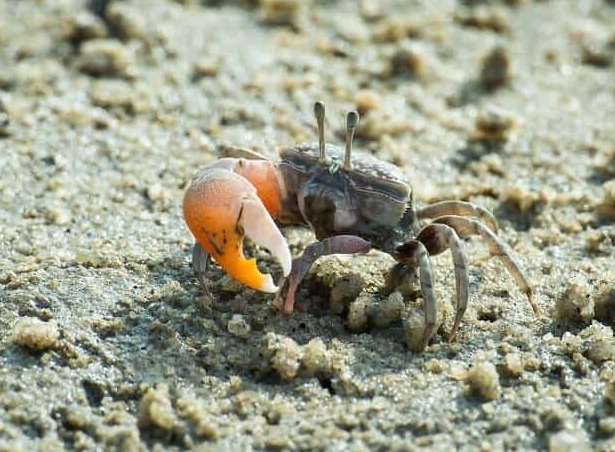
The Male's Giant Claw: Size, Function, and Trade-offs
This is the headline act. The male's major cheliped isn't just big; it's often 30-40% of his total body weight. In some species, the claw's length can exceed the carapace width. It's an outrageous investment.
What's the Claw For? It's Not Just for Fighting.
The primary function is signaling. It's a billboard. The crab waves it in a species-specific rhythm to attract females and warn rival males. Size matters here – females consistently prefer males with larger claws in controlled experiments. A study on Uca mjoebergi found females would choose a male with a large claw over one with a larger body but a smaller claw.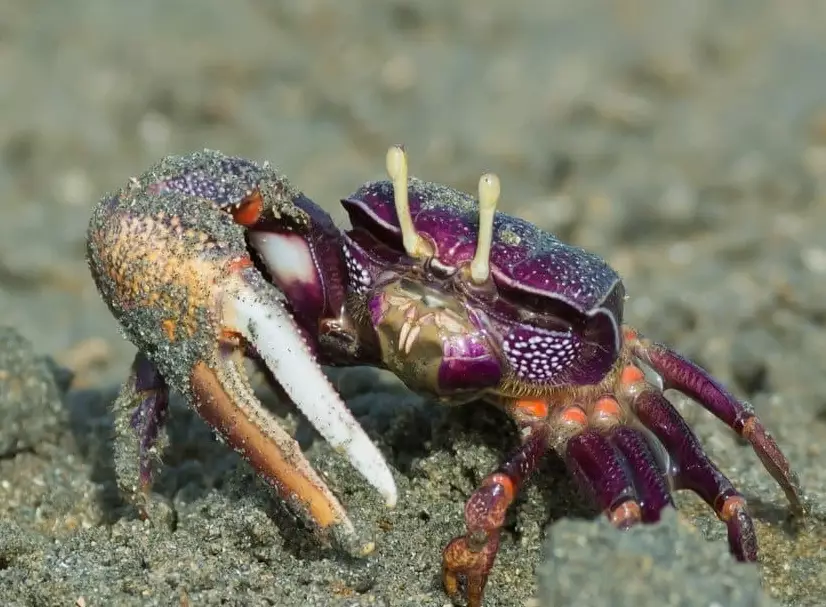
Secondarily, it's for combat. Fights are rarely to the death; they're more like wrestling matches where one crab tries to dislodge or lift the other. A larger claw provides leverage.
The Hidden Cost of a Giant Claw
Here's the non-consensus part many overlook: that claw is a liability. It's terrible for feeding (they use their small claw to eat). It's heavy, making the crab slower and more conspicuous to predators like birds. I've watched a male with a regenerating, smaller claw feed much more efficiently than his larger-clawed neighbor. The crab with the massive claw is making a bold, energy-intensive bet on reproduction at the expense of safety and efficient foraging. If he loses that claw, the regenerated one will be smaller and less effective in signaling, a serious setback.
What Controls How Big a Fiddler Crab Gets?
You won't find giant fiddler crabs. Their size is constrained by several hard factors.
Molting: They grow in discrete jumps by molting. Each molt, they increase their carapace width by a fairly fixed percentage. A young crab molts frequently; an older one slows down. There's a maximum size their physiology allows.
Environmental Stress: This is a big one. Crabs in a harsh, highly variable environment (big temperature swings, low food quality) often mature at a smaller size. It's better to be small and reproduce quickly than to risk dying before reaching a larger size. In a stable, food-rich mangrove creek, you'll generally find larger individuals on average.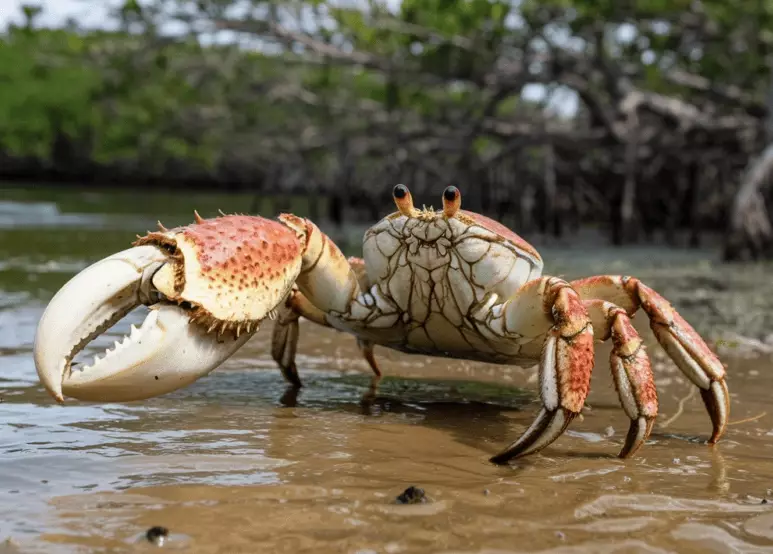
Predation Pressure: In areas with high bird or fish predation, there can be a selection pressure for smaller size, as smaller crabs can hide more easily and mature faster. I've noticed this comparing a protected lagoon to an exposed, heavily-foraged beachfront.
Burrow Physics: Their burrow must be wide enough to accommodate their carapace and deep enough to reach the water table. The energy required to dig and maintain a larger burrow in compact mud may impose a practical upper limit on body size.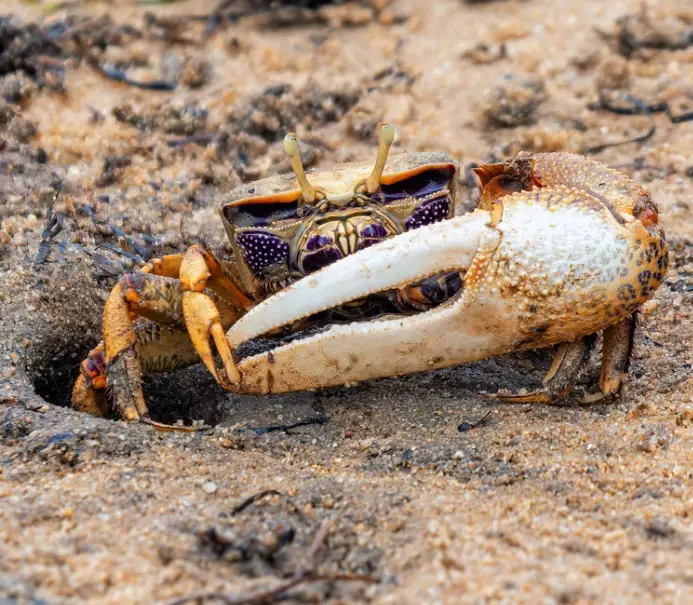
Your Fiddler Crab Size Questions Answered
On a mangrove walk, how can I quickly estimate if a male fiddler crab's claw is unusually large for its species?
Look for proportion. A good rule of thumb for many common species is that if the major claw looks as long or longer than the crab's entire body is wide, you're looking at a well-endowed male. Compare several males in the same area. If one stands out immediately because its claw seems to dwarf its body, it probably does. Also, watch its waving – males with larger, heavier claws often have a slower, more deliberate wave, as if moving a weight.
I'm a teacher with a classroom terrarium. Does limiting space stunt fiddler crab growth compared to the wild?
Potentially, yes, but nutrition is a bigger factor. In a confined space, stress and limited foraging opportunity can slow growth. The main issue I've seen in captivity isn't just tank size, but diet. They need constant access to fine organic detritus, biofilm, and minerals to successfully molt and grow. Many captive crabs are fed only fish flakes, which doesn't replicate the complex microbial soup they filter from sand. Poor nutrition will limit their ultimate size more directly than a moderately sized tank.
If a male loses his giant claw, will his body size (carapace width) be affected in future molts?
This is a fascinating physiological trade-off. The crab's body size growth and claw regeneration compete for the same resources. Studies, like those on Uca pugnax, show that after losing the major claw, the crab will often allocate more energy to regenerating a new (though smaller) claw during the next molt. This can sometimes come at a slight cost to the increase in carapace width. So, he might grow a bit less in body size that molt cycle to fund the claw rebuild. It's a clear example of how the claw isn't a separate accessory – it's a core part of his energy budget.
Can you reliably identify a fiddler crab species by size alone?
Almost never. Size ranges overlap too much. A large specimen of a small species can be the same size as a small specimen of a large species. You must combine size with other clues: habitat (sand vs. thick mud?), claw shape (slender or bulky?), carapace color and patterns, and most reliably, geographic location. A crab in Florida won't be an Australian species. Use size as one piece of the puzzle, not the definitive key. Field guides like those from the University of Florida's IFAS extension provide excellent species-specific detail.

Comments
Leave a Comment