Let's cut right to the chase. The most mind-blowing thing about Darwin's frog isn't its size (it's tiny, about the length of a paperclip) or its perfect leaf-like camouflage. It's the fact that the male frog carries his developing babies inside his own vocal sac. You read that right. He doesn't just guard eggs on a leaf. He swallows them, incubates them in a pouch derived from his vocal cords, and then, weeks later, coughs up fully formed froglets. It's a parenting strategy so bizarre and unique that it still leaves biologists shaking their heads in wonder. But here's the kicker: this incredible amphibian, a true icon of evolutionary ingenuity, is sliding toward extinction. If you've ever been fascinated by the phrase "Darwin's frog babies," you're about to learn everything—from the precise mechanics of this pocket parenting to why seeing one in the wild is now a rare privilege.
What's Inside?
- What Are Darwin's Frog Babies? Beyond the Basic Fact
- How Does the Male Darwin's Frog Carry the Babies? A Step-by-Step Breakdown
- Why This Bizarre Strategy Matters (It's Not Just a Cool Trick)
- Where and How to (Responsibly) Look for Darwin's Frogs
- The Silent Crisis: Why Darwin's Frogs Are Disappearing
- Your Burning Questions About Darwin's Frog Parenting
What Are Darwin's Frog Babies? Beyond the Basic Fact
Most articles stop at "the male carries the tadpoles in his vocal sac." That's like describing a Ferrari as "a car with wheels." It misses the depth. We're talking about two distinct species: the Darwin's frog (Rhinoderma darwinii) and the Northern Darwin's frog (Rhinoderma rufum), the latter likely extinct since the 1980s. The surviving species, R. darwinii, calls the temperate rainforests of Chile and a sliver of Argentina home.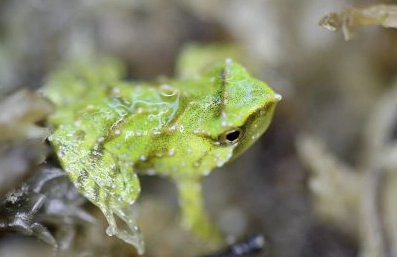
I once spent a soggy week in Chile's Valdivian Rainforest, guided by a local researcher. We found one. Not by sight, but by sound. The male's call is a faint, high-pitched metallic "ping," like a tiny bell. That's your first clue. The frog itself is a masterpiece of disguise—brown, with a sharp snout, looking exactly like a dead leaf on the forest floor. The idea that this unassuming creature is a walking nursery is still hard to grasp.
Here’s a detail most miss: not all eggs get the VIP treatment. A female lays about 30-40 eggs. The male guards them for up to three weeks until the embryos inside start wriggling. Only then does he scoop several of them into his mouth. He doesn't take them all. The rest are left to perish. It's a brutal but calculated investment of his energy.
How Does the Male Darwin's Frog Carry the Babies? A Step-by-Step Breakdown
Let's walk through the process. This isn't passive holding; it's active incubation.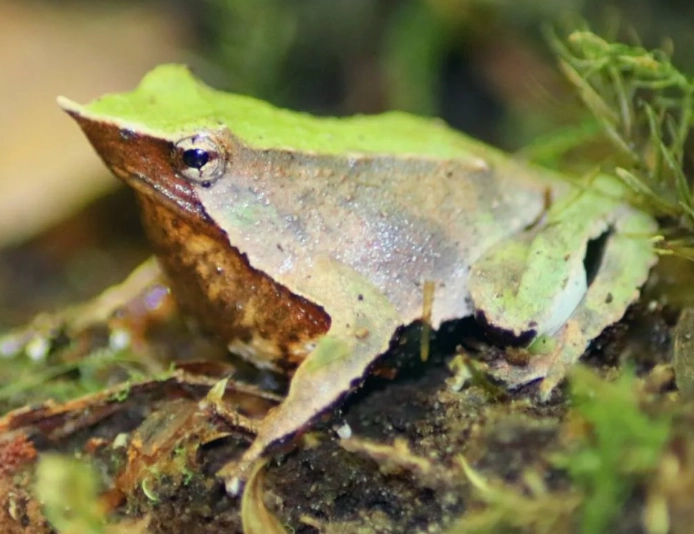
The Pickup and Internal Journey
When the embryos are ready, the male positions himself over them. Using his tongue or a gulping motion, he takes up to 15 of them into his mouth. They don't go down to his stomach. Instead, they're maneuvered into a pair of large, slit-like openings on the floor of his mouth, which lead to the hugely expanded vocal sac. Think of it as a pair of internal pockets running along his lower body.
Life Inside the Sac
For the next 50 to 70 days, the tadpoles develop in this dark, moist chamber. They are immobile at first, attached to a large yolk sac. A common misconception is that the father feeds them. He doesn't. They live off their yolk. But he does provide something critical: a controlled, protected, and oxygenated environment. As he breathes through his skin and the lining of his mouth, oxygen diffuses into the fluid surrounding the tadpoles. He's a living, breathing incubator.
The Grand Finale: "Birth" or Release?
This is the best part. The tadpoles undergo metamorphosis inside the sac. They lose their tails, grow legs, and transform into perfect miniature frogs, about 1 cm long. When they're ready, the father opens his mouth wide and uses muscular contractions to expel them. They don't "pop" out all at once. It can be a staggered process over a day or two. One moment he's a frog, the next he's a frog surrounded by a dozen hopping, identical copies of himself. Then he's done. His job is over, and the froglets are on their own.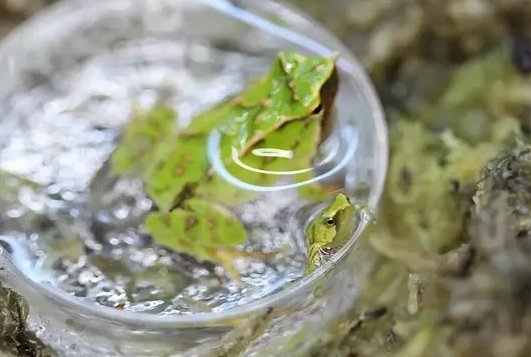
Why This Bizarre Strategy Matters (It's Not Just a Cool Trick)
Evolution doesn't do things for fun. This extreme form of paternal care is a direct answer to a harsh environment. The cool, damp forest floor is full of predators—insects, spiders, other frogs. Eggs and exposed tadpoles are sitting ducks. By internalizing development, the father frog provides a near-perfect shield.
But there's a huge trade-off. It ties the male down for over two months. During this time, he's slower, more vulnerable, and can't call for another mate. It's an enormous energetic commitment to a small number of offspring (compared to a frog that lays thousands of eggs). This strategy only works in a stable, specific environment. When that environment changes, as it is now, the strategy becomes a liability.
Where and How to (Responsibly) Look for Darwin's Frogs
You're not going to stumble upon them. If you're serious about seeing Darwin's frog in its natural habitat, you need a plan. I learned this the hard way.
Primary Location: The native forests of southern Chile, particularly the Valdivian Temperate Rainforest ecoregion. Specific areas include Parque Nacional Puyehue, Parque Nacional Vicente Pérez Rosales, and private reserves around the city of Valdivia. In Argentina, their range is tiny and poorly documented.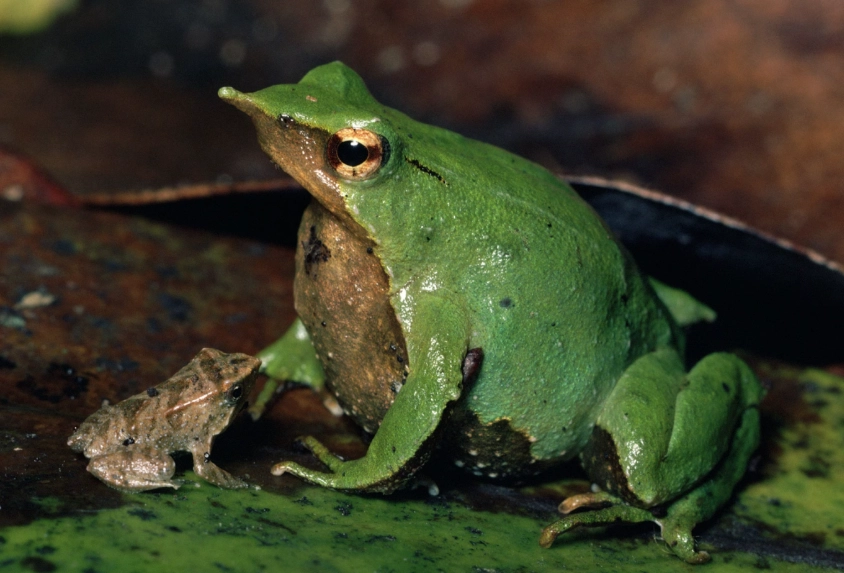
When to Go: The austral spring and summer (October to March). This is their active and breeding season. You'll have the best chance of hearing males call, which is your primary search method.
How to Look:
1. Hire a local guide or join a research trip. This is non-negotiable for ethics and success. Organizations like the IUCN or local Chilean universities can sometimes point you to legitimate ecotourism operators. My guide was affiliated with the Universidad Austral de Chile.
2. Listen, don't just look. Train your ear for that metallic "ping." It's soft and easy to miss over wind or water.
3. Move slowly and scan the leaf litter. Look for the pointed snout and leaf-like shape. They freeze when approached.
4. Never handle them. The oils and chemicals on your skin can harm their permeable skin. Amphibians worldwide are battling the deadly chytrid fungus, and human contact can spread it.
It was a moment of pure, dumb luck when my guide pointed one out. It was so still I thought he was joking, until I saw the subtle curve of its back. We took a few photos from a distance and moved on, leaving it in peace.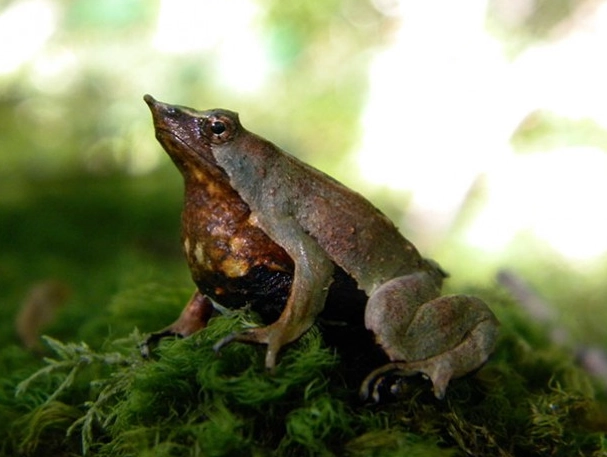
The Silent Crisis: Why Darwin's Frogs Are Disappearing
The International Union for Conservation of Nature (IUCN) lists Rhinoderma darwinii as Endangered. Its population is fragmented and declining. The story of the Northern Darwin's frog (R. rufum) is a sobering preview: no confirmed sightings since around 1981. It's listed as Critically Endangered (Possibly Extinct).
The threats aren't mysterious:
Habitat Loss: The conversion of native forest to pine and eucalyptus plantations is the biggest driver. These monocultures are dead zones for forest-floor specialists.
Chytridiomycosis: The global amphibian pandemic caused by the chytrid fungus (Batrachochytrium dendrobatidis) has hit southern Chile hard. The fungus attacks the skin, disrupting respiration and electrolyte balance. For a frog that breathes heavily through its skin during incubation, it could be particularly devastating.
Climate Change: Alters the cool, humid microclimate these frogs depend on. Drier conditions make it harder for froglets to survive after release.
Conservation is a patchwork. Some populations are within protected national parks, but parks aren't immune to edge effects or disease. Captive breeding programs exist, like the one at the Zoo in Leipzig, Germany, but they are challenging. The species' specialized needs make it a difficult candidate for "ark" programs.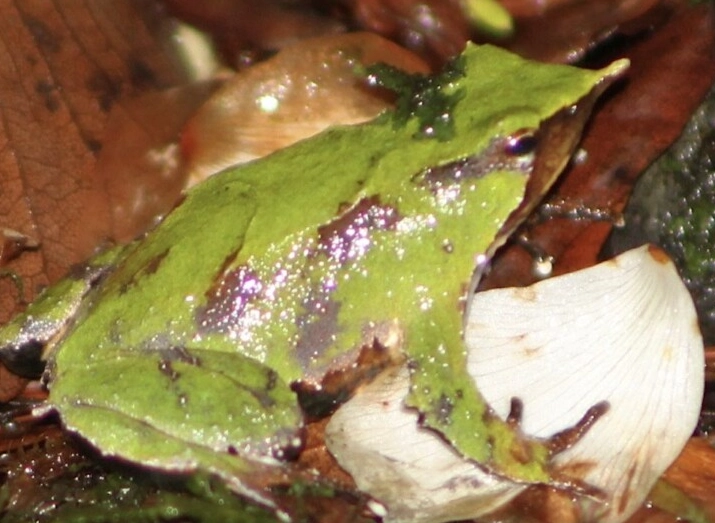
| Species | Status (IUCN) | Last Reliable Sighting | Primary Threat |
|---|---|---|---|
| Darwin's Frog (Rhinoderma darwinii) | Endangered | Ongoing (declining) | Habitat loss to plantations |
| Northern Darwin's Frog (Rhinoderma rufum) | Critically Endangered (Possibly Extinct) | ~1981 | Unknown (likely habitat loss & disease) |


Comments
Leave a Comment