In This Article
- Untangling the Web: Poisonous vs. Venomous
- Why Does Everyone Think They Might Be Poisonous?
- The Real Risks: What an Orchid Mantis CAN Do
- Orchid Mantis as Pets: Safety for You and Your Household
- Clearing Up Common Myths and Misconceptions
- What About Other Mantises? A Quick Comparison
- Answers to Your Burning Questions (FAQ)
- Final Verdict: Stop Worrying, Start Appreciating
I remember the first time I saw a picture of an orchid mantis. My brain short-circuited. It looked like someone had crossed a flower with a miniature alien predator, all delicate pink and white petals hiding what was clearly a set of spiny, grasping forelegs. My immediate, gut reaction wasn't "how beautiful" – it was "that thing looks dangerous." And the question that popped into my head, the same one that brings thousands of people to Google every month, was a straightforward one: are orchid praying mantis poisonous? Could something that stunning also be toxic?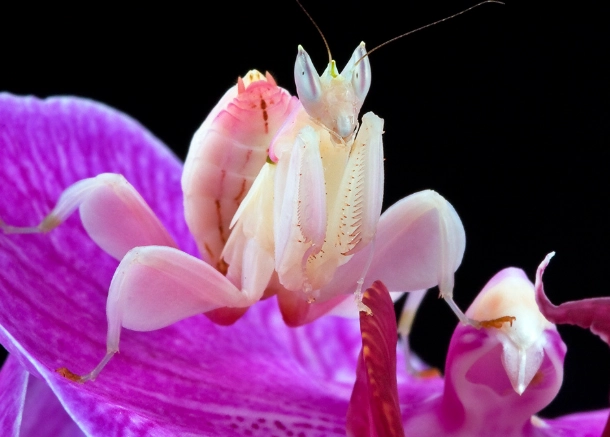
If you're here, you've probably had a similar thought. Maybe you're thinking about keeping one as a pet (they're incredibly popular in the exotic insect hobby), or you live in Southeast Asia and stumbled upon one in your garden. Perhaps you're just plain curious. Whatever the reason, the core worry is the same: is this insect a threat? The short, direct answer – and I know you want it upfront – is no. An orchid praying mantis is not poisonous. But that "no" opens up a whole world of much more interesting questions about venom, defense, and what "poisonous" really means in the insect world. Stick with me, because the full story is way cooler than a simple yes or no.
The Quick Take: Orchid mantises (Hymenopus coronatus) possess no poison or toxins that are harmful to humans, cats, or dogs. They are not poisonous to touch, and they do not secrete any harmful substances. The primary risk from handling any praying mantis, including orchids, is a potential pinch or bite from their strong forelegs or mandibles, which is a mechanical injury, not a venomous one.
Untangling the Web: Poisonous vs. Venomous
This is where most online explanations fall flat. They just say "no" and move on. But to really understand the answer to "are orchid praying mantis poisonous," we need to clear up some terminology. This isn't just semantics; it's crucial biology.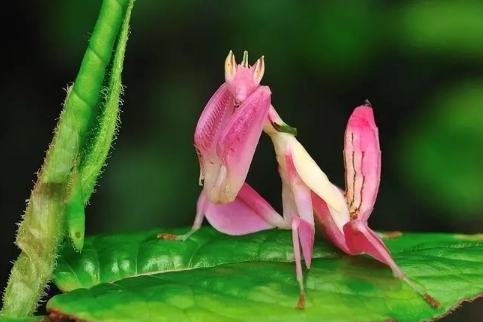
In the scientific world, and for anyone who keeps exotic pets, these terms mean very different things:
- Poisonous: Something is poisonous if it delivers its toxin passively. You have to touch, eat, or absorb it for it to harm you. Think of poison ivy or a poisonous frog – the danger comes from contact or ingestion.
- Venomous: Something is venomous if it actively delivers a toxin, usually through a bite or a sting. The creature produces the toxin in a specialized gland and has a dedicated delivery system (fangs, stinger) to inject it. Think snakes, spiders, or scorpions.
So, when people ask "are orchid praying mantis poisonous," they're often really asking if they are venomous – do they have a toxic bite? The answer is still no, but the distinction matters. Some insects, like certain ants or wasps, are truly venomous. Mantises, as a family, are not.
What orchid mantises are, without a doubt, is carnivorous predators. Their entire design is about hunting and eating other living insects. This predatory nature is the root of the fear, and honestly, it's a fair thing to be cautious about. They look the part of a dangerous creature.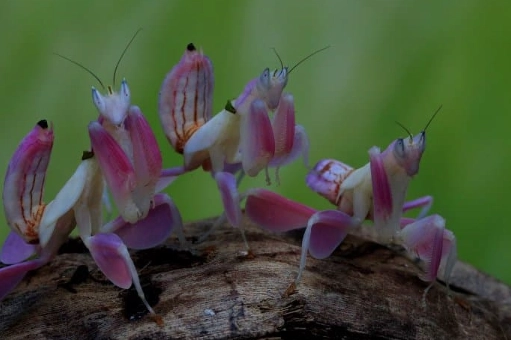
Why Does Everyone Think They Might Be Poisonous?
Let's be honest, the orchid mantis has a serious PR problem. It looks guilty. Its appearance screams "warning sign!" in the animal kingdom. Here’s why the myth that orchid praying mantis are poisonous persists:
1. The Ultimate Flower Con
Their famous camouflage isn't just for hiding. It's aggressive mimicry. They don't just look like orchids to avoid being seen; they look like them to lure prey. Pollinators like bees and butterflies are drawn to what they think is a flower, only to be snatched up. This deceptive, almost sinister hunting strategy makes us project nefarious traits onto them, like poison.
2. The "Startle" Display
If threatened, an orchid mantis will often rear back, spread its forelegs wide, and flare its wings (if it's an adult female with wings) to reveal often bright, contrasting colors underneath. This sudden transformation from a delicate flower into a wide, threatening-looking silhouette is a classic defensive bluff. It's designed to scare off predators by making the mantis look larger, more aggressive, and potentially dangerous—perhaps even poisonous. It works on birds, and it works on our primal brains too.
3. General Mantis Misconceptions
Praying mantises have a spooky reputation in folklore. Between their praying posture, their habit of sexual cannibalism, and their unblinking gaze, they've been associated with omens and danger for centuries. This cultural baggage gets applied to the most extreme-looking member of the family.
I've kept a few orchid mantis nymphs. The first time one of them did the threat display on me because my hand moved too fast, I jumped. It's incredibly effective! For a second, you completely forget it's a creature less than an inch long. The performance is that convincing. But once it calmed down and walked onto my finger, it was just a fragile, curious little thing.
The Real Risks: What an Orchid Mantis CAN Do
Okay, so they're not poisonous. But they're not stuffed animals either. They are living predators with tools for catching and killing prey. Here’s what you're actually dealing with.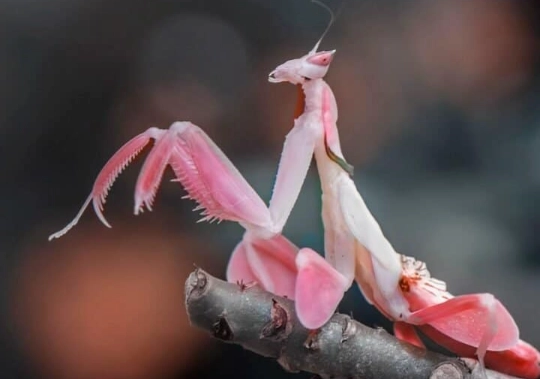
The primary weapons of an orchid mantis are its raptorial forelegs. These are the folded "praying" arms. They are lined with sharp spines designed to spear and pin struggling insect prey. If you handle a mantis carelessly—especially a large, hungry, or frightened adult female—it might grab your finger with these legs. It feels like a firm, prickly pinch. It can startle you and maybe even puncture skin enough to draw a tiny drop of blood, but it's not an envenomation. It's a mechanical pinch from spines.
Less commonly, if really provoked (like being squeezed), a mantis might turn its head and bite with its mandibles. I've been bitten by a large Chinese mantis before. It was like a sharp pinch, similar to a mild ant bite, and it was over in seconds. No swelling, no lasting pain, certainly no systemic effects. An orchid mantis bite would be even less significant due to its smaller size. The idea that a mantis bite is medically significant is, in my experience and according to entomologists, a complete myth.
| Potential Issue | What Happens | Level of Concern | How to Avoid It |
|---|---|---|---|
| Foreleg Pinch/Grab | Spiny legs grasp skin. Can feel prickly/painful, may leave tiny red marks. | Very Low | Move slowly. Let the mantis walk onto you. Don't grab it. |
| Bite | Mandibles pinch skin. Feels like a sharp pinch, may barely break skin. | Extremely Low (rare) | Avoid provoking or squeezing the insect. |
| Allergic Reaction | Theoretically possible to any insect protein (like a mild bee sting allergy), but unreported for mantises. | Near Zero | If you have severe insect allergies, exercise general caution. |
| Disease Transmission | Not vectors for human diseases. | None | Wash hands after handling any animal as a general rule. |
See? The chart tells the story. The risks are minimal and physical, not chemical.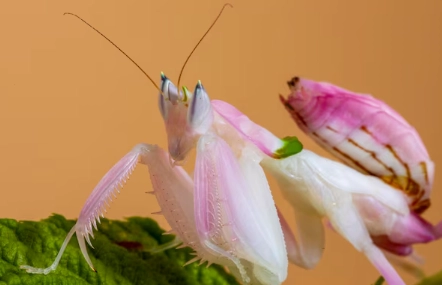
Orchid Mantis as Pets: Safety for You and Your Household
This is a huge concern for potential owners. You don't want to bring a hidden danger into your home.
Are orchid praying mantis poisonous to cats or dogs?
Again, no. They produce no toxin that would harm a pet if ingested. However—and this is a big however—this does NOT mean they are safe around pets. The main danger is to the mantis. A curious cat's paw or a dog's sniff could easily kill this fragile insect. Furthermore, if a pet did eat one, the mantis's spiny legs could potentially cause minor mouth or throat irritation, just like eating any crunchy bug with hard parts might. The bigger concern would be pesticides if the mantis was caught wild, which is why you should only buy captive-bred insects from reputable breeders. So, the answer to "are orchid praying mantis poisonous to dogs?" is a definitive no, but you should still keep them securely housed away from other animals.
Handling Your Orchid Mantis Safely
If you want to interact with your pet, the rules are simple. Be calm, be slow, and be close to the ground or a soft surface. Never grab it from above (that's how predators attack). Instead, gently place your hand or a brush in front of it and let it walk on. Their grip is surprisingly strong for their size. Always wash your hands before and after. Not because they are poisonous, but because you have oils and residues on your skin that could harm them, and it's just good hygiene.
Honest Downside: They are not "cuddly" pets. Handling causes them stress. The more you handle them, the higher the chance of an accidental fall or injury. I think the best part of keeping them is observing their incredible natural behaviors in a well-set-up enclosure, not frequent handling. Some keepers rarely handle theirs at all, and the mantises seem perfectly happy that way.
Clearing Up Common Myths and Misconceptions
The internet is full of half-truths. Let's smash a few.
Myth 1: "All praying mantises have a venomous bite." False. Mantises do not possess venom glands. Research into mantis biology confirms their saliva contains digestive enzymes to pre-digest prey, but these are not neurotoxic or cytotoxic venoms designed to disable. A great resource to understand insect venom systems in general is the Entomological Society of America, which publishes peer-reviewed research on insect physiology.
Myth 2: "The orchid mantis's color means it's poisonous (aposematism)." False. Its pink and white colors are for camouflage and lure, not warning. True warning colors in insects are often red, yellow, black, or orange in high-contrast patterns (think wasps). The orchid mantis is the opposite—it's trying to blend in, not stand out.
Myth 3: "They can spit poison or acid." Completely false. Zero evidence for this exists. This myth might stem from confusing them with other insects or from their occasional regurgitation of a dark liquid when severely stressed, which is a defensive behavior seen in many insects and is not toxic.
What About Other Mantises? A Quick Comparison
You might wonder if the orchid is unique. It's not. The non-venomous rule applies to the entire mantis order (Mantodea).
- Ghost Mantis: Not poisonous. Its dead-leaf appearance is pure camouflage.
- Devil's Flower Mantis: Not poisonous. Large and dramatic, but its threat display is a bluff.
- Chinese Mantis: Not poisonous. The large common garden mantis in North America.
If you're interested in the formal classification and biology of these insects, institutions like the Natural History Museum, London have excellent, vetted resources on mantodean diversity.
The bottom line across all species: mantises are hunters, not poisoners.
Answers to Your Burning Questions (FAQ)
Final Verdict: Stop Worrying, Start Appreciating
So, after all this, where do we land on the big question? Are orchid praying mantis poisonous? The evidence is overwhelming. They are not. The fear is understandable but misplaced. It comes from their otherworldly appearance and our tendency to equate beauty in nature with danger.
What they are is a breathtaking example of evolutionary adaptation. They are a lesson in patience, precision, and the sheer weirdness of natural selection. The real story isn't about a nonexistent poison; it's about how an insect learned to become a flower to eat the flower's visitors. That's far more fascinating.
If you're a potential owner, you can rest easy on the safety front. The challenges of keeping an orchid mantis are about replicating their specific tropical environment, providing the right food, and accepting their relatively short lifespans—not about managing any kind of toxicity. Your focus should be on their care, not on a phantom threat.
Next time you see that stunning pink and white image, I hope you see it differently. Not as a potential hazard, but as one of the most ingenious and delicate predators on the planet. A living jewel. And definitely, definitely, not poisonous.


Comments
Leave a Comment