Quick Dive-In
I've always found it fascinating how something so simple, so brainless, and so... well, jiggly, can be such an effective predator. Watching them pulse through the water at an aquarium, they look more like abstract art than eating machines. But that's exactly what they are. And one question that pops up a lot, especially from folks trying to raise fish or just curious about ocean life, is this: do jellyfish eat eggs?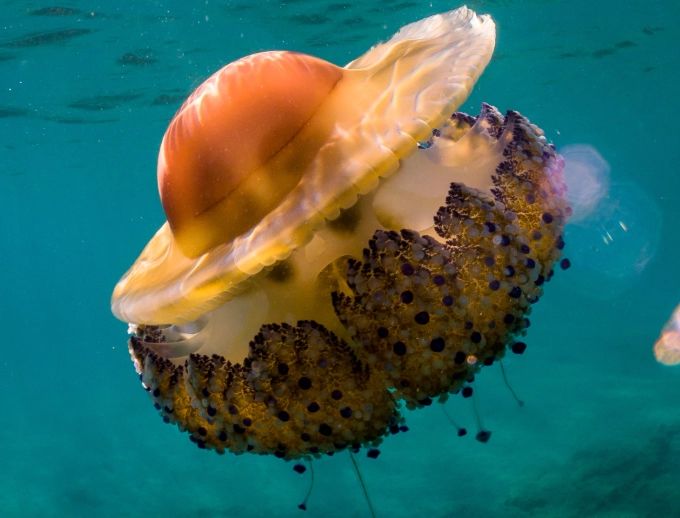
The short, direct answer is yes, absolutely. Many jellyfish species will consume eggs if they encounter them. Fish eggs, floating freely in the plankton soup of the ocean, are a perfectly packaged, nutrient-rich snack for a drifting jelly. But to stop there would be a massive oversimplification. It's like asking if humans eat bread. Sure, we do, but that's not the whole story of our diet, is it? The real story of what jellyfish eat, and how, is way more interesting than a simple yes or no.
It all comes down to opportunity and mechanism. Jellyfish are opportunistic feeders. They don't hunt in the way a shark or a tuna does. They drift, they wait, and they trap whatever small organisms bump into their tentacles. So, if a cluster of fish eggs (often called "roe") is drifting along at the same depth and current as a hungry jellyfish, those eggs are absolutely on the menu. The jellyfish's stinging cells, called nematocysts, will fire upon contact, immobilizing the eggs or the tiny organisms that carry them, and then the tentacles guide the food up to the mouth.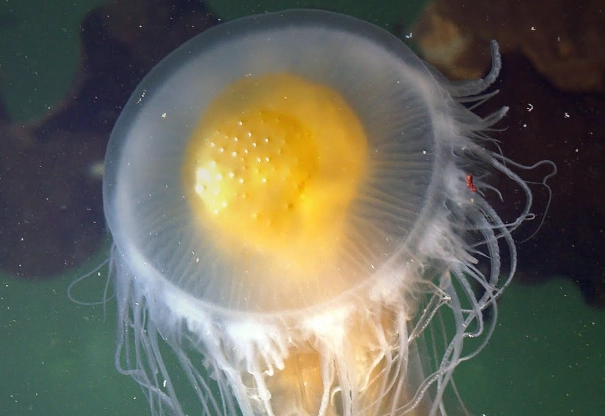
Key Takeaway: Jellyfish are passive, opportunistic predators. Their diet is a "catch-what-you-can" buffet of the ocean's tiny floating life, known as plankton. Eggs, being part of this planktonic world, are a viable food source.
What's Actually on the Jellyfish Menu?
To really understand if jellyfish eat eggs, you need to see the full spread. Their diet is less about specific cravings and more about size and availability. Think of their tentacles as a fine-mesh net drifting through the sea. What gets caught?
- Zooplankton: This is the main course. Tiny animals like copepods, larval fish (called fish fry), tiny shrimp-like creatures, and yes, the eggs of various marine organisms. The Smithsonian Ocean portal has great info on how foundational zooplankton is to ocean food webs.
- Small Fish: Smaller jellyfish species might stick to fish larvae, while larger ones like the Lion's Mane can trap and eat small adult fish.
- Other Jellyfish: Cannibalism isn't off the table. Some larger jellies won't hesitate to eat smaller ones of different species.
- Fish Eggs: Here's our star. Eggs from spawning fish like herring, cod, or anchovies, which are often released in massive clouds into the water column, are prime targets. They're defenseless, packed with energy, and the right size.
- Even Tiny Plants (Phytoplankton): Some jellyfish, like the upside-down jellyfish, have a symbiotic relationship with algae and can absorb nutrients from them, but most rely on animal-based food.
So, when you ask "do jellyfish eat eggs?", you're asking about one item in a vast, varied grocery list that is entirely dictated by chance and location. A jellyfish in a coastal area during a massive fish spawn will likely ingest more eggs than one in the open ocean deep water.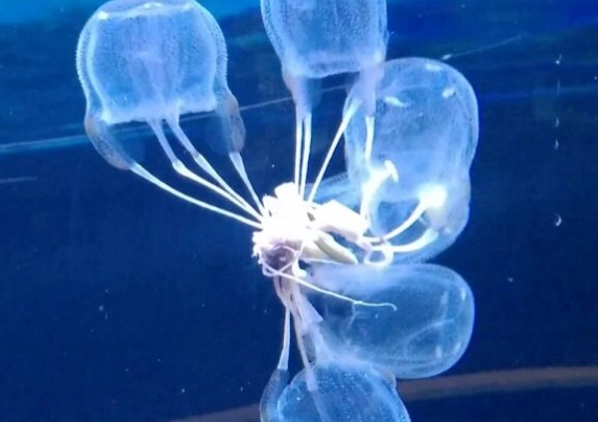
How Does a Brainless Blob Even Eat?
This is the part that blows my mind. They have no central nervous system, no brain to say "hey, that's food, grab it!". The process is entirely automatic and brutally efficient.
Their tentacles and often the underside of their bell are covered in thousands of specialized stinging cells. Each cell contains a coiled, harpoon-like thread. When something brushes against a trigger hair, the cell fires in milliseconds—one of the fastest biological processes in nature. The harpoon injects venom, which paralyzes or kills the tiny prey. The tentacles then contract, moving the prey up to the mouth, which is just a hole in the center of the body.
Digestion happens in a simple cavity, and waste goes back out the same hole. It's a simple, elegant, and ancient system. For a small, soft egg, the venom might not even be necessary to immobilize it, but the sticky tentacles will still ensnare it. I remember seeing a video of a jellyfish under a microscope, its tentacles littered with what looked like tiny, glowing beads—probably eggs or small larvae. It was less like hunting and more like the sea was feeding it directly.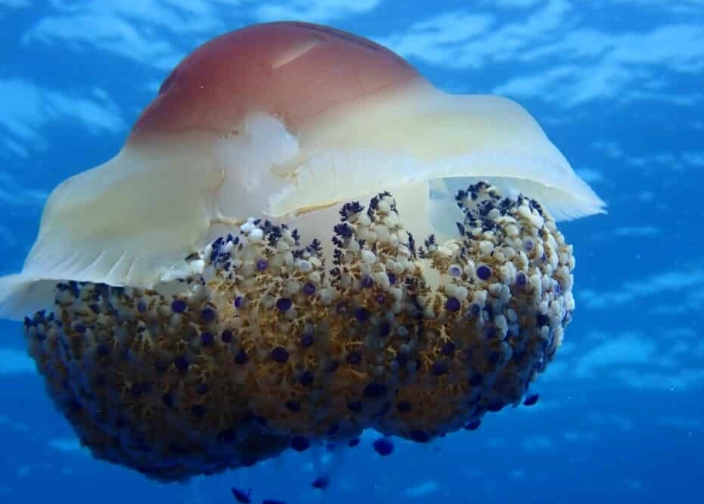
The Life Stage Matters: Polyps vs. Medusae
Here's a twist many people miss. The classic floating jellyfish shape, called a medusa, is just one part of their life cycle. They start as a tiny, anchored polyp that looks like a mini sea anemone stuck to a rock or shell.
The Polyp Stage: The polyp is a sessile, bottom-dwelling filter feeder. It uses its tiny tentacles to capture even smaller particles from the water. Could it eat very tiny eggs? Possibly, but its diet is even more microscopic, focusing on bacteria and the tiniest plankton. So, the question "do jellyfish eat eggs?" applies almost exclusively to the adult, swimming medusa stage.
The Medusa Stage: This is the roaming, egg-eating stage we've been discussing. The polyp eventually buds off tiny medusae that swim away and grow into the jellies we recognize.
It's a weird thought, isn't it? The same creature exists as a stationary speck on a rock and then as a pulsing ghost in the open water, with completely different feeding strategies. Nature's full of these bizarre plot twists.
A Quick Guide to Common Jellyfish and Their Diets
Not all jellies are equal. Some are more likely to encounter and consume eggs than others. Here's a breakdown of a few common types.
| Jellyfish Species | Typical Size | Diet Focus | Likelihood to Eat Eggs |
|---|---|---|---|
| Moon Jellyfish (Aurelia aurita) | 10-16 inches | Zooplankton, tiny crustaceans, fish larvae | High. Very common in coastal areas near spawning grounds. Their fine tentacles are perfect for trapping small particles like eggs. |
| Lion's Mane Jellyfish (Cyanea capillata) | Up to 8 ft bell, 100+ ft tentacles! | Small fish, other jellyfish, larger zooplankton | Medium. Can eat fish eggs, but its massive size means it often targets bigger prey. Eggs would be incidental. |
| Sea Nettle (Chrysaora fuscescens) | Up to 3 ft | Aggressive predator of zooplankton, fish larvae, other jellies | High. An active forager with a robust appetite for small planktonic animals, including eggs. |
| Box Jellyfish (Various) | Varies (some small) | Small fish, shrimp | Low to Medium. Many are visual hunters targeting fish. Tiny eggs might not trigger a strong feeding response. |
Looking at this, it's clear that the smaller to medium-sized jellies that thrive on zooplankton are the prime egg-eaters. The giants and the specialists are looking for more substantial meals.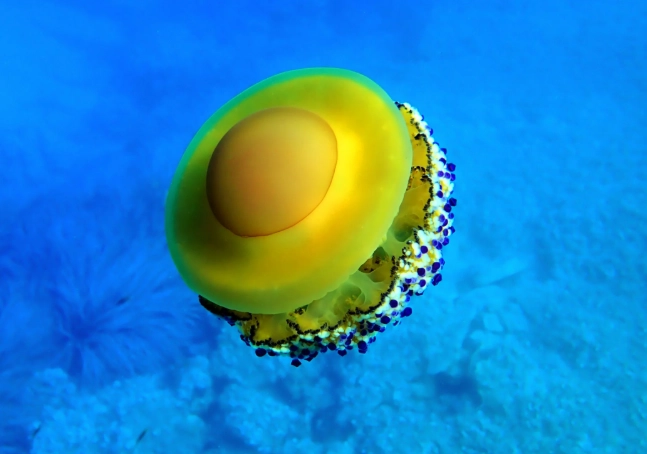
The Bigger Picture: Are Jellyfish a Threat to Fish Populations?
This is where the question gets practical, and honestly, a bit concerning. If jellyfish eat fish eggs and larvae, could they be impacting fish stocks? Scientists are actively studying this.
During normal ocean conditions, jellyfish are just one of many predators on fish eggs. It's a natural balance. However, problems arise when jellyfish populations explode into "blooms." These blooms are becoming more frequent, possibly linked to overfishing (removing their competitors), warming waters, and pollution.
In a bloom scenario, millions of jellyfish can swarm an area. If this coincides with a fish spawning event, the impact can be significant. A massive swarm can consume a huge percentage of the eggs and larvae, potentially reducing the number of fish that make it to adulthood. The National Oceanic and Atmospheric Administration (NOAA) notes that jellyfish blooms can have complex effects on ecosystems, sometimes outcompeting fish for food resources.
So, while a single jellyfish eating eggs is just part of the ocean's cycle, massive aggregations of them can shift the balance. It's a reminder that everything is connected. Overfish the predators that eat juvenile jellyfish, and you might end up with more jellies eating more fish eggs. It's a feedback loop that's tricky to manage.
I saw a documentary once about a fishery that collapsed partly due to a combination of overfishing and a subsequent jellyfish bloom. The fishermen were devastated. It wasn't just the jellyfish's fault, but they were the final straw. It made the abstract idea of "ecosystem balance" painfully concrete.
Answering Your Burning Questions
Let's get specific and tackle the related questions people are really searching for when they wonder, "Do jellyfish eat eggs?".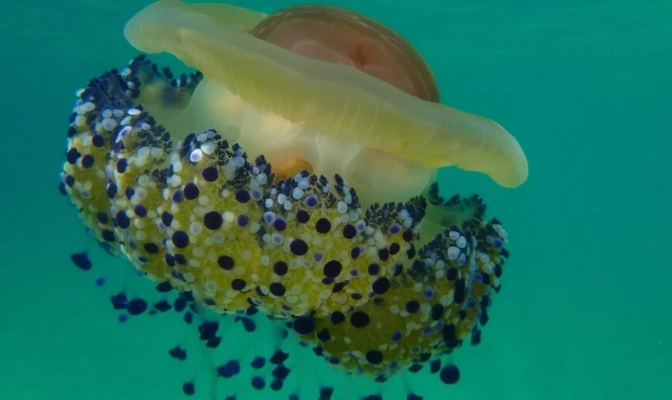
Do jellyfish eat fish eggs?
Yes, this is the most common scenario. Pelagic (free-floating) fish eggs are a standard part of the planktonic diet for many jellyfish species. Bottom-dwelling eggs attached to surfaces are much safer, as most jellyfish don't forage on the seafloor.
Do jellyfish eat their own eggs?
Generally, no. Jellyfish reproduction is messy and external. They release sperm and eggs into the water, and fertilization happens out in the open. The parents then drift away. There's no parental care and no intentional feeding, so cannibalism of their own immediate offspring isn't a typical behavior. However, a jellyfish could theoretically sting and eat eggs from another jellyfish of the same species, since they wouldn't recognize them as "theirs." It's random chance.
Do jellyfish eat turtle eggs or bird eggs?
Almost certainly not. Turtle eggs are buried on sandy beaches, completely outside a jellyfish's habitat. Bird eggs are, obviously, on land. Jellyfish are strictly aquatic and lack any ability to interact with hard-shelled eggs on land or in nests. This one's a firm no.
What about in an aquarium? Do pet jellyfish eat eggs?
If you're a jellyfish keeper (a tricky hobby, by the way), you feed them specially prepared diets like baby brine shrimp (Artemia nauplii), finely chopped seafood, or commercial jellyfish food. You wouldn't feed them fish eggs directly. The risk of introducing disease or messing up your tank's water quality is too high. So in captivity, the answer is usually no, unless the eggs are part of a processed food blend.
How do you even study what a jellyfish eats?
Scientists have a cool, if slightly gross, method. They collect jellyfish, preserve them, and then dissect and examine their gut contents under a microscope. It's like looking through their last meal. This research has directly shown the remains of fish eggs, larval crustaceans, and other plankton inside jellyfish stomachs. It's the definitive proof that answers our core question.
You can see examples of this detailed research into marine trophic interactions on sites like the Monterey Bay Aquarium's animal pages, which often summarize diet findings from scientific literature.
The Bottom Line on Jellyfish and Eggs
So, let's wrap this up. Do jellyfish eat eggs? Unquestionably, yes. For many species, fish eggs and other small egg types are a natural, opportunistic food source. They are part of the vast planktonic smorgasbord that drifting jellies consume.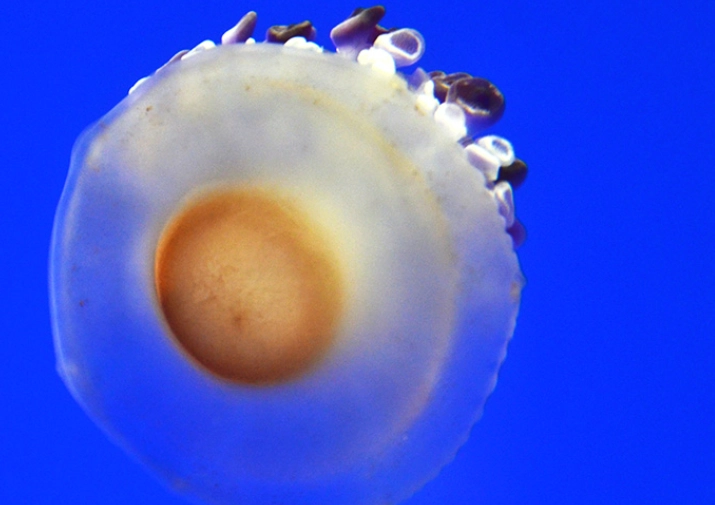
But it's not a targeted hunt. It's a passive, random encounter driven by currents and chance. The jellyfish's simple, ancient biology—sting, trap, ingest—is perfectly suited to capturing these tiny, protein-packed parcels. While this feeding habit is a normal part of ocean ecology, large-scale jellyfish blooms have the potential to disrupt fish populations by consuming excessive amounts of eggs and larvae.
Understanding this helps us see jellyfish not just as floating stinging hazards or aquarium curiosities, but as integral, powerful components of the marine food web. Their diet, including those eggs, plays a role in the health and balance of the oceans. Next time you see one, you'll know that within that gelatinous bell could be the story of a thousand tiny meals, maybe even the potential future of a fish, captured by one of nature's most simple and successful designs.
It's a humbling thought.
The ocean works in mysterious ways, and sometimes the most important questions—like do jellyfish eat eggs—open up a window into the entire complex, drifting world just beneath the waves.

Comments
Leave a Comment