Quick Navigation
- The Extreme Kitchen Where It Lives
- So, How Does It Not Cook? The Multi-Layer Survival Suit
- What Happens If It Gets Too Hot? The Limits of Tolerance
- Why Should We Care? It's More Than Just a Cool Snail
- Common Questions About the Scaly-foot Gastropod's Heat Tolerance
- A Final Thought: The Snail as a Teacher
Let's talk about one of the ocean's most bizarre and tough customers. Picture this: a snail. But not your garden-variety, leave-a-shiny-trail kind. This one lives nearly 3,000 meters down in the pitch black, next to volcanic vents spewing superheated, toxic water. It's clad in a suit of iron armor. And it doesn't just survive there—it thrives. We're talking about Chrysomallon squamiferum, the scaly-foot gastropod. Its heat tolerance isn't just a neat trick; it's a masterclass in evolutionary survival.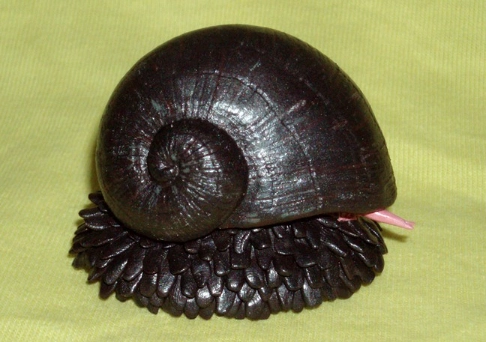
I remember first seeing a picture of this thing and thinking it looked like a reject from a steampunk fantasy. It's weirdly beautiful. But its looks are the least interesting part. What had me hooked was the sheer impossibility of its home. How does any living thing, let alone a snail, handle that? The answer is a cocktail of biological innovations that makes this creature a superstar of extremophile science.
The Extreme Kitchen Where It Lives
You can't understand the scaly-foot gastropod's heat tolerance without understanding its address. We're not talking about a warm tropical sea. This is the deep-sea hydrothermal vent ecosystem, specifically the Indian Ocean's Kairei and Longqi vent fields. It's one of the most punishing environments on the planet.
The Vent Environment at a Glance: Imagine a pressure cooker crossed with a chemistry lab. The water pressure is crushing—around 300 times what we feel at sea level. The water is loaded with dissolved minerals and heavy metals like iron and sulfides, which are outright poisonous to most life. And then there's the heat. The fluid shooting out of the vent chimneys can be over 400°C (750°F). While the snail isn't sitting in that jet, it lives in the mixing zone where this superheated fluid meets the near-freezing (2°C) deep ocean water. The temperature gradients are insane, shifting dramatically over just a few centimeters.
The snail has to navigate a thermal minefield. One wrong move towards the vent, and it gets cooked. Too far away, and it loses access to its food source and freezes. Its entire existence is a tightrope walk along a thermal cliff. This is the context for its legendary scaly-foot gastropod heat tolerance.
So, How Does It Not Cook? The Multi-Layer Survival Suit
The snail's heat tolerance isn't one magic bullet. It's a whole integrated system. Think of it as wearing a high-tech suit with insulation, a cooling system, and built-in air conditioning.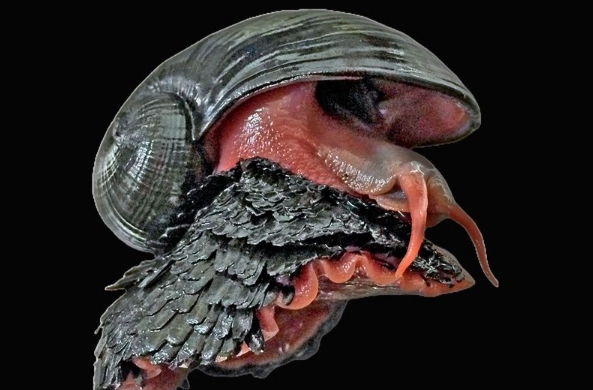
Layer 1: The Iron-Clad Armor (The Physical Barrier)
Its most famous feature is its sclerites—those scale-like structures covering its fleshy foot. They're not just for show. These sclerites have a unique three-layer structure:
- An outer layer of iron sulfides (greigite and pyrite). Yes, real iron. This is the only known animal to incorporate iron sulfides into its skeleton. It's like having a coat of mail.
- A middle organic layer. This acts like a shock absorber, providing flexibility.
- An inner layer of calcium minerals. The classic snail shell material, providing a strong base.
This armor does a few critical jobs for heat management. First, it's a physical barrier against the scalding water. Second, the iron sulfide layer is thought to be highly resistant to the corrosive, acidic vent fluids. But here's a personal thought: I wonder if it also acts as a heat sink? The metal could potentially absorb and dissipate thermal energy, preventing a sudden heat spike from reaching the soft tissue underneath. Research from institutions like the Woods Hole Oceanographic Institution is still piecing this together, but the armor is clearly frontline defense.
Layer 2: The Internal Power Plant (Symbiotic Chemistry)
This is the real engine of its survival, and it's mind-blowing. The scaly-foot gastropod has no mouth or digestive system in its adult form. Zero. So how does it eat?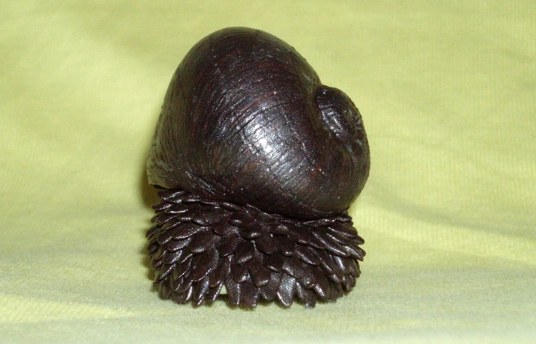
It farms bacteria inside a special organ called the trophosome. This organ makes up a huge part of its body. These are chemosynthetic bacteria. They don't need sunlight. Instead, they use the hydrogen sulfide (that toxic, rotten-egg-smelling gas) from the vent fluids as an energy source to create organic carbon—the snail's food. It's a built-in, hydrothermal-powered snack factory.
Now, link this to heat tolerance. This symbiotic relationship means the snail must get close enough to the vents to harvest sulfides for its bacteria. Its biology is literally wired to seek out this dangerous interface. The bacteria themselves are hyperthermophiles, meaning they love high temperatures. The snail's body has evolved to protect this precious internal crop, creating a stable, hospitable internal environment even when the outside is chaotic. The heat isn't just a threat; it's part of the energy cycle that feeds it. You can't separate its scaly-foot gastropod heat tolerance from this symbiosis.
Layer 3: The Molecular Toolkit (Cellular Defense)
Underneath the armor and beyond the symbionts, at the cellular level, the snail is packed with special adaptations.
Its enzymes—the proteins that make all its biochemistry work—are stable at higher temperatures than those of shallow-water snails. If our proteins start to unravel (denature) with a bit of heat, theirs keep chugging along. Its cell membranes are likely packed with special lipids that remain stable and flexible under thermal stress, preventing them from melting or cracking.
Then there are heat shock proteins (HSPs). All animals have these as a kind of emergency repair crew for heat-damaged proteins. But in extremophiles like the scaly-foot, these HSPs are thought to be on permanent high alert or are exceptionally efficient. They're the last line of cellular defense, ensuring that when heat does seep through, the cellular machinery doesn't grind to a halt.
Genomic studies, like those referenced by the Smithsonian Institution, have shown the scaly-foot gastropod has a unique set of genes related to stress response, heavy metal detoxification, and maintaining protein stability. Its genome tells the story of a life under constant pressure.
What Happens If It Gets Too Hot? The Limits of Tolerance
It's tough, but it's not invincible. This is a crucial point. The scaly-foot gastropod's heat tolerance has very real limits, defined by its specific vent habitat.
Researchers estimate its optimal range is likely within that turbulent mixing zone of 10°C to 30°C (50°F to 86°F). It can probably withstand short exposures to higher spikes. But sustained exposure to temperatures approaching 40°C (104°F) or above is likely lethal. Why? Because at that point, the systems break down. The bacteria might die. The proteins denature faster than the HSPs can fix them. The delicate balance collapses.
Think of it like a specialist Formula 1 car. It performs miracles on a racetrack but would be terrible on a muddy dirt road. The snail is a specialist of its specific thermal niche.
Why Should We Care? It's More Than Just a Cool Snail
Studying the scaly-foot gastropod's heat tolerance isn't just an academic exercise. It has real-world ripples.
Biomimetics: The structure of its iron-clad armor is giving material scientists headaches (the good kind). How does it grow such a durable, layered composite at low temperatures and ambient pressure? We make iron sulfides in labs under extreme conditions. The snail does it in cold water. Cracking this could lead to new materials for body armor, ship hulls, or anything needing lightweight, corrosion-resistant protection.
Astrobiology: If life can thrive in the energy-rich, sunless, high-pressure, high-temperature environment of a hydrothermal vent, where else in the solar system could it exist? Jupiter's moon Europa or Saturn's moon Enceladus, with their suspected subsurface oceans and hydrothermal activity, are prime candidates. The scaly-foot is a model for what alien life might look like.
Climate Change & Ocean Health: This one's a bit more sobering. Deep-sea vents are isolated islands of life. The scaly-foot gastropod is found only in a few spots in the Indian Ocean. It's already listed as Endangered on the IUCN Red List, primarily due to the threat of deep-sea mining. But changes in ocean chemistry and temperature could also disrupt the delicate vent ecosystems. Understanding its limits tells us how vulnerable these unique communities are.
Common Questions About the Scaly-foot Gastropod's Heat Tolerance
Let's tackle some of the things people are probably typing into Google.
Could this snail survive in a hot spring on land?
Almost certainly not. It's a package deal. The heat is just one factor. It needs the immense pressure of the deep sea to keep its body chemistry functioning. It needs the specific cocktail of minerals and hydrogen sulfide to feed its bacteria. A land-based hot spring lacks the pressure, has a completely different chemical makeup, and would probably cause its cells to implode or its proteins to malfunction. It's a deep-sea specialist through and through.
Is it the most heat-tolerant animal on Earth?
That's a great debate. In the animal kingdom, the top contenders are often other vent dwellers, like the Pompeii worm (Alvinella pompejana), which may tolerate skin temperatures up to 80°C. Some tardigrades (water bears) can survive brief exposures to extreme heat in a dried-out state. The scaly-foot gastropod's claim to fame isn't necessarily the absolute highest temperature it can withstand, but the combination of challenges it masters: high heat, high pressure, toxicity, and acidity, all at once. Its scaly-foot gastropod heat tolerance is part of a broader suite of extreme adaptations.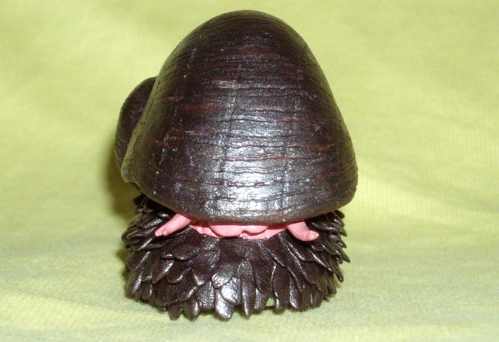
How do scientists even study its heat tolerance?
It's incredibly hard and expensive, which is why there's still so much to learn. It involves:
- Using remotely operated vehicles (ROVs) to collect specimens very, very carefully, trying not to shock them.
- Keeping them in specialized pressurized aquariums that mimic deep-sea conditions, like those at the National Oceanography Centre in the UK. You can't just put them in a fish tank.
- Conducting non-lethal experiments, often measuring physiological responses like heart rate or oxygen consumption under controlled temperature changes in these hyperbaric chambers.
- Lots of genomic and biochemical analysis on tissue samples to understand the molecular machinery.
Every piece of data is hard-won.
A Final Thought: The Snail as a Teacher
We often look to the big, charismatic animals—whales, tigers, eagles—for wonder. But the scaly-foot gastropod, this slow, iron-plated snail from the abyss, quietly redefines what's possible for life on Earth. Its heat tolerance is a testament to evolution's power to craft exquisite solutions to insane problems.
It lives in a world of darkness, yet it built its own light, in the form of bacterial symbionts. It lives in a world of crushing pressure and dissolving chemicals, so it built an iron suit. It lives on the razor's edge of a thermal inferno, so it tuned its very cells to endure.
Studying it humbles you. It shows that life is not just tenacious; it's ingenious. The next time you hear about deep-sea exploration or the search for life elsewhere, remember this little gastropod. It's proof that the rules for survival can be rewritten in the most unexpected ways. And honestly, that's a more exciting story than any sci-fi movie.
The story of the scaly-foot gastropod's heat tolerance is far from over. Every new dive with an ROV, every new genome sequence, adds another piece to the puzzle. It's a reminder that the deepest, hottest, most hostile corners of our planet are still home, and they're waiting to teach us their secrets.



Comments
Leave a Comment