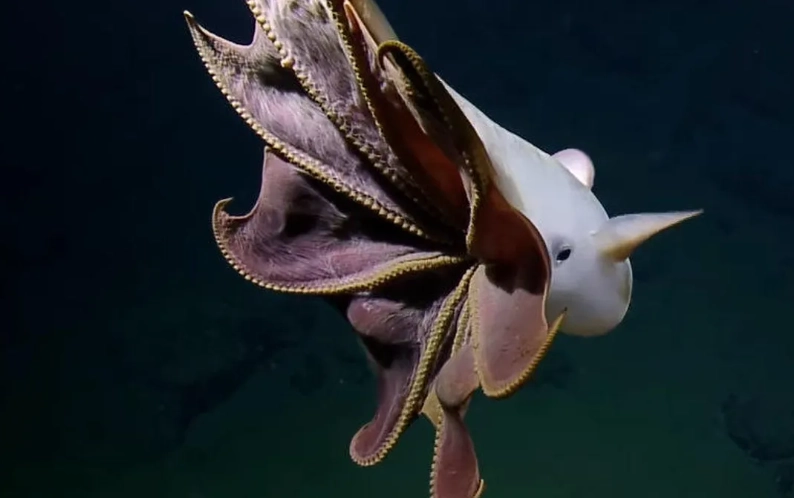
Let's be honest. When you think "adorable octopus," you probably picture a tiny, big-eyed creature changing colors in a viral video. It's charming. But that label "adorable" sells them short. It's like calling a Nobel laureate "nice." After a decade of keeping a close eye on these animals—both in research notes and in my own (admittedly challenging) home aquarium—I've learned their cuteness is just the gateway drug. What lies beneath is a mind-bending cocktail of intelligence, mischief, and biological wizardry that makes them one of the most alien yet relatable creatures on Earth.
What You'll Discover
Why Is an Octopus So Smart? It's Not Just the Brain
Everyone talks about the distributed intelligence—neurons in the arms and all that. It's true. But here's the subtle error most articles make: they treat it like a cool factoid without grasping the daily reality. An octopus doesn't "think" with its arms in the way we think with our hands. It's more that each arm has a degree of autonomy for basic tasks like tasting and grasping, freeing up the central brain for bigger problems. Imagine your hand could independently test if a doorknob was hot while your brain was planning the rest of your day. That's closer to it.
This setup fuels their legendary escape artistry. I recall a study from the Journal of Applied Animal Welfare Science detailing how octopuses in labs would sneak out at night, visit other tanks for a snack, and return before morning. They weren't just fleeing; they were planning nocturnal raids. This isn't simple curiosity. It's calculated risk-assessment, memory, and navigation—hallmarks of complex cognition.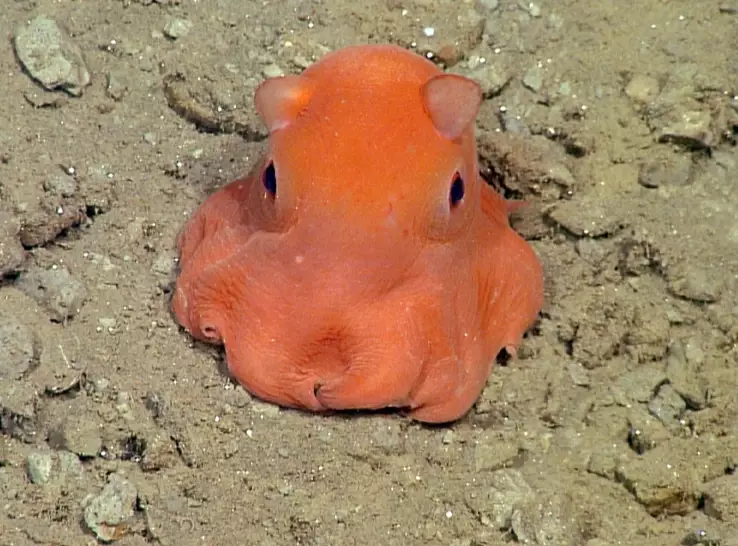
Expert Note: Their short lifespan (1-3 years for most species) is the real kicker. They have no time to learn from parents. They are born problem-solvers. This "live-fast, die-smart" strategy is a huge part of why their intelligence feels so immediate and intense.
More Than Just Color Change: Adorable Behaviors Explained
The color and texture shifts are the main attraction. But watch closer.
How Octopus Camouflage Actually Works
It's not just a static disguise. It's a dynamic performance. Specialized cells called chromatophores (for color), iridophores (for iridescence), and papillae (for texture) are controlled directly by neurons. They can mimic the specific pattern of light filtering through seagrass, not just the green color. They can create the moving shadow of a cloud passing overhead. I've seen a common octopus (Octopus vulgaris) on a dive flatten itself, turn a mottled gray, and raise two papillae that perfectly imitated the two small rocks next to it. It didn't just hide; it became part of the landscape's architecture.
Playful Antics and Tool Use
This is where "adorable" meets "profound." Documented cases, like those from the Seattle Aquarium, show octopuses shooting jets of water at floating pill bottles, catching the stream, and doing it again. That's play. Tool use is even clearer. Veined octopuses (Amphioctopus marginatus) are famous for carrying around coconut shell halves to assemble into a portable shelter. They'll walk awkwardly on two arms, tiptoeing with their precious shell, a behavior that looks both comical and brilliantly pragmatic.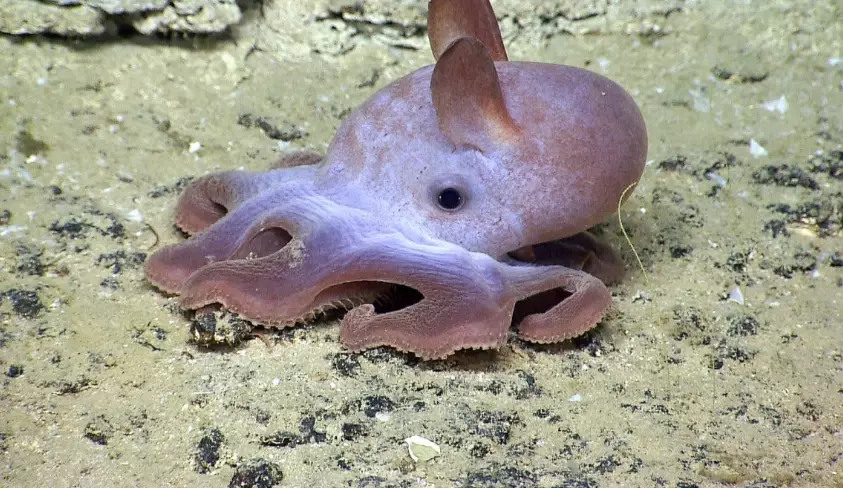
Meet the Cast: Common "Adorable" Octopus Species
Not all octopuses are the same. Their personalities and care needs vary wildly.
| Species | Key "Adorable" Trait | Size (Arm Span) | Habitat & Notes |
|---|---|---|---|
| California Two-Spot Octopus (Octopus bimaculoides) | Friendly disposition, curious. Often the "beginner" pet species (though there's no true beginner octopus). | Up to 2 feet | Eastern Pacific. Hardy in captivity, relatively short-lived (12-18 months). Known for interacting with keepers. |
| Caribbean Reef Octopus (Octopus briareus) | Stunning color shifts from deep green to turquoise and brown. Elegant and slender. | 2-3 feet | Caribbean reefs. Shy but a master of disguise. Requires a mature, complex aquarium. |
| Blue-Ringed Octopus (Hapalochlaena spp.) | Iconic flashing blue rings. EXTREMELY VENOMOUS. Adorable to look at, never to touch. | 5-8 inches | Pacific. A classic example of "look, don't touch." Their tetrodotoxin venom is lethal. |
| Mimic Octopus (Thaumoctopus mimicus) | The ultimate actor. Can contort to mimic flounders, lionfish, and sea snakes. | Up to 2 feet | Indo-Pacific. Not for captivity. Its behavior is a survival strategy in open sand flats. |
The Hard Truth About Keeping an Octopus as a Pet
This is the biggest user pain point. You see the cute videos and want one. I've been there. I kept a two-spot for about a year. Here's the raw, unfiltered reality most pet stores won't tell you.
- The Tank is a Prison to Them: You need a specialized, escape-proof tank. I'm talking lid clamps, sealed filter intakes, no gaps. An octopus can squeeze through a hole the size of its beak (the only hard part in its body). I found mine halfway across the room once because I underestimated a 1-inch gap.
- The Food Bill and Mess: They eat live or fresh-frozen seafood—crabs, shrimp, clams. It's expensive and pollutes the water fast. You'll be doing large, frequent water changes.
- The Short, Heartbreaking Lifespan: You will get attached. And then, in a year or two, they will die of senescence. It's a rapid, irreversible decline. It's emotionally tough.
- They Get Bored: An intelligent animal in a barren tank is a sad sight. You must provide enrichment: puzzle jars with food, LEGO structures, changing the tank layout. If you don't, they can become lethargic or destructive.
My Personal Take: After my experience, I no longer recommend octopuses as pets for 99% of people. The ethical weight of keeping such a clever, short-lived animal in a box is heavy. The setup cost easily runs over $1000, and the weekly time commitment is 10+ hours. It's a research project, not a hobby.
How to See an Octopus in the Wild (Ethically)
This is the better way. It's cheaper, more ethical, and infinitely more rewarding.
Go Snorkeling or Diving: Octopuses are crepuscular (most active at dawn/dusk). Look for tell-tale signs:
- Midden piles: A collection of cleaned-out crab and shell remains outside a hole or crevice. This is their front door.
- Unusual rock formations: A "rock" that seems a bit too smooth, or has a perfect, rounded shape.
- Movement: A slow, flowing movement along the bottom, often with a slight change in texture.
Visit a Top-Tier Public Aquarium: Places like the Monterey Bay Aquarium, the Seattle Aquarium, or the National Aquarium have excellent cephalopod exhibits designed by experts. You'll see them in environments that stimulate their natural behaviors. Support these institutions—they do vital conservation and education work.
Your Octopus Questions, Answered
 I've heard octopuses can recognize people. Is that true?
The adorable octopus is a marvel. Its cuteness is the hook, but its intelligence, complexity, and sheer alien nature are the real story. Appreciating them doesn't require owning one. It requires understanding, respect, and sometimes, the wisdom to admire from a distance—whether that's through the glass of a world-class aquarium or the mask of a snorkeler floating above a coral reef. That's where their true magic is on full display.



Comments
Leave a Comment