I remember the first time I saw one. Not the moth, but the caterpillar. It was on a hiking trail in Virginia, clinging to the trunk of a black walnut tree. At nearly six inches long and covered in bright orange spines, it looked more like a creature from a fantasy novel than an insect. That's the regal moth for you—Citheronia regalis, also called the royal walnut moth. It's one of the largest and most spectacular moths in North America, and if you know where and when to look, you can find it too. This isn't just a list of facts. It's a practical guide from someone who's spent years tracking these orange giants, filled with the specific details you need to actually see one.
What’s Inside This Guide
From Spiky Caterpillar to Orange Giant: The Full Life Cycle
Most people get excited about the adult moth, and it is stunning. But the real drama happens during the larval stage. Understanding this cycle is the key to finding them.
The caterpillar, or regal moth larva, is what you're most likely to encounter. They hatch in late spring from eggs laid on the leaves of specific host trees (more on that later). The newly hatched caterpillars are tiny and dark, almost black. They feed in groups at first. Here's the first nuance many miss: the famous bright orange color doesn't appear until the caterpillar is much older. For the first few instars (growth stages), they're a cryptic greenish-brown, perfectly camouflaged against leaves and bark.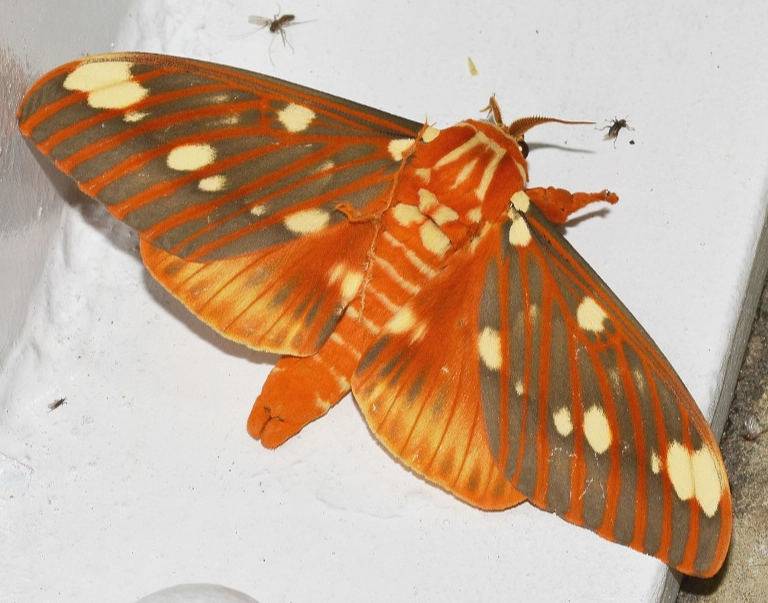
Pro Tip: When searching for young caterpillars in early summer, don't just look for orange. Scan the undersides of leaves on host trees for small, dark, spiky clusters. A headlamp at night can reveal them feeding.
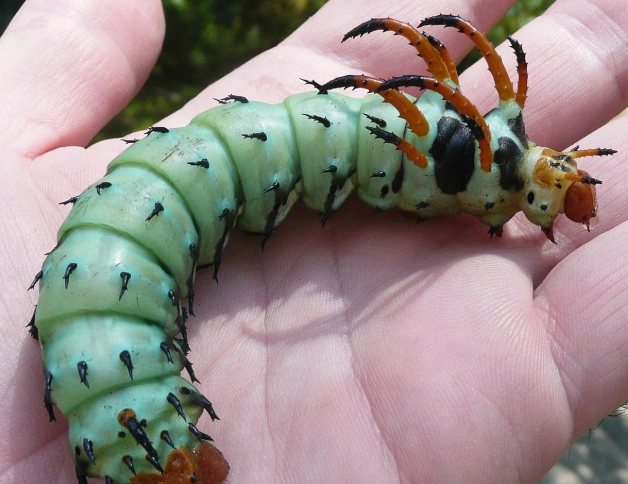
As they mature, they become solitary and undergo a spectacular color change. The final instar caterpillar is the showstopper: lime-green body adorned with long, menacing-looking orange or yellow spines. Those spines are mostly for show—they're not venomous, but they sure do deter predators. I've watched blue jays approach one, peck hesitantly, and then fly off. The caterpillar's size alone is a deterrent; few birds want to tackle something that looks like a prickly sausage.
By late summer or early fall, the fully grown caterpillar leaves the tree. This is a critical and vulnerable period. It crawls along the ground, searching for a suitable spot to burrow and pupate. This is when many are lost to cars, lawnmowers, or simply drying out on pavement. If it survives, it digs into the soil and forms a hard, dark-brown pupal case. It will spend the entire winter and most of the following spring underground.
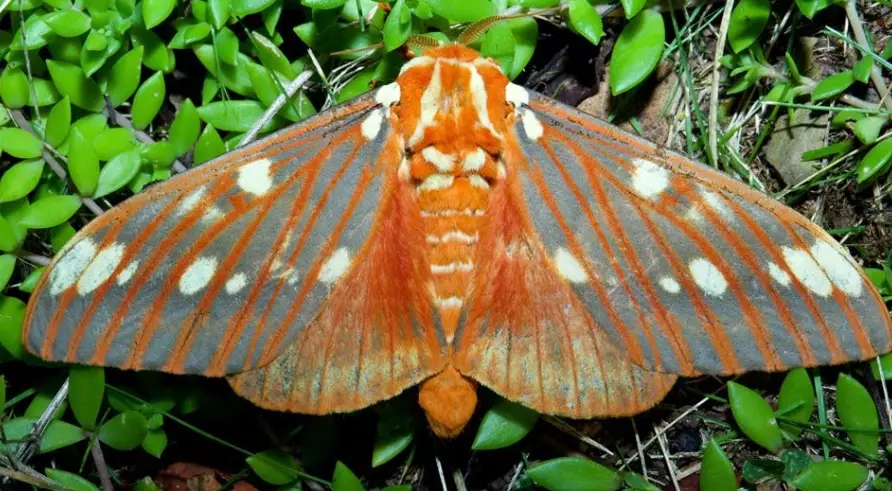
The adult moth emerges the following summer, typically from June to August, depending on your latitude. Males emerge first. The adult regal moth is large, with a wingspan reaching up to 6 inches. The forewings are a subtle gray with orange veins and yellow spots, while the hindwings are a brilliant, almost fluorescent orange with yellow patches. Here's a crucial fact: the adult regal moth has no functional mouthparts. It cannot eat. Its entire adult life, which lasts only about a week, is dedicated to finding a mate and reproducing. It lives off the fat reserves built up during its time as a ravenous caterpillar.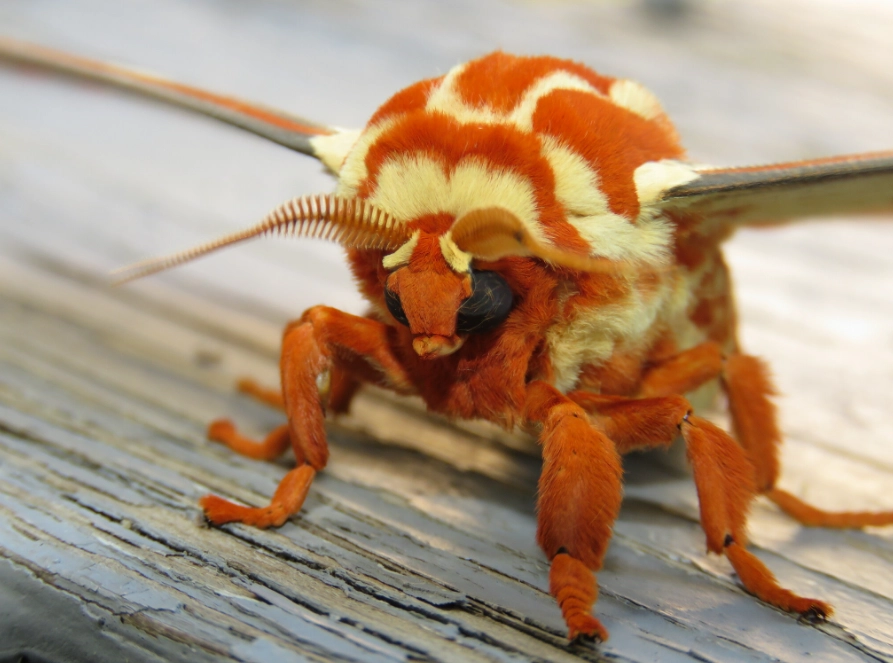
| Life Stage | Key Features | Best Time to See | Primary Activity |
|---|---|---|---|
| Egg | Tiny, oval, laid in small clusters on host plant leaves. | Late Spring | Incubation |
| Early Larva | Small, dark green/brown, spiky, feeds in groups. | Early to Mid Summer | Feeding & Growth |
| Mature Larva | Large (5-6"), bright green with orange spines, solitary. | Late Summer | Heavy Feeding |
| Pupa | Hard, dark-brown case buried in soil. | Fall to Spring | Overwintering |
| Adult Moth | Large wingspan (4-6"), orange & gray, no mouthparts. | Summer (Jun-Aug) | Mating & Egg-laying |
How to Find a Regal Moth (Timing and Tactics)
Want to see one? It's not just luck. You need a strategy.
Timing is everything. For the adult moths, go out at dusk on warm, humid summer nights. They are strongly attracted to lights. A mercury vapor lamp or a strong white LED light against a white sheet is the classic entomologist's method. Check porch lights, gas station canopies, or streetlights in wooded areas. Males fly actively to find females, so they're the ones you'll usually see at lights. Females are heavier, release pheromones, and often wait near their host trees.
To find caterpillars, you need to be out during the day in late summer. Focus on the host trees listed in the next section. Look for signs of feeding—large, irregular holes eaten out of leaves. Then, inspect the trunk and major branches carefully. The caterpillars often rest on the bark during the day. I've had the most success by slowly circling a tree, looking at it from all angles. The bright green color, while striking, can surprisingly blend in with lichen or dappled sunlight.
The Host Plant Shortlist: What They Actually Eat
You won't find regal moths just anywhere. They are tied to specific trees. The caterpillars are picky eaters. Planting or protecting these trees is the single best thing you can do to support local populations.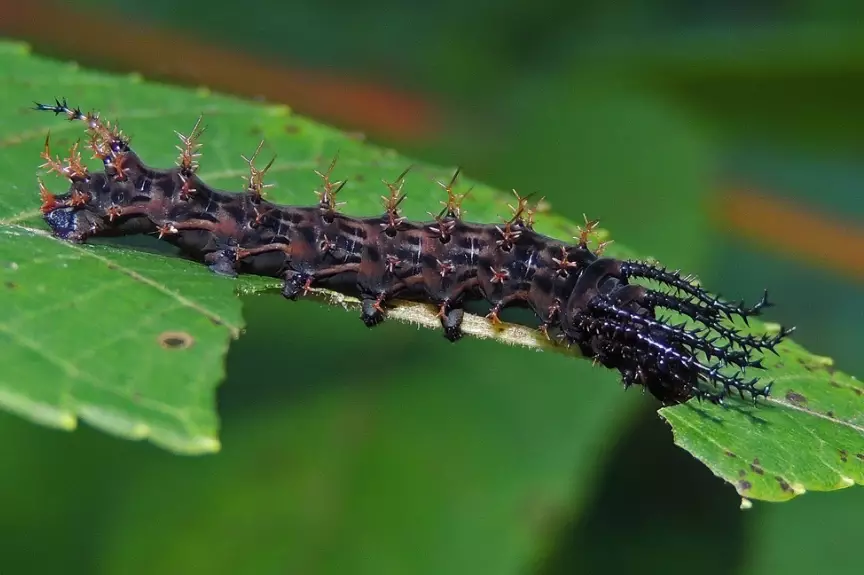
Top Tier Host Plants:
Black Walnut (Juglans nigra) and Butternut (Juglans cinerea): These are the classics, hence the name "royal walnut moth." Caterpillars are frequently found on these trees, especially in the eastern US.
Persimmon (Diospyros virginiana): In my experience, this is an incredibly productive host, especially in the southeastern US. The trees are often smaller, making caterpillar spotting easier.
Sweetgum (Liquidambar styraciflua): A very common host throughout its range. Check sweetgums in suburban areas and forest edges.
Secondary but Important Hosts: Hickories (Carya spp.), Sumacs (Rhus spp.), and even cultivated pecan. Don't ignore these, especially if the primary hosts aren't around.
A common mistake is to only check large, forest-grown trees. Regal moths often use younger trees or saplings at the forest edge. The caterpillars on these smaller trees are easier for you to see, and perhaps for the female moth to find as well.
Common Mistakes and Overlooked Details
After a decade of looking, you notice patterns of error. Here are a few that might keep you from success.
Mistake 1: Searching only for the adult moth. Your window is a few weeks in summer, at night. The caterpillar stage lasts for months and is visible during the day. Increase your odds by focusing on the larval stage.
Mistake 2: Misidentifying the caterpillar. The hickory horned devil (the larva of the regal moth) is distinctive, but people sometimes confuse early, dark instars with other spiky caterpillars, like the io moth caterpillar. The io moth caterpillar has stinging spines (the regal does not) and a more uniform color with lateral stripes. When in doubt, don't touch—observe.
Mistake 3: Overlooking the "wandering" phase. In fall, you might find a giant caterpillar crossing a road or a path. This isn't lost; it's looking for a place to pupate. If you move it for its safety, place it in loose, well-drained soil near trees, not on a hard surface. Don't put it back in a tree—its instinct is to burrow now.
Mistake 4: Assuming they're everywhere. Their range is the eastern United States, from New Jersey to Florida and west to Texas and Nebraska. But even within that range, they are local and patchy. Finding one is a thrill precisely because they aren't as common as, say, a monarch butterfly.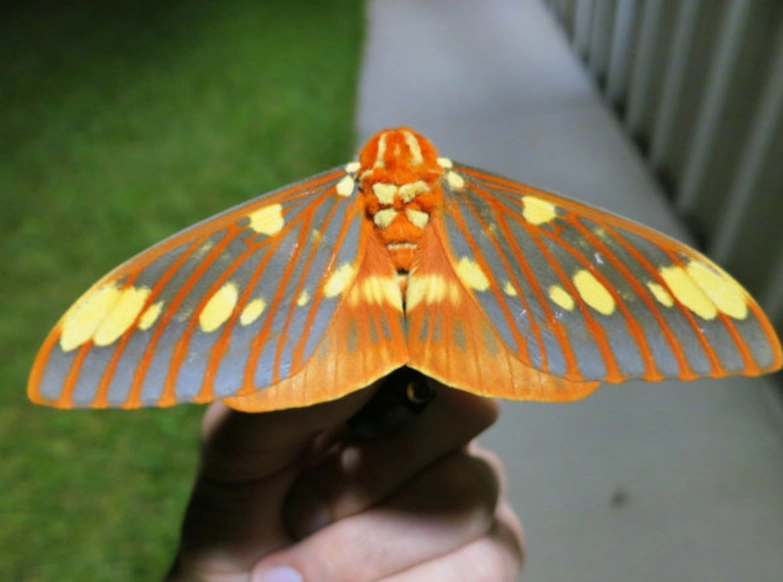
Simple Conservation: Why Your Backyard Matters
You don't need to run a nature reserve to help. Regal moths are susceptible to habitat loss, pesticide use, and light pollution.
Plant a host tree. This is the most direct action. A black walnut or persimmon in your yard becomes potential habitat for decades. Research from organizations like the Xerces Society for Invertebrate Conservation consistently shows that native plantings are the foundation of insect conservation.
Leave the leaves—and the soil. If a caterpillar burrows into your garden bed, let it be. Avoid tilling that soil in the fall or spring. The pupa is safely underground.
Reduce nighttime lighting. Excessive artificial light disorients nocturnal moths, interfering with mating. Use motion sensors, shield outdoor lights, or turn them off when not needed. Every little bit helps keep the night dark for them.
Skip the broad-spectrum insecticides. These chemicals don't discriminate. A spray meant for mosquitoes will also kill caterpillars and moths. Tolerate some leaf damage on your trees; it's a sign of a living ecosystem.
Your Regal Moth Questions Answered
This is incredibly common. A single tree, especially a large, isolated one in a lawn, might not be in a female moth's flight path. Moths need corridors of habitat. Also, check the tree's health and pesticide history. But the biggest factor is often simply the moth's patchy distribution. They might be in the woodlot a mile away but haven't colonized your tree yet. Consider planting more native trees and shrubs to create a more inviting landscape.
No, they are not venomous and do not sting. Unlike the spines of the io moth or saddleback caterpillar, the regal moth's spines are primarily a physical deterrent. They can be somewhat sharp, so handling one roughly might prick your skin, but it won't inject venom or cause a lasting reaction. It's still best to observe without touching to avoid stressing the animal.
 Can I raise a regal moth caterpillar I found?
You can, but it comes with major responsibility. They require a constant supply of fresh leaves from their specific host plant. The enclosure must be kept clean to prevent mold and disease. Most critically, you must provide a deep container of slightly moist, loose soil (several inches deep) for them to burrow and pupate in when they are ready. The pupa then needs a cold period (winter) to develop properly. If you're not prepared to care for it for over a year (from caterpillar to emerged adult), it's more ethical to observe it in the wild and let it complete its cycle naturally.
Look at the antennae. Males have large, feathery (bipectinate) antennae, which are essential for detecting the female's pheromones from a distance. Females have much thinner, almost thread-like antennae. Females also tend to have a larger, heavier abdomen, which is full of eggs. In hand, the difference is obvious, but in a photo, the antennae are the surest tell.
Fragmentation. It's not just about losing trees, but losing the connections between them. A female moth may emerge in a small forest patch, but if she has to cross a sea of parking lots, manicured lawns, and bright lights to find a mate or a suitable host tree, her chances of success plummet. The solution is creating networks of native habitat—in parks, along roadsides, and in our own backyards. It's a slow process, but every host tree planted helps stitch that network back together.




Comments
Leave a Comment