In This Article
- Getting to Know Theridion Grallator: More Than Just a Pretty Face
- Decoding the Grin: Why Does the Orange Smiley Face Spider Smile?
- A Day in the Life: Diet, Behavior, and Survival
- The Orange Smiley Face Spider and Its Role in the Ecosystem
- Can You Have an Orange Smiley Face Spider as a Pet?
- Spotting One in the Wild: A Quick Guide for Respectful Observation
- Clearing Up the Confusion: Your Questions Answered
- Final Thoughts: More Than a Meme
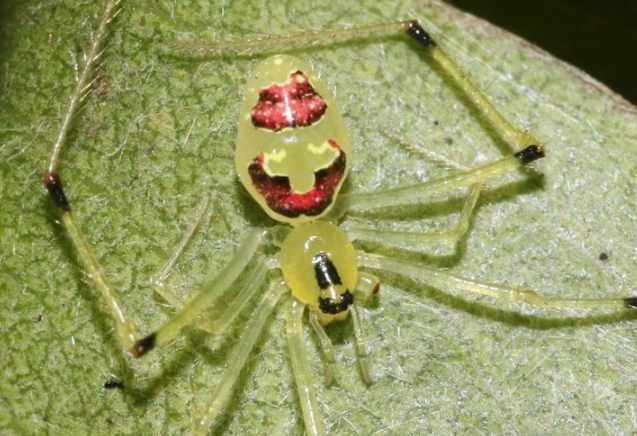
Picture this. You're hiking through a lush, damp forest in Hawaii, the kind where the air feels like a warm blanket and every leaf seems to drip with green. You pause to look at a plant, and there it is, tiny and unassuming on the underside of a leaf. A spider. But not just any spider. This one looks like it's been doodled on by a cheerful cartoonist. Its back is a bright, almost neon orange, and right there, in stark black, is a perfect, beaming smiley face. Your brain does a double-take. A smiling spider? Is this a trick?
It's not a trick. It's the real deal, and it's one of nature's most charming little accidents. The Orange Smiley Face Spider, known to science as *Theridion grallator* and locally as the Hawaiian happy-face spider, is a creature that seems to defy the usual creepy-crawly narrative. I remember the first time I saw a photo of one. I was convinced it was Photoshopped. It looked too perfect, too intentionally funny to be real. But it is, and its story is even more fascinating than its looks.
Let's clear something up right away. This isn't a spider you're likely to find in your backyard unless you live on certain Hawaiian islands. And no, the smile isn't there to communicate with us. But that doesn't make it any less incredible. This post is for the curious, the arachnophobes looking for a friendly gateway spider, the Hawaii-bound travelers, and anyone who just appreciates nature's weird and wonderful sense of humor. We're going to dig into everything about this little celebrity: where it lives, why it looks like that, what it eats, and whether you should ever hope to have one as a pet (spoiler: it's complicated).
Getting to Know Theridion Grallator: More Than Just a Pretty Face
Okay, so it's cute. But what exactly is it? The orange smiley face spider is a tiny spider, really tiny. Females, which are the ones that famously sport the markings, have a body length of about 5 millimeters. That's smaller than a standard pencil eraser. Males are even smaller and, frankly, a bit duller in comparison, often lacking the vivid face pattern. They belong to the Theridiidae family, which is the same family as the common house spider and the notorious black widow. But don't let that family connection alarm you.
Quick Size Reality Check: 5mm is *tiny*. You could fit several on a single U.S. quarter. Their entire world exists on the underside of a leaf or within a small, messy web. This scale is important to remember—it's a miniature masterpiece.
They are endemic to the Hawaiian islands, primarily found on the islands of Oahu, Molokai, Maui, and Hawaii (the Big Island). "Endemic" is a key word here. It means they are found nowhere else on Earth naturally. Their entire evolutionary story played out in the isolation of those volcanic islands. This isolation is a big part of why they became so unique. The University of Hawaii's entomology resources often highlight these endemic species as prime examples of island evolution.
Their habitat is the native Hawaiian rainforest. We're talking about places like the Kokee State Park on Kauai or the Waikamoi Preserve on Maui. They thrive in wet, humid environments where their favorite plants, like the *Chelrodendron* and various native hibiscus, grow. They are canopy dwellers, preferring the undersides of leaves where they build their small, irregular, three-dimensional cobwebs. These aren't the beautiful orb webs you picture; they're more like messy little trampolines or hammocks designed to trip up tiny prey.
And here's a personal gripe with how they're sometimes portrayed online. You'll see articles calling them "extremely rare." That's not quite accurate. In their specific, native habitat, on the right plants, they can be locally quite common. The "rarity" comes from the fact that their habitat itself—pristine native Hawaiian forest—is shrinking. So, you won't find them on the beach in Waikiki, but a guided hike in a preserved rainforest might give you a surprisingly good chance of spotting one. Or several.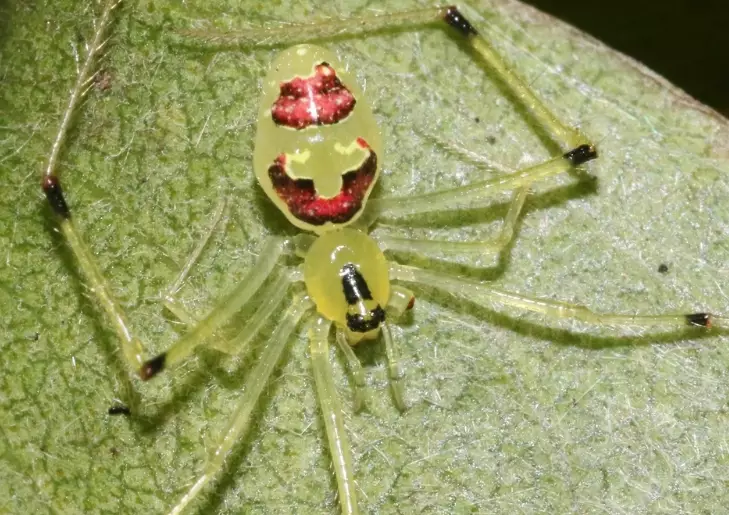
Decoding the Grin: Why Does the Orange Smiley Face Spider Smile?
This is the million-dollar question, isn't it? Why on earth would a spider evolve a pattern that looks uncannily like a human emoticon? The short, slightly disappointing answer is: it probably didn't. The smiley face is for us. For the spider, it's just a pattern of pigments on its cuticle.
The leading scientific theory is that this is a classic case of camouflage, but with a twist. It's not about blending in with a green leaf. Look at the dappled light under a forest canopy. Sunlight filters through leaves, creating a chaotic pattern of bright spots and dark shadows. The theory, which you can read more about in studies referenced by institutions like the Bishop Museum in Honolulu, suggests that the spider's pattern breaks up its outline. To a bird or other visual predator looking up from below, the spider doesn't look like a juicy spider-shaped snack. It looks like a confusing patch of light and leaf litter. The "smile" is just a coincidental arrangement of those patches that happens to tickle our human pattern-recognition brains.
Now, here's the really cool part. The pattern isn't uniform. Not every Orange Smiley Face Spider has the same smile. Some have what looks like a grinning grin, others a more subdued upturned curve. Some patterns are bold and clear, others are faint or even scrambled. This variation is genetic, and it's another fascinating puzzle. Does a specific pattern work better in certain micro-habitats? Is it just random genetic drift? Scientists are still piecing that together.
I find the variation one of the most humanizing aspects. It makes each one feel like an individual, not just a copy of a cartoon. It’s a reminder that we’re looking at a living, evolving population, not a sticker someone mass-produced and stuck on spiders.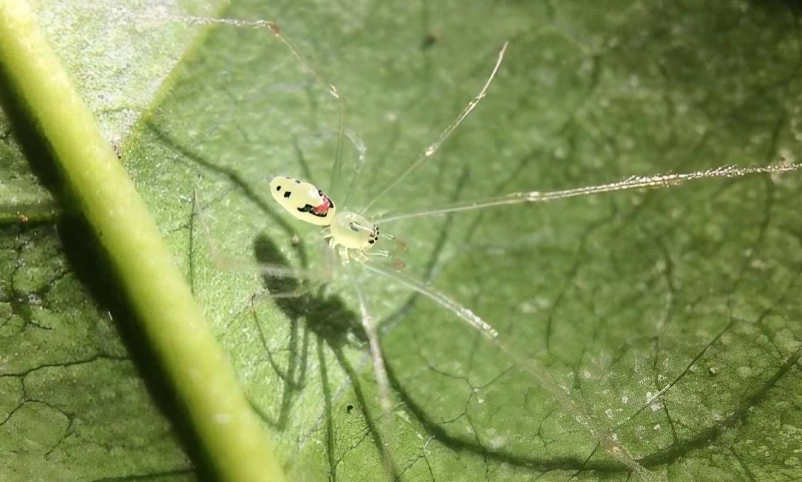
A Day in the Life: Diet, Behavior, and Survival
So what does a smiling spider do all day? It's not just sitting there grinning for tourists with macro lenses. Its life revolves around survival in a competitive mini-jungle.
The Menu of a Miniature Predator
This spider is an ambush predator. It hangs upside down in its messy little web, often touching the web with its legs to feel for vibrations. When a small insect blunders into the web—think fruit flies, leafhoppers, tiny moths, or other minuscule arthropods—the spider rushes over, quickly wraps it in silk, and delivers a paralyzing bite. Its venom is tailored for small prey and is utterly harmless to humans. We're just too big to even register on its threat or food radar.
What's for Dinner? A Typical Prey List:
- Fruit Flies (Drosophilidae): A very common snack, especially in damp forests where decaying fruit is around.
- Leafhoppers (Cicadellidae): Small, hopping insects that feed on plant sap.
- Springtails (Collembola): Tiny, ancient arthropods that are incredibly abundant in soil and leaf litter.
- Other Tiny Spiders: Yes, spiders aren't above a bit of cannibalism, especially of smaller species or their own young if times are tough.
Family Life (It's Not a Hallmark Movie)
The life cycle of the orange smiley face spider is a rapid, high-risk affair. After mating, the female produces a small, silken egg sac which she guards ferociously. She'll stay with it, protecting it from parasitic wasps and other predators. When the dozens of spiderlings hatch, they are pale and lack the famous pattern. They may even stay with their mother for a very short time, a rare example of sub-social behavior in spiders, before ballooning away on strands of silk to find their own leaf to call home. Their lifespan is likely less than a year.
This is where things get real. The survival rate for these spiderlings is incredibly low. Between birds, predatory insects, parasitic wasps that specifically target spider egg sacs, and just the general difficulty of finding a good home leaf, most won't make it to adulthood. That bright orange color might confuse some birds, but it doesn't stop everything. It's a tough world, even for a spider that looks happy.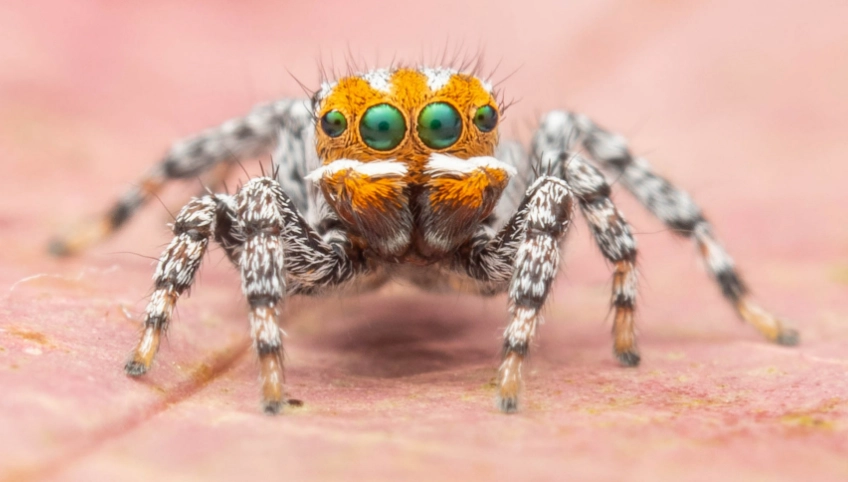
The Orange Smiley Face Spider and Its Role in the Ecosystem
You might wonder what good such a tiny creature does. Its role is small but significant. As a predator of even smaller insects, it helps regulate populations of potential plant pests like leafhoppers. It's part of the complex food web, serving as food itself for birds, larger spiders, and insects.
But its most important role, in my opinion, is as an ambassador. The Hawaiian happy face spider is a flagship species for Hawaiian conservation. It's unique, instantly recognizable, and inspires curiosity and affection in a way that many other endangered invertebrates do not. Protecting the rainforests where it lives doesn't just save the spider; it saves the entire ecosystem—the plants, the birds, the insects, and the watersheds. Organizations like the Hawaii Department of Land and Natural Resources work to protect these habitats, and creatures like this spider help make the case for why it matters.
The Not-So-Happy Truth: The biggest threat to the Orange Smiley Face Spider isn't collectors; it's habitat loss. Invasive species like feral pigs that root up the forest floor, invasive plants that choke out native host plants, and climate change altering the delicate humidity of their home are the real dangers. Their future is directly tied to the health of Hawaii's remaining native forests.
Can You Have an Orange Smiley Face Spider as a Pet?
This is a question I get a lot, and I have to be brutally honest. The short answer is: you shouldn't, and in most cases, you legally can't.
Let's break down the realities with a table, because this is a decision with many layers:
| Consideration | Reality Check | My Personal Take |
|---|---|---|
| Legality | It is illegal to collect or export most native Hawaiian wildlife, including the orange smiley face spider, without special permits (which are not granted for pet trade). State and federal laws protect them. | This isn't a gray area. Taking one from the wild is a crime that harms conservation efforts. |
| Ethics | It's an endemic species with a limited, threatened population. Removing individuals from the wild is ecologically irresponsible. | Loving something means wanting it to thrive in its home, not on your shelf. |
| Practical Care | Extremely challenging. They require a constant supply of live, pinhead-sized insects (like fruit flies), very specific high humidity (70%+), stable warm temperatures, and native Hawaiian plant leaves to web on. Replicating a Hawaiian rainforest microclimate is a major undertaking. | I've kept other small spiders. The feeding logistics for something this tiny are a nightmare. Most would slowly starve in a captive setting. |
| Observation Value | They are tiny, nocturnal/crepuscular, and spend most of their time motionless. You'd barely see it. | You'd be maintaining a complex, living museum exhibit you hardly ever get to enjoy. Not rewarding. |
If your love for the Orange Smiley Face Spider makes you want one, channel that energy differently. Support organizations that protect Hawaiian forests. Plan a responsible eco-tour to Hawaii with a guide who can help you spot one in the wild. That experience—seeing it in its actual home, on its own terms—is a million times more meaningful than keeping it in a jar.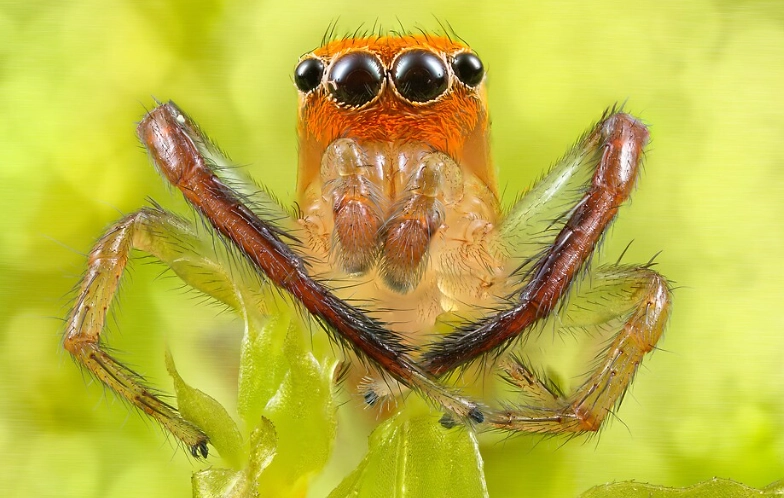
Spotting One in the Wild: A Quick Guide for Respectful Observation
If you're headed to Hawaii and want to try your luck, here's how to do it right. First, manage your expectations. You need to get into good, wet native forest. Popular tourist trails in dry areas won't cut it.
- Go with a Guide: Book a naturalist-led hike. They know the exact spots and plants to check (often the *kōpiko* or *ʻōlapa* trees) and can ensure you don't disturb the environment.
- Look Low, Look Under: Don't scan the treetops. Gently examine the undersides of broad, healthy leaves at eye-level or below. Move slowly and carefully.
- Timing: Early morning or late afternoon can be good, as they may be more active.
- The Gear: A good macro lens or a pair of close-focusing binoculars is essential. Do not touch the leaf or the spider.
- The Golden Rule: Look, photograph if you can without flash, and leave everything exactly as you found it. The spider, its web, and its leaf are its entire world.
Finding one feels like winning a naturalist's lottery. It's a quiet, personal moment of connection with one of evolution's most playful designs.
Clearing Up the Confusion: Your Questions Answered
Final Thoughts: More Than a Meme
The Orange Smiley Face Spider is so much more than an internet curiosity or a cute animal photo. It's a testament to the bizarre and wonderful paths evolution can take in isolation. It's a lesson in perception—the smile is for us, the survival trick is for the birds. It's a tiny, fragile beacon for the incredible and endangered biodiversity of Hawaii.
Its greatest gift might be that it makes people stop and care about a spider. In a world where we often overlook small invertebrates, this one, with its accidental cartoon grin, forces us to pay attention. And when we pay attention, we might just start to care about the wet, green, complex world it calls home. And that's a reason to smile.
So next time you see its picture, don't just think "cute." Think about the dappled light of a Hawaiian forest, the silent drama of life on a leaf, and the profound importance of keeping such places wild. The orange smiley face spider isn't just smiling; if we listen, it might be telling us a very important story.



Comments
Leave a Comment