Explore the Axanthic Hognose Guide
- What Exactly Is an Axanthic Hognose Snake?
- The Genetics Behind the Grey: How Axanthic Works
- Axanthic Hognose Care: It's More Than Just a Pretty Face
- Health, Temperament, and What to Really Expect
- The Cost of an Axanthic Hognose: Breaking Down the Price Tag
- Axanthic Hognose: Common Questions Answered
- Final Thoughts: Is the Axanthic Hognose Right for You?
Let's talk about the Axanthic Hognose. If you've been scrolling through reptile forums or browsing breeder pages, you've probably seen them. Those stunning, almost black-and-white photos of snakes that look like they've stepped out of a graphite sketch. I remember the first time I saw one at a reptile expo years ago. It wasn't the flashiest animal in the room, not like some neon-bright corn snake. But there was something about that sleek, silvery-grey and black pattern that just pulled me in. It was elegant. Understated. Different.
And that's the thing about the Axanthic Hognose morph. It doesn't scream for attention, it whispers. But once you hear that whisper, it's hard to think about anything else. This guide is for anyone who's been captivated by that whisper. Whether you're a seasoned keeper wondering about adding one to your collection, or a complete newbie who just fell down a Google rabbit hole and landed here, we're going to cover everything. And I mean everything – from the basic "what is it?" to the nitty-gritty of genetics, care, and even the tricky question of price.
We'll get into the science a bit, because understanding the "why" behind the color makes owning one so much cooler. We'll talk about the real, day-to-day experience of keeping one of these snakes. The good, the bad, and the occasionally frustrating (like their famous picky eating phases). My goal isn't just to give you facts. It's to give you the full picture, so you can decide if an Axanthic Hognose is the right fit for your life.
What Exactly Is an Axanthic Hognose Snake?
Okay, basics first. "Axanthic" is a genetic term. It comes from Greek, meaning "without yellow." In the reptile world, an axanthic animal lacks yellow and red pigmentation (called xanthophores and erythrophores). What you're left with are the blacks, browns, whites, and greys. Think of it like a photo where someone has completely dragged the saturation slider for yellows and reds down to zero.
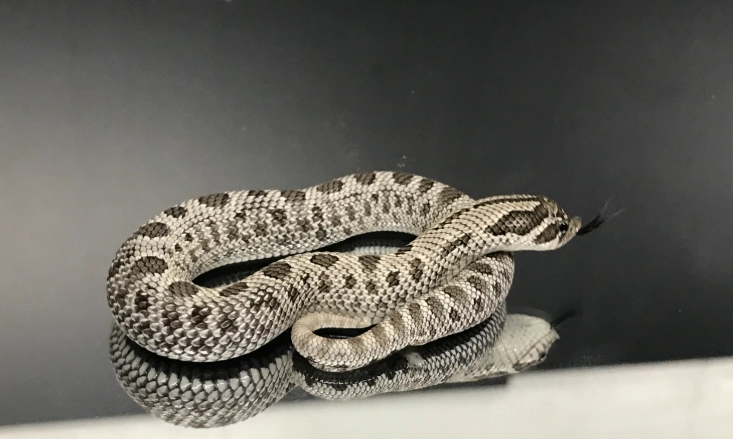
So, an Axanthic Hognose is a Western Hognose Snake (*Heterodon nasicus*) that carries this genetic mutation. It's not a separate species. A normal Western Hognose has lovely patterns of browns, tans, oranges, and yellows. The Axanthic version takes that same beautiful pattern and renders it in a stunning monochrome palette of black, grey, silver, and white.
The effect can be dramatic. The contrast between the dark dorsal blotches and the lighter background becomes incredibly sharp. Some high-contrast specimens look almost like a living ink drawing. It's a morph that highlights the classic Hognose pattern in a whole new way.
It's also crucial to understand that "Axanthic" refers specifically to the lack of yellow/red pigment. It doesn't affect the snake's structure, size, or temperament. An Axanthic Hognose will have the same adorable upturned snout (for digging!), the same generally docile personality, and the same hilarious defensive bluffing behaviors as any other Western Hognose. The color is just the wrapping paper.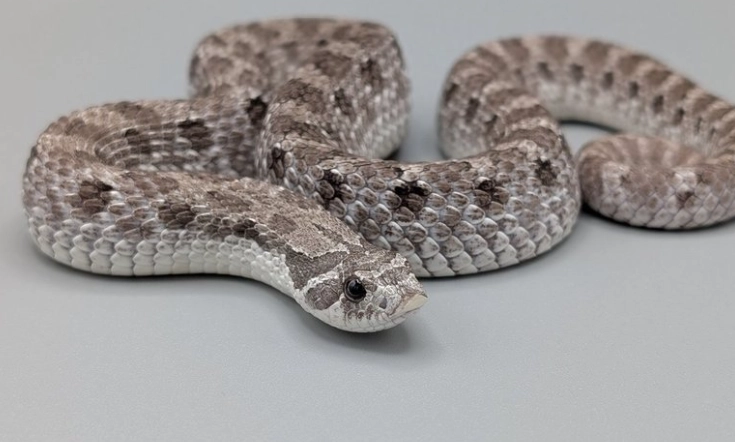
The Genetics Behind the Grey: How Axanthic Works
This is where it gets interesting for the hobbyist. You don't need a biology degree, but knowing a little genetics helps you understand what you're buying and the potential if you ever want to breed.
The Axanthic trait in Hognose snakes is a recessive mutation. Let's break that down without the jargon.
Every snake has two copies of the gene that controls this pigment. We'll call the normal gene "N" (for normal color) and the mutant Axanthic gene "a" (lowercase for recessive).
- Normal (NN): A snake with two normal genes looks like a typical, wild-colored Hognose. It shows all its yellows and reds.
- Het Axanthic (Na): This snake has one normal gene and one Axanthic gene. "Het" is short for heterozygous. Here's the key part: it *looks* completely normal. The single "a" gene is hidden by the dominant "N" gene. But it carries the Axanthic trait and can pass it on to its babies.
- Visual Axanthic (aa): This snake has two copies of the Axanthic gene. With no dominant "N" gene to override them, the lack of yellow/red pigment is fully expressed. This is what we call a visual Axanthic Hognose – the grey-scale snake you see in the pictures.
The world of Hognose genetics doesn't stop there. The real magic happens when you start combining Axanthic with other morphs. This is called creating "compound morphs" or "combos." An Axanthic Hognose is often used as a base to create even more stunning animals.
For example:
- Snow Hognose: This is an Albino Axanthic. Albino removes black pigment (melanin), and Axanthic removes yellow/red. The result is a snake that is primarily white, pink, and yellow, with very little dark pattern. It's a stunning combo.
- Axanthic Conda: Combines the Axanthic greyscale with the "Conda" pattern gene, which reduces or connects the dorsal blotches into a more striped or solid-backed appearance.
- Arctic Axanthic: Adds the "Arctic" gene, which further lightens the background colors, creating an even higher-contrast, cleaner look.
When researching, a great resource to understand reptile genetics standards and terminology is the Morphopedia database, which community contributors use to document and standardize morph definitions across species.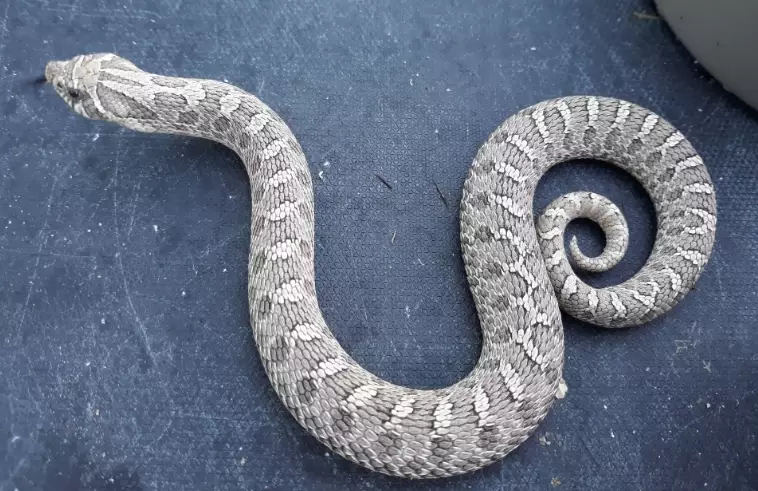
Axanthic Hognose Care: It's More Than Just a Pretty Face
Here's the most important thing to remember: caring for an Axanthic Hognose is exactly the same as caring for any other Western Hognose. The color mutation doesn't come with a special care manual. But since proper care is the difference between a thriving pet and a struggling one, let's go over the essentials.
The Perfect Enclosure Setup
Hognose snakes are active, curious diggers. They're not big climbers, so floor space is more important than height. A 20-gallon long tank (30" x 12" x 12") is a great forever home for an adult male. Females get larger, so a 30-40 gallon breeder tank (36" x 18" x 16") is better.
Front-opening PVC enclosures are fantastic—they hold heat and humidity well, are secure, and don't have screen tops that let all your heat escape. But a glass tank with a secure, locking screen lid works perfectly fine if you manage it carefully.
Substrate: This is key. They need to dig. Aspen shavings are the gold standard. It's safe, holds burrow shapes beautifully, and is easy to spot-clean. Avoid cedar or pine (toxic oils), and I'm not a fan of coconut fiber for them—it's too dusty when dry and too damp when wet, and it doesn't hold tunnels well. I've tried it. My hog hated it. Back to aspen we went.
Heating & Lighting: They need a heat gradient. One end of the tank should be warm, the other end room temperature. This allows them to thermoregulate.
- Warm side: 88-92°F (31-33°C) on the surface under the heat source.
- Cool side: 70-75°F (21-24°C).
- Nighttime drops into the high 60s°F (~20°C) are fine.
Use an under-tank heat mat or a radiant heat panel connected to a reliable thermostat. A thermostat is NOT optional. It prevents your heat source from overheating and burning your snake. Place the probe for the thermostat on the glass/substrate right over the heat mat.
They don't require special UVB lighting like some reptiles, but providing a low-level UVB light (like a ShadeDweller or 5.0 tube) for a 12-hour day cycle can be beneficial for their overall health and circadian rhythm. It's not a strict requirement, but a nice bonus.
Humidity & Hides: Keep ambient humidity around 30-50%. Provide a humid hide, especially when they are in shed. A simple plastic container with a hole cut in the lid, filled with damp (not wet) sphagnum moss works wonders. You must also have at least two snug hides—one on the warm end, one on the cool end. Snakes feel secure in tight spaces.
Feeding Your Axanthic Hognose: The Great Mouse Debate
Ah, feeding. This is where new Hognose owners often panic. In the wild, their diet is predominantly amphibians (like toads). This can make them initially reluctant to take frozen/thawed mice in captivity.
The vast majority will convert. It just might take patience and technique.
- Prey Size: Feed a mouse that is roughly the same width as the widest part of the snake's body.
- Frequency: Hatchlings: every 5-7 days. Juveniles: every 7 days. Adults: every 10-14 days. Females eating to grow for breeding may eat more often.
- The Techniques: If they refuse a plain mouse, try braining (puncturing the skull), scenting with tuna juice or frog juice (commercial scents are available), or wiggling it with tongs to simulate life. The key is to offer, leave it in the enclosure overnight (on a bottle cap or plate), and if refused, remove it and try again in 5-7 days. Don't offer every day—it stresses them out.
Hunger strikes are common, especially with males during breeding season (fall/spring) or when they are going into shed. As long as the snake isn't losing significant weight (more than 10% of its body mass), don't panic. Offer consistently on schedule.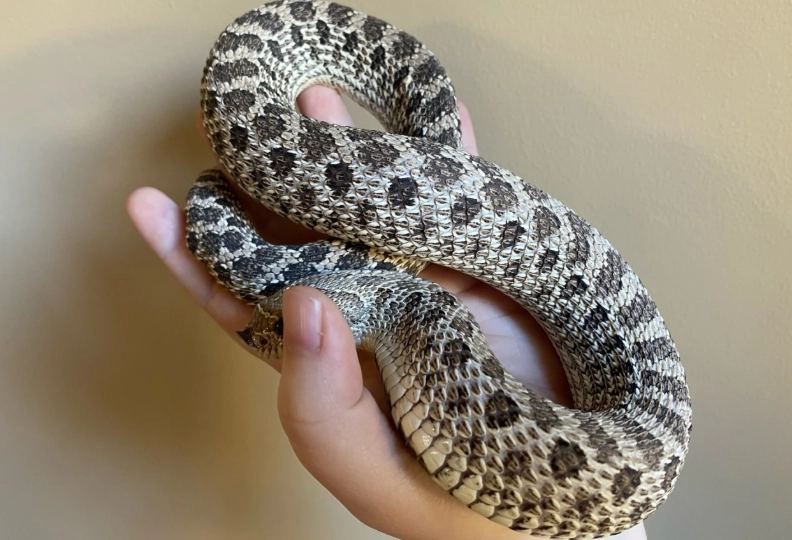
Health, Temperament, and What to Really Expect
Let's talk about the living experience. An Axanthic Hognose isn't just a display animal.
Typical Health Considerations
Generally, they are hardy snakes. The main issues to watch for are:
- Respiratory Infections (RI): Signs include wheezing, mucus around the nostrils or mouth, and holding the head up to breathe. Usually caused by prolonged low temperatures or too-high humidity. Requires a vet visit for antibiotics.
- Mites: Tiny black or red parasites moving on the snake or in the water dish. Quarantine new animals! Treatment involves thorough enclosure cleaning and reptile-safe mite sprays or "prevent-a-mite" products.
- Stuck Shed: Incomplete sheds are often due to low humidity. Provide that humid hide. Never pull stuck shed off. Soak the snake in shallow, lukewarm water for 15-20 minutes and gently rub with a wet cloth.
- Scale Rot: Blister-like lesions or discolored scales, usually on the belly. Caused by a wet, dirty substrate. Keep the enclosure clean and dry.
Having a relationship with a qualified exotics vet before you have an emergency is one of the best things you can do. The Association of Reptilian and Amphibian Veterinarians (ARAV) has a "Find a Vet" tool that is invaluable.
The Famous Hognose Temperament
They have a reputation for being dramatic, and they earn it. Their defensive sequence is a comedy routine:
- Huff and Puff: They flatten their neck (cobra imitation), hiss loudly, and mock-strike with a closed mouth. It looks terrifying but is completely harmless.
- Bluff Strike: A headbutt with a closed mouth. It might startle you, but it won't break skin.
- Playing Dead: The grand finale. They flip onto their back, open their mouth, let their tongue loll out, and emit a foul musk. They commit to the role. If you flip them right-side up, they'll immediately flip back over to stay "dead."
It's all an act. Once they realize you're not a threat, most calm down remarkably quickly. With gentle, consistent handling (after 48 hours of settling in and not around feeding time), they become wonderfully docile, curious pets. They are not constrictors and are not prone to biting defensively. A bite is extremely rare and usually a feeding response mistake.
I find their bluffing endearing. It's like they're trying so hard to be scary in their tiny, derpy-faced bodies.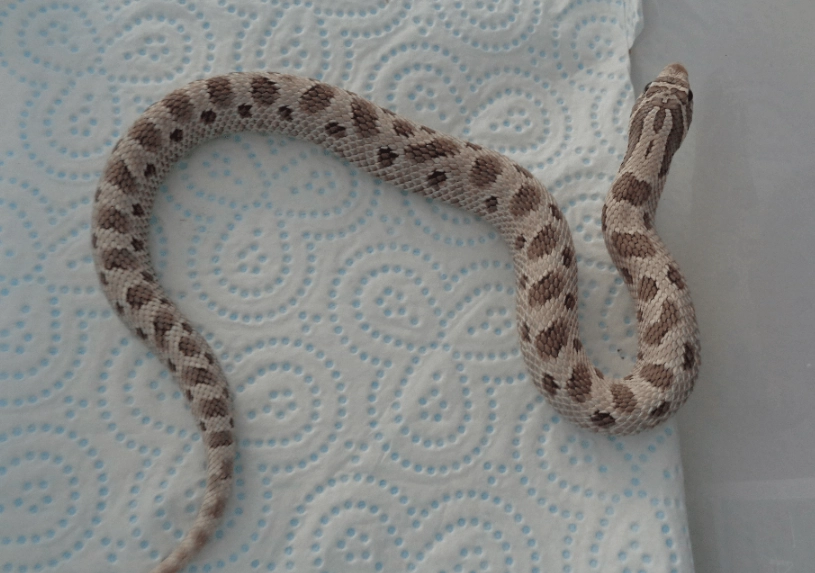
The Cost of an Axanthic Hognose: Breaking Down the Price Tag
This is the question everyone wants answered. How much? The price for an Axanthic Hognose can vary wildly based on several factors.
| Type / Factor | Price Range (USD) | Notes & What You're Paying For |
|---|---|---|
| Hatchling Visual Axanthic (Normal Pattern) | $300 - $600 | The entry point for the morph. Price depends on contrast, sex (females often cost more), and breeder reputation. |
| 100% Het Axanthic | $100 - $250 | Looks like a normal Hognose. You're paying for the guaranteed genetics for future breeding projects. |
| Axanthic + Pattern Gene (e.g., Axanthic Conda) | $600 - $1,200+ | Adding a desirable pattern morph like Conda or Superconda significantly increases value. |
| Axanthic + Color Gene (e.g., Arctic Axanthic, Albino Axanthic/Snow) | $800 - $2,000+ | High-end combos. Snow Hognose (Albino + Axanthic) are particularly sought after. |
| Proven Breeder (Adult Visual) | $500 - $1,500+ | Skip the baby phase, get a snake ready to breed or that has already proven it eats well. A premium. |
| Lineage & Breeder Reputation | Varies | A snake from a well-known, established breeder with documented genetics and health guarantees costs more. Usually worth it. |
Beyond the snake itself, you need to budget for the setup. A proper enclosure, heating, thermostat, hides, substrate, and initial vet check can easily add another $300-$500 upfront. Then there are the ongoing costs of electricity, substrate replacements, and food.
Is an Axanthic Hognose expensive? Compared to a $50 normal Hognose, yes. But compared to some ball python or boa morphs that run into the thousands, it's a relatively accessible "designer" morph. You're paying for specific genetics and years of selective breeding work.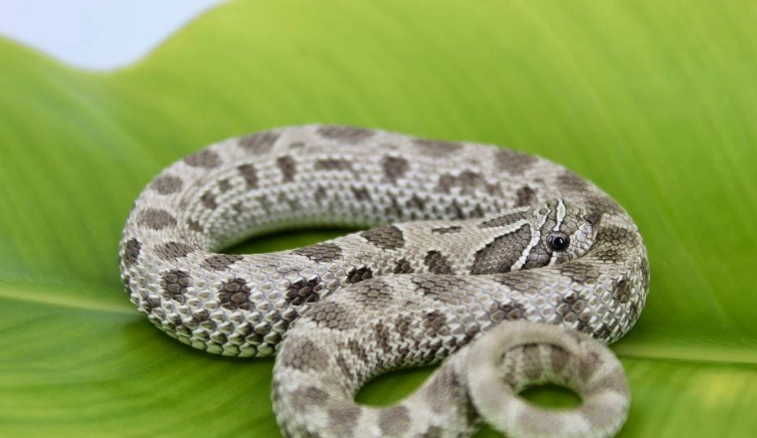
Axanthic Hognose: Common Questions Answered
Final Thoughts: Is the Axanthic Hognose Right for You?
So, after all this, should you get one?
Think about what you want in a pet snake. If you're looking for a stunning, conversation-starting animal with a big personality in a small package, and you're okay with a pet that might be a bit theatrical and occasionally picky about its dinner, then the Axanthic Hognose is a phenomenal choice.
Its care is straightforward but non-negotiable. Its beauty is subtle but profound. It's a morph that rewards closer looking.
For me, the appeal of the Axanthic Hognose goes beyond genetics. It's a reminder that beauty in the reptile world isn't always about being the brightest. Sometimes, it's about contrast, pattern, and elegance. It's a living piece of natural art that also happens to be a hilarious, engaging little companion.
Do your homework, find a great breeder, set up the enclosure perfectly before the snake arrives, and be patient. If you do all that, you'll have an incredible pet that will bring you joy for 15-20 years. And honestly, watching that sleek, grey snake pop its head out of its aspen burrow never gets old.

Comments
Leave a Comment