Quick Guide
So you're staring at a jellyfish, pulsing along in an aquarium or maybe in a nature documentary, and the question pops into your head: Do jellyfish give birth to babies or lay eggs? It seems like a simple yes-or-no question, right? I had the same thought the first time I saw a tank full of moon jellies. They look so... simple. How could something so seemingly basic handle something as complex as making more of itself?
Well, buckle up, because the answer is a resounding "it depends," and the real story is far more fascinating than a simple binary choice. The truth is, jellyfish don't do either one in the way we typically think of mammals giving live birth or chickens laying eggs. Trying to fit them into our familiar categories is where the confusion starts. Their reproductive strategy is a masterclass in biological flexibility, involving multiple life stages, different methods, and some species that can essentially cheat death. It's one of the coolest things about them, honestly.
The Quick Answer: Most jellyfish species reproduce in two main ways, often within a single lifetime: 1) Sexually as medusae (the classic "jellyfish" form), where they release sperm and eggs into the water. This is the closest to "laying eggs," but the eggs are usually fertilized externally. 2) Asexually as polyps (a tiny, anchored stage), where they bud off clones or create tiny jellyfish stacks. Nothing about this process resembles "giving birth to babies" in the mammalian sense.
Let's break it down. To really understand jellyfish reproduction, you have to let go of the idea of a single animal living one life. Instead, think of it as a cycle, a two-part play where the actors look nothing alike and use completely different scripts for creating the next generation.
The Two-Act Life Cycle: Medusa and Polyp
This is the core concept that answers do jellyfish give birth to babies or lay eggs? for most species. They have a life cycle called "alternation of generations," which sounds fancy but just means they switch between two very different body forms.
Act 1: The Medusa (The Jellyfish You Know)
This is the free-swimming, bell-shaped, tentacled creature we all picture. This is the stage that engages in sexual reproduction. Most medusae are either male or female, though some species are hermaphrodites.
Here's how it works for a typical species like the moon jellyfish (Aurelia aurita):
- Spawning: Males release sperm from their mouth (which also functions as their anus, talk about efficiency) into the surrounding water. Females release eggs. In many species, the eggs are held on the female's oral arms or in special brood pouches, but fertilization still happens externally when sperm meets egg.
- Fertilization & Larva: The fertilized egg develops into a tiny, free-swimming larva called a planula. It looks like a microscopic hairy football and can drift for days or weeks.
- Settlement: The planula eventually drops out of the water column, attaches to a hard surface like a rock, dock piling, or shellfish shell, and transforms.
Act 2: The Polyp (The Secret, Sessile Stage)
The settled planula morphs into a polyp. This looks nothing like a jellyfish. Imagine a tiny anemone or a skinny little tube with tentacles on top, stuck to the seafloor. This is where the "giving birth" analogy gets really stretched, but also where asexual reproduction shines.
The polyp is a cloning factory. It can:
- Bud: Grow tiny replicas of itself from its body wall. These can detach to become new, independent polyps.
- Strobilate: This is the real magic trick. The polyp essentially segments itself horizontally, like a stack of tiny saucers. Each saucer, called an ephyra, detaches and swims away. Over weeks, each ephyra grows into a new adult medusa. One polyp can produce dozens or even hundreds of new jellyfish this way.
Think about it: That single polyp stage, which came from one fertilized egg, can now generate an entire bloom of genetically identical jellyfish through strobilation. This asexual phase is a huge reason why jellyfish populations can explode so rapidly under the right conditions. It's not about laying one egg at a time; it's about running a production line.
So, when you ask do jellyfish give birth to babies or lay eggs?, you're really asking about two different phases of a complex life cycle. The medusa phase handles the sexual, genetic-mixing part (similar to laying eggs). The polyp phase handles the asexual, mass-production part (which is a form of "giving birth" to clones, but not babies).
A Closer Look at Different Species: It's Not One-Size-Fits-All
While the medusa-polyp cycle is standard, nature loves exceptions. Here's how some well-known jellyfish mix things up, which adds more nuance to the do jellyfish give birth question.
| Jellyfish Species | Reproductive Highlights | What It Means for "Birth" or "Eggs" |
|---|---|---|
| Moon Jellyfish (Aurelia) | Classic alternation of generations. Eggs are held in brood pouches on the female's oral arms, where they are fertilized by sperm drawn in with feeding currents. | Eggs are "laid" in a protected space on the parent, but still fertilized externally. The polyp stage then does heavy asexual lifting. |
| Lion's Mane Jellyfish | Follows the standard cycle. The massive female medusa releases eggs into the water column. | A clear example of broadcast spawning ("laying eggs" into the sea). The polyp stage is assumed but less studied due to deep/cold water habitats. |
| Box Jellyfish (e.g., Sea Wasp) | More complex. The male transfers a sperm packet to the female. She carries the fertilized eggs on her body until they develop into planulae. The polyp can also bud. | This is closer to "carrying eggs" until they are ready to hatch as larvae. A step beyond simple spawning. |
| The Immortal Jellyfish (Turritopsis dohrnii) | The ultimate cheat code. The adult medusa, when stressed or aging, can revert back to its polyp stage, forming a new colony. It can theoretically do this indefinitely. | It completely bypasses death, so asking if it gives birth or lays eggs feels almost trivial! It reproduces both sexually as a medusa and then regenerates itself from that medusa. |
| Freshwater Jellyfish (Craspedacusta) | The polyp stage is the dominant, long-lived form. It forms tiny buds that become medusae only occasionally when conditions are perfect. | You might see the "jellyfish" form rarely. Most reproduction is asexual polyp budding, so you'd almost never witness egg or sperm release. |
Looking at this table, you can see why a blanket answer fails. The National Oceanic and Atmospheric Administration (NOAA) has a great, straightforward page on jellyfish life cycles that confirms this variability, noting how some species brood their young while others don't. It's a fantastic resource if you want the big-picture science from a trusted source.
Here's my personal take after reading dozens of scientific papers and watching hours of footage: The polyp stage is the unsung hero of the jellyfish world. Everyone gets excited about the pulsating medusa, but that little, hidden polyp is the engine of their success. It's like the secret basement factory that pumps out the products we see on the shelf.
Common Questions About Jellyfish Reproduction (The Stuff You're Really Wondering)
Let's get into the nitty-gritty. These are the questions I had, and the ones I see popping up everywhere online.
Do jellyfish have genders?
Most jellyfish medusae have separate sexes – male and female. You can't usually tell by looking, though sometimes the color of the gonads (reproductive organs), visible through the bell, gives it away. Some species, however, are hermaphrodites, carrying both sets of equipment.
Where are the eggs, exactly?
It varies wildly! In moon jellies, they're in those frilly oral arms. In others, they're in the lining of the stomach or in special gonadal sacs. In the box jellyfish, the female literally carries them attached to her body. The Monterey Bay Aquarium Research Institute (MBARI) has captured stunning deep-sea video of jellyfish brooding their young, showing eggs or even developed larvae tucked safely under the bell. It's a far cry from just dumping them in the ocean.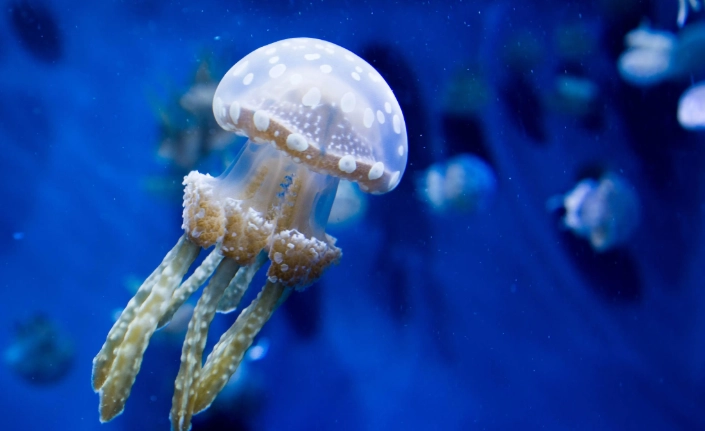
Is it true some jellyfish don't have a polyp stage?
Yes, a few groups have lost the polyp stage entirely. For example, some deep-sea jellyfish in the order Narcomedusae have a larval stage that develops directly into a tiny medusa. So for them, the cycle is medusa -> egg -> planula -> medusa. This makes the question do jellyfish lay eggs or give birth to babies a bit simpler for them—it's more squarely in the "lay eggs" camp, with the young developing independently.
Can a jellyfish reproduce by itself?
The medusa (adult) usually can't. It needs a mate for sexual reproduction. But the polyp stage absolutely can—and does—reproduce all by itself through budding and strobilation. That's asexual reproduction 101.
What about the "immortal jellyfish"? How does that fit in?
Turritopsis dohrnii is the ultimate outlier. When the medusa is damaged or starving, its cells can undergo a process called transdifferentiation. They basically disassemble the complex medusa and reassemble the cells into a polyp. This new polyp can then bud off many new, genetically identical medusae. So, it reproduces sexually normally, but then the parent can revert to a younger stage and start over. It's not exactly reproduction, more like hitting the biological reset button. It blurs every line we have.
I find this one a bit overhyped, to be honest. Yes, it's biologically miraculous, but calling it "immortal" is a bit of a media stretch. In the wild, they still get eaten, get sick, or succumb to other hazards. They're not invincible, just incredibly flexible.
Why Does This Matter? Beyond the Curious Question
Understanding how jellyfish reproduce isn't just trivia. It's key to understanding some major ecological events.
Jellyfish blooms—those massive swarms that can cover square miles of ocean—are directly fueled by their reproductive strategy. A single, successful polyp colony, sitting unnoticed on a harbor wall or a ship's hull, can churn out thousands of medusae through strobilation. If conditions are good (warm water, lots of plankton food, few predators), those medusae will grow, spawn, create more planulae, which settle and become more polyps... and the cycle explodes. Their ability to reproduce both sexually (for genetic diversity and dispersal) and asexually (for rapid local population increase) makes them incredibly resilient and opportunistic.
This knowledge is crucial for fisheries scientists, coastal managers, and even power plant operators (who can have intakes clogged by blooms). When you see a news report about a jellyfish invasion, you're now seeing the end result of countless polyp "factories" working overtime.
For a deep dive into the science of jellyfish blooms and their life history, the Smithsonian Ocean Portal offers a reliable and well-researched overview. It connects their reproductive biology to their ecological impact, which is the real-world consequence of all this talk about eggs and polyps.
Wrapping Up: So, What's the Final Verdict?
Let's circle back to the original, seemingly simple question: Do jellyfish give birth to babies or lay eggs?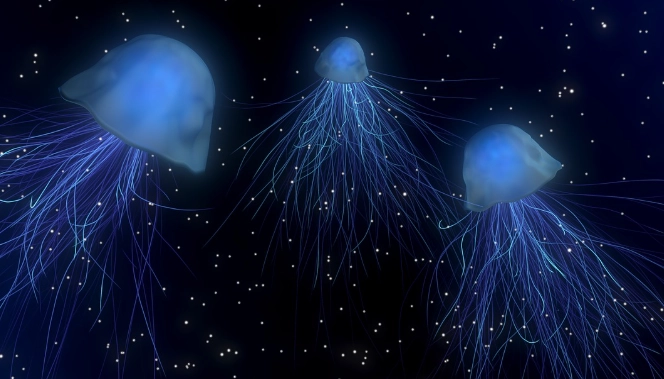
The most accurate answer is: Neither, and a bit of both, depending on the life stage you're looking at.
- In their familiar medusa form, they engage in sexual reproduction. They release sperm and eggs (or carry eggs to be fertilized). This is functionally closest to "laying eggs," though it's often a broadcast event into the water.
- They do not give live birth to independent, developed offspring like mammals do.
- In their polyp form, they engage in asexual reproduction, "giving birth" to clones through budding or producing stacks of tiny young medusae through strobilation. This is a form of reproduction that creates new individuals from the body of the parent.
The genius of jellyfish lies in this dual strategy. It allows them to spread their genes far and wide through the sexual, medusa phase, and then rapidly colonize a favorable area through the asexual, polyp phase. It's a winning combo that has kept them thriving in our oceans for over 500 million years.
Next time you see a jellyfish, remember there's a whole other, hidden form of its life lurking somewhere on the seafloor, quietly building the next generation. And that's a much cooler story than just deciding between babies and eggs.

Comments
Leave a Comment