In This Article
You're walking along, minding your own business, the sand between your toes, the sound of waves in your ears. Then you see it. A weird, glistening lump, maybe clear, maybe pinkish, just sitting there. It looks like a misplaced dessert or something from a sci-fi movie. Your first thought is probably, "What on earth is that?" and your second might be, "Should I poke it?"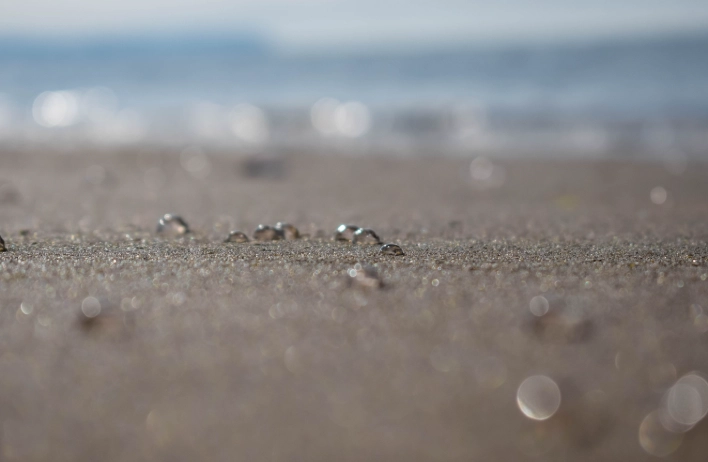
Let's clear this up right away. That strange, gelatinous mass you're looking at has a good chance of being jellyfish eggs on beach. Or, to be more scientifically precise, it's likely a jellyfish egg mass or a related life stage. It's one of the most common yet most misunderstood things beachcombers encounter. I've seen them from the chilly shores of Maine to the warm sands of Florida, and every time, someone nearby is guessing—alien eggs, whale snot, toxic waste. It's almost never that dramatic.
So, What Exactly Are You Looking At?
Calling them "jellyfish eggs on beach" is the simple way to put it, but the biology is cooler. Jellyfish have a complex life cycle that sounds like it was designed by a biologist who loved plot twists. It involves two completely different body forms. The blob you see is usually one of two things: a mass of thousands of tiny eggs, or more commonly, a colony of polyps.
Think of it this way. The adult jellyfish, the medusa (the classic bell-shaped thing that stings), releases eggs and sperm. When they meet, they form larvae that sink and attach to a hard surface—a rock, a shell, a piece of driftwood. That larva then transforms into a tiny, anemone-like creature called a polyp. This polyp is the real workhorse of the jellyfish world. It can just sit there, clone itself, and eventually, under the right conditions, these cloned polyps stack up like plates and bud off tiny baby jellyfish, called ephyrae. The blob you find might be a cluster of these polyps, often called a "hydroid colony," wrapped in a protective jelly matrix.
Sometimes, you find the actual egg mass, which looks similar. The distinction matters to marine biologists, but to us on the shore, the key point is the same: it's a nursery. Finding jellyfish eggs on beach means you've found a portable, gelatinous apartment complex for the next generation of jellies. It's a sign of a healthy, reproducing population offshore.
How to Tell It Apart from Other Beach Blobs
Not every weird jelly thing is jellyfish related. Beach ecosystems are messy, and all sorts of stuff washes up. Here’s a quick guide to avoid confusion.
| What You See | Key Characteristics | Likely Identity | Is it Jellyfish Eggs? |
|---|---|---|---|
| Clear, firm, grape-sized clusters | Often has tiny black or white dots inside (the eggs/polyps). Holds shape well. Feels like firm Jell-O. | Likely true jellyfish (Scyphozoa) egg mass or polyp colony. | Yes, very likely. |
| Large, milky, amorphous blob | Can be huge (beach ball size!), very soft, disintegrates easily. No internal structure visible. | Probably a salp or pyrosome (free-floating tunicates). They're harmless filter feeders. | No, but a common impostor. |
| Small, blue, inflated sacs with a sail | Hard to miss. Bright blue color, rigid float, and a clear "sail." | By-the-wind sailor (Velella velella). A colonial hydrozoan (distant jellyfish cousin). | Not eggs, but a relative. |
| Brown, spaghetti-like strands | Looks like a clump of brown noodles or tangled fishing line. Rubbery texture. | Egg cases of whelks or other sea snails (like the common "sea wash balls"). | No. These are mollusk eggs. |
| Pink, frothy, slimy streaks | Looks like pink foam or slime coating the sand or rocks. Smells... organic. | Often a bacterial bloom or a type of algae, not animal life. | No. |
I once spent twenty minutes convincing a family that the large, milky blob they were nervously circling was just a salp, not a monster. They were relieved, but also a little disappointed it wasn't more exciting. The true jellyfish eggs on beach are usually more structured.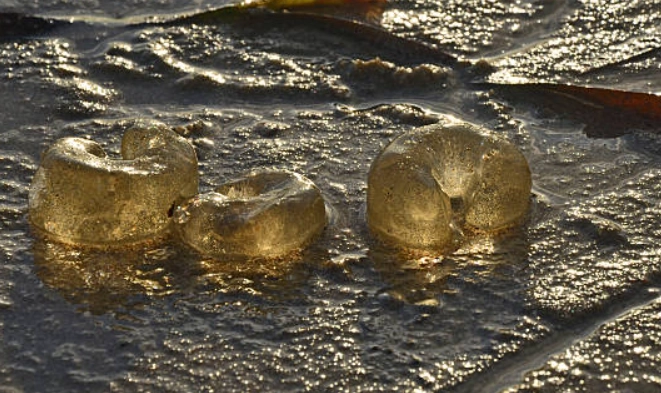
The Big Question: Are They Dangerous?
This is the heart of the matter, right? You see this alien-looking thing and wonder if it's going to hurt you, your kids, or your dog.
I say "almost never" and "usually" because biology loves exceptions. Some species, particularly in the box jellyfish family, can have stinging cells in other life stages. But these are rare in most temperate beach areas. The general rule for beachgoers from California to the Carolinas is that the blob is inert.
However—and this is a big however—use common sense. If the blob is surrounded by tentacle fragments or you're in an area with known dangerous jellyfish (like Irukandji territory in Australia), it's best to give it a wide berth. The main danger isn't from the eggs themselves, but from the possibility of nearby adult jellyfish parts that can sting.
For dogs, the advice is similar. The blob itself is likely non-toxic if ingested, but eating any decaying marine material can cause stomach upset. The real risk, again, is if tentacles are mixed in. It's best to keep curious pets away. I've seen a dog roll in a decaying jellyfish carcass, and the vet visit afterward was no fun for anyone.
What Should You Actually DO If You Find Them?
Okay, so you've identified jellyfish eggs on beach. Now what?
- Look, don't touch (as a general principle). It's the safest policy for you and for them. These are living organisms, part of the ocean's web. Disturbing them serves no purpose.
- Take a picture! Use your phone. It's a great way to remember the find and even help science. Apps like iNaturalist allow you to upload your sighting, which helps researchers track species distribution. Was it clear with white dots? Pinkish? How big? These details matter.
- Just leave them be. The tide will likely take them back out. If they're stranded too high, they probably won't survive, but that's part of the natural cycle. They become food for shorebirds, crabs, and insects. Don't try to be a hero and throw them back; you might be introducing them to an unsuitable environment.
- Report unusual masses. If you see a huge washing, like a continuous line of these blobs for miles, some environmental agencies track this. For example, the National Oceanic and Atmospheric Administration (NOAA) monitors jellyfish populations as part of broader ecosystem health checks.
I made the mistake once of poking one with a stick repeatedly, fascinated by its texture. In retrospect, it was a bit disrespectful to the little ecosystem in my hand. Now I just observe.
Why Finding Jellyfish Eggs on Beach Matters (It's Not Just Curios)
This is where it gets interesting. These blobs aren't just oddities; they're data points. The frequency and location of jellyfish eggs on beach can tell scientists a lot.
Jellyfish populations are famously boom-and-bust. They explode under certain conditions: warmer water, fewer predators (often due to overfishing), more nutrients (sometimes from runoff). A sudden increase in these egg masses washing ashore might indicate a large spawning event offshore, which could precede a bloom of adult jellyfish later in the season. Fisheries managers and beach safety officials sometimes look at this as one of many indicators.
But let's not panic. Finding a few blobs doesn't mean the next "jellyfish apocalypse" is coming. Jellyfish have been here for over 500 million years. They're survivors. Their presence, including their eggs on the beach, is a sign of an ocean doing what it's always done. It's when the balance shifts dramatically that scientists take note.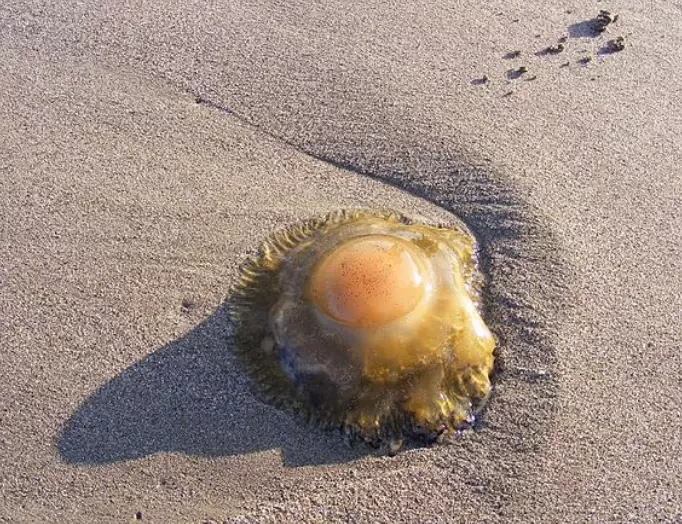
Clearing Up the Confusion: Your Questions Answered
I get a lot of the same questions whenever this topic comes up. Let's tackle them head-on.
If I see jellyfish eggs on beach, does that mean there will be a swarm of stingers soon?
Not necessarily. The journey from egg/polyp to adult jellyfish is perilous. Most don't make it. They get eaten, drift to the wrong place, or just fail to develop. A lot of eggs is just a species hedging its bets. It's like seeing a lot of acorns on the ground—it doesn't guarantee a forest of oak trees will sprout next year, but it shows the trees are trying.
Can they hatch on the sand?
No. The eggs or polyps need to be in seawater to develop. If they're high and dry on the beach, their journey is over. That's okay. Beach wrack—the line of seaweed and debris—is a crucial part of the coastal food chain. These stranded eggs become nutrients.
Are they the same as "sea pork"?
Ah, sea pork! That's a great common name for tunicates, which are completely different animals (closer to us, evolutionarily, than to jellyfish). Sea pork is often firmer, more rubbery, and can be various colors. It's another cool beach find, but it's not jellyfish eggs on beach. The names get mixed up all the time, which is why looking at structure is key.
Should I report my find?
If you're curious and want to contribute to science, absolutely. Use iNaturalist or check if a local university has a marine biology citizen science project. Your photo and location pin can be useful. But for the average find, no official report is needed. Just enjoy the moment of discovery.
A Deeper Dive: The Science of the Blob
For those who want to go beyond the basics, let's talk about what's actually in that jelly. The matrix is mostly water, mucopolysaccharides (long sugar molecules), and some proteins. It's a brilliant evolutionary invention: a protective, hydrating cradle that keeps the developing young safe from many small predators and buffers them from minor changes in salinity.
Different species have different signature blobs. The moon jelly (Aurelia aurita), one of the most common worldwide, often has egg masses that look like a clump of clear petals with tiny white or yellow dots. Comb jellies, which aren't true jellyfish and don't sting, have completely different, often more fragile, egg masses.
Researchers are still learning about the cues that trigger polyps to finally release their tiny baby jellies. Temperature and daylight length are big factors. This is why you might see more of these blobs washed up in the spring or early summer—it's often after a major spawning and release event.
The Smithsonian Ocean Portal has fantastic, accessible resources on jellyfish life cycles that show just how bizarre and wonderful this process is. It’s a reminder that the ocean's most common processes can seem utterly alien to us land-dwellers.
The Bottom Line for Beach Lovers
So, next time you're on the sand and you spot that mysterious blob, you'll know.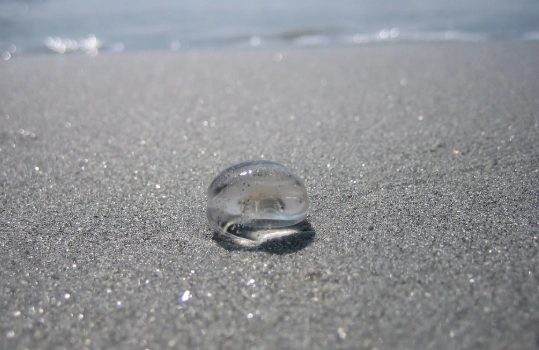
You can confidently say, "Hey, look, probably jellyfish eggs on beach." You'll know they're mostly harmless, ecologically significant, and a sign of the ocean's endless productivity. You can satisfy your curiosity without fear (but still with caution). You can snap a photo, maybe even make a note of it, and then let it be.
The beach is full of these small wonders—worm casts, sand dollars, mermaid's purses, and yes, jellyfish eggs. Understanding them doesn't take away the magic; it adds a layer of depth. It turns a simple walk into a treasure hunt for the workings of nature itself.
And honestly, that's a lot more interesting than assuming it's alien goo.
Just watch where you step.


Comments
Leave a Comment