Quick Guide to Picasso Bug Insights
- What Exactly Is a Picasso Bug? Breaking Down the Basics
- Where in the World Do You Find These Colorful Bugs?
- The Life and Times of a Picasso Bug: From Egg to Artwork
- So, What's on the Menu? The Picasso Bug Diet
- Why So Colorful? The Science Behind the Art
- Picasso Bug vs. The World: Behavior and Interactions
- Can You Keep a Picasso Bug as a Pet? The Honest Truth
- Diving Deeper: Scientific Classification and Research
- Your Picasso Bug Facts Questions, Answered
- Final Thoughts: Why We're Obsessed with This Little Bug
Let's be honest, the insect world is full of creatures that make us squirm. But then you stumble upon a picture of the Picasso bug, and it stops you in your tracks. It looks like someone took a tiny paintbrush and went to town on its back. I remember the first time I saw one in a nature documentary, I actually thought it was a piece of modern art someone had glued to a leaf. That's the magic of it. This isn't your average garden-variety bug.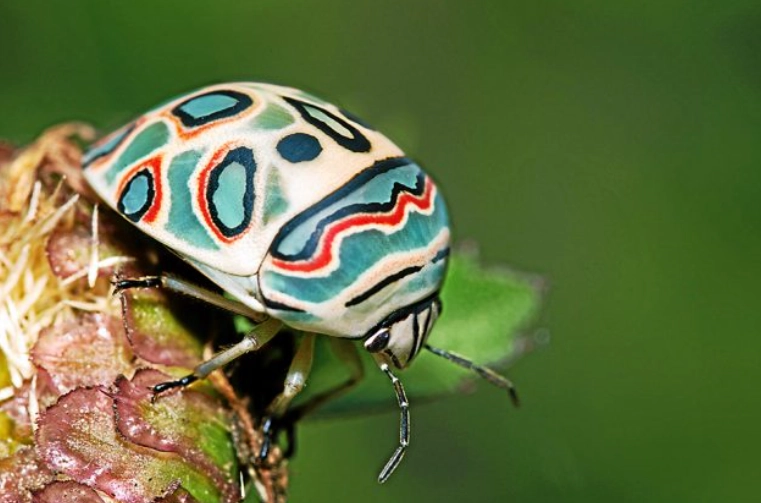
If you're here, you're probably just as captivated as I was. You want the real Picasso bug facts, not just a sentence saying "it's pretty." You want to know what it is, where it lives, why it looks like that, and maybe even if you could ever see one. Well, you've come to the right place. We're going to dig into everything, and I mean everything, about Sphaerocoris annulus—that's its scientific name, but Picasso bug is way more fun to say.
What Exactly Is a Picasso Bug? Breaking Down the Basics
Before we get lost in the colors, let's figure out what we're actually looking at. The Picasso bug is a type of shield bug, belonging to the Scutelleridae family. Think of stink bugs—they're cousins. But while most shield bugs try to blend in with greens and browns, the Picasso bug decided to take a completely different, much more fabulous, evolutionary path.
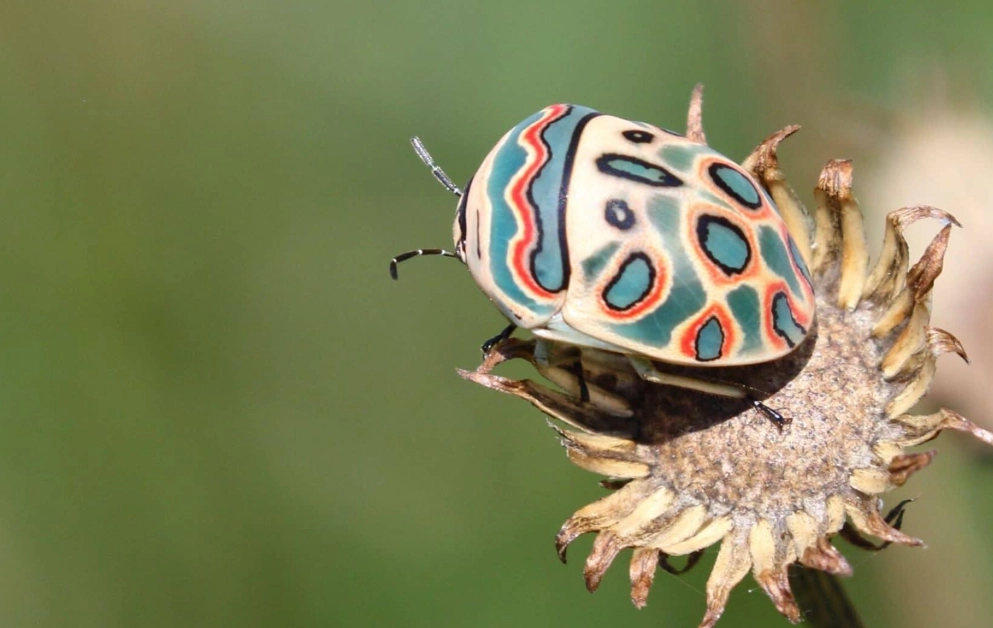
Its most famous feature is, without a doubt, its pronotum (that's the shield-like plate covering its thorax) and its forewings. They are a canvas of wild patterns. We're talking abstract splotches of yellow, red, black, and sometimes even green or blue, often outlined in bold black lines. No two patterns are exactly identical, which just adds to the allure. It’s like each bug is a unique, tiny painting. Getting these core Picasso bug facts straight helps you appreciate why it's so special in the entomology world.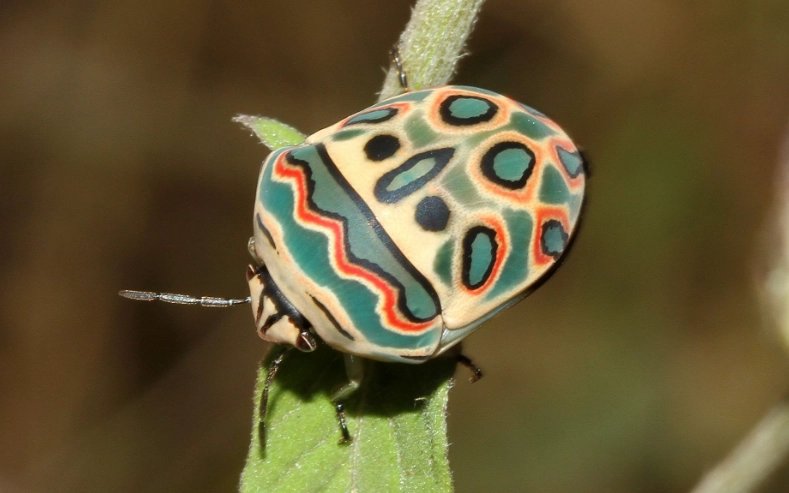
Quick Identity Check: Picasso bug, Zulu hud bug, painted bug, Sphaerocoris annulus. All names for the same incredible insect. It's usually about 0.5 inches (1.2-1.5 cm) long, so it's small but its impact is huge.
Now, why "Picasso"? Well, the patterns are said to resemble the abstract, cubist style of the famous artist Pablo Picasso. I can see it. The geometric shapes and bold lines do have that modern art vibe. Some people argue it looks more like tribal art, maybe Zulu patterns, which is where the alternative name comes from. Personally, I think it looks like a bug that attended a very enthusiastic kindergarten art class and aced it.
Where in the World Do You Find These Colorful Bugs?
You won't find these little masterpieces in your backyard unless you live in a very specific part of the world. They are native to tropical Africa. We're talking countries like Ethiopia, South Africa, Cameroon, and Zimbabwe. They thrive in warm, humid climates and are typically found chilling on the leaves and stems of various plants.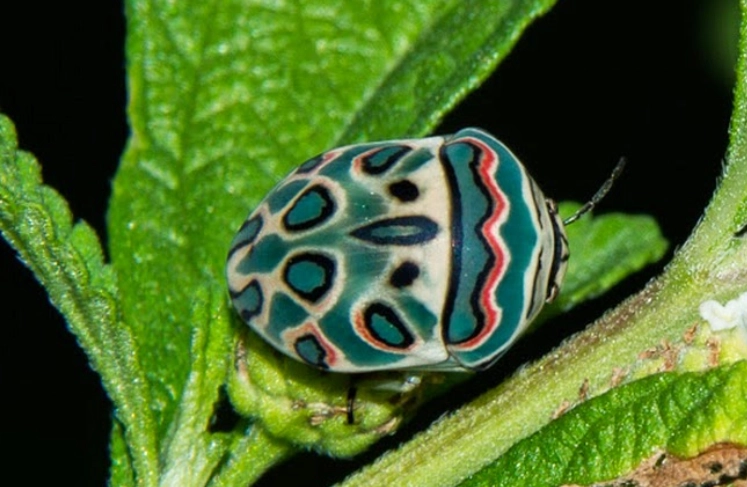
Their habitat choice is crucial. They prefer areas with plenty of host plants from the Malvaceae family (think hibiscus, cotton, okra) and other flowering shrubs. They're not deep forest dwellers; they like the edges, gardens, and cultivated areas where their food is plentiful. So if you're planning a bug-hunting safari, focus on those regions and those types of plants. Just remember, look but don't touch (we'll get to why later).
The Life and Times of a Picasso Bug: From Egg to Artwork
Understanding the lifecycle rounds out your Picasso bug facts. It's a classic insect metamorphosis, but with a colorful twist at the end.
The Beginning: Clusters of Eggs
The female lays her eggs in neat, orderly clusters, usually on the underside of a leaf she deems safe and full of future food. She guards them fiercely. The eggs themselves are pretty nondescript—little barrels that start pale and darken as the tiny nymphs inside develop.
The Awkward Teenage Phase: Nymphs
This is where it gets interesting for bug enthusiasts. The nymphs that hatch look nothing like their parents. They are small, dark, and spiny, often with hints of red or orange. They look more like little, prickly beetles than future works of art. They go through several molts (instars), growing bigger each time. Their diet? The same as the adults—plant sap. They huddle together for protection during these vulnerable stages.
The real magic happens in the final molt. It's like a butterfly emerging from a chrysalis, but for bugs. The adult, with its full, hardened, and spectacularly painted shell, emerges. The transformation is complete. The dull, spiky nymph is gone, replaced by the insect world's equivalent of a supermodel.
| Life Stage | Appearance | Key Behavior | Duration (Approx.) |
|---|---|---|---|
| Egg | Small, barrel-shaped, pale to brown | Guarded by female on leaf underside | 5-10 days |
| Early Nymph (1st-3rd Instar) | Dark, spiny, black/red coloration | Gregarious (stay in groups), feed on sap | 2-3 weeks |
| Late Nymph (4th-5th Instar) | Larger, spines reduce, patterns start to show | Begin to disperse, feed more actively | 1-2 weeks |
| Adult | Fully developed colorful shield (pronotum & wings) | Solo feeding, mating, egg-laying | Several months |
So, What's on the Menu? The Picasso Bug Diet
This is a straightforward part of our Picasso bug facts. They are phytophagous, a fancy word for plant-eaters. More specifically, they are sap-suckers. They have a piercing, needle-like mouthpart called a rostrum. They use it like a straw to pierce plant stems and leaves and suck out the nutrient-rich sap.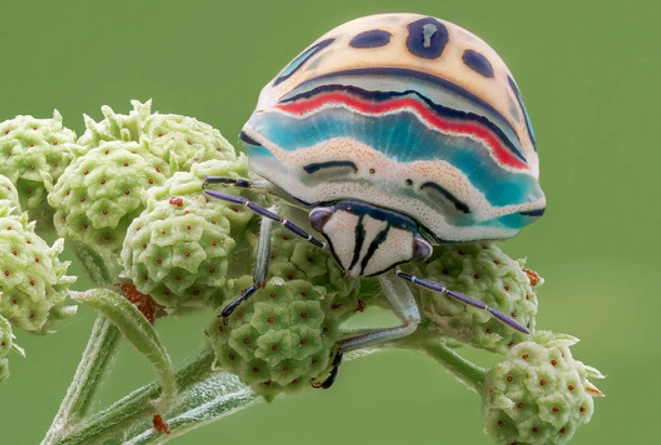
This diet makes them a potential agricultural pest on their favorite crops, like cotton and hibiscus. A few bugs? No problem. A large infestation? Farmers might start to get worried as the plants get weakened. It's the classic conflict between human agriculture and insect survival.
Think of them as tiny, artistic vampires... but for plant juice instead of blood. They're not picky eaters within their preferred plant families, which is why they can thrive in different areas.
Why So Colorful? The Science Behind the Art
This is the million-dollar question. In nature, bright colors usually mean one of two things: "I'm delicious, come eat me" (which is bad) or "I'm dangerous, stay away" (which is good). For the Picasso bug, it's definitely the latter. This is called aposematic coloration.
The vibrant, contrasting patterns are a warning sign to potential predators like birds and lizards. It's a billboard that says, "Back off, I taste terrible or I might make you sick." And it's not a bluff.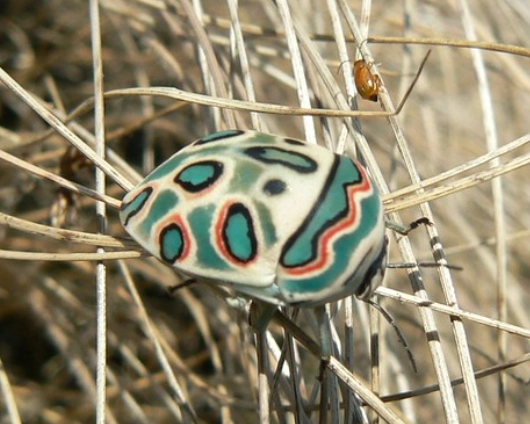
The Not-So-Secret Weapon: Stink and Irritants
Like its stink bug relatives, the Picasso bug has defensive glands. When threatened, it can release a foul-smelling, chemically irritating fluid. I've read accounts from entomologists who have handled them (with care, and usually with gloves), and even they say the smell is potent and unpleasant. For a small bird, this experience is enough to teach it to avoid anything with that specific crazy pattern in the future.
The colors and the chemical defense are a perfect one-two punch for survival. The colors advertise the danger from a distance, and the stink confirms it up close. Really, it's that simple. Evolution decided that being flashy and smelly was a better survival strategy than being camouflaged for this particular bug. And you know what? It works.
Picasso Bug vs. The World: Behavior and Interactions
They're mostly solitary as adults, just going about their business of finding food and mates. They're not aggressive toward humans or other insects in a territorial way. Their entire defense is passive-aggressive: look scary and smell bad if bothered.
They can fly, using membranous hind wings tucked under that colorful hard shell. But they're not marathon fliers. It's more for short hops between plants or a quick escape.
One of the most charming bits of Picasso bug facts is their mating behavior. The male will approach the female carefully, and they'll engage in a period of antennal touching—like a little bug conversation. After mating, the female takes on the sole responsibility of guarding her egg cluster until they hatch, which is a pretty dedicated mom move in the insect world.
Can You Keep a Picasso Bug as a Pet? The Honest Truth
I get this question a lot. They're stunning, so the desire is understandable. But here's my blunt opinion: it's generally a bad idea.
Let's be real: They are wild insects from a specific tropical climate. Recreating that perfectly in a terrarium is tough. They need specific host plants to feed on (not just any leaf), the right humidity, and the right temperature. Most importantly, they are not interactive pets. You can't handle them because a) you'll stress them out, and b) they might release their stink, which will ruin your day and your room's smell.
Furthermore, depending on where you live, importing them might be illegal due to biosecurity laws. You don't want to introduce a potential plant pest to a new region. The ethical and practical choice is to admire them in photos, documentaries, or if you're lucky, in their natural habitat on a responsible eco-tour.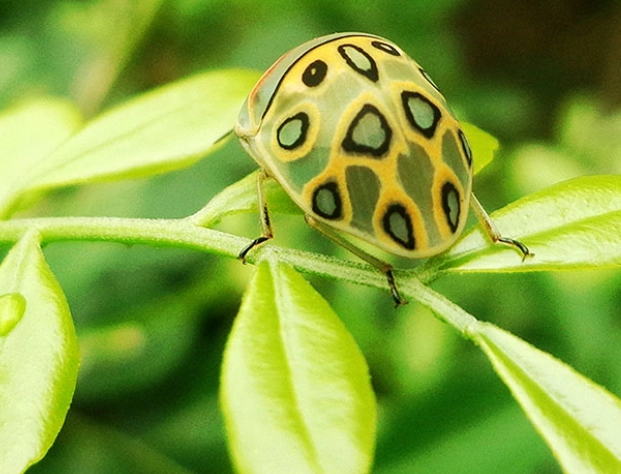
If your heart is set on observing insects up close, there are far hardier and more suitable species for beginners. The core Picasso bug facts point to a creature best left in the wild, being its beautiful, untamed self.
Diving Deeper: Scientific Classification and Research
For the science-minded folks, here's where the Picasso bug fits into the grand tree of life. This taxonomy isn't just academic; it helps scientists understand its relationships to other insects and trace its evolution.
- Kingdom: Animalia (It's an animal, obviously)
- Phylum: Arthropoda (Jointed legs, exoskeleton)
- Class: Insecta (It's an insect)
- Order: Hemiptera (The true bugs - sap-suckers)
- Family: Scutelleridae (Shield-backed bugs)
- Genus: Sphaerocoris
- Species: S. annulus
Research on the Picasso bug often focuses on its aposematic coloration as a model for evolutionary studies. Scientists are fascinated by how such patterns evolve and how effective they are. Organizations like the Royal Entomological Society often publish studies on insect defense mechanisms, and the Picasso bug is a prime example. Another great resource for credible information on insect biodiversity is the Smithsonian Institution, whose entomology departments document species from around the globe.
Your Picasso Bug Facts Questions, Answered
Final Thoughts: Why We're Obsessed with This Little Bug
I think the obsession with Picasso bug facts comes down to a simple human truth: we are drawn to beauty and mystery. In a world where we think we've seen it all, an insect that looks like a miniature gallery piece reminds us that nature is the most incredible artist of all. It challenges our notion of what a "bug" should look like.
It's a perfect example of evolution's creativity. The colors aren't for us; they're a sophisticated language of survival. Every time someone searches for Picasso bug facts, they're not just looking for a trivia answer. They're trying to connect with a tiny piece of natural wonder. And honestly, I think that's a pretty great thing.
So, the next time you see that iconic image, you'll know the full story.
You'll know it's a sap-sucking shield bug from Africa, wearing a warning sign that doubles as abstract art, armed with a stink bomb, and living its best colorful life on a hibiscus leaf. And that's a much richer story than just "look, a pretty bug." That's the depth behind all those fascinating Picasso bug facts.



Comments
Leave a Comment