Quick Guide
- From Shell-Dweller to Ocean Drifter: The Wild Anatomy of a Heteropod
- Meet the Likely "Sea Elephants": A Closer Look at Key Species
- Where Do You Find These Oceanic Ghosts? (Hint: It's Not Easy)
- Why Should We Care About a Weird Swimming Snail?
- Common Questions About Sea Elephant Heteropods (The Stuff You Actually Want to Know)
- The Challenges of Studying and Conserving a Nearly Invisible Animal
- Final Thoughts: Embracing the Mystery
Okay, let's be honest. The first time I heard the term "Sea Elephant heteropod," my brain did a little backflip. An elephant? In the sea? With weird feet? It sounds like something from a fantasy novel, not a real creature you'd find drifting in the ocean's twilight zone. I pictured some massive, trunk-nosed beast lumbering across the seabed. I was, of course, completely wrong.
The reality is both more bizarre and more fascinating. It turns out the name is a classic case of scientific naming being... well, a bit imaginative. There's no trunk, no giant size (compared to a land elephant, anyway), and it's not even a mammal. We're talking about a snail. A very, very special kind of swimming snail. That's the core of what a Sea Elephant heteropod is. The name "heteropod" itself gives a clue – it comes from Greek words meaning "different foot," which is a perfect description for how these creatures have adapted their single muscular foot into a swimming fin.
Here's the quick truth bomb: A Sea Elephant heteropod is not one single species. It's a common name that gets applied to certain large species within the heteropod family, particularly in the genus Carinaria. The "Sea Elephant" moniker likely comes from their size (they're giants compared to most plankton) and perhaps the shape of their body or trunk-like proboscis. When people search for Sea Elephant heteropod, they're usually trying to understand these specific, larger members of a much broader group of amazing oceanic snails.
From Shell-Dweller to Ocean Drifter: The Wild Anatomy of a Heteropod
To really get what makes a Sea Elephant heteropod tick, you have to forget everything you know about garden snails. This is evolution gone off the deep end, in the best way possible.
Imagine you're a snail. Your whole life is about that spiral shell on your back, right? It's your home, your armor. Now imagine deciding, "You know what? This shell is holding me back. I want to swim." That's essentially the evolutionary journey of the heteropod. Many species, especially the larger ones like the potential Sea Elephant heteropod candidates, have drastically reduced, thin, cap-shaped shells or lost them almost entirely as adults. Their entire body plan has been re-engineered for a life of perpetual motion in the open water column.
The Swimming Machine: Key Body Parts
Let's break down the parts of this living submarine. The most obvious feature is the foot. In your garden snail, it's a flat crawling organ. In a heteropod sea elephant, it's a vertical, fin-like structure called a parapodium. They flap this thing rhythmically to propel themselves through the water, often with a surprising grace. It's not fast swimming, more a slow, deliberate sculling that keeps them suspended.
Then there's the body, or visceral mass. In many of the larger species, this is transparent. You can literally see right through them. I remember the first time I saw a high-quality image of Carinaria cristata, a prime candidate for the "sea elephant" name. Its body was like a delicate, gelatinous canoe, with internal organs neatly arranged inside. The transparency is a perfect camouflage in the open ocean, where hiding places are nonexistent.
The head is where things get really alien. They have a prominent proboscis—a trunk-like extension—which houses a complex mouth apparatus. And what an apparatus it is! They are fierce predators. Their mouth contains a radula, a ribbon-like tongue covered in teeth, but it's been modified into a weapon. Some species have harpoon-like teeth used to spear their prey, which mainly consists of other gelatinous zooplankton like salps, jellyfish, and even other mollusks.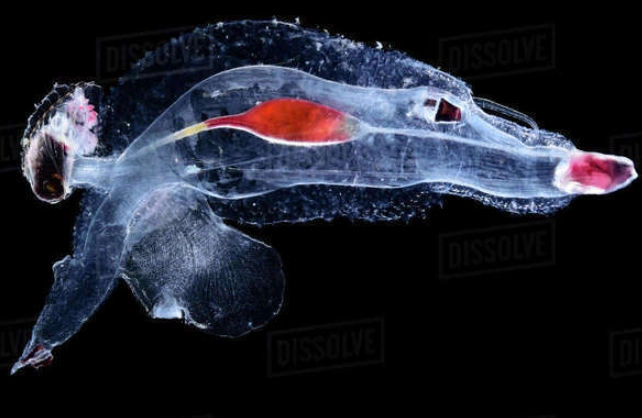
Meet the Likely "Sea Elephants": A Closer Look at Key Species
Since "Sea Elephant heteropod" isn't a formal scientific name, it's helpful to know which actual species fit the bill. Based on size, appearance, and the common use of the name in older texts and among marine enthusiasts, a few species stand out. It's less about a single animal and more about a type of animal.
The genus Carinaria is your best bet. These are the giants of the heteropod world, often reaching 5, 10, or even more centimeters in length. In the world of planktonic snails, that's enormous.
| Likely "Sea Elephant" Species | Scientific Name | Key Identifying Features | Typical Size |
|---|---|---|---|
| The Crested Heteropod | Carinaria cristata | Prominent, keel-like crest on its tiny, cap-shaped shell; large, transparent body. | Up to 10 cm (body), shell ~1 cm |
| The Pacific Sea Elephant | Carinaria japonica | More robust body, less extreme transparency than C. cristata. Common in Pacific waters. | 5-8 cm |
| The Mediterranean Heteropod | Carinaria lamarcki | Found in warmer Atlantic/Mediterranean waters; has a distinct, small, conical shell. | 3-6 cm |
You'll notice the shell is always small relative to the animal. In Carinaria cristata, it's this tiny, ear-shaped cap sitting on the front of the animal's back. It looks almost like an afterthought, a vestige of its evolutionary past. The animal's soft, gelatinous body does most of the work of providing structure and buoyancy.
So, when someone wonders about a Sea Elephant heteropod, they're probably picturing something like Carinaria cristata.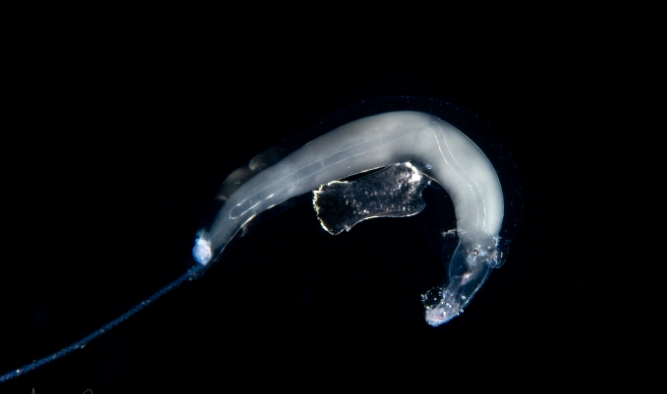
Where Do You Find These Oceanic Ghosts? (Hint: It's Not Easy)
This is where the challenge—and the magic—comes in. You won't find a Sea Elephant heteropod on a coral reef or washed up on your local beach (unless you're incredibly lucky and in a very specific location). They are inhabitants of the open ocean, the pelagic zone. More specifically, they are often found in the mesopelagic zone, also known as the twilight zone, which ranges from about 200 to 1000 meters deep.
They perform daily vertical migrations, a common behavior in the deep sea. At night, they may rise closer to the surface to feed. During the day, they descend back into darker, cooler waters to avoid predators. This makes them difficult to study. You can't just go for a dive and see one. They are primarily collected via specialized plankton nets towed from research vessels or observed by remotely operated vehicles (ROVs).
A personal frustration: The internet is full of mislabeled images. You'll search for Sea Elephant heteropod and find pictures of elephant seals, siphonophores, or other gelatinous creatures. It's a real pain if you're trying to get an accurate visual. Trust scientific databases or reputable marine biology image libraries. A great resource for verified information and imagery is the World Register of Marine Species (WoRMS). It's the go-to authoritative database for checking taxonomy and finding legitimate sources.
Their distribution is global but patchy. They are more common in tropical and temperate waters. I recall reading a research paper from the Woods Hole Oceanographic Institution that discussed how heteropod populations can be indicators of water masses and oceanographic conditions. Their presence or absence tells scientists something about the health and movement of ocean currents.
Why Should We Care About a Weird Swimming Snail?
Beyond the sheer cool factor, heteropods play a significant role in the ocean's food web. They are mid-level predators. They consume a lot of gelatinous plankton, which are often abundant but not eaten by many other animals. In turn, they are prey for fish, sea birds, and even other, larger pelagic creatures. They help transfer energy through the ecosystem.
Furthermore, their shells, though small, are made of aragonite, a form of calcium carbonate. When they die, these shells sink and contribute to the "marine snow" that feeds deep-sea ecosystems and sequesters carbon on the seafloor. There's growing concern that ocean acidification—the decrease in ocean pH due to absorbed CO2—could make it harder for them to build their shells. Studying a Sea Elephant heteropod and its relatives gives us a window into how climate change is affecting even the most obscure parts of the ocean.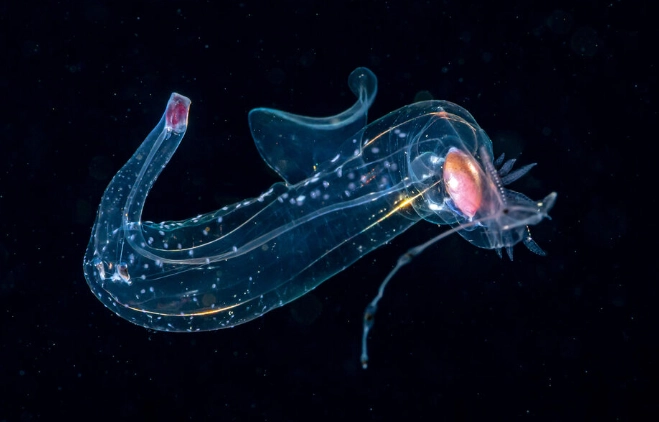
The Big Picture Role
- Predator Control: They help regulate populations of jellyfish and salps.
- Prey Source: They are a food item for commercially important fish species.
- Carbon Cycle: Their sinking shells are a tiny but part of the biological carbon pump.
- Bio-indicators: Their sensitivity makes them potential sentinels for ocean change.
Common Questions About Sea Elephant Heteropods (The Stuff You Actually Want to Know)
Can I keep a Sea Elephant heteropod in an aquarium?
Absolutely not. This is a hard no. Their requirements are impossibly specific for a home aquarium. They need cold, deep, pristine water, a constant supply of live gelatinous plankton for food, and immense space to perform their vertical migrations. Attempting to keep one would be unethical and would result in the animal's quick death. They belong in the vast open ocean.
Are they dangerous to humans?
No. They pose zero threat. You will almost certainly never encounter one while swimming. Even if you did, they are not aggressive toward large animals and their feeding apparatus is designed for tiny, soft-bodied prey. The only danger is to their delicate bodies from human activity like pollution or fishing gear.
How do they reproduce?
Like many marine invertebrates, they are thought to be broadcast spawners. Males and females release sperm and eggs into the water column, where fertilization happens. The larvae are planktonic, often looking completely different from the adults, and will eventually metamorphose into the swimming juvenile form. It's a risky strategy, but it works for life in the open ocean where finding a mate is difficult.
What's the difference between a heteropod and a pteropod?
Great question, and a common point of confusion. Both are pelagic snails. Pteropods are often called "sea butterflies." They swim using wing-like extensions of their foot (parapodia) and are mostly herbivorous, feeding on phytoplankton. Heteropods, our Sea Elephant heteropod included, use a single, vertical fin-like foot and are almost exclusively carnivorous. Pteropods tend to have more prominent, coiled shells, while heteropods have reduced or lost shells.
The Challenges of Studying and Conserving a Nearly Invisible Animal
Let's not sugarcoat it. Research on these animals is tough. They are fragile—often completely disintegrated when caught in a standard net, leaving researchers with just a shell or a mangled piece of tissue. Specialized, gentle sampling gear is needed. Deep-sea ROVs with high-definition cameras have been a game-changer, allowing us to observe them alive in their natural environment for the first time.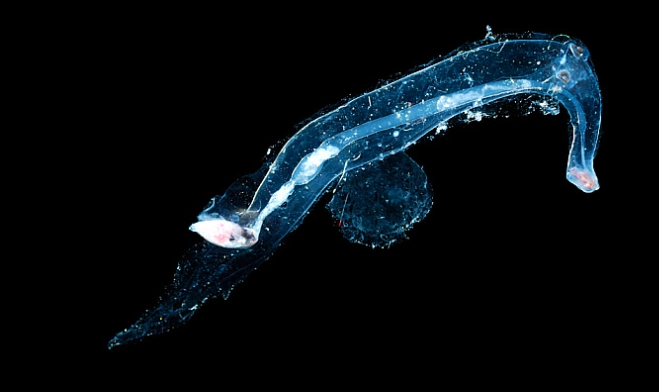
Conservation is a tricky subject for a creature that isn't directly exploited. The threats are indirect but severe: ocean acidification, plastic pollution (they can mistake microplastics for food), and changes in ocean temperature and currents that disrupt their delicate food web. Protecting them means protecting the entire open ocean ecosystem, a daunting global challenge. Organizations like the International Union for Conservation of Nature (IUCN) work to assess the health of marine biodiversity, though most heteropods are listed as Data Deficient due to the lack of population information.
I once spoke to a researcher who spent months at sea towing nets for hours just to collect a handful of intact specimens. The dedication is incredible. It really puts into perspective how much we still don't know about the residents of our own planet's largest habitat.
Final Thoughts: Embracing the Mystery
So, the Sea Elephant heteropod isn't a mythical beast. It's a real, flesh-and-blood (well, gel-and-muscle) example of evolution's incredible creativity. It's a snail that gave up the rock for the open sea, traded its shell for transparency, and turned its foot into a fin. The name might be a bit misleading, but the creature it points to is a testament to the hidden wonders of the deep ocean.
Its elusive nature is part of its charm. It reminds us that there are still corners of the world filled with animals that defy our basic expectations. The next time you look out at the open sea, remember that below the waves, in the vast blue nothingness, creatures like the Sea Elephant heteropod are drifting, hunting, and playing their small but vital part in the grand machinery of the ocean. We're just beginning to understand them, and that's a journey worth following.
And if you take away one thing, let it be this: it's a swimming snail. A magnificent, predatory, deep-sea swimming snail. How cool is that?

Comments
Leave a Comment