In This Story
Okay, let's talk about this. You've probably seen the clickbait headlines screaming about a "giant rat" discovered in a volcano. My first thought was, come on, really? A volcano? It sounds like something straight out of a bad monster movie. I remember scrolling past it, thinking it was just more internet nonsense. But then I started digging, and you know what? There's actually a real scientific story here, buried under all the sensationalism. It's not about Godzilla's cousin, but it's way more interesting than you might think.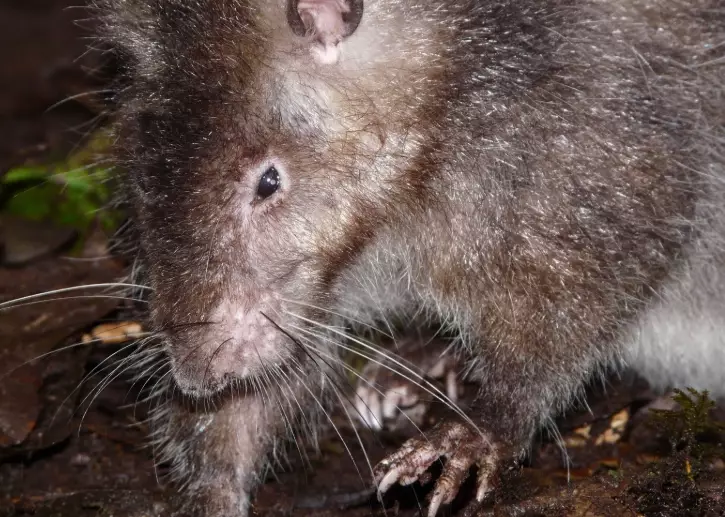
The core question, was the giant rat found in a volcano?, is a perfect example of how a simple fact gets twisted. The short, technically-correct-but-misleading answer is... sort of. The longer, more truthful answer is what we're here for. It involves a dedicated scientist, a remote and dangerous location, and a rodent that's a true survivor. This isn't about finding a rat swimming in lava; it's about discovering life in one of the most hostile places on Earth.
What Actually Happened? The Real Discovery
So, where did this all start? The story originates from the Solomon Islands, specifically from Mount Bosavi. Now, Mount Bosavi isn't your classic cone-shaped, lava-spewing volcano. It's a giant, extinct volcano. I mean, it hasn't erupted in about 200,000 years. Calling it a "volcano" is like calling your quiet, retired uncle a "soldier" because he served decades ago—technically true, but it paints a very specific and active picture that's not quite right.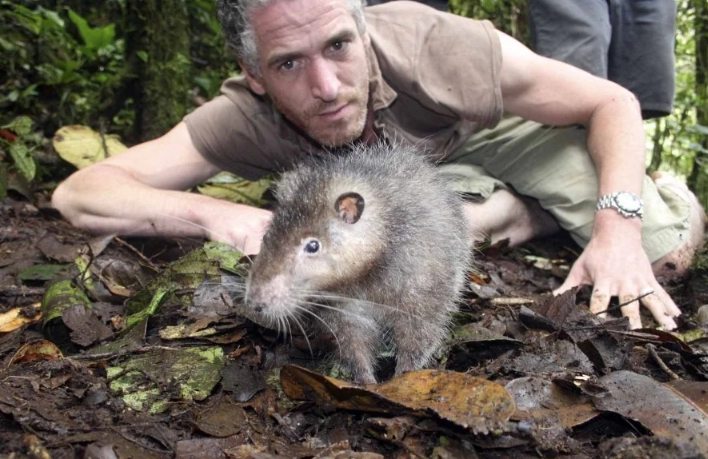
The discovery was made back in 2009 during a BBC-funded expedition led by a mammalogist named Dr. Tyrone Lavery. The team was exploring the crater of this extinct volcano, which, over millennia, had developed its own isolated and lush rainforest ecosystem, completely cut off from the surrounding forests by the crater's steep, 1,000-meter walls. It's a lost world up there.
Dr. Lavery and his team were documenting biodiversity when they came across a large, unusual rodent. This leads us directly back to our main query: was the giant rat found in a volcano? In the geographical sense, yes, it was found inside the crater of an extinct volcano. In the pop-culture sense of a fiery, active volcano? Absolutely not.
Meet the "Giant" Rat: Mallomys spp.
Let's talk about the star of the show. The rat was new to science. It was a species of giant woolly rat, belonging to the genus Mallomys. "Giant" is relative, of course. To you and me, it's huge for a rat—reportedly about the size of a large cat, weighing over 2 pounds and measuring more than 30 inches from nose to tail. But in the world of rodents, especially in Papua New Guinea and surrounding islands, big rats aren't that uncommon. The infamous "giant rat" label is, frankly, a media hook.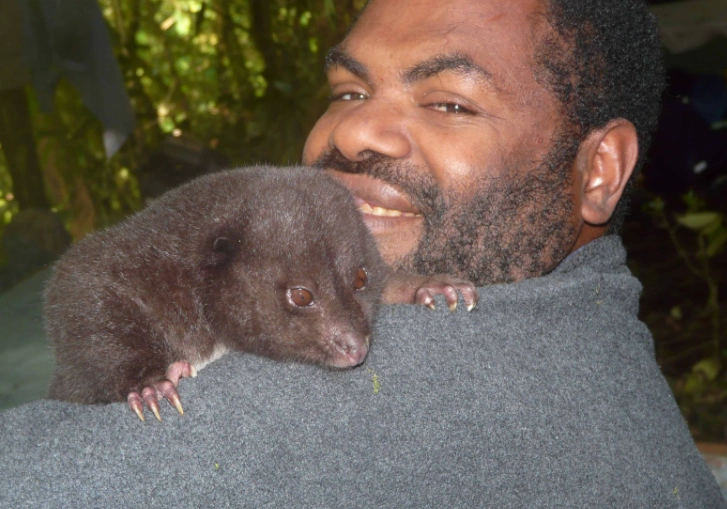
This particular rat, sometimes called the "Bosavi woolly rat," is a gentle giant. It's a herbivore, munching on leaves and fruits in its secluded crater home. It had no fear of humans because it had never encountered them before. That's the real magic of this find—not its size, but its profound isolation.
Busting the Myth: Volcano vs. Crater Ecosystem
This is the crucial distinction everyone misses. The headlines scream "volcano" because it's exciting. But scientists care about the crater ecosystem. An extinct volcano's crater, after centuries of erosion and soil accumulation, can become a unique ecological island. The steep walls act as barriers, allowing species to evolve independently. The environment inside is a cool, misty rainforest, not a hellscape. When you ask, was the giant rat found in a volcano?, you're really asking about a discovery in a pristine, isolated rainforest that happens to be shaped like a bowl because of ancient geological activity.
I think the media focus on the "volcano" part does a disservice to the actual science. It turns a story about evolutionary biology and conservation into a cheap monster flick. It's frustrating because the truth is cooler.
Why Does This Discovery Matter? Beyond the Hype
Forget the giant rat volcano meme for a second. This find matters for several concrete reasons that get lost in translation.
First, it's a testament to how little we know about our planet. Here was a large mammal, unknown to science, living just a few hundred miles from Australia. It shows there are still pockets of the world, even ones that seem inhospitable at first glance, hiding unique life. If this rat was in a volcano crater, what else is out there?
Second, it highlights the concept of "sky islands." Isolated mountain tops or crater basins act like islands in the sky. Species get trapped there and evolve separately from their lowland cousins. The Bosavi crater rat likely descended from a population that was stranded when the volcano became extinct and the walls became too steep to cross. It's a live-in example of evolution in action.
Finally, and most urgently, it's a story about vulnerability. This rat evolved without predators like humans, cats, or dogs. Its tiny, isolated world makes it incredibly susceptible to any change. Logging, climate change, or introduced species could wipe it out easily. Discovering it is the first step to potentially protecting it.
Scientific Context: Rodents in Extreme Places
While the Bosavi find is special, rodents are famously adaptable. The Smithsonian's National Museum of Natural History has extensive records showing rodents in diverse habitats. For instance, the Smithsonian Institution details species living in deserts, tundras, and yes, even on the slopes of active volcanoes (where soil is fertile). The key with the Bosavi rat is its complete isolation, not just its tough habitat. The IUCN Red List, the global authority on species conservation status, is filled with rodents found only in one specific mountain range or valley—this is the same principle, just with a more dramatic geological backstory.
Here’s a quick breakdown of what makes this discovery different from your average new rodent:
| Feature | The "Giant Volcano Rat" (Bosavi Woolly Rat) | A Typical New Rodent Discovery |
|---|---|---|
| Location Context | Isolated inside the crater of an extinct volcano (a "sky island"). | Often in a remote forest, swamp, or mountain range, but with some connectivity. |
| Ecosystem | Pristine, closed-canopy rainforest that evolved in isolation for millennia. | Part of a larger, contiguous ecosystem. |
| Level of Endemism | Extremely high. Found nowhere else on Earth, likely never left the crater. | May be endemic to a region, but that region could be quite large. |
| Public & Media Angle | "Giant rat in a volcano!" – High sensationalism due to location. | "New species of mouse discovered" – Lower media interest. |
| Scientific Significance | High. A perfect natural lab for studying isolation and evolution. | Varies, but often adds to biodiversity catalogs. |
Looking at it this way, you see why the giant rat volcano discovery captured imagination, even if inaccurately.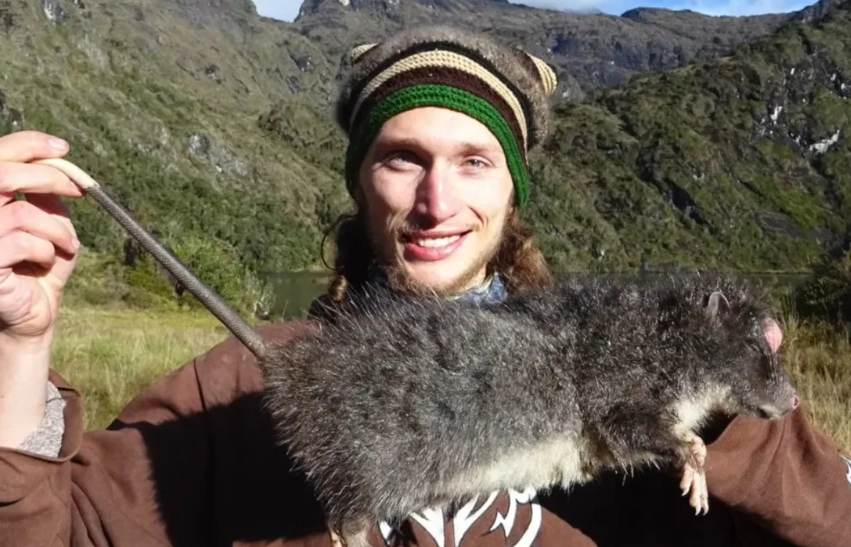
Addressing Your Burning Questions (FAQ)
Let's tackle the questions you're actually typing into Google. This is the stuff I wondered about too.

The Bigger Picture: Volcanoes as Life Arks, Not Just Destroyers
We usually think of volcanoes as forces of pure destruction, and rightly so. But in the long, slow scale of geology, they also create opportunities. Volcanic soil is incredibly fertile. An extinct crater creates a sheltered bowl. Life floods into these spaces and, given enough time and isolation, cooks up something new.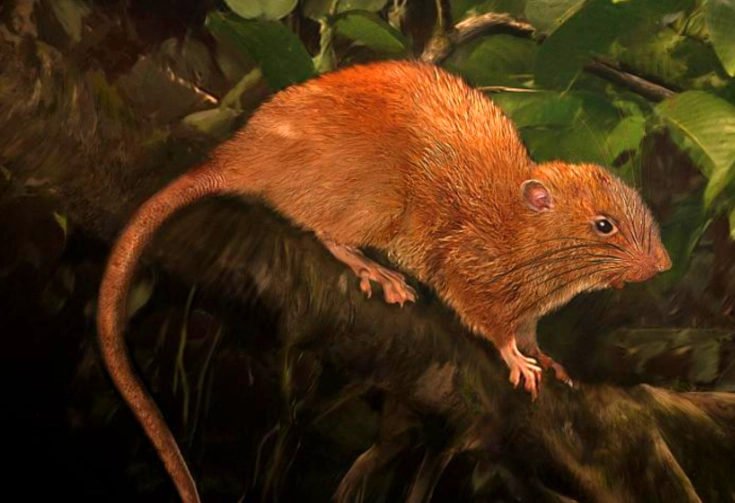
So, when you strip away the hype, the story of the giant rat in the volcano is a story about creation and sanctuary. It's about how life finds a way in the most unexpected nooks and crannies. The rat isn't a monster; it's a relic, a living piece of a unique historical and biological process.
Organizations like National Geographic, which partially covered this expedition, play a key role in bringing these remote discoveries to light, though sometimes the nuances get flattened for a general audience.
Final Thoughts: Separating Science from Soundbite
Look, the internet loves a wild story. "Giant rat found in a volcano" is irresistible clickbait. But as someone who's now spent too much time reading scientific papers and expedition logs about this, the real story is so much better. It's not about a single weird animal; it's a window into how biodiversity works, how species evolve in isolation, and how fragile these hidden worlds are.
The next time you see a headline that makes you go "What?!", like was the giant rat found in a volcano, it's worth digging a little deeper. The truth is usually less like a sci-fi movie and more like a complex, beautiful puzzle about our planet. And honestly, that's the stuff that's truly worth sharing.
So, the definitive answer to the viral question? The giant rat was found in the secluded, rainforest-filled crater of an extinct volcano. Not quite as snappy, but a whole lot more real.


Comments
Leave a Comment