Quick Guide
Okay, let's talk about the Bosavi woolly rat. You've probably heard the rumors – a rat the size of a small dog, discovered in a remote volcano crater. It sounds like something from a fantasy novel, right? I remember first reading about it and thinking it had to be an exaggeration. But then you see the pictures, and the reality sinks in. This thing is massive. So, the burning question everyone has is: how big is the Bosavi woolly rat, actually? Not just a vague "big," but in numbers we can understand, compared to things we know.
Well, get ready, because the answer is pretty mind-blowing. We're not talking about a slightly oversized city rat. This is a completely different league of rodent. The discovery back in 2009 by a BBC expedition team filming for the "Lost Land of the Volcano" series was a genuine shocker, even for seasoned scientists. They weren't even looking for it specifically; it just ambled into their camp. Imagine that scene.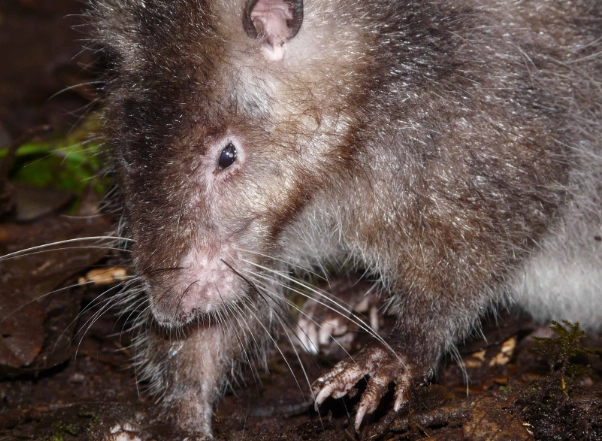
The Straight Answer First: How big is the Bosavi woolly rat? Adult specimens are reported to measure about 32 inches (82 cm) from nose to tail tip. Its body alone can be around 20 inches (50 cm) long, with a tail adding another 12 inches (30 cm) or so. But here's the real kicker – its weight. This rodent can tip the scales at a staggering 3.3 pounds (1.5 kilograms). To put that in perspective, that's roughly the weight of a large adult chihuahua or a full-grown house cat. It's not just long; it's solid.
But just throwing numbers out there doesn't really do it justice. To truly grasp how big the Bosavi woolly rat is, we need to dive deeper, look at comparisons, and understand the context of its home. Because its size isn't just a random fact; it's a direct result of where and how it lives.
Breaking Down the Numbers: A Detailed Size Analysis
Let's get specific. When we ask how big is the Bosavi woolly rat, we need to break it down into its components. Length and weight tell different parts of the story.
The body length of 20 inches is already enormous. Your standard brown rat (*Rattus norvegicus*) might reach about 10 inches in body length on a very good day. So, the Bosavi woolly rat's body is double that. Its fur is thick and woolly (hence the name), giving it an even bulkier appearance. The tail isn't as disproportionately long as some rat species; it's more muscular and furry too.
Now, the weight – 1.5 kg. This is where it becomes truly impressive. Most large rodent species are built lightly. The Bosavi woolly rat has a robust, stocky build. Scientists who handled it (like Dr. Kristofer Helgen from the Smithsonian Institution, who was part of the team) described it as heavy and substantial in the hand, not lanky or light. This heft suggests a powerful animal adapted to a specific ecological niche.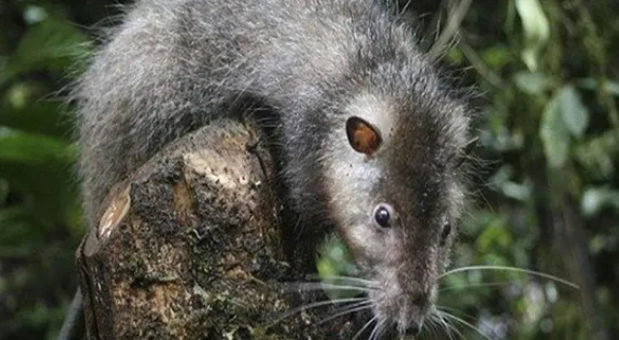
Personal aside: I've held a pet rat that weighed about a pound, and it felt surprisingly solid. Trying to imagine an animal three times that weight, wild and muscular... it completely changes the mental image from a "rat" to something more akin to a small groundhog or a large guinea pig on steroids.
Why does this matter? In biology, size like this in an isolated environment often points to a phenomenon called insular gigantism. It's not a hard and fast rule, but on islands or in isolated habitats with few predators and ample resources, small animals sometimes evolve to become much larger over generations. The Bosavi crater, its home, is a perfect setup for this.
How It Stacks Up: The Giant Rodent Leaderboard
To really answer how big is the Bosavi woolly rat, we have to see its place in the rodent world. Is it the biggest? Where does it rank? This is where a comparison table helps cut through the clutter.
| Rodent Species | Average Body Length | Average Weight | Native Region | Notes |
|---|---|---|---|---|
| Capybara | 3.5 - 4.4 ft (106-134 cm) | 77 - 146 lbs (35-66 kg) | South America | The undisputed heavyweight champion of rodents. |
| North American Beaver | 29-35 in (74-90 cm) | 24-71 lbs (11-32 kg) | North America | Longer on average, but much heavier due to aquatic adaptation. |
| Bosavi Woolly Rat (Mallomys sp.) | ~20 in (50 cm) | ~3.3 lbs (1.5 kg) | Mt. Bosavi, Papua New Guinea | A true giant among true rats (genus Mallomys). |
| Gambian Pouched Rat | 14-18 in (35-45 cm) | 2-3 lbs (1-1.4 kg) | Sub-Saharan Africa | Famous for landmine detection; similar weight but less stocky. |
| Common Brown Rat (for contrast) | ~10 in (25 cm) | 0.5-1 lb (0.2-0.45 kg) | Worldwide | This is our common urban reference point. |
Looking at this, the Bosavi woolly rat isn't the largest rodent overall – capybaras and beavers hold those titles. But here's the crucial distinction: it is almost certainly one of the largest true "rats" in the world. The term "rat" is loose, but in the genus *Mallomys* (the giant woolly rats of New Guinea), the Bosavi species is a top contender. It's arguably the largest rat species by mass that has been documented in recent times. Some historical island rats might have been larger, but they're extinct.
So, in the league of living, breathing rats you might theoretically encounter? It's a strong candidate for the gold medal.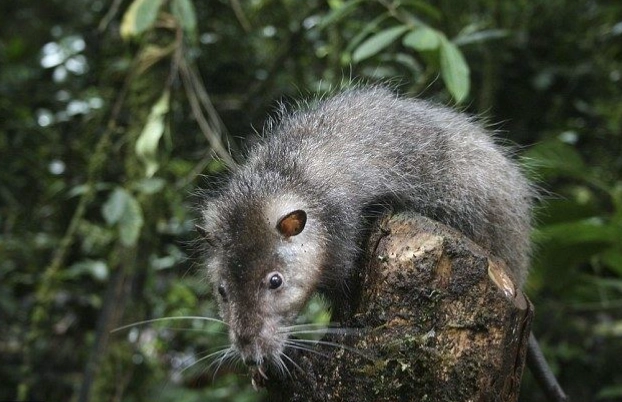
More Than Just Measurements: The Story Behind the Size
If we stop at the tape measure, we're missing the best part. The real fascination with how big the Bosavi woolly rat is lies in the "why" and the "how." Its size is a direct product of its prison-paradise: the Mount Bosavi crater.
Mount Bosavi is an extinct volcano in Papua New Guinea's Southern Highlands. Its crater, formed thousands of years ago, is a steep-walled bowl about 4 kilometers wide and over 1,000 meters deep. For the animals inside, it's a world apart. Few predators made it in or evolved there. For a large rodent, the main threats might have been birds of prey or maybe snakes – nothing like the constant pressure from mammalian predators found elsewhere.
This isolation and safety allowed the ancestors of this rat to grow. With less energy spent on constant vigilance and escape, and with a rich forest floor to forage on (think fruits, roots, plants), natural selection likely favored larger size. Larger size can mean better ability to store nutrients, compete for resources, and perhaps even regulate temperature in the cool, high-altitude crater forest. Its woolly fur is a clear adaptation to the cooler climate up there.
The discovery was so significant that the species, while commonly called the Bosavi woolly rat, doesn't even have an official scientific name yet! It's a new species provisionally placed in the genus Mallomys. The formal description and naming process in science can take years. You can read more about the expedition and the scientific context from the Smithsonian Magazine, which often covers such taxonomic discoveries.
I think one of the most common misconceptions is that something this big must be aggressive or dangerous. By all accounts from the researchers, it was quite docile when encountered. It's a gentle giant, evolved in a place without humans. Its size wasn't for combat; it was for thriving in a stable, predator-light environment. That's a humbling thought.
Common Questions People Really Ask
Beyond the basic how big is the Bosavi woolly rat, people's curiosity branches out. Here are some of the most frequent tangents, based on what I see others wondering online.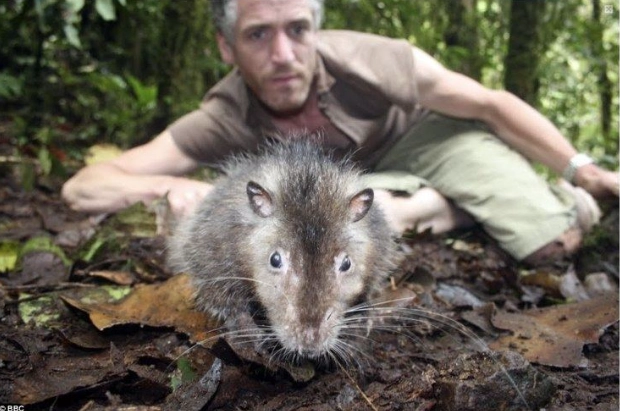
Could it be kept as a pet?
This question pops up a lot, probably from rodent enthusiasts amazed by its size. The short, unequivocal answer is no. And it's a bad idea to even think about it. First, it's a wild animal from an extremely specific and fragile ecosystem. Taking it from its home would be unethical and likely illegal under international conservation agreements (CITES). Second, its ecological needs – the specific temperature, humidity, diet, and social structure of the Bosavi crater – are virtually impossible to replicate in captivity. It would likely suffer and die. We should appreciate it as a wonder of the remote wild, not a potential cage-mate. This is a point where wildlife conservation concerns trump sheer curiosity.
Is it related to the "giant rats" sometimes in the news?
You'll see headlines about "giant rats" in cities like New York or London. Those are almost always large examples of common brown rats, perhaps fed exceptionally well. They might reach 1-1.5 lbs in extreme cases, which is half or less of the Bosavi rat's weight. They are also a different shape – more lean and adapted for squeezing through urban spaces. The Bosavi woolly rat is a different genus entirely, from a pristine rainforest. They share a common ancestor way back, but that's about it. The urban "giants" are bloated versions of a common species; the Bosavi rat is a naturally evolved giant in its own right.
What does it eat to get that big?
It's an herbivore, a vegetarian giant. The crater floor is rich in vegetation. It likely feeds on a variety of forest plants, leaves, fruits, ferns, and roots. Abundant, year-round plant food without much competition allowed for a lifestyle that supported a larger body. It doesn't need to hunt or scavenge; it just forages. A simple, peaceful diet for a simple, peaceful (and huge) creature.
Why hasn't it been studied more? This is a great question and a user pain point. The remoteness of Mount Bosavi is the primary reason. The area is incredibly difficult to access, requiring helicopter support or grueling multi-day hikes. Political and logistical challenges in Papua New Guinea further complicate long-term scientific study. The initial 2009 expedition, documented by the BBC, was a major event. Follow-up research is sparse and difficult. Much of what we know is from that first encounter and similar woolly rat relatives. So, the information pool is shallow, which is both frustrating and exciting – there's so much more to learn.
The Bigger Picture: Why Its Size Matters for Conservation
Understanding how big the Bosavi woolly rat is isn't just a trivia pursuit. Its monumental size makes it incredibly vulnerable. Species that evolve in isolation to become large and specialized are often the first to suffer when that isolation breaks.
Think about it. This rat knows no fear of humans. It lives in a small, contained area. If logging, mining, or even eco-tourism were to encroach on Mount Bosavi without extreme care, the population could be devastated rapidly. Introduced species like cats or dogs would be catastrophic predators. Its size, which was its advantage, becomes a liability in a changing world.
Its existence is a powerful argument for the protection of the entire Bosavi crater ecosystem. Protecting it isn't just about saving one giant rat; it's about preserving the unique web of life that produced such a creature. The World Wildlife Fund and other conservation groups highlight the Papua New Guinea forests as critical biodiversity hotspots. You can learn about broader conservation efforts in the region through organizations like the World Wildlife Fund.
In a way, its size is its own conservation flag. It's hard to ignore an animal that big and that unique.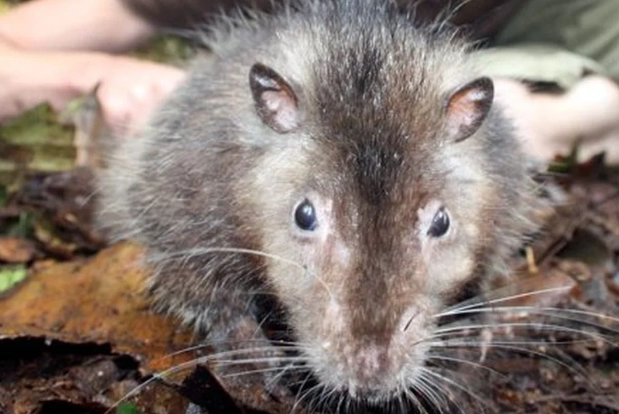
Final Thoughts: Grasping the Scale
So, let's circle back to the core question one last time: how big is the Bosavi woolly rat?
It's an animal that stretches over two and a half feet from its nose to the end of its tail. It weighs as much as a bag of sugar or a small laptop. It has the body length of a large house cat but the stocky build of a groundhog. It's a creature that looks like it should be from a bygone era, yet it was found alive and well in our lifetime, in a hidden world atop a mountain.
The numbers – 32 inches, 3.3 pounds – are the answer, but they're not the full story. The full story is one of isolation, evolution, and the incredible surprises our planet still holds in its remote corners. The Bosavi woolly rat's size is a testament to nature's ability to craft extraordinary solutions in extraordinary places. It reminds us that there are still wonders out there that defy our everyday expectations, wonders that are worth knowing about, and more importantly, worth protecting.
Hopefully, the next time someone asks you about giant rats, you can tell them not just about a measurement, but about the lost world inside a volcano that made it all possible.

Comments
Leave a Comment