Quick Guide
- Why You Can't Touch It: The Science of the Sting
- Spotting the American Dagger Moth Caterpillar: A Visual Guide
- What Happens If You Do Touch One? Symptoms and Timeline
- First Aid: Exactly What to Do After Contact
- When to See a Doctor
- Prevention: How to Safely Coexist
- Beyond the Touch: Common Questions Answered
- The Bottom Line: Appreciate, Don't Annoy
If you're reading this, you've probably seen one of these fuzzy critters on a leaf, maybe in your own backyard, and that question popped into your head. It looks kind of cute, right? All those hairs give it a soft, almost plush appearance. I get it. I had the same thought the first time I spotted one on an oak tree in my garden.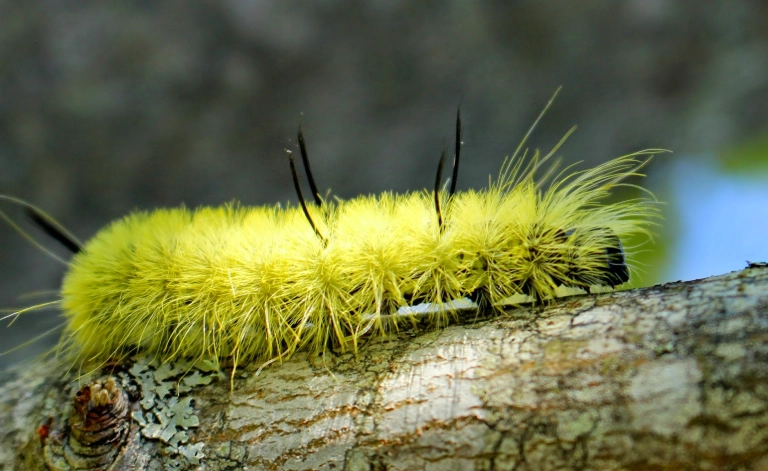
But here's the immediate, no-nonsense answer you came for: No, you absolutely should not touch an American dagger moth caterpillar. Not with your bare hands, not with gloves unless they're thick and dedicated for the purpose, and you should definitely keep kids and pets far away from it. Asking "can I touch American dagger moth caterpillar?" is like asking if you should poke a bee hive. The risk far, far outweighs any fleeting curiosity.
Straight Talk: This isn't a mild irritant. Contact with an American dagger moth caterpillar can cause a painful, itchy rash that resembles a severe reaction to fiberglass or poison ivy. For some people, especially those with allergies or sensitive skin, it can be a genuinely miserable experience that lasts for days. It's a defense mechanism, and it's very effective.
So, why is something so common and seemingly harmless actually a problem? Let's break down everything you need to know, from why it's dangerous to what to do if you or your child accidentally brushes against one. This guide is for anyone who spends time outdoors, has kids who love exploring, or just wants to understand the local wildlife a bit better.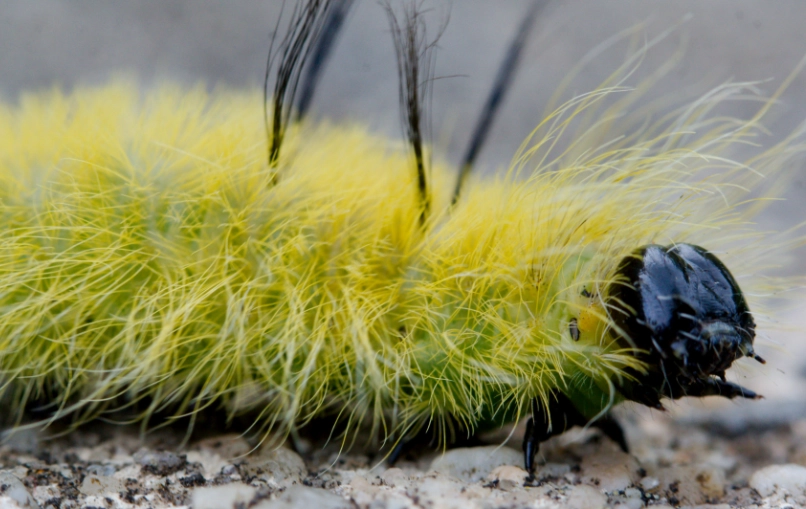
Why You Can't Touch It: The Science of the Sting
It all comes down to those hairs. They're not just for show. The American dagger moth caterpillar (Acronicta americana) is what entomologists call a "stinging caterpillar" or "urticating caterpillar." The long, yellow or white hairs you see are just the visible ones. Hidden among them are much shorter, specialized hairs called setae.
These setae are the real trouble-makers. They are hollow, brittle, and connected to poison glands at the caterpillar's base. When something (like your finger) touches them, they break off easily. Their structure is like tiny, barbed hypodermic needles. They penetrate your skin and deliver a cocktail of irritants. This isn't a bite or a sting in the traditional sense; it's a mechanical injection of irritating proteins.
Your body's immune system reacts to these foreign proteins, leading to inflammation, itching, and pain—a condition sometimes called caterpillar dermatitis or lepidopterism.
I made the mistake of lightly brushing one off a garden chair years ago. I didn't even see it. About twenty minutes later, my forearm felt like it had a bad sunburn combined with a thousand tiny splinters. It was not fun. It took a good three days for the redness and persistent itch to fully subside. A lesson learned the hard way.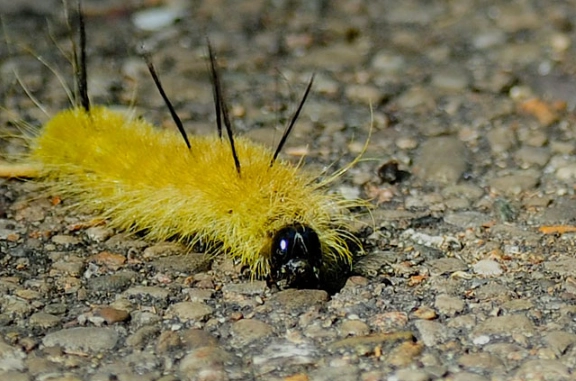
Spotting the American Dagger Moth Caterpillar: A Visual Guide
Before we talk about what happens if you touch one, you need to be sure you know what you're looking at. Misidentification is common. Here’s a detailed breakdown of its appearance, which changes as it grows.
Main Identification Features:
- Color: Typically a bright, lemon-yellow or pale yellow. Some can be more whitish. It's a very clean, noticeable color.
- Hairs: The most striking feature. Long, dense, and hair-like filaments (setae) that stand out from the body. They are usually pale yellow or white, and they are arranged in distinct clusters or tufts along its back.
- Black "Daggers": This is the namesake feature. Look for one pair of long, sleek, jet-black "hair pencils" or tufts near the front (thoracic region) and another pair near the rear. They look like small, stiff paintbrushes or, well, daggers. Not all individuals have these equally prominent, but they're a key clue.
- Size: When fully grown, they can be quite impressive—up to 2 to 2.5 inches (5-6 cm) long.
- Head: Usually black and shiny.
Where to Find Them: They are generalist feeders. You'll commonly find them on broadleaf trees like oak, maple, ash, elm, alder, willow, and poplar. They can also be on shrubs and sometimes even on garden plants if trees are nearby. They're active from late summer into fall (July to October) in most of their range across the eastern United States and parts of Canada.
To help you distinguish it from other common fuzzy caterpillars, here’s a quick comparison table. This is super useful because several species look similar at a glance.
| Caterpillar | Key Identifying Features | Stinging? | Common Confusion with American Dagger? |
|---|---|---|---|
| American Dagger Moth | Bright yellow/white, long soft hairs, distinct black "dagger" tufts front and rear. | YES | N/A |
| Yellow Woolly Bear | All yellow, dense short fur, no distinct black tufts, looks uniformly fuzzy. | YES | High. Often mistaken. Woolly bear is also a stinger. |
| Puss Caterpillar | Teardrop shaped, covered in long, silky grayish-brown fur (like a toupee). No distinct markings. | YES (Severe) | Low (looks very different). |
| Hickory Tussock Moth | White with a black line down its back, tufts of black and white hairs, black head. | YES | Medium. Color pattern is different. |
| Eastern Tent Caterpillar | Hairy, but with a clear white stripe down its back and blue/black markings. Social, builds webs. | No (irritating for some) | Low. Pattern is very distinct. |
| Gypsy Moth Caterpillar | Hairy, but with a pattern of blue and red dots down its back. No long tufts. | No (can cause rash) | Low. |
See the pattern? A good rule I follow now: If it's conspicuously fuzzy or hairy and you're in North America, assume it can sting until proven otherwise. It's the safest mindset. The question "can I touch American dagger moth caterpillar?" should extend to almost any unknown, fuzzy caterpillar.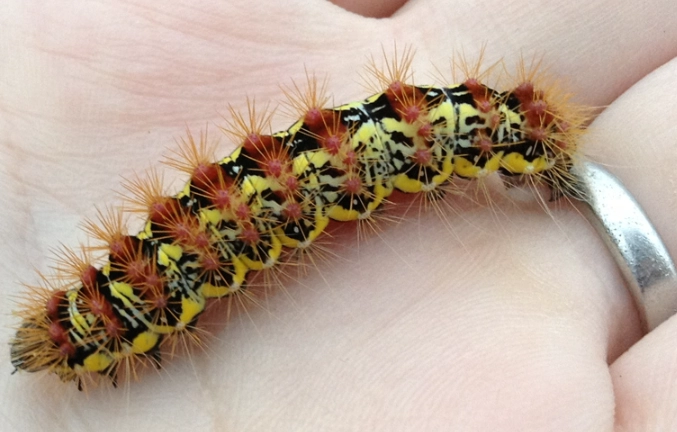
What Happens If You Do Touch One? Symptoms and Timeline
Okay, so let's say contact happened. Maybe you were moving a pot, or a kid grabbed at it before you could stop them. What should you expect? The reaction can vary from person to person based on sensitivity, the amount of contact, and where you were touched.
Common Symptoms of Contact:
The reaction usually follows a predictable pattern, but the intensity can swing wildly.
- Immediate to Within Minutes: A burning or stinging sensation. It often feels hot, like a mild burn.
- Within 5-30 Minutes: Intense itching sets in. This is usually the most prominent symptom. The area becomes red and inflamed.
- Raised Welts or Rash: Red bumps (papules) or raised, irregular welts (wheals) appear, often tracing the path of where the hairs dragged across your skin. Sometimes it looks like a patch of hives or a severe poison ivy rash.
- Swelling: The affected area may swell slightly.
- Possible Systemic Symptoms (Less Common): In more sensitive individuals, you might experience nausea, headache, or difficulty breathing if there's a severe allergic reaction. This is rare with dagger moths but possible.
My own reaction was mostly the intense itch and red bumps. The weirdest part was the "prickling" sensation that lingered for hours, even when I wasn't touching the area. It felt like the ghost of the caterpillar was still there. Not pleasant at all.
How Long Does It Last?
This is what everyone wants to know after the initial panic. For most people:
- Peak Discomfort: The first 4-12 hours are usually the worst for itching and burning.
- Rash Duration: The visible rash and bumps can last anywhere from 1 to 5 days. In my case, it was about 3 full days before the redness faded completely.
- Residual Itch: A mild, occasional itch might linger for a day or two after the rash looks better.
Scratching is the enemy here. It can push the tiny hair fragments deeper into your skin, worsen the inflammation, and potentially lead to a secondary bacterial infection. So, the big challenge is managing that itch.
First Aid: Exactly What to Do After Contact
Acting quickly and correctly can make a huge difference in the severity and duration of your symptoms. If you or someone else touches an American dagger moth caterpillar, follow these steps in order.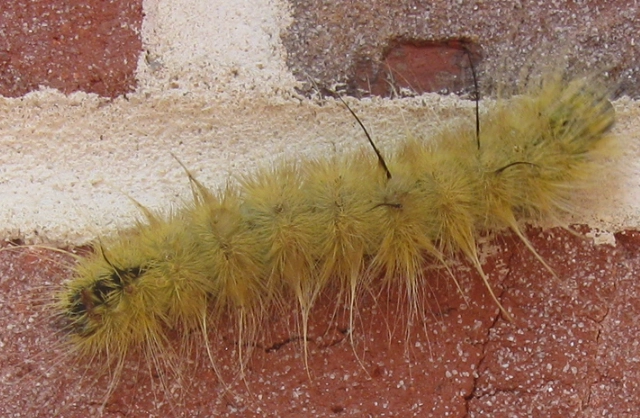
Immediate Action Checklist
- Don't Panic, Don't Rub. Rubbing or scratching will break more hairs and spread them over a larger area of skin.
- Isolate the Area. Gently brush off any visible, loose caterpillar hairs or the caterpillar itself with a stiff piece of paper, a stick, or tweezers. Do NOT use your bare hands.
- Tape It Out. This is the most crucial step many people miss. Use wide, strong adhesive tape (like packing tape or duct tape). Press the sticky side firmly onto the affected skin and peel it off. Repeat this several times with fresh pieces of tape. This helps pull out the microscopic, embedded setae that are causing the problem. It feels weird but it works.
- Wash Thoroughly. Wash the area with plenty of cool water and soap (dish soap is great for cutting oils). Don't use hot water, as it can open pores and let the irritants in deeper.
- Apply a Cold Compress. Use a cold, wet cloth or an ice pack wrapped in a towel. Apply it to the area for 15-20 minutes at a time. This reduces inflammation, swelling, and numbs the itch temporarily.
Treating the Itch and Rash
After the initial cleanup, you need to manage the symptoms. Over-the-counter products are your friends here.
- Anti-Itch Creams: Hydrocortisone cream (1%) is a standard go-to. Apply a thin layer as directed on the package. Calamine lotion can also provide a cooling, drying effect, which is soothing.
- Oral Antihistamines: An oral antihistamine like diphenhydramine (Benadryl) or cetirizine (Zyrtec) can help control the itch from the inside out, especially if it's preventing sleep. Be aware that diphenhydramine can cause drowsiness.
- Baking Soda Paste: An old-school but effective remedy. Make a paste with baking soda and a little water, apply it to the rash, and let it dry. It can help neutralize irritants and soothe the skin.
Avoid using creams that contain topical anesthetics like benzocaine right away for some people, as they can sometimes cause further irritation on already angry skin. Stick with the basics first.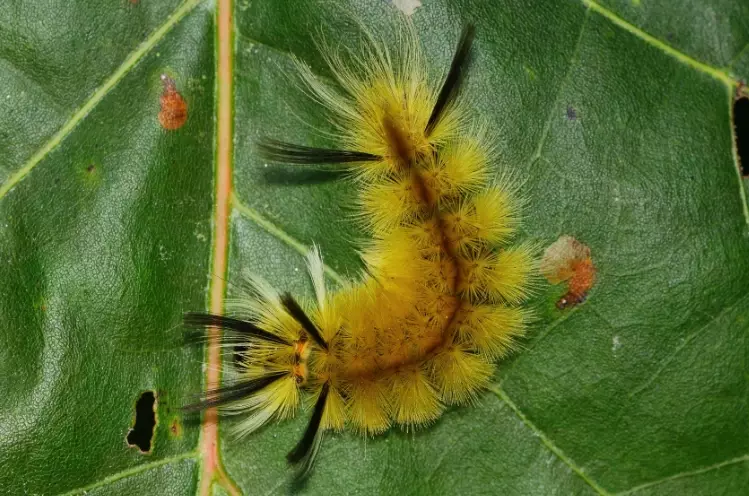
When to See a Doctor
Most reactions can be handled at home. However, you should seek medical attention if:
- The rash covers a large area of your body (like an entire arm or leg).
- You develop signs of a severe allergic reaction: difficulty breathing, swelling of the lips, tongue, or throat, dizziness, or a rapid heartbeat. This is a medical emergency—call 911.
- The rash shows signs of infection: increased redness, warmth, pus, yellow crusting, or red streaks radiating from the site.
- You have intense pain or swelling that doesn't improve with home care within 24 hours.
- The reaction is on or near your eyes. Do not rub your eyes if you think you have caterpillar hairs on your hands.
A doctor can prescribe stronger topical steroids or oral steroids (like prednisone) to knock down a severe inflammatory reaction. They can also properly treat any infection.
Prevention: How to Safely Coexist
The best medicine is avoiding contact altogether. Here are some practical tips for gardeners, parents, and hikers.
For Gardeners & Yard Workers:
- Inspect Before You Grab. Get in the habit of looking at the undersides of leaves, along stems, and on garden furniture before you put your hands there.
- Wear Gloves. A good pair of sturdy gardening gloves is essential. Even then, wash the gloves afterwards to remove any possible hairs.
- Long Sleeves and Pants. When pruning or clearing brush in late summer/fall, cover up.
For Parents:
This is a big one. Kids are curious and drawn to colorful, fuzzy things.
- Teach the "Look, Don't Touch" Rule. Make it a game. "We look with our eyes, not with our hands." Use clear, simple language: "That fuzzy worm can give you a big owie like a bee sting."
- Supervise Outdoor Play. Be extra vigilant around trees where they commonly feed.
- Know What's in Your Yard. Take a walk around and identify the trees. If you have oaks or maples, you know to be more watchful.
General Outdoor Tips:
- Avoid sitting or leaning against tree trunks where caterpillars might be crawling down.
- Shake out towels, blankets, or clothing that has been on the ground before using them.
- If you find one on your property and want it gone, do not squish it. The hairs can become airborne. Instead, gently coax it onto a leaf or piece of cardboard and relocate it to a wooded area away from high-traffic spots.
Beyond the Touch: Common Questions Answered
Yes, they can be. Dogs or cats that mouth or try to eat a caterpillar can have a severe reaction. The hairs can embed in their gums, tongue, and throat, causing excessive drooling, pawing at the mouth, vomiting, and inflammation. If you suspect your pet has interacted with one, contact your veterinarian. It's a good reason to keep pets on a leash or supervised in areas where these caterpillars are common.
It's possible, especially if a caterpillar is disturbed or crushed. The brittle setae can break off and float in the air, potentially landing on skin or being inhaled. This is why you shouldn't mow over them or try to kill them in a way that creates debris. Inhalation can cause respiratory irritation, so it's a concern for people with asthma.
No. Once the caterpillar pupates (forms a cocoon) and emerges as an adult American dagger moth, it loses its stinging hairs. The adult moth is a harmless, grayish-brown moth with distinctive black dagger-shaped markings on its forewings (hence the name). It's nocturnal and attracted to lights. So, the danger is only during the larval (caterpillar) stage.
Not all fuzzy caterpillars sting! Some are completely harmless, like the giant leopard moth caterpillar or the banded woolly bear. Also, individual sensitivity varies widely. You might have a higher tolerance, touched a harmless species, or simply didn't make sufficient contact with the stinging hairs. Don't take past luck as a guarantee for the future.
For accurate identification and distribution maps, I always cross-reference with reputable sources. The Butterflies and Moths of North America (BAMONA) page is an excellent starting point, run by a consortium of universities and agencies. For medical information on skin reactions, the American Academy of Dermatology has trustworthy guidance on rashes from caterpillars and other plants. For a broader overview of stinging caterpillars, university extension services are gold mines; the University of Minnesota Extension has a clear, well-researched article.
The Bottom Line: Appreciate, Don't Annoy
So, circling back to the core question: Can I touch American dagger moth caterpillar? I think we've built a rock-solid case for a firm "no." It's not worth the days of discomfort.
But here's the thing—this doesn't mean we should fear them or go out of our way to kill them. They're a fascinating part of the local ecosystem. They turn into neat-looking moths and are food for birds and other insects. The key is respectful coexistence.
Teach your kids to observe nature's wonders without needing to handle them. Equip yourself with the knowledge to identify common hazards in your environment. And if an accidental encounter happens, you now know exactly what to do, step by step.
Enjoy the outdoors, keep your eyes open for that flash of yellow and those distinctive black daggers, and give the American dagger moth caterpillar the space it's clearly asking for with its warning colors and potent defenses. Your skin will thank you.



Comments
Leave a Comment