You type "Scaly-foot snail size" into Google. Maybe you saw a stunning image of this iron-clad creature and thought, "How big is that thing?" Or perhaps you're a student trying to visualize this extreme animal for a project. Here's the thing most articles won't tell you right away: its size isn't just a random number. The Scaly-foot snail's dimensions are a direct, fascinating, and somewhat heartbreaking story of survival in one of Earth's most hostile environments. Forget the garden snail in your backyard. Chrysomallon squamiferum, its proper name, is a biological suit of armor living under crushing pressure, and its size tells us exactly how it manages that.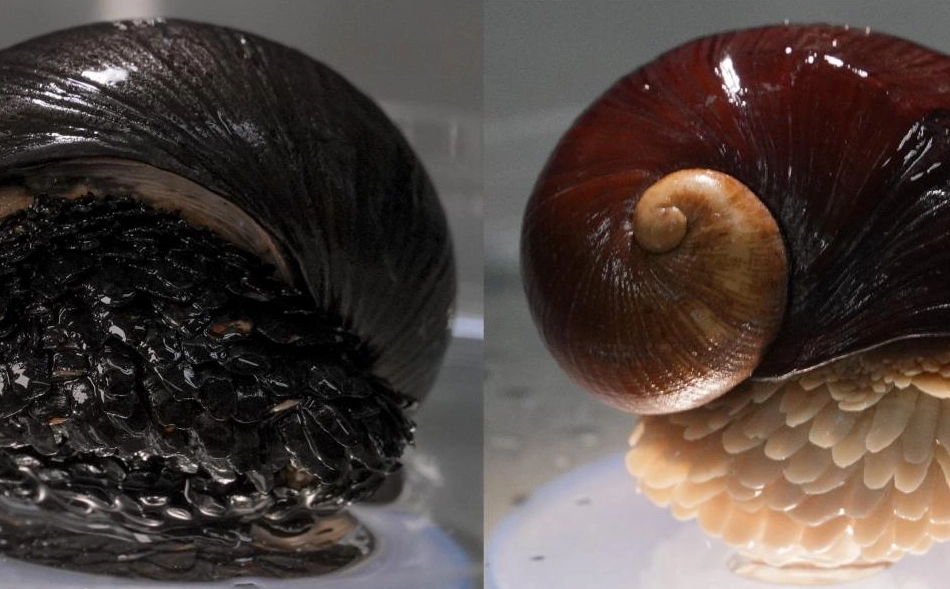
What You’ll Discover
The Actual Size Numbers (No Fluff)
Let's cut to the chase. When researchers from institutions like the Woods Hole Oceanographic Institution or the University of Southampton pull these snails up from the deep, they measure them. The recorded Scaly-foot snail size typically falls within a specific, and honestly, quite modest range.
The shell diameter—that's the width across the spiral—usually maxes out at about 45 millimeters. That's roughly 1.8 inches. For a visual, picture the diameter of a standard golf ball or a large walnut. The shell height (from the tip to the base) is similar, making its shell roughly spherical.
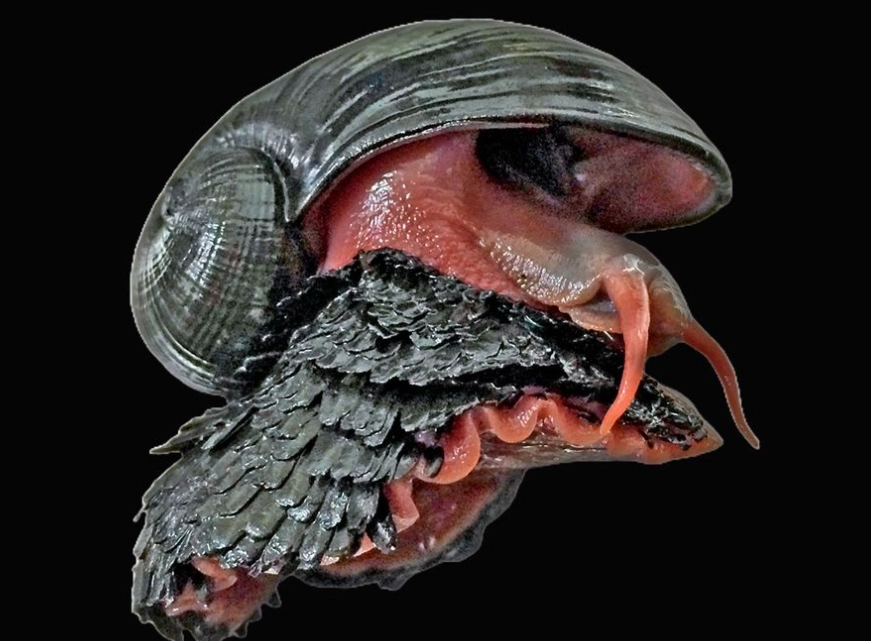
Now, the total animal size, including its fleshy foot and those famous iron-sulfide sclerites (the "scales"), can be a bit larger when extended, but it's still within that same compact frame. There's very little size variation among adults at a given vent site. You won't find a "king" version twice the size of others. This consistency is the first clue that something in their environment is strictly regulating their growth.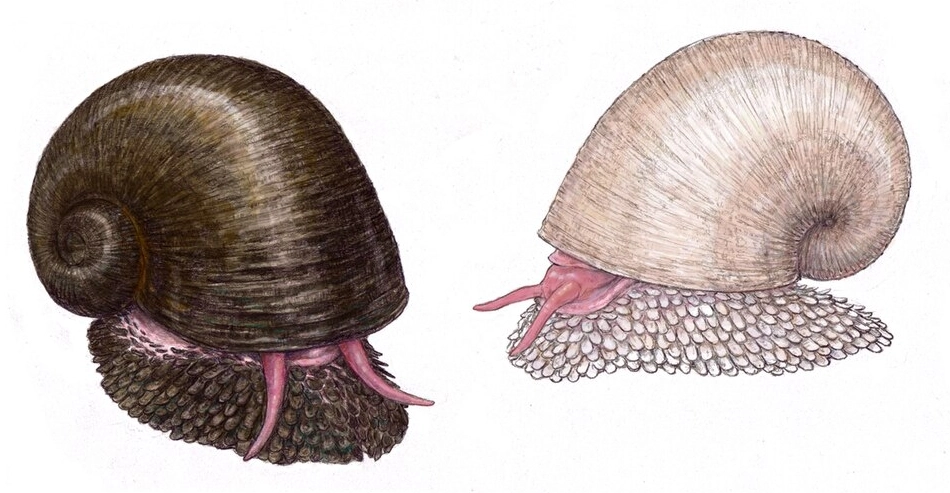
Quick Size Snapshot
Average Adult Shell Diameter: 30 - 45 mm (1.2 - 1.8 inches)
Average Shell Height: 30 - 45 mm
Notable Feature: Size is remarkably uniform within populations, unlike many shallow-water snail species where you might find significant size ranges.
What Determines the Scaly-foot Snail's Size?
This is where it gets interesting. The Scaly-foot snail doesn't just grow to a random size. Its dimensions are a finely tuned compromise shaped by the brutal economics of the deep-sea hydrothermal vent.
The Energy Bottleneck
These snails live solely on the chemical soup spewing from vents. They host symbiotic bacteria in a specialized organ that convert hydrogen sulfide and other chemicals into food. This energy source is incredibly rich but also incredibly localized. The habitable zone around a vent chimney might only be a few meters wide. Beyond that, it's a cold, barren desert.
Growing a larger body requires exponentially more energy and minerals (especially iron and sulfur for that armor). In a habitat patch that might vanish overnight if the vent flow stops, investing in massive growth is a risky, inefficient strategy. A 45mm shell represents the optimal "sweet spot"—large enough to house the necessary symbiotic organ and support reproduction, but small enough that the local vent chemistry can sustain a dense population.
The Pressure of Armor
Those iron scales and reinforced shell aren't lightweight. They're a massive metabolic investment. Producing and maintaining this biomineralized armor takes resources away from sheer body growth. The snail's size reflects this trade-off: a smaller, heavily armored body that can resist crab attacks (their main predator at the vents) is evolutionarily smarter than a larger, vulnerable one. I've spoken to deep-sea ecologists who point out that if you compare it to a similar-sized shallow-water snail, the Scaly-foot is significantly heavier for its dimensions due to its mineral load.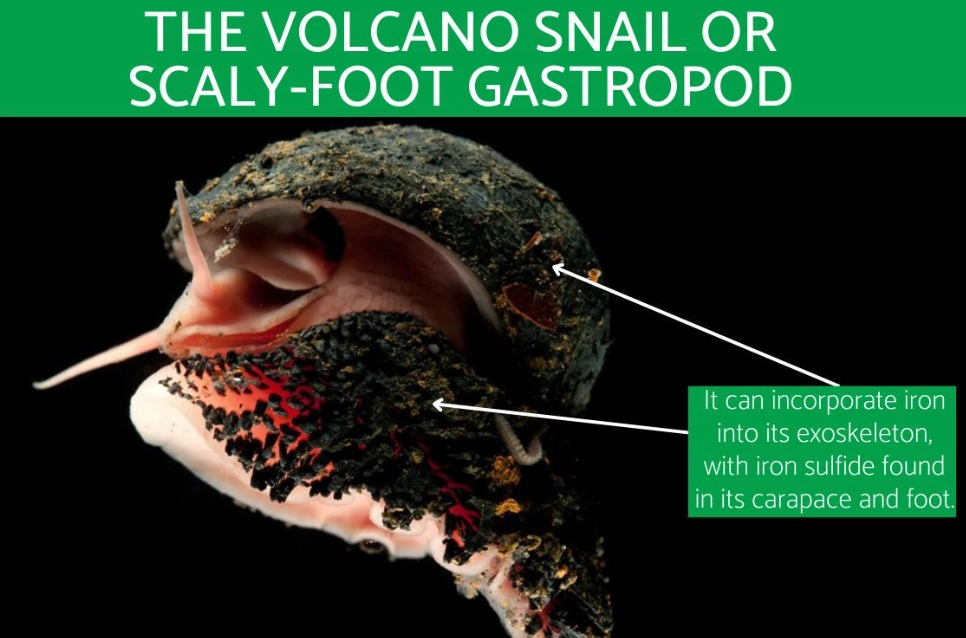
Size in Context: How It Stacks Up
To truly appreciate the Chrysomallon squamiferum size, you need to see it beside its peers and predators. This table puts it in perspective.
| Deep-Sea Vent Creature | Typical Size | Relation to Scaly-foot Snail |
|---|---|---|
| Scaly-foot Snail (Chrysomallon squamiferum) | Shell: ~45 mm diameter | The subject itself — a medium-sized vent specialist. |
| Deep-Sea Vent Crab (Austinograea spp.) | Carapace: ~50-100 mm wide | Main Predator. Its size advantage is why the snail needs its armor. |
| Giant Tube Worm (Riftia pachyptila) | Tube: Up to 2.5 meters (8 ft) long | Vent neighbor. Shows how some species prioritize vertical growth in the same chemical plume. |
| Common Garden Snail (Helix aspersa) | Shell: ~25-40 mm diameter | Surprisingly similar in shell size, but utterly different in biology, weight, and habitat. |
| Ifremeria nautilei (Another vent snail) | Shell: ~20-30 mm diameter | Close relative, often found nearby. Its smaller size suggests a slightly different ecological niche. |
Seeing this, you realize the snail isn't the biggest or smallest player at the vent. It's sized precisely for its role: durable enough to deter crabs, compact enough to thrive in a crowded, ephemeral oasis.
Why Its Size Matters for Survival & Science
Beyond being a trivia fact, the snail's size has real implications.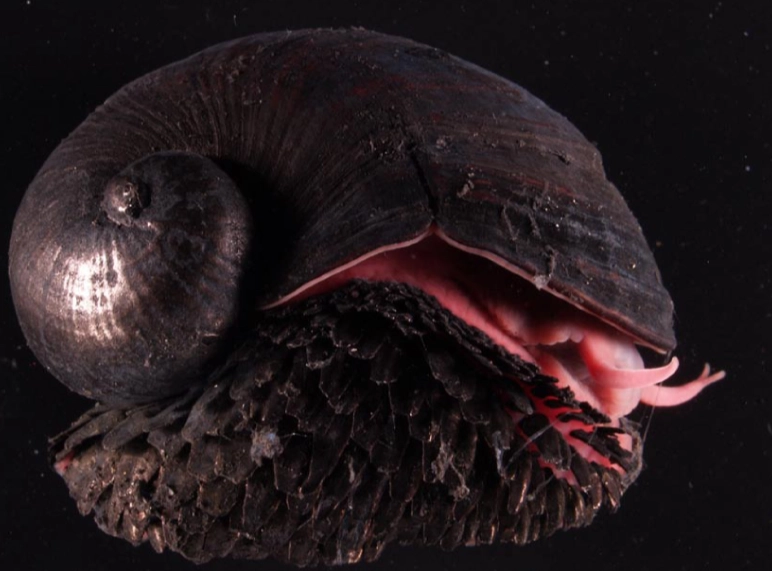
For the snail: Its compact, armored form is a survival package. It allows for a high population density around a vent, which is crucial for finding mates in the dark abyss. Its small-ish stature means it can cling tightly to rock surfaces in the turbulent, mineral-rich flows without being swept away. A larger surface area would be a liability.
For scientists: The consistency of deep-sea snail size across populations is a bioindicator. If snails from a new vent site were consistently smaller, it might suggest lower chemical energy output. Changes in the average size of a population over time could signal environmental stress or shifts in the vent's activity. It's a simple, measurable metric with deep meaning.
There's a common misconception that all deep-sea creatures are gigantic due to deep-sea gigantism. The Scaly-foot snail is a perfect counterexample. Its environment selects for robust, efficient design over sheer scale. This is a subtle point many nature documentaries gloss over.
Size, Rarity, and the Conservation Tightrope
Here's the critical part. The Scaly-foot snail is listed as Endangered on the IUCN Red List. Its entire global population exists at just three known hydrothermal vent fields in the Indian Ocean. When your entire world is a few football fields of seabed, your size and population dynamics become incredibly fragile.
Its specific size is now a factor in its vulnerability. Deep-sea mining interests target polymetallic sulfides—the very same geological formations that create its vents. A single mining operation could wipe out an entire population because the snails cannot migrate to a new vent. They are trapped by their exquisite adaptation to their specific, tiny habitat.
Understanding its size helps us visualize the scale of the threat. We're not talking about impacting a widely distributed species. We're talking about the potential eradication of a unique life form from its only known homes, each smaller than most cities.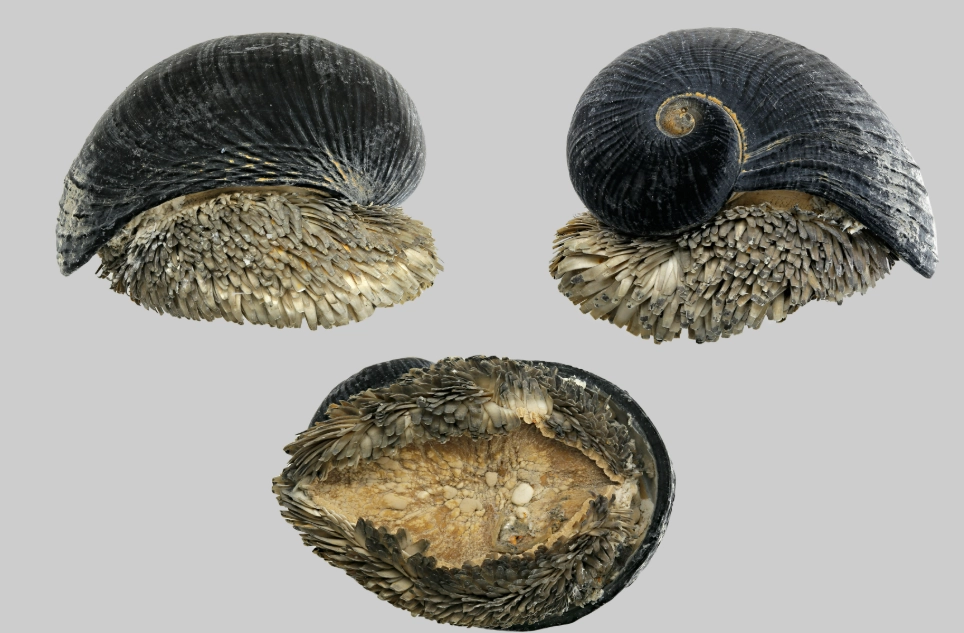
Your Scaly-Foot Snail Size Questions Answered
Is the Scaly-foot snail the biggest snail in the deep sea?
Not even close. While impressive for its build, its size is modest. True deep-sea giants like the Australian trumpet snail (Syrinx aruanus) from shallower waters can have shells over 70 cm long. Even within vent ecosystems, tube worms and some clams achieve much larger body masses. The Scaly-foot's claim to fame is its material composition, not its dimensions.
How can I see a Scaly-foot snail without a submarine?
Your best bet is a major natural history museum with a deep-sea exhibit. For instance, the Smithsonian National Museum of Natural History or the Natural History Museum in London have or have had specimens. You'll be looking at a preserved shell and sclerites. Seeing its true scale in person, even preserved, drives home how small and intricate this animal is—photos often make it look more massive than it is.
 Does its small size make it harder to study?
Absolutely, but in unexpected ways. The technical challenge isn't just its size, but its habitat depth (over 2,400 meters down). The real difficulty is studying it alive. Bringing it to the surface is usually fatal due to pressure and temperature changes. Most size and biology data come from specimens collected by remotely operated vehicles (ROVs), which is why each data point is so valuable and why population studies are so rare. We know its size well, but much about its life cycle remains a mystery precisely because it's small and lives in an inaccessible place.
If the vents are so rich, why don't they grow bigger?
Think of the vent not as an endless buffet, but as a busy, dangerous food truck in a desert. The "food" (chemicals) is concentrated right at the truck. Crowding is intense, predators are lurking, and the truck could drive away (the vent ceases) at any time. Evolving to be bigger means needing more food from that single spot, making you less maneuverable, and a bigger target. Evolution favored the equivalent of a well-armored, fuel-efficient compact car over a gas-guzzling truck. Bigger isn't always better; in this case, optimized is.
So, the next time you recall the Scaly-foot snail, remember it's not about a single measurement. That 45-millimeter shell diameter encapsulates a world of extreme pressure, chemical warfare, evolutionary trade-offs, and fragile existence. Its size is the ultimate proof that in the deep sea, the most successful designs are often the most perfectly constrained ones.




Comments
Leave a Comment