Let's cut to the chase. When we talk about frog parenting, you might think of a female laying eggs and then... leaving. That's the norm. But Darwin's frog (Rhinoderma darwinii) throws the rulebook out the window. Its parental care strategy is so bizarre, so counterintuitive, that it sounds like a myth. The male frog doesn't just guard the eggs—he swallows them. Not to eat them, but to incubate them inside his own body, specifically in his vocal sac, until they emerge as fully formed froglets. It's one of the most extraordinary adaptations in the animal kingdom, a masterpiece of evolutionary ingenuity that is now on the brink of being lost forever.
What You'll Discover in This Guide
The Swallowing Process: A Step-by-Step Breakdown
It's not a simple gulp. The entire process is a finely tuned ballet of instinct and biology. Here’s how it unfolds, from egg to independence.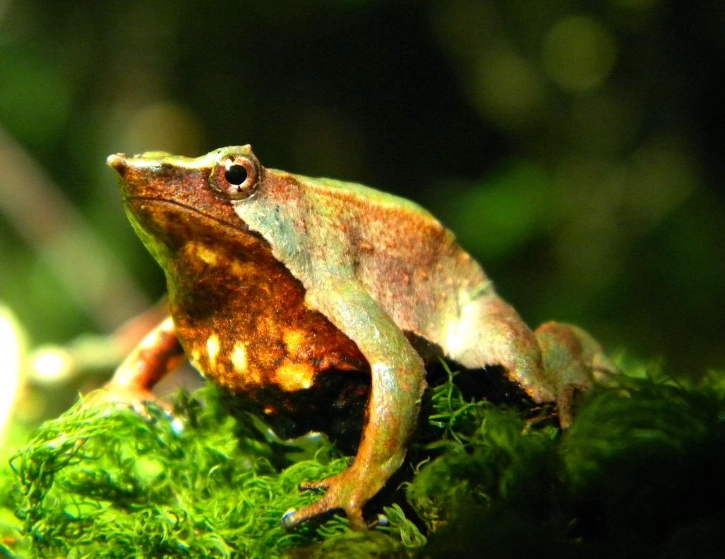
Phase 1: Courtship and Egg-Laying
The story begins in the temperate rainforests of Chile and Argentina. After mating, the female lays a small clutch of eggs—typically between 5 to 15—on the damp forest floor. The male then takes up his post. He guards them fiercely for about two to three weeks. This initial guard duty is crucial; it protects the eggs from predators like insects and keeps them moist. I've spoken with herpetologists who've spent weeks in the field hoping to witness the next step, only to have the male abandon the clutch due to subtle disturbances. It's a fragile start.
Phase 2: The Critical Moment of Ingestion
This is the moment of truth. As the embryos inside the eggs develop and begin to wiggle, the male leans in. Using his tongue, he picks up each individual egg and maneuvers it into his mouth. He doesn't swallow them down to his stomach. Instead, he uses muscular contractions to channel each egg into his vocal sac—the same expandable pouch under his chin that he uses to call for mates.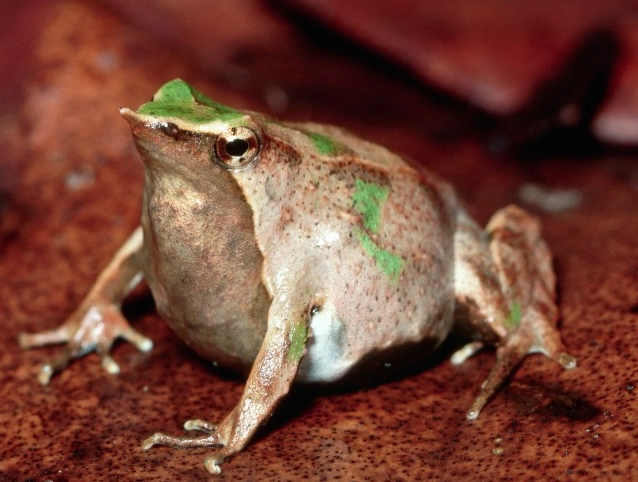
Key Detail Often Missed: He doesn't ingest all eggs at once. It's a selective process. Sometimes, he might only take the most developed or viable ones, leaving others behind. This suggests a level of parental investment calculation that's pretty sophisticated for a frog.
Phase 3: Incubation Inside the Vocal Sac
For the next 50 to 70 days, the male carries his developing offspring everywhere. His vocal sac transforms into a mobile nursery. Think of it as a warm, protected, and nutrient-rich pouch. The embryos hatch into tadpoles inside the sac. Here's the real kicker: they aren't just floating in there. A specialized tissue forms, and the tadpoles attach to it, absorbing nutrients and oxygen directly from the father's bloodstream through their skin and highly vascularized tails. It's a form of internal, placental-like nourishment.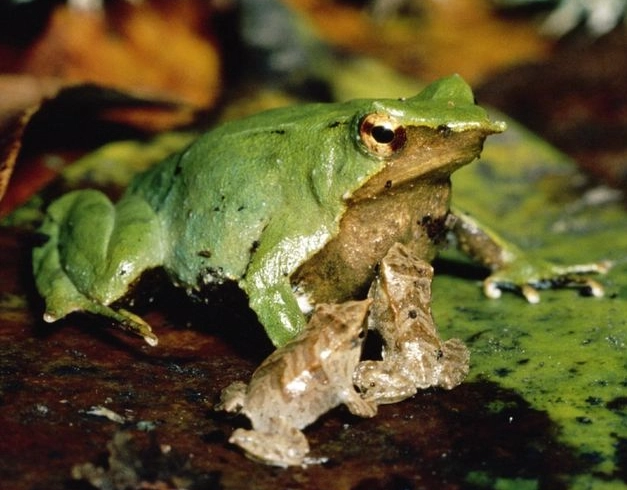
Phase 4: "Birth" and Independence
Development completes not into tadpoles needing water, but directly into miniature froglets. When they're ready, the male opens his mouth wide and, through a series of contractions, expels the fully formed baby frogs. They hop away, bypassing the vulnerable aquatic tadpole stage entirely. After this, the male's job is done. His vocal sac, now wrinkled and empty, slowly returns to its normal size.
Why Did This Bizarre Strategy Evolve?
Evolution doesn't do things for no reason. This extreme form of male brooding, known as neomelia, solved several critical survival problems in the cool, unpredictable forests of southern South America.
Predator Avoidance: Eggs and tadpoles in ponds are buffet items for fish, insects, and other frogs. By moving the nursery inside his body, the father removes his offspring from the menu completely.
Environmental Stability: The forest floor can dry out or flood. The vocal sac provides a constant, humid, temperature-buffered environment, independent of fickle external conditions.
Bypassing the Tadpole Stage: This might be the biggest advantage. Aquatic tadpoles face immense competition and predation. By providing internal nourishment, Darwin's frog lets its young skip this dangerous phase entirely, emerging as more mobile and resilient terrestrial juveniles.
It's a high-investment, high-reward strategy. The male can't eat during brooding and is presumably more vulnerable to predators himself. But the payoff is incredibly high survival rates for his few offspring—at least, it was, before modern threats emerged.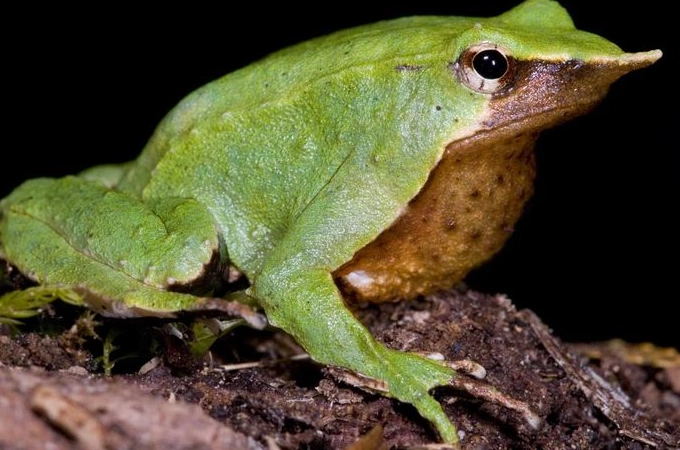
The Silent Crisis: Why Darwin's Frog is Disappearing
Here's the tragic part. This amazing frog, first described by Charles Darwin himself in 1834, is now Critically Endangered and may already be extinct in much of its range. The IUCN Red List, the global authority on species conservation status, spells out the dire situation. Its unique life history, once its greatest strength, might now contribute to its vulnerability.
The primary culprit is the amphibian-killing chytrid fungus (Batrachochytrium dendrobatidis). This disease has devastated amphibian populations worldwide. For a frog that carries its young internally, a fungal infection on the father's skin could be a death sentence for the entire brood inside him. It's a population collapse multiplier.
Other major threats are all human-made:
- Habitat Loss: Clearing of native forests for agriculture and pine/eucalyptus plantations destroys the moist, shaded floor they depend on.
- Climate Change: Alters the delicate moisture and temperature balance of their microhabitat.
- Invasive Species: Trout and salmon introduced for fishing prey on adults.
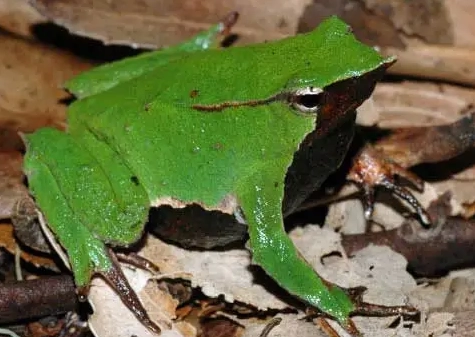
The northern Darwin's frog (Rhinoderma rufum) hasn't been seen since the early 1980s and is likely extinct. The southern species we've been discussing clings to survival in fragmented pockets. Conservation groups like the IUCN Amphibian Specialist Group are racing against time, but field surveys keep coming up empty. It's a stark reminder that the most incredible adaptations are no match for the scale of human environmental impact.
Clearing Up Common Misconceptions
Let's set the record straight on a few points where pop science often gets it wrong.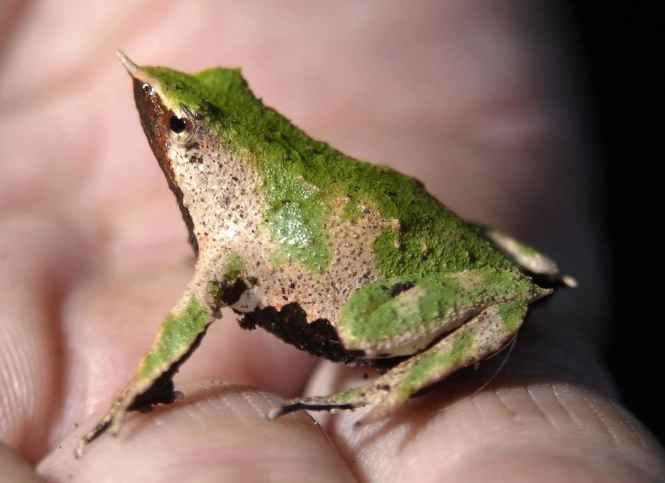
Misconception 1: "The male swallows the eggs into his stomach." False. The vocal sac is a separate pouch, not connected to the digestive tract. The eggs go down a special duct from the mouth into the sac.
Misconception 2: "He spits out tadpoles into water." False. He releases fully formed froglets onto land. There's no intermediate release into a pond.
Misconception 3: "This is common among frogs." Absolutely not. It is unique to the two species of Rhinoderma. A few other frogs (like the Gastric-brooding frog, now extinct) used the stomach, but the vocal sac brooding of Darwin's frog is one-of-a-kind.

Comments
Leave a Comment