You're walking along a beach after a storm, and the shoreline is littered with what looks like tiny, crumpled blue plastic sails. Pick one up. It's not plastic. It's delicate, slightly gelatinous, and has a deep indigo color. You've just found a By-the-wind sailor, one of the ocean's most elegant and misunderstood drifters. Scientifically known as Velella velella, this creature is a constant source of wonder (and sometimes alarm) for beachgoers. Let's clear up the confusion. This isn't a single animal like a jellyfish; it's a floating colony of hundreds of specialized polyps working as one. Their sudden appearances by the thousands are not random accidents but the result of wind patterns, currents, and a unique survival strategy.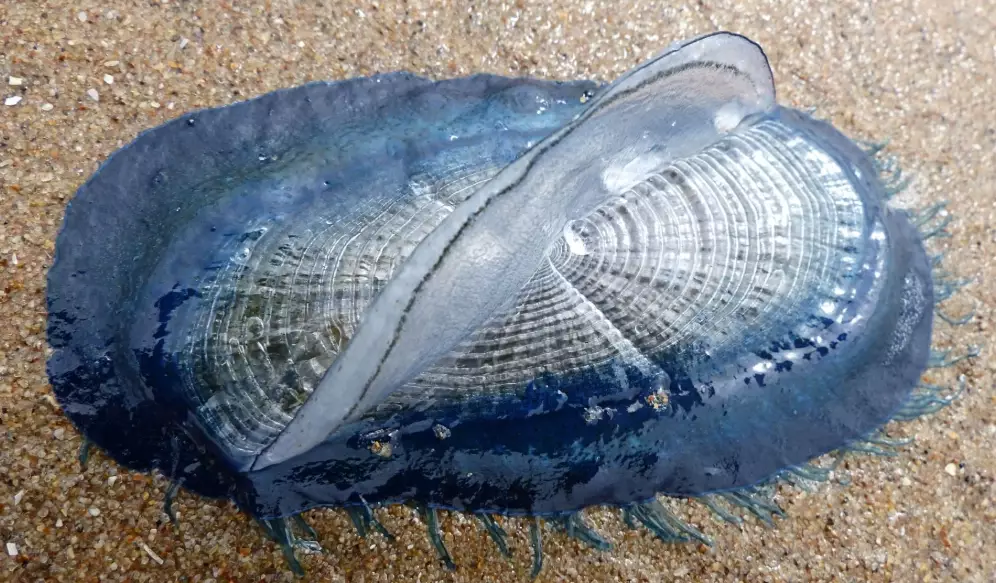
What's Inside This Guide
What Exactly Is a By-the-Wind Sailor?
Calling it a jellyfish is the first and most common error. I've seen this mistake in local news reports and even some nature blogs. A jellyfish, like a moon jelly, is a single organism in the medusa life stage. A Velella is something else entirely: a siphonophore. Think of it as a floating city. Each "sail" is a colony made up of different types of polyps, each with a dedicated job. Some polyps form the gas-filled float (pneumatophore). Others are specialized for catching prey with stinging tentacles. There are even reproductive polyps. They are all genetically identical but function as different organs of one superorganism. This colonial nature is key to understanding its appearance and behavior.
Their life is dictated by the wind. The chitinous sail sits diagonally atop the oval float, acting like a boat's sail. But here's a nuance most guides miss: not all Velella sails are oriented the same way. Populations are roughly split between "right-handed" and "left-handed" sailors (with the sail angled clockwise or counterclockwise). This isn't just trivia. This variation ensures that when winds blow, only a portion of the population gets pushed toward shore, while others are blown safely out to sea. It's a brilliant evolutionary bet-hedging strategy that keeps the species going even during massive beach strandings.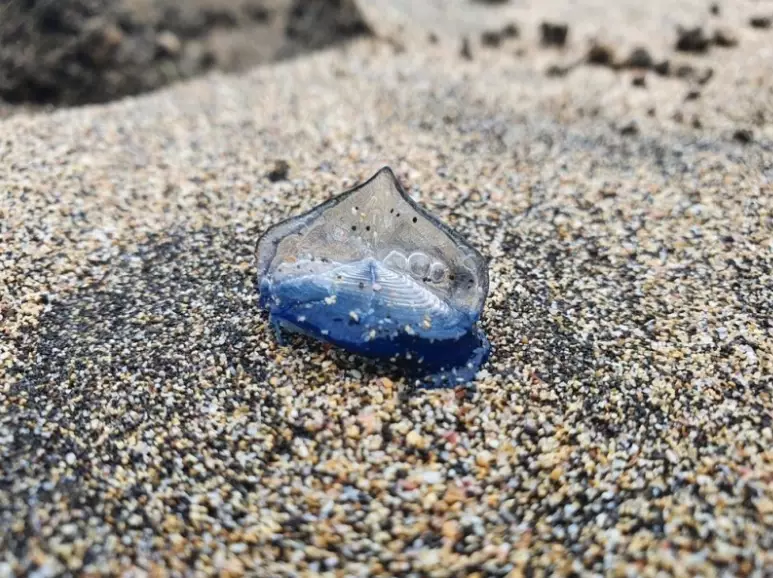
Dissecting the Unique Appearance
Let's break down what you're actually looking at when you hold one. The standard description—"a blue oval with a clear sail"—doesn't do it justice.
The Float: More Than Just a Blue Blob
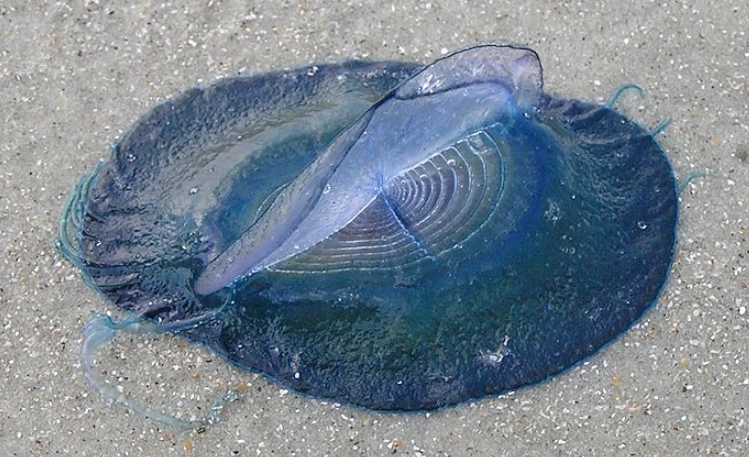
The main body, or float, is an oval disc about 7-10 cm long. Its intense blue color comes from pigments that likely offer some protection from UV rays in the open ocean. The color can range from a deep cobalt to a lighter cerulean. The underside is where the action is. It's not smooth. You'll see a central mouth surrounded by concentric rings of reproductive and feeding polyps. The tentacles, which are short and fringe-like, hang from the rim. They're a pale blue or almost white. When alive in the water, the float is semi-transparent and buoyant. Washed up, it dehydrates quickly, becoming a papery, darker blue disc.
The Sail: Nature's Ingenious Design
The sail is made of chitin, the same material as insect exoskeletons. It's stiff, transparent, and has a slight S-shaped curve. It's not glued on; it's an integral part of the float's structure. The angle of the sail, as mentioned, determines its "handedness." On a fresh specimen, you can see fine, radiating lines in the sail—these are structural reinforcements. This isn't a random sheet of plastic. It's a finely tuned piece of nautical engineering evolved over millions of years.
Where and When Can You See Them?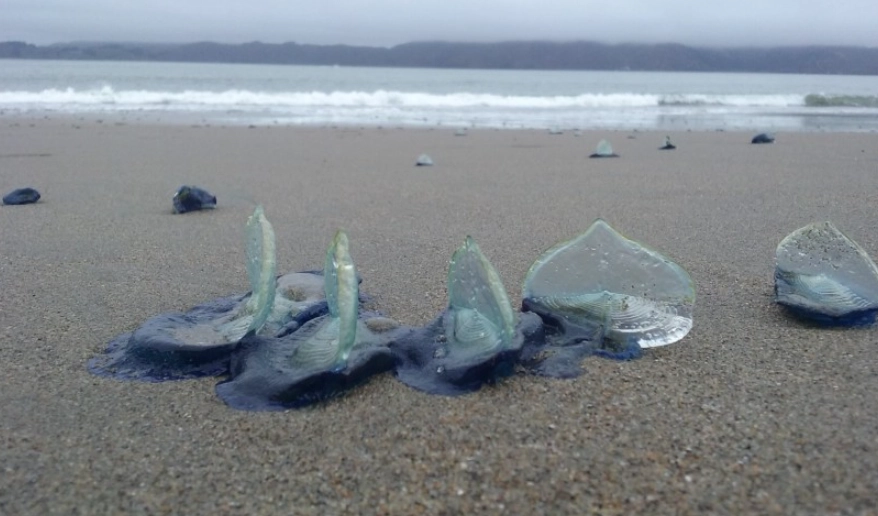
You won't see them every day. Sightings are event-based, tied to specific wind and current conditions. They are found in temperate and tropical oceans worldwide. In the North Pacific, they're incredibly common. I've had the most consistent luck on West Coast beaches from British Columbia down to Baja California.
Prime Location Example: Carmel Beach, California
Best Time to Visit: Late winter to early summer (March to June), especially 1-3 days after strong, sustained onshore winds (Westerlies or Northwesterlies) or a storm. Check wind forecasts—a switch from offshore to onshore flow is a good predictor.
Getting There: The beach is at the foot of Ocean Avenue in Carmel-by-the-Sea. There's limited paid parking along Scenic Road. A better option is to park in the downtown lots and walk down.
What to Expect: Don't expect a calm, blue ocean. The conditions that bring Velella ashore are often windy and rough. The sailors will be strewn along the high tide line (the wrack line), mixed with seaweed, driftwood, and other debris. Look for that distinctive blue color. Early morning is best, before too many people or scavenging birds disturb the line.
Other reliable spots include coastal Oregon (like Cannon Beach), the shores of the Salish Sea, and beaches in the UK and New Zealand following specific weather patterns. They are pelagic, meaning they live on the open ocean's surface, so they only come to us when the weather decides.
Sailor vs. Man o' War: Don't Make This Mistake
This is critical for your safety and for accurate reporting. The Portuguese man o' war (Physalia physalis) is also a siphonophore and can wash ashore in similar conditions. Confusing the two is a big deal. A man o' war sting is excruciatingly painful and can be dangerous, even from a detached tentacle. A Velella sting is so weak most humans can't even feel it. I still advise not rubbing your eyes after handling them, but the risk is minimal.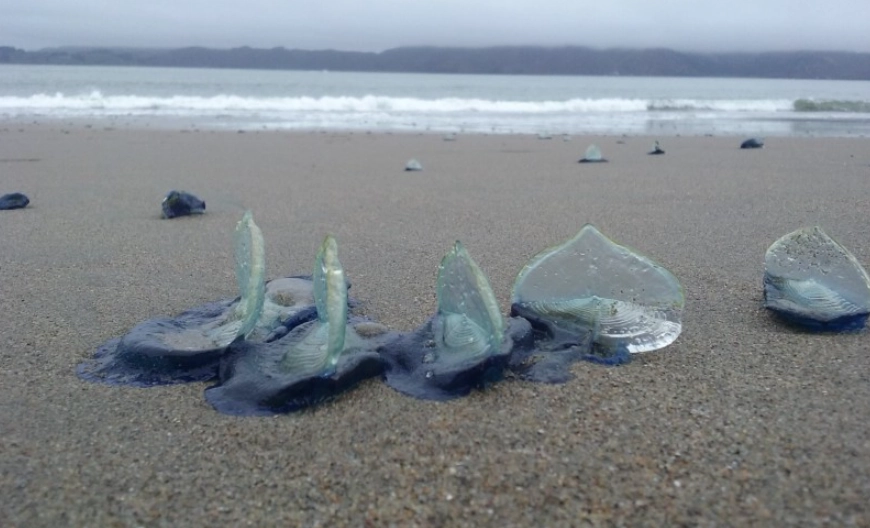
Here’s a quick comparison table based on my own side-by-side observations:
| Feature | By-the-Wind Sailor (Velella) | Portuguese Man o' War (Physalia) |
|---|---|---|
| Float Shape & Color | Flat, oval disc. Bright cobalt blue. | Large, elongated gas bladder (up to 30 cm). Pink, purple, or blue, with a iridescent sheen. |
| Sail | Flat, stiff, transparent chitinous membrane. | None. Has an erect, crested "sail" that is part of the gas bladder itself. |
| Tentacles | Short (a few cm), fringe-like, blue/white. Hang directly from float rim. | Extremely long (10+ meters), coiled, blue/purple. Hang from a separate feeding colony below the float. |
| Sting Potency | Very weak. Harmless to humans. | Powerful. Causes severe pain, welts, and can be medically significant. |
| Common Stranding Pattern | Often by the thousands, creating a continuous blue line. | Usually solitary or in smaller groups. |
If you see a pinkish, balloon-like creature with long, stringy tentacles, give it a very wide berth. That's a man o' war. The blue, flat disc with a little clear fin? That's our harmless sailor.
A Beachcomber's Field Guide
So you want to go find some. Here’s my practical advice, honed from years of checking beaches.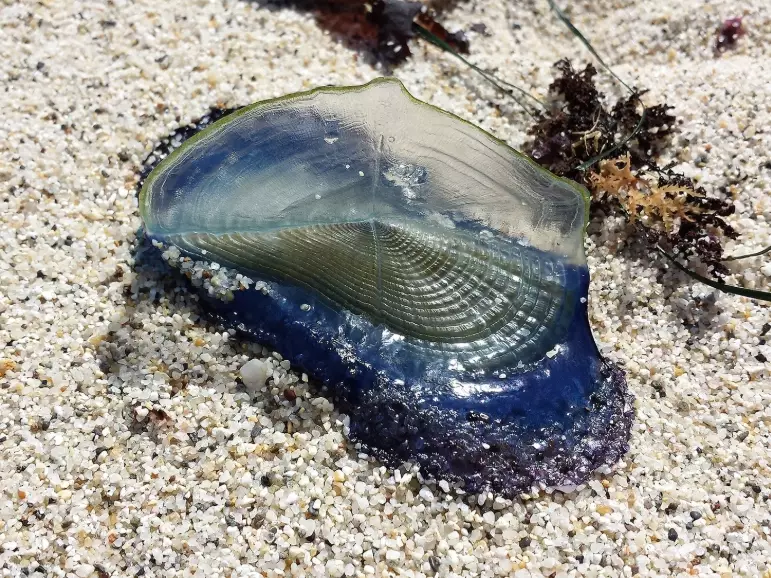
Timing is Everything: The window is short. They decompose or get eaten by birds within a day or two. Go early in the morning after a known onshore wind event. A rising tide might bring in a fresh batch.
Where to Look: Focus on the wrack line—the line of debris left by the highest tide. They rarely wash up on the wet, hard sand near the water. They’ll be nestled in dried kelp, next to sea foam and driftwood. Sometimes they get blown further up into the dunes by the wind.
Handling and Photography: It's fine to pick one up gently. They are fragile. For a photo, place one on a dark piece of driftwood or a bed of sand—this makes the blue color pop. Use the macro setting on your phone to capture the intricate structure of the sail and the polyps underneath. If you want to preserve one, let it dry completely in the sun. It will shrink and darken but retain its shape. Don't put it in alcohol or formaldehyde; it will just dissolve.
The Sad Reality: A mass stranding is a dead end for those individuals. They cannot right themselves or get back to sea. They are a bonanza for shorebirds, crabs, and flies. Ecologically, it's a nutrient pulse from the ocean to the land. It looks dramatic, but it's a normal part of their life cycle, made possible by that clever "right-and-left-handed" sail variation.
Your Questions, Answered
 Can you keep a By-the-wind sailor as a pet or in an aquarium?
Finding a By-the-wind sailor is a small gift from the open ocean. It’s a reminder of the vast, drifting ecosystems just beyond the surf, and of the intricate ways life adapts to a world of wind and waves. Next time you see that blue line on the sand, you'll know you're looking at a colonial marvel, not just a piece of blue plastic or a scary jellyfish. Take a moment, snap a picture, and let the wind tell you its story.
For further reading on siphonophores and their incredible biology, the research pages from the Monterey Bay Aquarium Research Institute (MBARI) are an excellent, authoritative resource.




Comments
Leave a Comment