You've probably heard the phrase "sheep head fish teeth" tossed around. It sounds bizarre, like something from a child's drawing. But it's not just nonsense. It's a powerful idiom that perfectly captures the essence of a jarring, mismatched hybrid. Think of a peaceful sheep's head grafted onto a fish's body, complete with its tiny, sharp teeth. The image is unsettling because the parts don't belong together functionally or aesthetically. This concept, far from being just a funny mental picture, is a key to understanding everything from bad product design and confusing policies to fascinating biological anomalies and deep cultural clashes.
What You'll Find in This Deep Dive
- What Does ‘Sheep Head Fish Teeth’ Really Mean?
- Real-World Examples You've Definitely Seen
- From Biology to Pop Culture: Where Hybrids Thrive and Fail
- Why This Idea Matters in Culture and Communication
- How to Spot and Avoid Creating Your Own ‘Sheep Head Fish Teeth’
- Your Questions on Mismatched Concepts, Answered
What Does ‘Sheep Head Fish Teeth’ Mean?
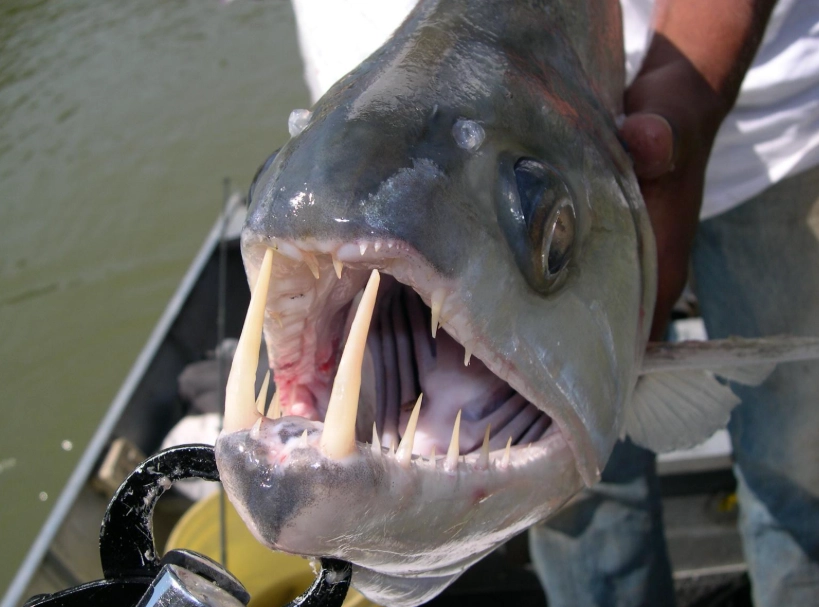
At its core, "sheep head fish teeth" describes a forced or unnatural combination where the individual components clash so severely that the whole thing becomes dysfunctional, confusing, or just plain ridiculous. The sheep's head implies docility, simplicity, and herbivorous habits. The fish body and teeth imply an aquatic, predatory life. Put them together, and you have a creature that couldn't survive—a herbivore with carnivore's teeth, a land animal's head on a water creature's body.
This isn't just about looks. A common mistake is to think it only describes visual weirdness. It's deeper. It's about functional incongruity. The mismatch creates a system where the parts work against each other's core purpose.
Key Insight: The phrase is often used in Chinese and other East Asian contexts as a vivid metaphor (羊头鱼齿). It critiques things that try to be two incompatible things at once, losing their identity and utility in the process. It's the opposite of a harmonious hybrid like a "wolf in sheep's clothing," which has a clear, deceptive function. A sheep-head-fish-teeth creation has no coherent function at all.
Real-World Examples You've Definitely Seen
Let's move from theory to reality. You encounter sheep head fish teeth concepts more often than you think. Here are some areas where they pop up, causing frustration or amusement.
In Technology and Design
This is a goldmine. Remember the first-generation smartphones with a physical keyboard crammed below a touchscreen? The interface was a mess—neither a good keyboard nor a good touch experience. It was a transitional hybrid that pleased no one.
Software is another big one. Have you used an app that's trying to be both a simple note-taker and a full-blown project management suite? The result is often a cluttered, confusing interface where simple tasks become complex. The developer slapped a "project management" head on a "note-taking" body.
I once tested a "smart" kitchen appliance that was a blender, a cooker, and a speaker. It pureed poorly, cooked unevenly, and the speaker quality was terrible. A classic case of trying to be everything, excelling at nothing.
In Business and Policy
Corporate initiatives often suffer from this. A company known for fast, cheap products suddenly launches a "luxury line" with a tiny budget and no brand credibility. The marketing (the sheep's head) promises premium quality, but the production and materials (the fish's body and teeth) scream cost-cutting. Customers see through it immediately.
Government regulations can be the ultimate sheep head fish teeth creations. A policy designed to encourage small business (the benevolent sheep head) gets loaded with so much complex paperwork and compliance costs (the predatory, sharp fish teeth) that it actively harms the very businesses it aims to help.
| Domain | The "Sheep Head" (Promised/Intended Function) | The "Fish Teeth" (Actual/Contradictory Reality) | Result |
|---|---|---|---|
| Hybrid Car (Early Models) | Green, eco-friendly, cutting-edge image. | Underpowered engine, high upfront cost, limited battery range. | Appealed only to a tiny niche, felt like a compromise to most buyers. |
| Fast-Casual "Gourmet" Restaurant | High-quality, chef-inspired meals. | Microwaved components, assembly-line preparation, fast-food prices. | Food that tastes mediocre and feels inauthentic, disappointing both sides. |
| Social Media App "Feature Bloat" | Be the one app for photos, videos, shopping, dating, and news. | A confusing, bloated interface where core features get buried and performance suffers. | User frustration, app abandonment, and a loss of original identity. |
From Biology to Pop Culture: Where Hybrids Thrive and Fail
Nature gives us the purest examples. A chimera in genetics is an organism with cells from two different zygotes. Sometimes this occurs naturally and the organism lives fine. But in the metaphorical sense, a forced biological hybrid like the mythical griffin (eagle head, lion body) works because the parts are symbolically compatible—both are regal, powerful predators. A sheep-head-fish-teeth creature doesn't work because the parts' fundamental natures are at odds.
Pop culture loves hybrids, but the successful ones follow internal logic.
Godzilla is a dinosaur-like creature mutated by radiation—the parts (animal, force of nature, nuclear metaphor) cohere. A cartoon character like The Simpsons' "Spider-Pig" is funny precisely because it's a sheep head fish teeth joke—a pig trying to be a spider is absurd. It's not meant to be taken seriously as a hybrid.
The failed pop culture hybrids are the ones that try to merge two wildly different genres or tones without a unifying vision. A movie that can't decide if it's a dark thriller or a slapstick comedy often ends up satisfying fans of neither.
Why This Idea Matters in Culture and Communication
This phrase sticks because it names a universal experience of cognitive dissonance. When we see something that is incongruous at a fundamental level, it triggers unease. In cross-cultural communication, a sheep head fish teeth scenario might be a Western business applying its direct, individualistic management style (the fish teeth) to a team in a culture that values hierarchy and group harmony (the sheep head). The result is resentment and low productivity.
It also speaks to authenticity. In an age of personal branding, people who try to project an image wildly inconsistent with their true skills or personality are often perceived as "sheep head fish teeth." The LinkedIn profile that lists every buzzword but has no substance to back it up. It's a performance that doesn't hold up to scrutiny.
How to Spot and Avoid Creating Your Own ‘Sheep Head Fish Teeth’
So how do you apply this? Whether you're designing a product, writing a policy, or even planning a party, ask these questions:
1. Core Function Check: What is the single most important job this thing needs to do? Does every added feature or element directly support that job, or does it contradict it? Adding a social media feed to a meditation app might be adding fish teeth to a sheep's head.
2. Audience Consistency: Who is this for? Are you trying to serve two audiences with fundamentally different needs? A textbook that tries to be both for complete beginners and advanced experts usually fails for both groups.
3. Internal Logic Test: Do all the parts operate under the same set of rules or principles? A company culture that preaches "radical transparency" but has secretive, closed-door leadership meetings is creating a massive internal sheep-head-fish-teeth disconnect that employees will feel daily.
The goal isn't to avoid all hybrids. Successful hybrids integrate compatible traits. A mango-habanero sauce works because sweetness and heat can complement. A sheep's head and fish teeth cannot.
Your Questions on Mismatched Concepts, Answered
The next time you feel a pang of confusion or frustration toward a product, a policy, or a piece of art, ask yourself: am I looking at a sheep head on fish teeth? Recognizing this pattern is the first step toward creating things that are coherent, functional, and genuinely valuable. It pushes us away from superficial mash-ups and toward thoughtful, integrated design—in everything we do.




Comments
Leave a Comment