Let's be honest. If you're searching for information on the moonrat, you've probably stumbled upon a photo of this weird-looking creature and thought, "What on earth is that?" It looks like a giant shrew crossed with a possum, and everyone keeps talking about its smell. You're in the right place. I've spent years tracking wildlife in Southeast Asia, and the moonrat (Echinosorex gymnura) remains one of the most misunderstood animals I've encountered. It's not a rat, it's not a hedgehog, and its infamous odor? There's more to that story than most articles tell you.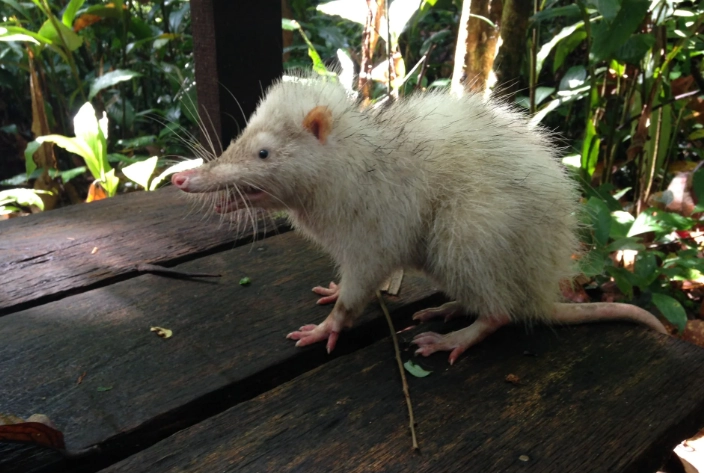
Navigate This Moonrat Deep Dive
- What Exactly Is a Moonrat?
- What Does a Moonrat Look Like?
- Where Do Moonrats Live? (Hint: Not Your Backyard)
- The Secret Life of a Moonrat: Diet, Smell, and Survival
- How to Find a Moonrat in the Wild? A Realistic Guide
- Moonrat vs Hedgehog: The Ultimate Comparison
- Your Moonrat Questions, Answered by Experience
What Exactly Is a Moonrat?
First, let's clear the biggest misconception. The moonrat is not a rodent. It belongs to the family Erinaceidae, which makes it a distant cousin of the hedgehog. Think of them as evolutionary branches that went in very different directions. While hedgehogs in Europe developed spines for defense, the moonrat in the humid rainforests of Southeast Asia took another path. It's the largest living insectivore in its order, sometimes reaching the size of a small rabbit. That fact alone should tell you this is no ordinary backyard critter.
Quick Taxonomy Check: Order: Eulipotyphla | Family: Erinaceidae | Subfamily: Galericinae (the gymnures or hairy hedgehogs). This subfamily includes other lesser-known species like the Philippine gymnure. The moonrat is the heavyweight champion of this group.
What Does a Moonrat Look Like?
Close your eyes and picture this. A body covered in coarse, dark hair, often black or dark brown. A long, pink, hairless snout that twitches constantly, like a periscope searching for snacks. Small, beady eyes. And the pièce de résistance: a naked, scaly tail that's almost always pure white for the last half or third. That white tail tip is a dead giveaway in your torchlight.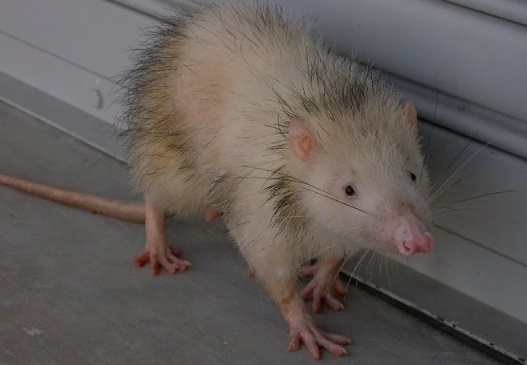
Their size is shocking if you're expecting a rat. Head and body length can be 26 to 46 cm (10 to 18 inches), with a tail adding another 17 to 29 cm. They can weigh over 2 kg (4.4 lbs). That's a substantial animal moving through the leaf litter.
Key Physical Features You Won't Forget
- The Snout: It's not just for show. It's incredibly sensitive, used to root through mud and debris for worms and insects.
- Feet and Claws: Strong, with long claws perfect for digging. Their feet are partially webbed in some populations, a hint at their comfort around water.
- Teeth: Sharp and pointy, designed for an insectivorous diet, not gnawing wood like a rodent.
Where Do Moonrats Live? (Hint: Not Your Backyard)
Forget seeing one in a city. Moonrats are creatures of pristine, lowland habitats. Their world is one of humidity, darkness, and constant moisture. Their primary strongholds are:
- Lowland Rainforests: The dense, primary forests of the Malay Peninsula, Sumatra, and Borneo are their classic home.
- Swamp Forests & Riverbanks: This is crucial. They are almost always found near water. Mangrove swamps, peat swamps, and the banks of slow-moving rivers and streams are prime real estate. I've had the most consistent sightings in these areas.
- Plantations & Logged Forests: They can persist in secondary habitats, but their numbers thin out dramatically. It's a sign of a resilient but vulnerable creature.
Geographically, you're looking at southern Myanmar, Thailand, Malaysia, Sumatra, Borneo, and some nearby islands. The IUCN Red List classifies them as Near Threatened, mainly due to the relentless destruction of these specific wetland forests for palm oil and agriculture.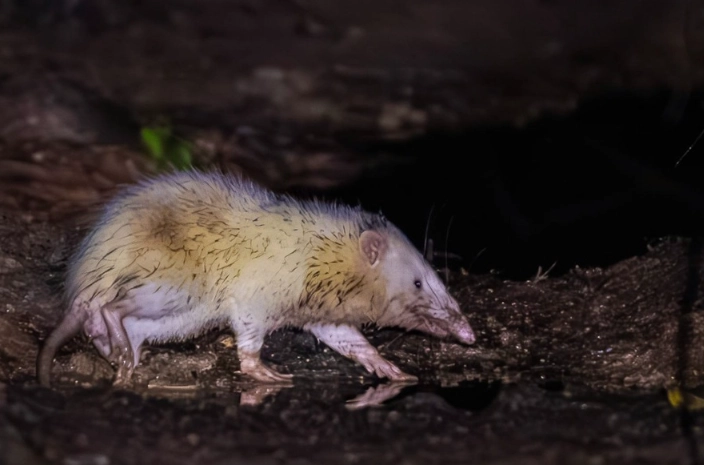
The Secret Life of a Moonrat: Diet, Smell, and Survival
This is where the moonrat gets fascinating. They are almost entirely nocturnal. Your chance of a daytime encounter is virtually zero unless you disturb its den.
The Infamous Moonrat Smell
Yes, they smell. The scent is often compared to rotting onions or ammonia. But here's the expert nuance everyone misses: they don't constantly reek. The strong odor comes from anal glands and is primarily used for communication and marking territory, not as a constant defense cloud. When calm and foraging, you might not notice it. Startle one, or encounter a heavily used trail or latrine site, and the aroma will be unmistakable. It's a calling card, not a permanent aura.
What's on the Menu?
They are opportunistic carnivores with a simple motto: if it's small and moves, eat it.
- Earthworms and insects are the staples.
- They happily take crustaceans, frogs, and small fish, showcasing their semi-aquatic side.
- They'll also scavenge on fruit and carrion.
They forage alone, snuffling along the ground or even wading into shallow water. Their hunting technique is more about diligent searching than speed.
A Personal Observation: I once watched a moonrat for nearly twenty minutes at the edge of a forest stream in Taman Negara, Malaysia. It was methodical, poking its snout under every overhanging root and leaf pile. It caught two large earthworms and a unfortunate beetle. The whole time, there was no strong smell. Only later, when I accidentally got too close to its presumed burrow entrance, did I get a whiff of that characteristic ammonia scent. It was a warning, not a feature.
How to Find a Moonrat in the Wild? A Realistic Guide
Want to see one? It's a challenge, but not impossible. It requires planning and accepting that luck is a major factor.
- Choose the Right Location. You need to be in their range. Top-tier national parks in their habitat are your best bet:
- Thailand: Kaeng Krachan National Park (near water sources).
- Malaysia: Taman Negara National Park, Endau-Rompin National Park.
- Borneo (Malaysia/Indonesia): Danum Valley, Kinabatangan River areas.
- Focus on Micro-habitats. Don't just walk any trail. Target trails that run along rivers, swamps, or muddy lowland areas. Look for their signs: footprints (five-toed, with claws), scat, or that tell-tale smell on a well-used path.
- Timing is Everything. You must be out at night. Go on a guided night walk or drive slowly along park roads after dark. A high-powered torch (flashlight) with a red filter is ideal to avoid spooking them. Their eyeshine is a dull red.
- Move Slowly and Listen. You're more likely to hear the rustle of their movement in the dry leaves before you see them. Stay quiet.
Manage your expectations. Even in perfect habitat, seeing one is a special event. I've had trips where I saw none, and others where I was gifted with two sightings.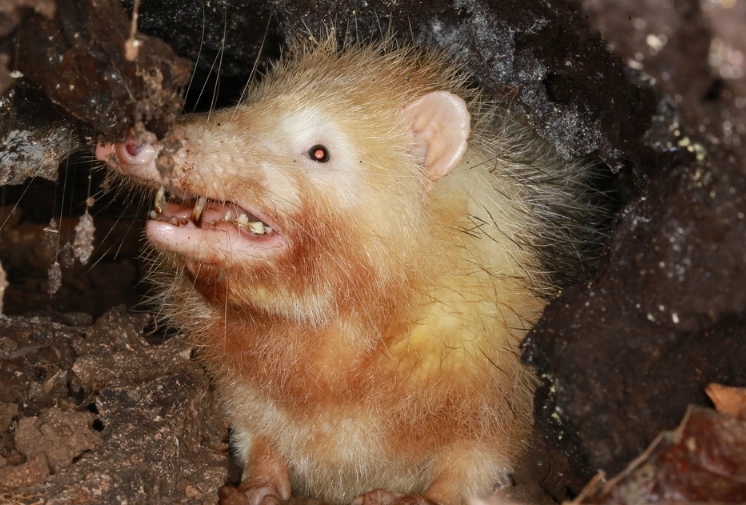
Moonrat vs Hedgehog: The Ultimate Comparison
People constantly mix them up because they're related. This table should end the confusion.
| Feature | Moonrat (Echinosorex gymnura) | Typical Hedgehog (e.g., Erinaceus europaeus) |
|---|---|---|
| Defense Mechanism | Pungent smell from glands; biting. | Rolls into a ball protected by sharp spines. |
| Body Covering | Coarse, dark hair. No spines. | Short hair with thousands of sharp, keratin spines. |
| Tail | Long, scaly, often with a distinct white tip. | Very short, often hidden. |
| Habitat | Southeast Asian lowland rainforests & swamps. | European gardens, hedgerows, woodlands. |
| Relationship with Water | Semi-aquatic; excellent swimmer, forages in water. | Generally avoids water; can swim if necessary. |
| Primary Sense | Excellent smell via long snout. | Good hearing and smell. |
They're a perfect example of evolution finding different solutions. The hedgehog became a spiky tank. The moonrat became a smelly, swamp-dwelling forager.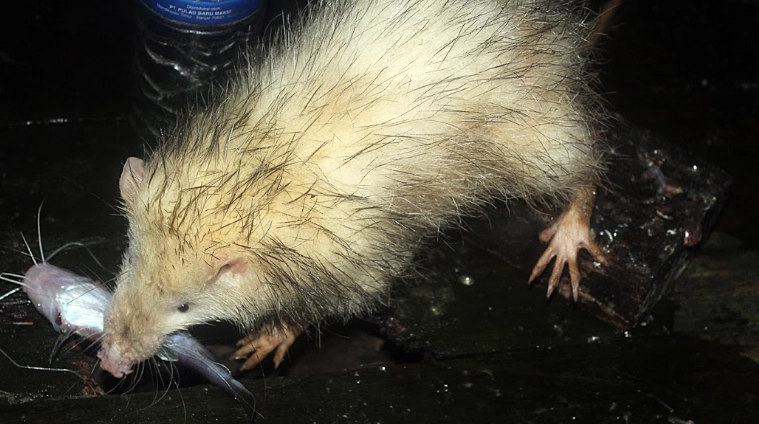
Your Moonrat Questions, Answered by Experience
If I smell ammonia while hiking in Southeast Asia, does it mean a moonrat is nearby?
It's a strong possibility, but not a guarantee. The smell can linger on trails they use frequently. It could mean one passed through recently or has a latrine site nearby. Stop, stay quiet, and scan the area with your torch, especially along the ground near water. You might catch a glimpse. Other animals can produce smells too, but the moonrat's ammonia scent is quite distinctive.
Can you keep a moonrat as a pet?
This is a terrible idea for so many reasons. First, it's illegal in most places as they are a protected wild species. Second, their dietary needs (live invertebrates, worms) are complex and messy. Third, that scent would permeate your home, especially if the animal is stressed. Fourth, they are solitary, nocturnal, and not social animals. They would be miserable in captivity, and you'd be left with a smelly, unhappy creature. Appreciate them in the wild where they belong.
Are moonrats dangerous to humans or pets?
Not in the slightest. They are shy and will always choose to flee. Their only defenses are their smell and a defensive bite if cornered and unable to escape. A bite would be painful and could get infected, but the moonrat isn't seeking conflict. For pets, the main risk is the reverse—a curious dog might get a faceful of stink spray. They pose no threat to cats or dogs in a typical encounter.
Why aren't they considered rodents? They look like a giant rat.
This is all about teeth and ancestry. Rodents (Rodentia) have a single, perpetually growing pair of incisors in the upper and lower jaw for gnawing. Moonrats (Order Eulipotyphla) have a full set of pointed, rooted teeth for shearing insect exoskeletons and meat. They lack those characteristic rodent incisors. It's a fundamental evolutionary difference. Calling a moonrat a rodent is like calling a dolphin a fish because it lives in water.
What's the biggest threat to moonrat populations?
Habitat loss, full stop. Their specific niche—lowland swamp forests and riverine habitats—is being cleared for palm oil plantations, agriculture, and development at an alarming rate. This habitat is often seen as "wasteland" ready for conversion, but it's the only home for the moonrat and countless other species. Fragmentation also isolates populations. While they are adaptable to some disturbance, they cannot survive in oil palm monocultures. Supporting conservation of these wetland forests is the single most important thing for their future.


Comments
Leave a Comment