Let's cut to the chase. If you're reading about the hero shrew, you've probably heard the wild claim: this little guy has a spine so strong it can support the weight of a full-grown human without injury. Sounds like an internet myth, right? I thought so too, until I dug into the research and spoke with a mammalogist who had held one. The truth is more nuanced, and honestly, more fascinating than the viral factoid. Forget the superhero hype for a second. The real story of the hero shrew (Scutisorex somereni and its cousin S. thori) is a masterclass in evolutionary problem-solving in the dense, muddy heart of Central Africa.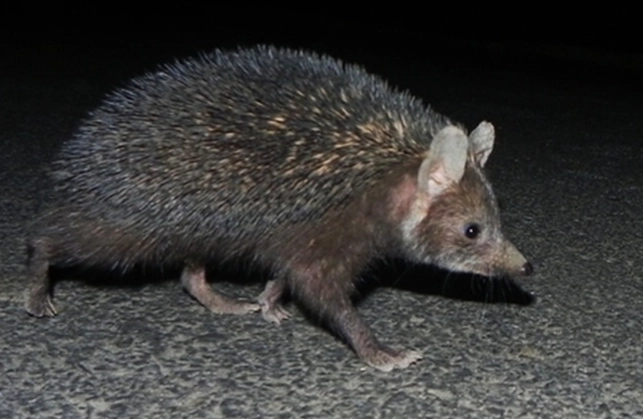
What You'll Discover
That Bizarre Spine: Architecture, Not Just Armor
The most famous feature is, without a doubt, its vertebral column. A typical shrew has 26 vertebrae in its lower back and tail region. The hero shrew? It has between 11 and 14 lumbar vertebrae, but here's the kicker – each one is covered in dozens of interlocking bony projections, like a complex 3D puzzle. Think of it less as a solid beam and more as a flexible, interwoven lattice.
So, What's It For? The Leading Theories
Nobody has filmed a hero shrew in the wild doing its thing for long enough to be sure. But the theories are compelling:
The Log-Lifter Hypothesis: This is the classic one. The idea is that the shrew uses its powerful back and neck muscles, anchored to that crazy spine, to lever up heavy objects like logs, stones, or palm fronds to get at insects and worms underneath. It's a built-in crowbar.
The Mud-Wedge Theory: A mammalogist I respect more pointed out something obvious that most articles miss. Their primary habitat is swampy, dense forest floor litter. That spine might act as a brace, allowing them to force their wedge-shaped head and body through tangled roots and compacted leaf litter, creating a tunnel where other small mammals can't go.
The "human weight" story? It likely stems from early 20th-century accounts where a researcher (J. A. Allen) reportedly stood on one. Modern ethics aside, the point was to demonstrate exceptional resistance to crushing, not that it's a daily habit. I'm skeptical of the "living bottle opener" image. In reality, it's probably a multi-tool for a tough environment.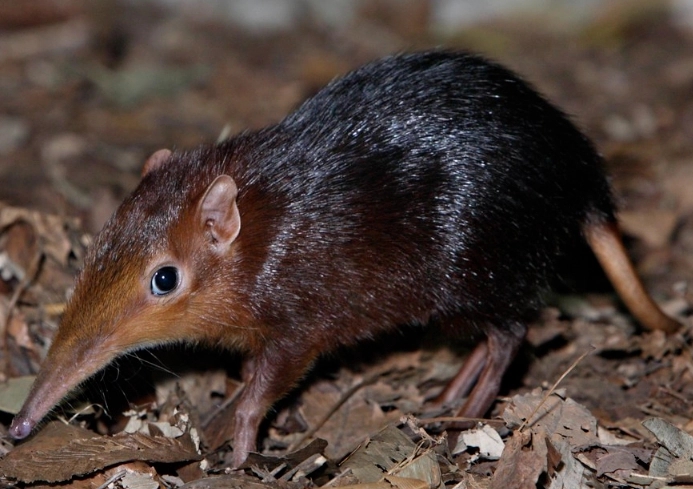
Meet the Family: It's Not Just One Shrew
For almost a century, we thought there was only one species: the armored hero shrew (Scutisorex somereni). Then in 2013, a team including researchers from the Field Museum and Université de Kisangani described a second species: Thor's hero shrew (Scutisorex thori). This was huge news in the small mammal world.
The differences are subtle but important. S. thori has a slightly less extreme spine – think of it as an intermediate model. It has fewer lower vertebrae (8-9) and the bony projections are less numerous. This discovery is a golden ticket for scientists because it gives them a comparative model to study how this unique trait evolved in steps.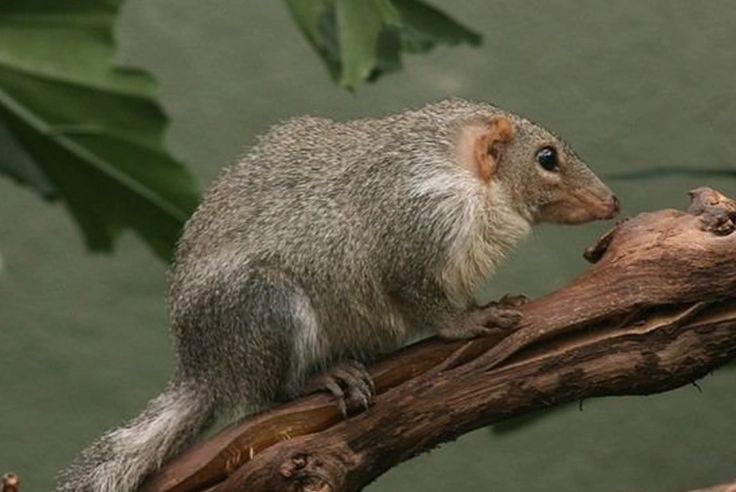
| Feature | Armored Hero Shrew (S. somereni) | Thor's Hero Shrew (S. thori) |
|---|---|---|
| Lumbar Vertebrae | 11-14 | 8-9 |
| Spine Complexity | Most extreme, more interlocking processes | Moderate, intermediate form |
| Primary Range | Wider in DR Congo, Uganda, Rwanda | Known from a smaller area in DR Congo |
| Discovery | Described in 1910 | Described in 2013 |
Finding a new large mammal is rare. Finding a new small mammal that rewrites our understanding of skeletal evolution? That's a career-defining moment. The local Mangbetu people actually knew about S. thori long before science did, having their own name and understanding for it.
Habitat and Behavior: Life in the Swamp
You won't find a hero shrew in your backyard unless you live in the swampy lowland and montane forests of the Congo Basin. We're talking about a very specific slice of real estate in the Democratic Republic of the Congo, parts of Uganda, Rwanda, and maybe surrounding areas. They are tied to moist, dense ground cover.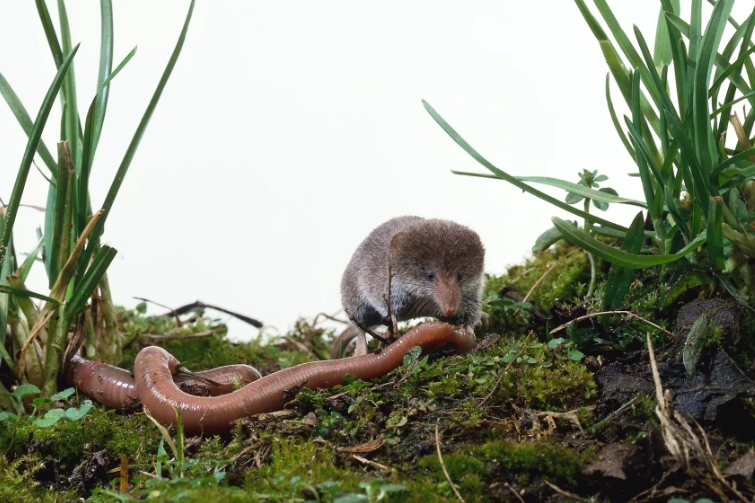
What do they eat? Like other shrews, they're insectivores, likely feasting on earthworms, beetle larvae, and other soft-bodied invertebrates they root out from the muck. Their metabolism is frantic – typical shrew stuff. They probably need to eat constantly.
One of the biggest gaps in knowledge? Their social life. Are they solitary? Do they have burrows? Most shrews are loners, but with such a specialized anatomy, who knows. A researcher based in Kisangani once told me finding their nests is like looking for a needle in a haystack made of mud and roots. The few specimens in museums usually come from local hunters who catch them by chance.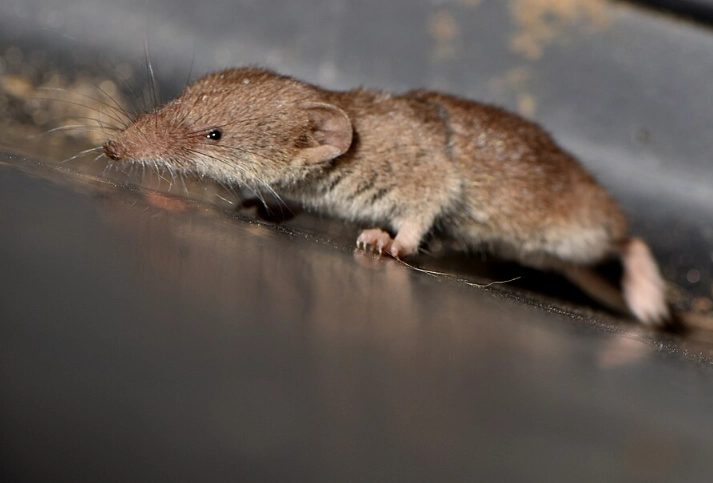
Why This Shrew Matters to Science
Beyond the cool factor, the hero shrew is a case study in extreme adaptation. It shows us how far mammalian anatomy can be pushed to solve an environmental challenge (exploiting a hard-to-reach food source).
For biomedical and engineering fields, studying its spine could inspire new designs for lightweight, flexible yet crush-resistant materials or structures. Think about applications in robotics, exoskeletons, or protective gear.
From an evolutionary biology perspective, it raises a fantastic question: what were the intermediate steps? S. thori gives us a clue. The trait didn't appear fully formed. There was a progression. This makes hero shrews a potential model for studying the genetics of skeletal development and how major morphological novelties evolve.
A lot of what's written online repeats the same three facts. The real, ongoing research is trying to sequence their genome, understand their precise ecology, and map their true distribution. Every new specimen adds a piece to the puzzle.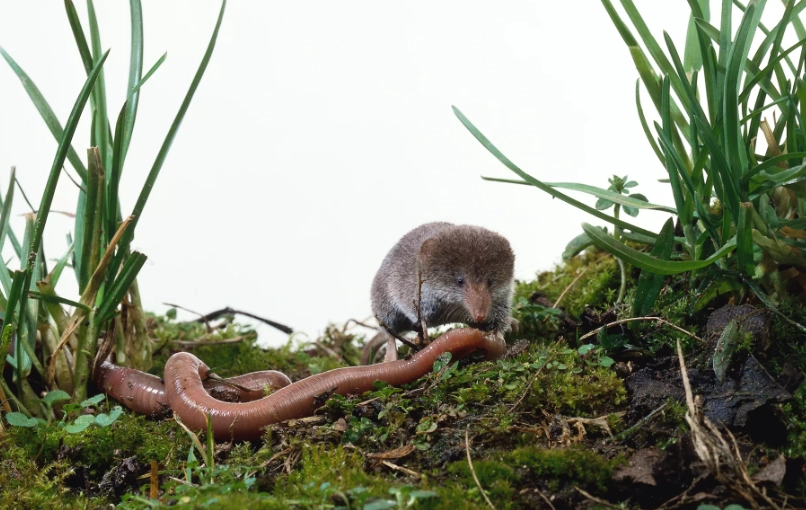
Conservation Status: Data Deficient but Likely Vulnerable
Here's the uncomfortable part. The IUCN Red List categorizes both species as Data Deficient. That doesn't mean they're safe. It means we don't have enough information to say.
Their entire world is under threat. The lowland forests of the Congo Basin face deforestation for agriculture, logging, and human expansion. A species with such a specific, limited habitat is incredibly vulnerable to habitat loss. If the swampy forest floor disappears, the hero shrew has nowhere to go.
There are no captive breeding programs. They are not in zoos. Their survival hinges on the conservation of their incredibly biodiverse, and pressured, homeland. Supporting broad conservation efforts in Central Africa, like those by the Wildlife Conservation Society (WCS) which works in the region, indirectly helps obscure creatures like this.
Your Burning Questions Answered
Walking away, I hope you see the hero shrew not as a cartoonish strongman, but as a testament to nature's ingenuity. In the dark, damp understory of an African forest, evolution engineered a living tool of breathtaking complexity. We've just begun to scratch the surface of its secrets.



Comments
Leave a Comment