What You'll Learn in This Guide
I was pruning my apple tree last August when I saw something that looked like a tiny, hairy monster clinging to a leaf. At first glance, I thought it was a slug, but then I noticed the odd leg-like projections. That was my first encounter with a monkey slug caterpillar, and it sparked a fascination that's lasted years. If you've ever stumbled upon one of these creatures, you probably have questions. Let's dive in.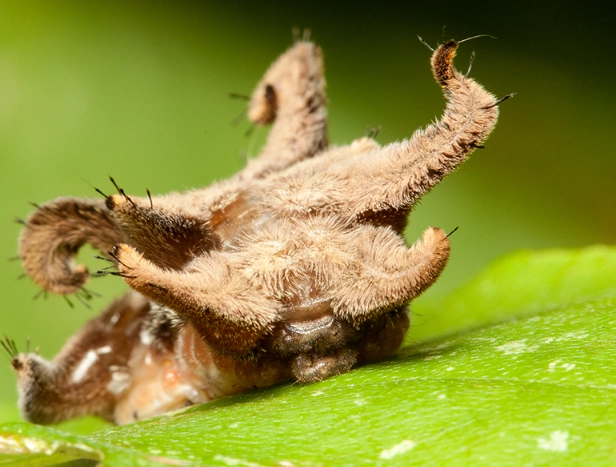
What Exactly is a Monkey Slug Caterpillar?
The monkey slug caterpillar is the larval stage of the hag moth, scientifically known as Phobetron pithecium. It's not a slug or a monkey, despite the name. This caterpillar belongs to the family Limacodidae, often called slug caterpillars because of their flattened, slug-like appearance. What sets the monkey slug apart is its bizarre look—imagine a brown, fuzzy blob with several pairs of fleshy, leg-like extensions that wiggle when it moves. It's about 1 to 2 inches long, and honestly, it's one of the weirdest things you'll see in nature.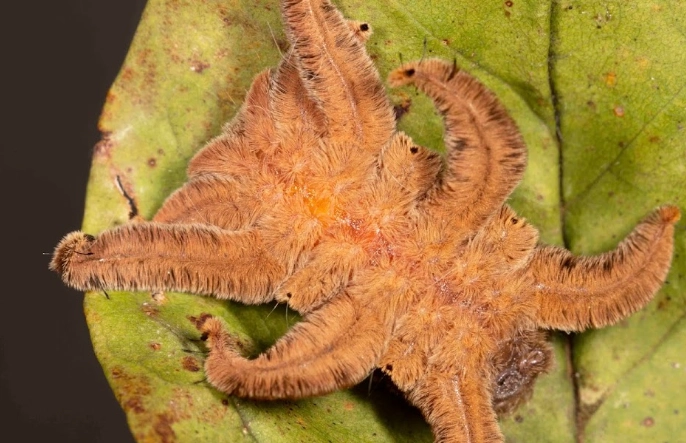
I've talked to entomologists, and they say the name comes from its resemblance to a hairy slug with monkey-like features. The "hairs" are actually setae, which can cause skin irritation. This isn't just some obscure bug; it's common in parts of North America, and knowing about it can save you from an itchy surprise.
How to Identify a Monkey Slug Caterpillar
Identification is key because many hairy caterpillars can sting, and confusing them can lead to unnecessary panic. Here's a breakdown of the monkey slug's features:
- Color: Usually brown or tan, with darker patches that can look like camouflage. Sometimes they have a reddish tint, especially when younger.
- Texture: Covered in dense, hair-like setae that give it a fuzzy, almost woolly appearance. Don't be fooled—these hairs are barbed and can embed in skin.
- Shape: Irregular and flattened, with six to nine pairs of lateral projections that mimic legs. These projections are fleshy and can vary in length, making each individual look slightly different.
- Size: Typically 1 to 2 inches long, but I've seen smaller ones around half an inch.
Pro Tip: A common mistake is mixing up the monkey slug with the puss caterpillar (the larval stage of the flannel moth). The puss caterpillar is more uniformly hairy and lacks those distinct projections. If it looks like a tiny toupee, it's probably a puss caterpillar. The monkey slug has a more ragged, "hairy slug" vibe.
I once misidentified one as a fallen leaf until it moved. That's how good their camouflage can be. If you're unsure, take a photo and compare it to resources from the University of Kentucky Entomology Department or local extension services—they have great guides.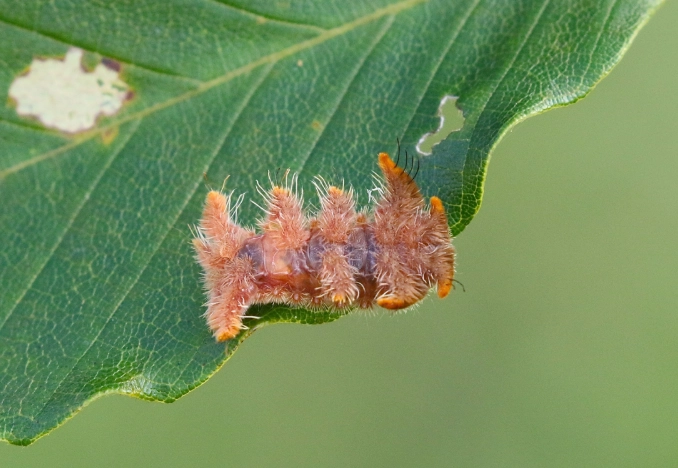
Habitat and Where to Find Them
Monkey slug caterpillars are primarily found in the eastern United States, ranging from Florida up to Maine, and west to Texas and Kansas. They've also been spotted in parts of Canada. Their preferred habitats include deciduous forests, wooded parks, and suburban gardens. I've personally seen them on oak, maple, apple, and cherry trees, often on the undersides of leaves where they're less visible.
According to the University of Florida Entomology and Nematology Department, these caterpillars are most active from late summer to early fall, which aligns with my observations. They tend to avoid open fields, sticking to shaded, leafy areas. If you're hiking in a forested trail or tending to a garden with native trees, that's where you're likely to encounter them.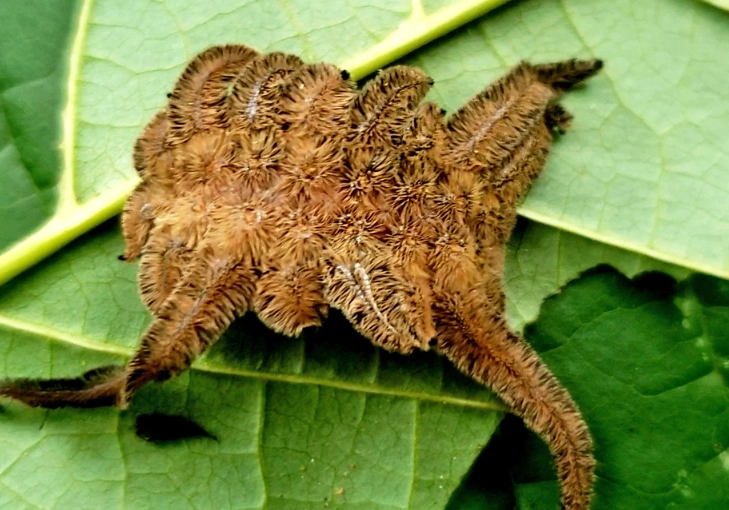
Distribution isn't uniform; in some years, populations boom, and you might see several in one area. Climate change might be shifting their range, but there's limited data on that. For now, focus on the eastern U.S. if you're looking.
Life Cycle and Behavior Insights
The life cycle of the monkey slug caterpillar is a fascinating process that starts with the adult hag moth. The hag moth is a small, brown moth with feathery antennae—it's not much to look at, and most people overlook it. Females lay eggs on host plants, and after hatching, the larvae go through several instars (growth stages) before pupating.
Here's a quick rundown:
- Egg Stage: Eggs are tiny and laid in clusters on leaves. They hatch in about a week.
- Larval Stage: This is the monkey slug stage, lasting 4 to 6 weeks. The caterpillars feed on leaves, but they're not voracious eaters like some pests. They move slowly, often staying on the same leaf for days.
- Pupal Stage: They spin a cocoon attached to twigs or bark, where they overwinter. The pupa is brown and inconspicuous.
- Adult Stage: The hag moth emerges in spring or summer, completing the cycle.
Behavior-wise, these caterpillars are solitary and non-aggressive. They don't bite or attack; their defense is purely passive through those irritating hairs. I've watched them for hours, and they mostly just crawl slowly or remain still. It's a chill existence, really.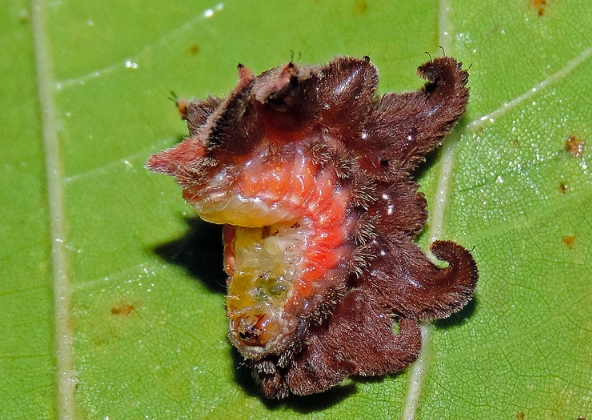
Are Monkey Slug Caterpillars Dangerous?
Yes, but let's put it in perspective. The setae (hairs) contain irritants that can cause contact dermatitis, similar to poison ivy. Symptoms include itching, redness, swelling, and sometimes small blisters. It's not life-threatening, but it can be incredibly annoying, especially if you're allergic or have sensitive skin.
Warning: I made the mistake of touching one bare-handed while gardening, and my forearm itched for three days straight. It wasn't painful, but the constant itch was a nuisance. So, if you have kids or pets, keep an eye out—they might not know better.
The risk is higher for people who spend time outdoors, like gardeners, hikers, or landscapers. According to reports from the American Academy of Dermatology, caterpillar-induced dermatitis is common in late summer, and monkey slugs contribute to that. However, they're not as notorious as the puss caterpillar, which can cause more severe reactions.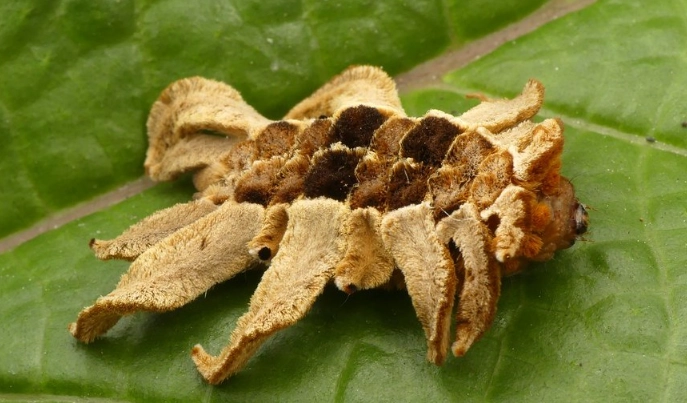
Pets can also be affected. Dogs might sniff or lick them, leading to oral irritation. I've heard stories from vets about pets drooling or pawing at their mouths after encounters. So, caution is key.
Safe Handling and Removal Tips
If you find a monkey slug caterpillar in your garden or on a hike, here's what to do—and what not to do. I've learned this through trial and error, plus advice from experts.
- Don't Touch Directly: This should be obvious, but it's worth repeating. Always wear gloves if you need to handle it. Thick gardening gloves work best.
- Use a Tool for Removal: Gently coax the caterpillar onto a leaf, piece of paper, or small container. A stick or tweezers can help, but avoid squeezing it, as that might release more hairs.
- Relocation: If you want to move it, take it to a wooded area away from high-traffic spots. They're part of the ecosystem, so killing them isn't necessary unless there's an infestation.
- For Infestations: If you have many on a plant, consider pruning the affected branches and disposing of them in a sealed bag. Chemical pesticides are overkill and can harm beneficial insects. I've found that natural predators like birds and parasitic wasps keep populations in check.
- After Contact: If you accidentally touch one, wash the area with soap and cold water immediately. Avoid rubbing, as that can push hairs deeper. Over-the-counter antihistamines or hydrocortisone cream can help with itching.
A friend of mine, a landscaper, swears by using duct tape to remove embedded hairs—gently press it on the skin and peel off. It sounds odd, but it works for him.


Comments
Leave a Comment