You're hiking in the southeastern woods, and a flash of red, yellow, and black slithers across the path. Your heart jumps. Coral snake? That rhyme—“red on yellow, kill a fellow”—starts racing through your mind. Hold on. Before you panic, there's a very good chance you've just met one of nature's most convincing impersonators. Several harmless snakes have evolved to look almost identical to the venomous coral snake, a phenomenon called Batesian mimicry. Telling them apart isn't just trivia; it's a crucial piece of outdoor safety knowledge that can prevent unnecessary fear—or a dangerous mistake.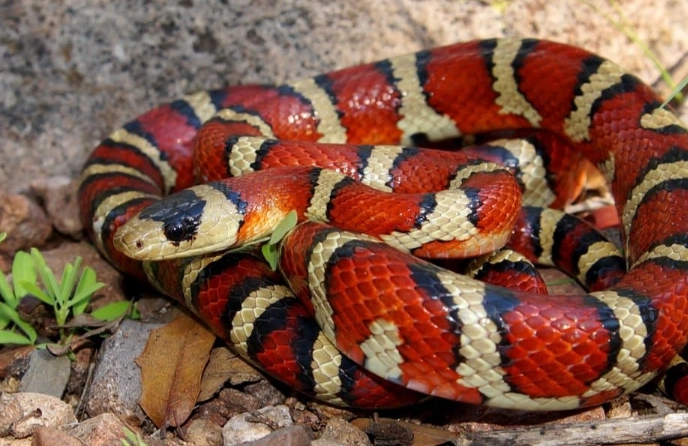
What’s Inside This Guide
How to Tell a Coral Snake from Its Look-Alikes
Forget trying to remember the exact wording of rhymes. They have regional exceptions and fail when you're stressed. You need a reliable, multi-point checklist. A true coral snake (genus Micrurus) has specific features its mimics can't perfectly replicate.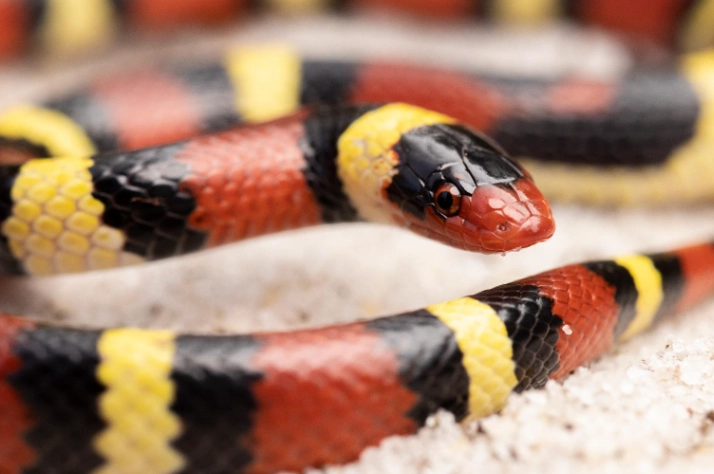
The Band Sequence is Key, But Not Foolproof: The famous rhyme “red on yellow, kill a fellow; red on black, venom lack” works for North American coral snakes and their mimics in the eastern United States. Here, coral snakes have red bands touching yellow bands. Look-alikes like the scarlet kingsnake have red bands touching black bands. However, this rhyme is useless in other parts of the Americas where coral snake patterns vary. A better universal rule? Look at the head and tail.
Head Shape and Features: Coral snakes have a small, blunt, black head that's barely wider than their neck. Their eyes are small and black, almost bead-like. In contrast, many mimics, like kingsnakes and milk snakes, have slightly more elongated heads and more prominent eyes. The coral snake's snout is also rounded and black, often extending over the mouth.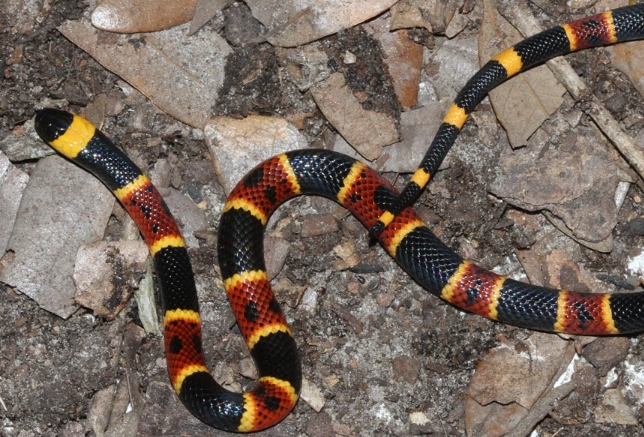
Tail Banding Pattern: This is a trick most people miss. On a coral snake, the black and yellow bands continue all the way to the tip of the tail. The tail doesn't have large sections of a single color. On some mimics, the tail pattern can become irregular or the bands may fade.
Meet the Common Coral Snake Mimics
Let's get specific. These are the snakes you're most likely to confuse with a coral snake in North America. They're beautiful, beneficial, and completely harmless to humans.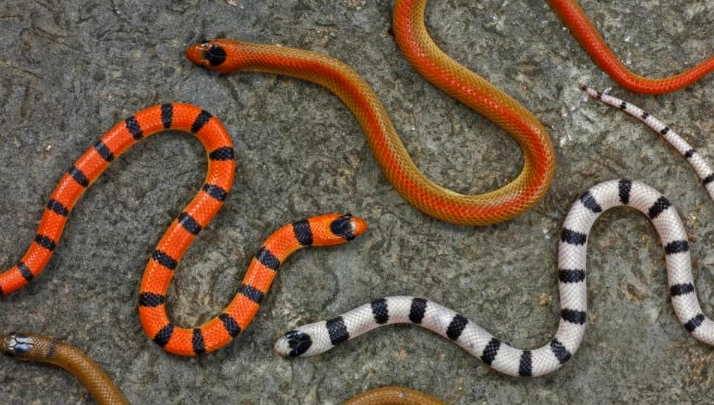
| Snake | Key Identifying Feature | Primary Range | Habitat |
|---|---|---|---|
| Scarlet Kingsnake (Lampropeltis elapsoides) | Red bands touch black bands. Bands typically encircle the body completely. Shiny, smooth scales. | Southeastern U.S. (NJ to FL, west to LA) | Pine flatwoods, hardwood forests, under logs/debris. |
| Scarlet Snake (Cemophora coccinea) | Red bands touch black bands. BUT the belly is plain white or gray—the bands do NOT wrap around. Pointed red snout. | Southcentral & Southeastern U.S. | Sandy soils, pine woods, often buried. |
| Various Milk Snakes (e.g., Lampropeltis triangulum) | Pattern varies by subspecies. Many have “red on black” banding. Often have a Y- or V-shaped mark on the back of the head/neck. | Widespread across the U.S. and Americas. | Highly variable: forests, farmland, rocky slopes. |
The scarlet kingsnake is the champion mimic. I've seen specimens in Georgia that had me doing a double-take even after years of herping. Their scales have a glossy, ceramic-like sheen that's different from the more satin finish of a coral snake. They're also constrictors, feeding on small lizards and rodents.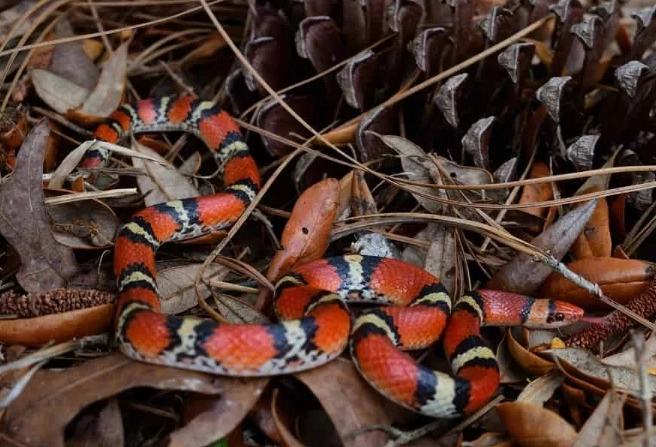
The scarlet snake is more secretive. That white belly is the dead giveaway. If you can't see the belly, the pointed red snout is another clear signal. It's a fossorial snake, spending much of its life underground.
Milk snakes are the wild card. Some subspecies, like the Louisiana milk snake, are stunning mimics. Others have blotchy patterns. If you're outside the core southeastern U.S. range of the coral snake and see a banded snake, it's overwhelmingly likely to be a milk snake or another kingsnake species.
What to Do If You Encounter a Banded Snake
Okay, you see one. Here's your step-by-step mental protocol.
Step 1: Freeze and Observe. Don't jump back wildly. Most snake bites happen when people try to kill or handle the snake. Give it a few feet of space. Watch its behavior. Coral snakes are famously reclusive and will almost always try to escape and hide their head under their coils. They are not aggressive. Mimics may also flee or remain still.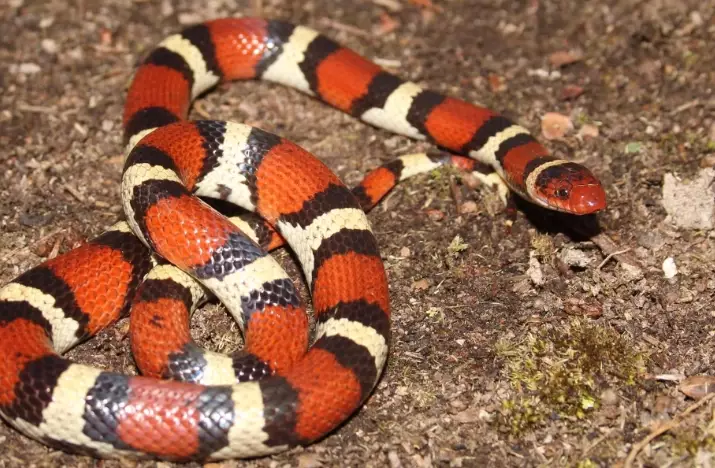
Step 2: Run the Checklist (from a distance).
- Bands: Red touching yellow? (Remember the regional limitation).
- Head: Small, blunt, and black?
- Tail: Banded all the way to the tip?
- Location: Are you in a known coral snake range? (Check a range map from a source like the Smithsonian Institution or your local wildlife agency).
Step 3: Decide on Action.
- If you're unsure: Treat it as venomous. Slowly back away and give it a wide berth. Take a photo with zoom if you can do so safely—this helps with later identification.
- If you're confident it's a mimic: Appreciate the view! These snakes are pest controllers and fascinating creatures. You can still choose to leave it be or watch from a distance.
- Never, ever attempt to handle or kill it. This is how most bites occur, and it's illegal to kill many native snake species, mimics included.
Why Mimicry Works and Where It Fails
This whole system relies on predators—like hawks, raccoons, and foxes—learning to avoid the bright “warning” colors of the venomous coral snake. Once a predator has a bad experience, it avoids anything that looks similar. This gives the harmless mimics a free pass. Research cited in journals like Evolution has shown mimicry is most accurate where coral snakes are common and predators have learned the lesson well.
But the system isn't perfect, and that's where human confusion comes from. Mimics aren't identical copies. Evolution strikes a balance: being just similar enough to fool predators, but not so similar that they can't find their own mates. That's why we have those telltale differences in head shape, belly color, and band order. The scarlet snake's white belly, for instance, might be a compromise because it spends so much time buried—its underside isn't under strong selective pressure to mimic.
Another critical point: mimicry only works if the model (the coral snake) is present. In areas where coral snakes have disappeared, the mimic's bright colors might actually make it more visible to predators who never learned the danger. This creates an evolutionary puzzle that scientists are still studying.

Comments
Leave a Comment