Let's be honest. Most fish are kind of boring. They swim around, they eat, they avoid being eaten. But then you have the sarcastic fringehead (Neoclinus blanchardi). This little guy looks like it just heard the world's worst joke and is permanently stuck in a state of appalled, wide-mouthed shock. It's not just a funny face, though. Behind that comical expression lies one of the most territorially aggressive and behaviorally fascinating fish in the ocean. I've spent years diving off the California coast, and I still get a jolt of excitement every time I spot one guarding its hole.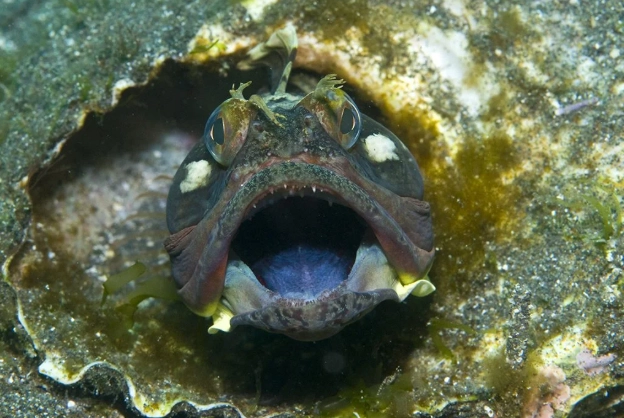
What’s Inside This Deep Dive
What Exactly Is a Sarcastic Fringehead?
First, the basics. This isn't some deep-sea monster. It's a small, elongated fish, a type of blenny, that maxes out at about 10 inches (25 cm). They're mostly mottled brown and green, perfect for blending into the muddy or rocky bottoms they call home. The "fringe" in their name comes from the frilly, fleshy appendages called cirri above their eyes. They have these big, expressive pectoral fins they use like little hands to prop themselves up in their burrows.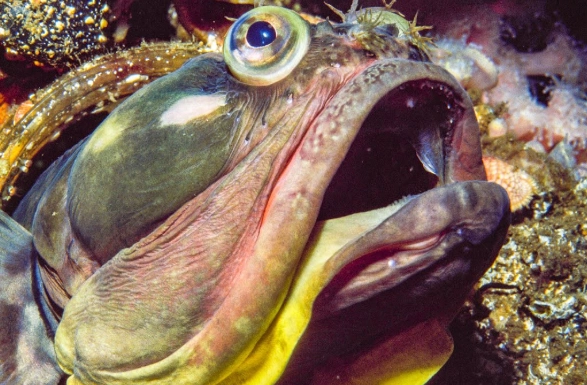
Their life is shockingly simple and revolves entirely around real estate. They are ambush predators. A fringehead finds a good hole—an empty clam shell, a discarded bottle, a crack in a rock—and claims it. That hole is its castle, its restaurant, and its nursery. It will rarely venture more than a body length away. Everything it needs comes to its front door.
A quick note on the name: No, it's not actually sarcastic. The name is believed to come from its "sardonic" or sneering facial expression. The scientific naming conventions of the 19th century loved a good anthropomorphic descriptor, and this one stuck. It's a fish named for its resting grump face.
The Jaw-Dropping Mouth: More Than Just a Gape
Okay, let's talk about the main event. The mouth. When closed, it's just a big, downturned line. But when threatened or confronting a rival, it unfolds. And I mean unfolds.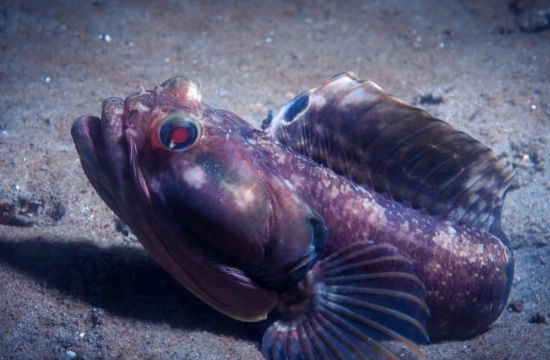
The jaws are hinged in a way that allows them to open to a grotesquely wide angle, often wider than the fish's own head. The interior is often a bright, contrasting white or yellow, making the display even more startling. This isn't for eating large prey—their diet is small crustaceans and fish. This is pure theater. It's a warning sign, a billboard that says "GO AWAY" in the most visually dramatic way possible.
Here’s something most generic articles miss: the mouth is also a measuring tool. During confrontations (which we'll get to), fringeheads press their open mouths together. The size of the mouth cavity directly correlates with the size and strength of the fish. It's a non-violent way to settle a dispute—whoever has the bigger, more impressive gape wins the argument without a bloody fight. It's like two people comparing biceps, but way weirder.
Not Just for Show: The Practical Side
Beyond intimidation, that big mouth serves a crucial survival function. It creates a powerful suction. When a small shrimp or fish wanders too close to the burrow entrance, the fringehead doesn't chase it. It launches its body forward just a few inches, opens that massive maw in a fraction of a second, and sucks the prey right in. The speed and efficiency are remarkable. You can sometimes find footage from research submersibles, like those operated by the Monterey Bay Aquarium Research Institute (MBARI), that show this lightning-fast strike in action.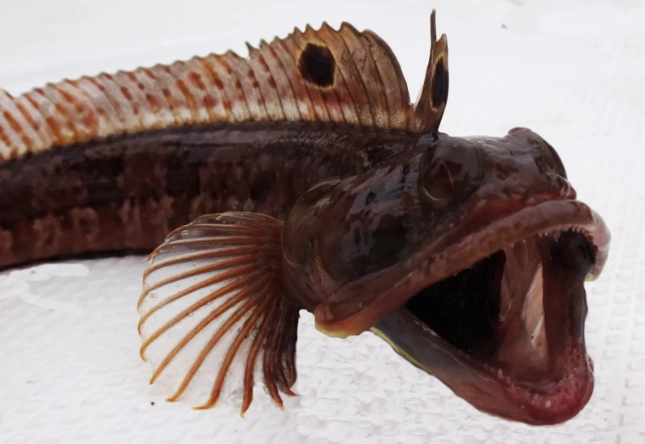
Territorial Wars: The ‘Mouth Wrestling’ Ritual
This is where the sarcastic fringehead earns its reputation. If two rival males meet at a territory boundary, they don't immediately bite. They engage in a ritualized display that looks absolutely ridiculous to us but is dead serious to them.
They face each other, flare their giant mouths, and then slowly, deliberately, press those open mouths together. They push and shove, each trying to force the other backward. It looks like they're kissing, or more accurately, like two kids playing a game of "who can open their mouth wider." This is called mouth wrestling or gaping display.
The goal is to intimidate. The fish with the larger mouth, perceived as bigger and stronger, usually wins. The loser retreats, and no one gets seriously hurt. It's a highly evolved form of conflict resolution that conserves energy and prevents injury—a concept more animals (and humans) could learn from.
I remember watching two medium-sized fringeheads do this for a solid three minutes during a dive near Monterey. They were so focused on each other they ignored my light completely. It was a slow, pushing match of pure bluster. The smaller one finally twitched, broke contact, and darted back into its shell. Winner keeps the neighborhood bragging rights.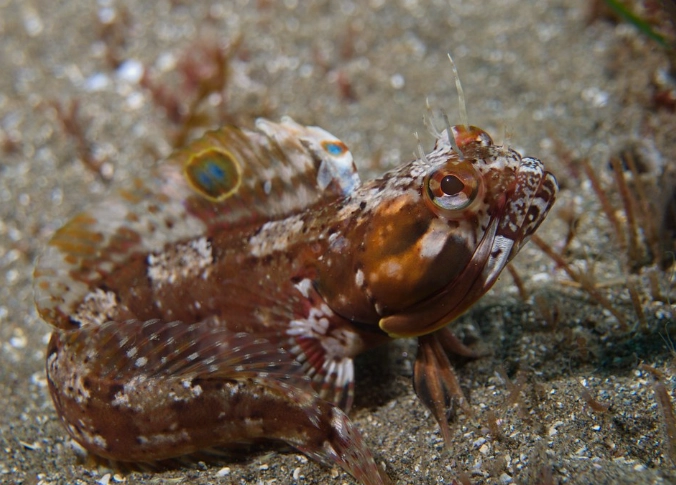
Where and How to Find One (If You're Lucky)
You won't find these on a coral reef or in a tropical aquarium. The sarcastic fringehead is a cold-water specialist of the eastern Pacific Ocean.
| Location | Habitat Type | Depth Range | Best Chance to See |
|---|---|---|---|
| Central to Southern California (e.g., Monterey Bay, Channel Islands) | Muddy or sandy bottoms, often near eelgrass beds or rocky outcrops. | 10 - 150 feet (3 - 45 meters) | Good. Popular with scientific divers and advanced recreational divers. |
| Baja California, Mexico | Similar soft bottoms, sometimes using human debris like cans as homes. | Up to 250 feet (75 meters) | Moderate. Less diving pressure, but they are present. |
| Public Aquariums | Specialized cold-water exhibits. | N/A | Your best, most reliable bet. The Monterey Bay Aquarium has been known to feature them. |
How to spot one on a dive: Move slowly. Look for any hole or crevice on the bottom. An empty clam shell sitting upright is a prime piece of fringehead real estate. You might see just the very front of a head poking out, with those big, dark eyes watching you. Shine your light gently to the side of the hole (not directly in, you'll blind it). If you're lucky and it feels threatened, you'll get the full display. Don't poke or try to provoke it repeatedly—that's just stressful for the animal.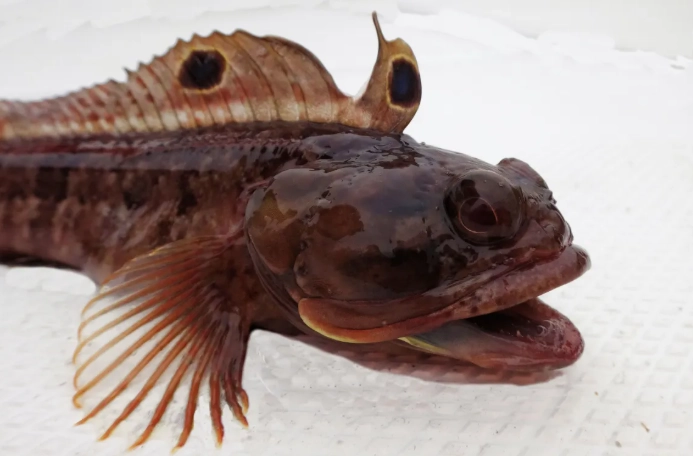
A common mistake new divers make is looking for a "fish." You need to look for its house. Scan the debris field.
Clearing Up Common Myths and Questions
After talking to dozens of fellow divers and marine enthusiasts, I've noticed the same questions and misconceptions popping up. Let's tackle them head-on.
The name likely comes from its unusual appearance. The 'sarcastic' part is thought to refer to its sneering, grimacing mouth, which to early scientists might have looked like a sarcastic smirk. The 'fringehead' comes from the frilly, fringe-like appendages (cirri) above its eyes. It's a classic case of a scientific name that's more about a visual impression than actual behavior. The fish isn't making witty remarks; it just looks permanently unimpressed.
Not dangerous at all. This is a crucial point. Their dramatic mouth displays and aggression are solely for intimidating rival fringeheads and other small fish. They are tiny, usually under 10 inches, and lack any venom or substantial teeth that could harm a person. The worst you might get from a provoked fringehead is a minor nip that feels like a pinprick. They pose zero threat to swimmers or divers. The fear is all for creatures their own size.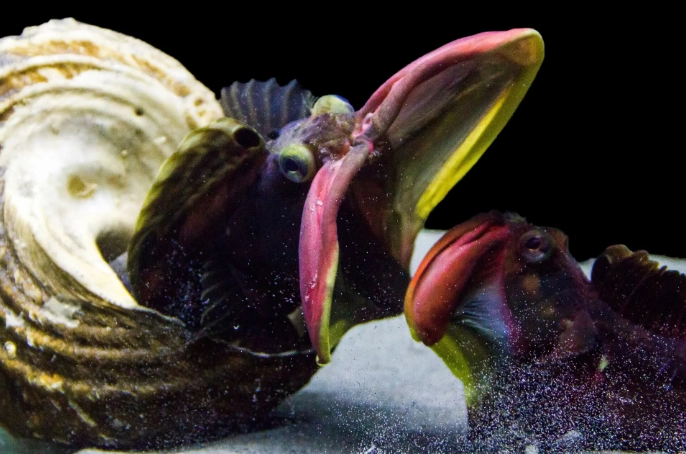
It's a terrible idea and I strongly advise against it, despite what some niche forums might suggest. First, they are highly specialized predators requiring live food like small shrimp and fish, which is messy and difficult. Second, and most importantly, they are incredibly asocial and territorial. They will attack and kill almost any tankmate, including their own kind, and need a complex environment with multiple burrows. They also have specific temperature and water quality needs matching the cold Pacific depths. Most attempts end with a dead fish and a frustrated hobbyist. They belong in the wild. Appreciate them through documentaries or by visiting a major public aquarium that has the resources to care for them properly.
Your best bet is along the rocky, sandy bottoms of the eastern Pacific, from central California down to Baja California. Look in water depths between 10 and 250 feet. They're not out in the open; you need to search for their homes. Target empty shells, abandoned bottles, or crevices in rocks. During a dive, move slowly and look for a small, eel-like head peeking out. Shine a light gently near the entrance—if it's occupied, you might be treated to a sudden, shocking display as it defends its front door. Remember, observe, don't disturb. Their survival depends on that little burrow.
The sarcastic fringehead is a perfect reminder that you don't need to be big, colorful, or fast to be one of the ocean's most captivating characters. Sometimes, all you need is a great defensive strategy, a fantastic piece of real estate, and the most unforgettable scowl in the animal kingdom. Next time you're diving the Pacific coast, look down. You might just get stared down by a fish that looks like it owns the place—because in its mind, it absolutely does.

Comments
Leave a Comment