You're puttering in the garden, maybe picking some late-season tomatoes, when you see it. Clinging to a branch of your black walnut tree is something that looks like it escaped from a paleontology museum. It's huge—as long and thick as your index finger. Its body is a vivid turquoise-green, studded with black-tipped, orange spikes that look like something from a medieval weapon. The head is a menacing crimson, crowned with four even larger, curving horns. Your first thought might be, "What on earth is that, and should I be worried?" Congratulations. You've just met the Hickory Horned Devil (Citheronia regalis), the larval form of the Regal Moth, and one of North America's most spectacular and misunderstood insects.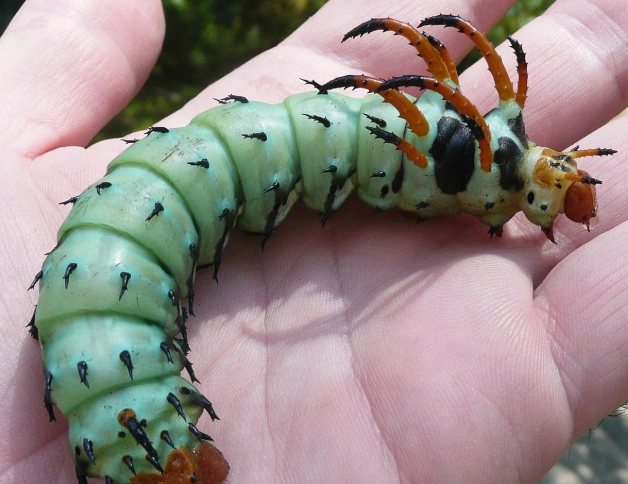
What You'll Find in This Guide
How to Spot a Hickory Horned Devil: A Step-by-Step ID Guide
Let's get the identification down cold. You don't want to mistake this gentle giant for something actually troublesome, like the invasive gypsy moth caterpillar. Here’s exactly what to look for, from the obvious to the subtle details most guides miss.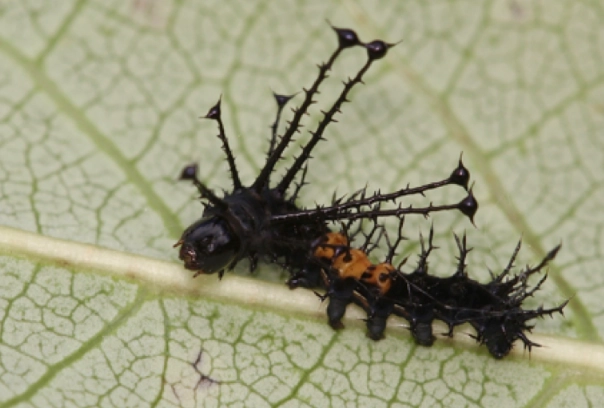
Size is the first giveaway. A mature specimen can reach 5.5 to 6 inches (14-15 cm) in length. I've seen them as thick as a good cigar. No other common caterpillar in its range (eastern U.S., roughly from New Jersey to Florida and west to Texas and Nebraska) gets this big.
The color palette is unique. The body is a striking sea-green or turquoise. Running down each side is a line of jet-black, forward-curving spikes, each tipped in bright orange. The spikes aren't sharp like needles; they're firm but somewhat flexible. The head capsule is a glossy, deep orange-red, and this is where you find the namesake "horns"—four prominent, curved projections that the caterpillar can wave around.
Now, here's something most online fact sheets won't tell you: they change dramatically as they grow. The tiny, early-stage caterpillars look nothing like the final form. They're smaller, darker, and the horns are proportionally even longer, making them look like bizarre, spiky ants. By the final molt, the iconic green and blue colors come in. If you only memorize the final look, you might miss the younger ones entirely.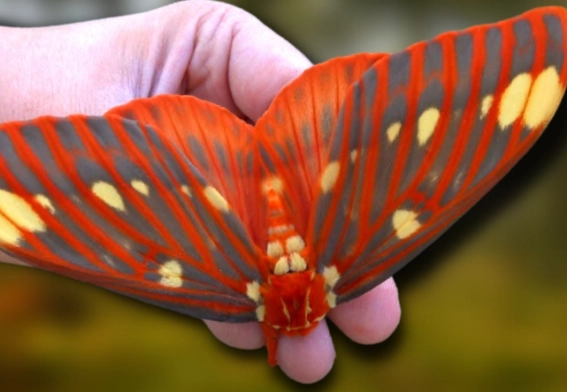
Where and When to Look
Timing is everything. These aren't insects you see all summer. The adult Regal Moths lay eggs in mid-summer. The caterpillars hatch and feed voraciously through late July, August, and into early September. This is your window. By mid-to-late September, they're done eating and heading down to the ground to pupate.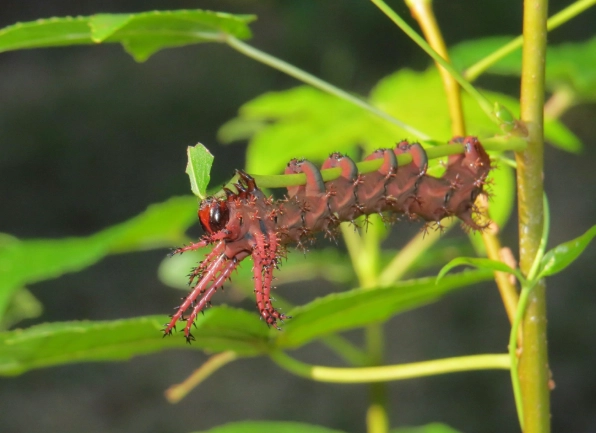
Look up. They are canopy feeders, preferring trees in the walnut family (Juglandaceae): hickory, walnut, pecan, butternut. Sweetgum and persimmon are also common hosts. They rarely come down low unless they've finished feeding and are seeking a pupation site. I find most of them by looking for large, ragged holes in the leaves of these specific trees, then scanning the branches nearby.
From Tiny Egg to Giant Moth: The Incredible Lifecycle
The transformation is the real magic. It's a story in four acts, and most people only ever see Act 3.
Act 1: The Egg. A female Regal Moth—a large, beautiful moth with orange and gray wings—lays small, oval eggs in small clusters on the leaves of a host tree. They're easy to overlook.
Act 2: The Growing Devil. The caterpillar goes through five distinct growth stages (instars). With each molt, it gets bigger, its colors intensify, and its appetite grows exponentially. In the last couple of weeks, it's an eating machine, capable of stripping a small branch. This is when people panic, but hold that thought—we'll address it next.
Act 3: The Descent. This is the most dramatic part you might witness. When fully grown, the caterpillar stops eating. Its color often changes to a duller brownish-green. It then climbs down from the tree—a slow, deliberate journey down the trunk. This is risky, as it's exposed to predators. Many are taken by birds or raccoons at this stage. If it survives, it burrows 4 to 6 inches into the soil.
Act 4: The Long Wait and The Grand Finale. Underground, it forms a tough, dark pupal case. Here's the kicker: it doesn't emerge next spring. It stays dormant through the entire next summer, fall, and winter, finally emerging as a moth the following summer. The entire cycle takes two years. The adult moth doesn't eat at all; it lives only about a week to mate and lay eggs, starting the process over. Resources like the University of Florida's Entomology Department confirm this two-year lifecycle is common in the southern parts of its range.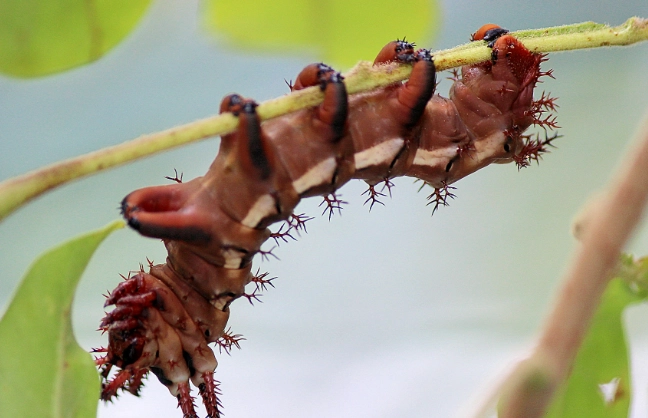
The Truth About Tree Damage: Are They Actually a Pest?
This is the million-dollar question for any gardener or homeowner. You see this massive caterpillar skeletonizing leaves on your prized tree, and the instinct is to reach for the insecticide. In 99% of cases, that's a massive overreaction.
Let's be clear: They are defoliators. A large one can eat a lot of leaves. But here’s the critical context most pest control blogs ignore:
- They are solitary or few in number. You don't get outbreaks of hundreds of Hickory Horned Devils like you can with tent caterpillars. You might find one, two, or maybe five on a mature tree.
- They feed late in the season. By August, a healthy deciduous tree has already done most of its photosynthesis for the year. Losing some leaves at this point is like a person skipping a small snack after a big dinner—it's not a crisis.
- The tree has defenses. A robust hickory or walnut will simply bud new leaves the following spring. The defoliation is almost always cosmetic and temporary.
The real damage comes from stressing the tree with other things: drought, root compaction, disease. A caterpillar taking a few leaves is a symptom, not the disease. If your tree is so weak that a couple of caterpillars threaten it, the caterpillar isn't the core problem.
My non-consensus take? We've become too quick to label any insect that eats a plant as a "pest." The Hickory Horned Devil is a native species that has coexisted with these trees for millennia. It's a vital food source for birds and other wildlife. Killing it to save a few leaves on a tree that will drop them all in a month anyway is bad ecology and unnecessary gardening.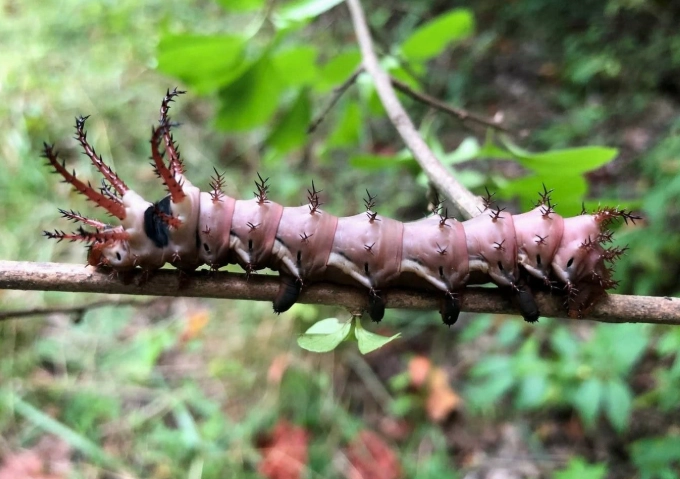
| Insect | Social Behavior | Time of Feeding | Typical Impact on Tree | Recommended Action |
|---|---|---|---|---|
| Hickory Horned Devil | Solitary | Late Summer (Aug-Sept) | Minor, cosmetic defoliation | Observe and enjoy. No action needed. |
| Eastern Tent Caterpillar | Colonial (in tents) | Spring (April-June) | Can defoliate if severe, stresses tree during critical growth period | Remove tents if small tree; tolerate on large trees. |
| Gypsy Moth (Invasive) | Outbreak populations | Spring to Early Summer | Severe, repeated defoliation can kill trees | Report to local extension service. Targeted control may be advised. |
Common Mistakes People Make (And What to Do Instead)
After talking to folks at local nature centers for years, I see the same errors pop up.
Mistake #1: Assuming the horns are dangerous. People see the spikes and think "stinging caterpillar." That's a mix-up with the puss caterpillar or saddleback caterpillar, which have urticating (irritating) hairs. The Devil's horns are a bluff. They're made of the same stuff as its skin—chitin. They can't sting or inject anything. You can pick one up gently (support its whole body) and it won't hurt you, though it might thrash its head dramatically. The real risk is you dropping it because the thrashing startles you.
Mistake #2: Trying to "rescue" it by moving it to a "better" tree. If you find one on a persimmon and think it would prefer a hickory, don't move it. Caterpillars are often imprinted on the specific leaf chemistry of the plant they hatched on. Moving it to a different tree, even of the same species, can cause it to stop eating and die.
Mistake #3: Panic-spraying. As outlined above, this is almost never warranted. Broad-spectrum insecticides will do far more harm, wiping out pollinators and beneficial insects in your yard for the sake of one showy, harmless caterpillar.
What should you do? Take a picture. Show your kids. Watch it eat. It's a free, incredible nature lesson happening right in your yard. If its feeding is concentrated on a small, ornamental tree you're particularly worried about, you can gently relocate the caterpillar to a larger, more mature host tree on your property. Use a stick or wear gloves if you're squeamish. Place it on a sturdy branch. Then let nature run its course.
Your Questions, Answered by a Long-Time Bug Watcher
Finding a Hickory Horned Devil is a moment of luck. It's a reminder that even in our own backyards, there's drama, beauty, and ancient life cycles playing out. It's not a pest to be feared, but a wonder to be appreciated. Next time you see one, don't reach for a spray bottle. Reach for your camera. You're looking at one of the most fantastic examples of what North American insects have to offer.




Comments
Leave a Comment