Picture the Southern Ocean. It's all greys and blues, a heaving expanse of water under a vast sky. The wind bites, and the waves are relentless. Now imagine a flash of black and white, a sleek form arcing through a swell before disappearing into the trough. You blink. Was it a trick of the light? For many who venture into these waters, that fleeting glimpse might be their only encounter with one of the ocean's most enigmatic cetaceans: the hourglass dolphin (Lagenorhynchus cruciger).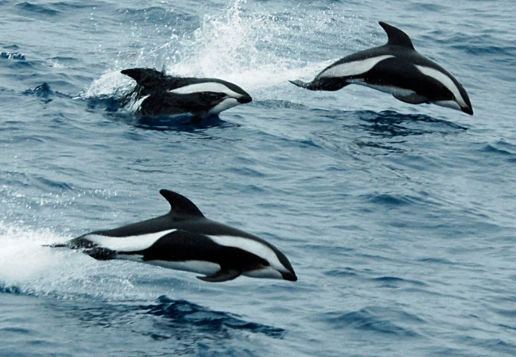
This isn't your friendly, coastal bottlenose. The hourglass dolphin is a creature of the remote, cold Antarctic and subantarctic waters. It's the only small dolphin regularly found this far south, and despite its stunning, painterly pattern, it remains a ghost in the scientific literature. We know shockingly little about it.
I've spent years on expedition vessels down there, and I can tell you, spotting one feels like winning the wildlife lottery. It's not just about seeing a dolphin; it's about connecting with a symbol of the planet's last wild frontier.
What's Inside This Guide?
Meet the Hourglass Dolphin: Anatomy of a Phantom
Let's start with the obvious: they're gorgeous. The name "hourglass" comes from the distinctive white patch on each side, which narrows in the middle like an old-fashioned hourglass set against the dolphin's otherwise black or dark grey body. But here's a detail most illustrations get wrong—the white isn't a flat, clean shape. Up close (which almost no one gets), it's often described as more yellowish or creamy, sometimes with grey speckling. It's a living animal, not a cartoon.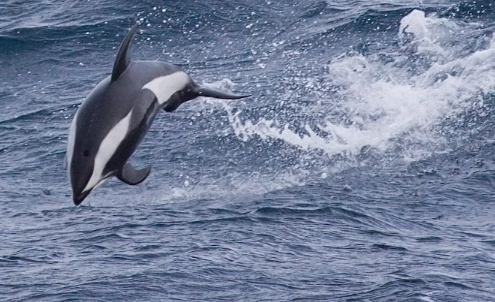
They're compact and robust, built for power in rough seas. Adults typically reach 1.6 to 1.8 meters (5-6 feet) in length. That's smaller than a human is tall. Their dorsal fin is prominent, tall, and curved—a key field mark. The beak is short and not always clearly defined.
Quick ID Card:
Size: 1.6-1.8m (5-6 ft)
Weight: 90-120 kg (200-265 lbs)
Key Feature: The striking, side-mounted white hourglass patch.
Fin: Tall, falcate (curved) dorsal fin.
Look-alikes: From a distance in poor light, they can be confused with a young killer whale (orca) due to the black-and-white contrast, but orcas are massively larger.
The Naming Mix-Up
Their scientific name, Lagenorhynchus cruciger, is a bit of a historical mess. Cruciger means "cross-bearing," which likely refers to the intersecting patterns seen from above. For a long time, they were colloquially called the "sea skunk" or "Wilson's dolphin." The hourglass dolphin name finally stuck, and it's the one that accurately captures their most visible trait.
Where They Roam: Navigating Their Ocean Realm
This is where things get interesting, and frankly, frustrating for anyone hoping for a guaranteed sighting. Hourglass dolphins have what we call a circumpolar distribution in the Southern Ocean. Translation: they can be found in a broad ring around Antarctica, but where exactly within that ring is wildly unpredictable.
Their range generally sits between about 45°S and 65°S. Think of a line from the southern tip of South America, arcing down towards the Antarctic Peninsula, and sweeping across the ocean south of New Zealand and Australia. The map shows a giant, donut-shaped habitat.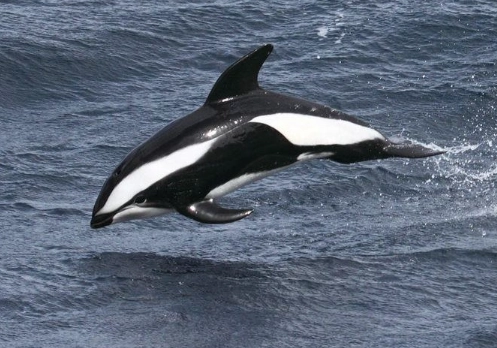
That said, some areas have more recorded sightings than others. The waters of the Drake Passage, the infamous stretch between Cape Horn and the Antarctic Peninsula, are perhaps the most famous (or infamous) corridor for potential sightings. The Scotia Sea and areas south of New Zealand also feature in the logs. But I've spoken to researchers on vessels in what should be "prime" habitat who've gone entire seasons without a single confirmation.
They seem to prefer waters with a surface temperature between 0.1°C and 13°C (32°F to 55°F). They're often associated with the Antarctic Convergence, a biological barrier where cold polar waters sink beneath slightly warmer subantarctic waters, creating a nutrient-rich soup.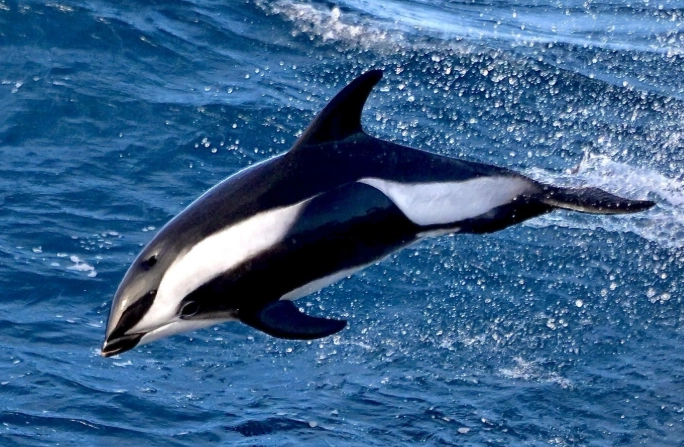
Life in the Cold: Behavior, Diet, and Social Secrets
This is the section padded with phrases like "thought to be" and "believed to," because direct observation is so rare. What we know is pieced together from fleeting encounters and stomach contents of stranded individuals (which are themselves extremely rare).
Diet: They are almost certainly opportunistic feeders on the Southern Ocean's abundant buffet of small creatures. The menu likely includes:
- Various species of squid (a major component).
- Small, schooling fish like lanternfish.
- Crustaceans, including krill. Yes, the same krill that baleen whales feast on.
Behavior: They are fast, energetic, and known for their aerobatics. They bow-ride, but not as commonly as other dolphin species. More often, they're seen riding the pressure waves created by the stern (back) of large ships. They can be elusive, but when they're in the mood, they'll put on a show of leaps and splashes.
Social Structure: Group sizes are typically small, from 5 to 10 individuals, though aggregations of up to 100 have been reported. These larger groups might form around particularly rich feeding grounds. They are frequently seen in mixed-species associations, a fascinating behavior. Their most common companions?
- Fin whales
- Sei whales
- Pilot whales
- Minke whales
Why? No one knows for sure. It could be for cooperative feeding, protection, or simply because they're all targeting the same prey patches. Seeing a pod of these small, patterned dolphins surfing alongside a 60-foot fin whale is a sight that redefines scale.
How to Spot One: A Realistic Guide for Voyagers
So, you're convinced. You're booking a trip to the Southern Ocean with dreams of that perfect hourglass dolphin photo. Let's get realistic.
Your Best Bet: A dedicated expedition cruise from Ushuaia (Argentina) to the Antarctic Peninsula, specifically one that markets itself towards "pelagic birding" or "marine life." Companies that carry professional naturalists and biologists are key. These experts spend hours on the bridge scanning the ocean and know what to look for. General tourist cruises might luck out, but they're not actively searching the same way.
Timing: The Antarctic travel season (November to March) is your window. Remember, you're looking for an animal that lives in the open ocean, not near the continent itself. The crossings (the Drake Passage or similar) are where you have a chance.
Onboard Strategy:
1. Location: Spend time at the stern (the back of the ship). The wake creates a visible line, and dolphins love to ride the pressure waves there. It's often less crowded than the bow.
2. Eyes: Don't just scan the horizon. Look closely about 50-200 meters from the ship. Their black dorsal fin is the most visible thing against the grey water.
3. Weather: Calm seas are easier, but dolphins are still active in rough weather. Look for any unusual splash or "boil" in the water that seems too organized to be a wave.
4. Patience: This isn't SeaWorld. You might see zero. Embrace the journey and the albatrosses, petrels, and whales you will certainly see. The hourglass dolphin is the ultimate bonus.
I'll be honest. On my first five trips south, I didn't see a single one. It was on a particularly rough, grey day in the Drake, when I was the only person stubbornly braving the spray at the stern, that a pod of seven materialized out of nowhere and rode with us for ten glorious minutes. They were gone as quickly as they came. It felt less like watching wildlife and more like being granted a brief audience.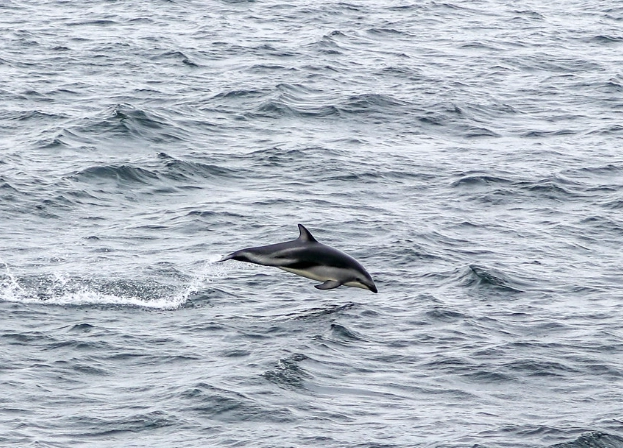
The Conservation Conundrum: Are They Really Safe?
Here's the big, uncomfortable question. The International Union for Conservation of Nature (IUCN) lists the hourglass dolphin as Least Concern. On paper, that sounds great. But in reality, it's a label born from a lack of data, not an abundance of security.
The IUCN assessment itself states the obvious: "There are no estimates of abundance or trends for this species." We simply don't know how many there are, or if their numbers are going up, down, or staying the same.
So, what are the threats? They're not hunted directly. Their remote habitat protects them from many direct human impacts like coastal pollution or fishing nets—to a point.
The real dangers are the silent, global ones:
- Climate Change: Warming oceans could shift the distribution of their krill and squid prey, disrupting the entire food web of the Southern Ocean.
- Ocean Noise: Increasing shipping traffic (including tourism and research) in their habitat creates underwater noise pollution. Dolphins rely on sound to communicate and hunt. A noisy ocean is a blinding, confusing one.
- Bycatch: While not a major documented issue, as deep-sea fishing operations expand, the risk of accidental capture in fishing gear exists.
The "Least Concern" tag risks making this species invisible to conservation funding and policy. Why protect what seems fine? The truth is, we have no idea if it's fine. In the world of marine biology, the hourglass dolphin stands as a stark reminder of how much we have yet to learn about the open ocean.
They are a symbol of the wild, remote places we still have left. Seeing one isn't just a check on a list; it's a reminder of the vast, mysterious, and fragile ecosystems that operate far beyond our daily view. Protecting them means protecting the entire chaotic, beautiful, and cold heart of the Southern Ocean.

Comments
Leave a Comment