Picture this: you're on a dusty track in the Kenyan savanna, the sun is fierce, and you're scanning the acacia trees for movement. Then, a flash of impossible color—deep, shimmering violet—catches your eye. Not a flower, not a trick of the light, but a living bird. That's your first encounter with the Amethyst Starling (Cinnyricinclus leucogaster). It feels less like birdwatching and more like discovering a jewel with wings. Forget the common sparrows and pigeons; this is a creature that makes you understand why people travel across the world with binoculars.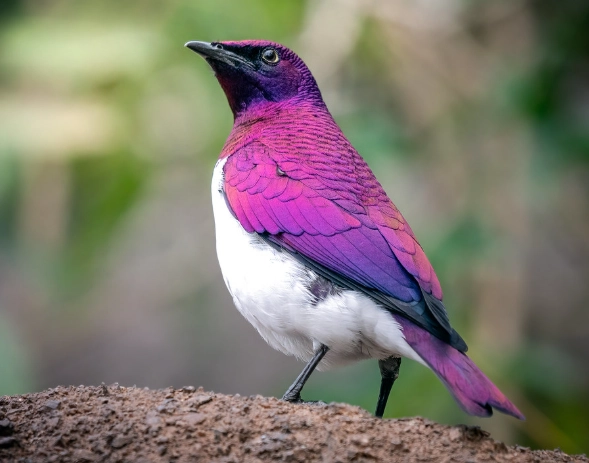
Quick Navigation: What's Inside This Guide
What Exactly is an Amethyst Starling?
Let's clear up the name first. "Amethyst Starling" and "Purple Starling" are used interchangeably for the same bird, Cinnyricinclus leucogaster. It's a medium-sized starling, about 18-19 cm long—roughly the size of a common blackbird but with a more slender, elegant build.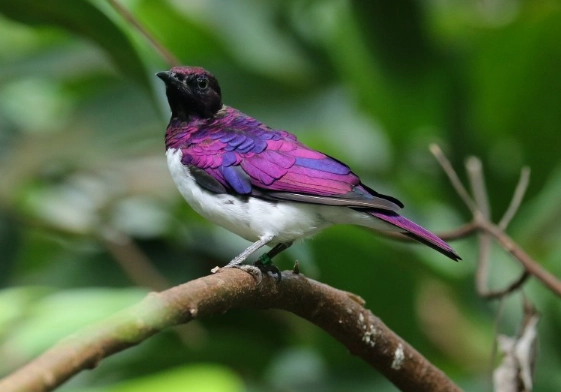
The male is the real head-turner. His entire body is covered in intensely iridescent plumage. In direct sunlight, it shifts from a rich royal purple to a dazzling violet-blue, like polished amethyst gemstones. The contrast with his pure white lower belly and under-tail feathers is stark and beautiful. The female? She's the ultimate master of disguise. If you didn't know better, you'd swear she was a completely different species. She's dressed in cryptic brown and white streaking, perfect for blending into a nest in a thorny bush. It's one of the most dramatic differences between sexes in the entire bird world.
Where to Find Them: Habitat & Distribution
This isn't a bird you'll stumble upon in a European garden or an American park. The Amethyst Starling is a quintessential African species. Its range is a broad belt across Sub-Saharan Africa, avoiding the dense rainforests of the Congo Basin and the arid deserts of the Sahara and Namib.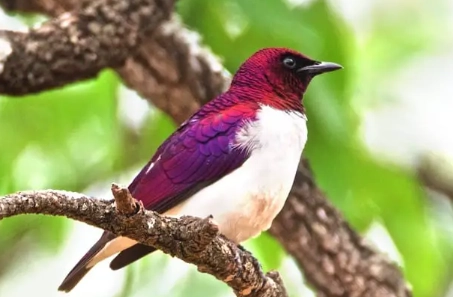
They're habitat specialists. Think open woodlands, savannas dotted with acacia trees, and riverine forests. They have a firm requirement for trees—not for deep forest cover, but for perching, nesting, and finding food. You'll rarely find them far from a reliable water source either.
| Region | Key Countries for Sightings | Preferred Habitat Type |
|---|---|---|
| East Africa (Prime Territory) | Kenya, Tanzania, Uganda, Ethiopia | Acacia savanna, open woodland, areas near lakes (e.g., Baringo, Manyara) |
| Southern Africa | Angola, Zambia, Malawi, Mozambique, NE South Africa | Miombo woodlands, thornveld |
| West Africa | Senegal, Ghana, Nigeria | Guinea savanna, woodland edges |
I remember driving through Tarangire National Park in Tanzania, a place famous for its elephants and baobabs. The birdlife was staggering, but the moment a small flock of male Amethyst Starlings landed in a bare tree next to the river was unforgettable. The late afternoon sun hit them just right, turning them into literal purple light bulbs. That's the kind of moment you plan for.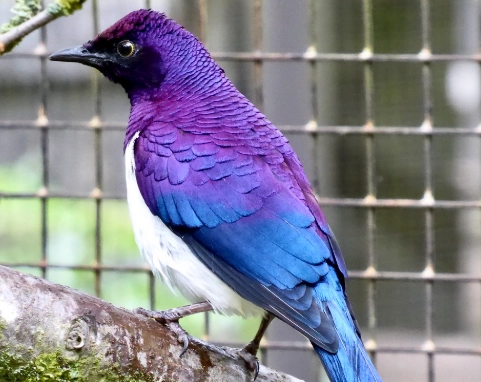
Behavior, Diet, and Family Life
Amethyst Starlings are social, often seen in small flocks, especially outside the breeding season. They mix freely with other starling species, like the Greater Blue-eared or Wattled Starlings, creating colorful, chattering foraging parties.
What's on the Menu?
They're primarily frugivores—fruit lovers. Figs are a particular favorite. But they're also keen insect hunters, hawking for flying termites or beetles from a high perch. This dietary flexibility helps them thrive across seasons. In my observations, they seem to prefer fruiting trees in the early morning, switching to more active insect hunting when the day heats up and insects are on the move.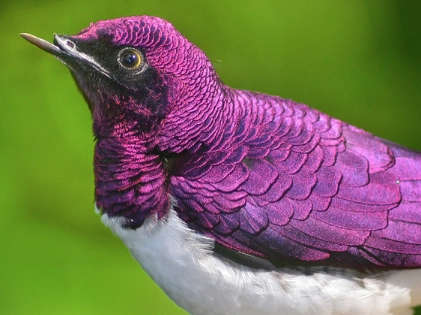
Breeding: A Secretive Affair
Here's a nuance many field guides gloss over. While they are cavity nesters (using old woodpecker holes or natural tree hollows), they show a strong, almost exclusive preference for nests situated within the protective fortress of thorny acacia trees. It's not just any hole in a tree; it's a hole in a specifically defended tree. The fierce thorns deter monkeys, snakes, and other nest raiders. The female does most of the nest building and incubates the 2-4 pale blue eggs for about two weeks. Both parents then feed the chicks a protein-rich diet of insects.
A Birder's Field Guide: How to Spot Them
Want to see one for yourself? It's a achievable goal, but it requires a bit of strategy. Relying on luck in the vast African bush is a recipe for disappointment.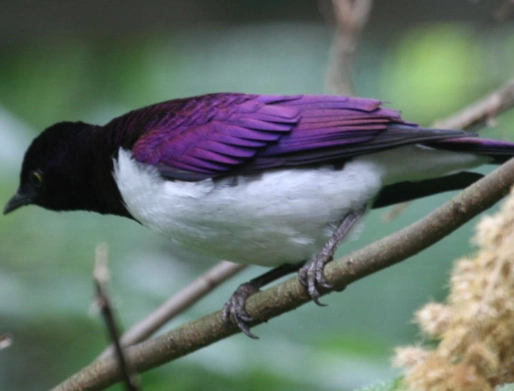
Best Time & Places
Timing is everything. The dry season (June to October in East Africa) is prime. Why? Foliage is thinner, making birds easier to see, and wildlife—including birds—congregates around shrinking water sources. National parks and reserves with mixed woodland and riverine areas are your best bet.
Top Locations from Experience:
- Maasai Mara National Reserve, Kenya: Look for them in the acacia trees along the Talek or Mara rivers.
- Tarangire National Park, Tanzania: The Silale Swamp area and the Tarangire River circuit are fantastic.
- Lake Baringo, Kenya: A famous birding hotspot. The acacia woodlands around the lake shores are reliable.
Gear & Technique
A decent pair of binoculars (8x42 is a great all-rounder) is non-negotiable. A camera with a zoom lens is a bonus. The key technique is patience and listening. Learn their call—a pleasant, metallic, slightly squeaky "tseee" or "chir-leep." Often, you'll hear a small flock chattering in a tree before you see the purple flash. Scan the tops of fruiting trees (figs, wild olives) and dead snags where they like to perch.
The Common Mistake (And How to Avoid It)
Beginners often misidentify the female as a thrush or a completely different, dull starling. The giveaway they almost always miss is the shape and behavior. Look for that straight, sharp starling bill and the slightly notched tail. Watch how it moves—it will often be in the company of other, more colorful starlings. If you see a flock of glossy blue-eared starlings, scan carefully. That "brown thrush" sitting with them is almost certainly a female Amethyst Starling.
Are They Safe? Conservation Status
Globally, the species is listed as Least Concern by the International Union for Conservation of Nature (IUCN). Its population is widespread and relatively stable. However, "Least Concern" doesn't mean no concern. Localized threats are real:
- Habitat Loss: Conversion of woodlands to agriculture chips away at their home.
- The Cage Bird Trade: Their stunning looks make them a target for illegal trapping in some areas, though they are notoriously difficult to keep alive in captivity due to their specialized diet.
- Climate Change: Shifting rainfall patterns could affect the fruiting cycles of the trees they depend on.
The best thing any enthusiast can do is support sustainable, bird-friendly tourism. Use local guides, stay in eco-lodges that protect habitat, and report any suspected illegal wildlife trade to authorities. Organizations like BirdLife International work across Africa on conservation projects that benefit entire ecosystems, including species like this starling.
Your Top Questions Answered
Finding an Amethyst Starling is more than just ticking a box on a life list. It's a direct encounter with one of nature's most audacious displays of color. It reminds you that the natural world still holds magic that no screen can replicate. Do your research, pick the right spot, be patient, and that flash of purple in the acacia tree will be a memory you keep forever.



Comments
Leave a Comment