Let's cut to the chase. The Mary River Turtle (Elusor macrurus) isn't your average pond slider. It looks like it just walked out of a 1980s hair metal band, thanks to strands of algae that grow on its head. It breathes through its bum—a real thing called cloacal respiration. And it's in serious trouble, clinging to survival in one single river system in Queensland, Australia. Forget what you know about turtles. This one rewrites the rulebook.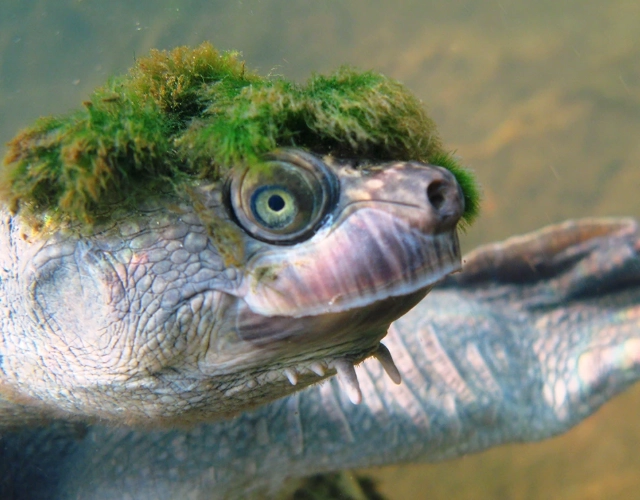
What's Inside This Guide
- Meet the Turtle: More Than Just Green Hair
- What Makes the Mary River Turtle So Unique?
- Home Sweet Home: The Mary River Habitat
- Why Is the Mary River Turtle Critically Endangered?
- How Are We Saving the Species?
- Can You See a Mary River Turtle? A Responsible Observer's Guide
- Your Burning Questions Answered
Meet the Turtle: More Than Just Green Hair
I remember the first time I saw a photo. I thought it was a photoshop joke. A turtle with a mohawk? But no, it's real. Scientifically described only in 1994, the Mary River Turtle has been around for a lot longer, an ancient lineage that split off from other turtles about 40 million years ago. It's a living fossil, a relic.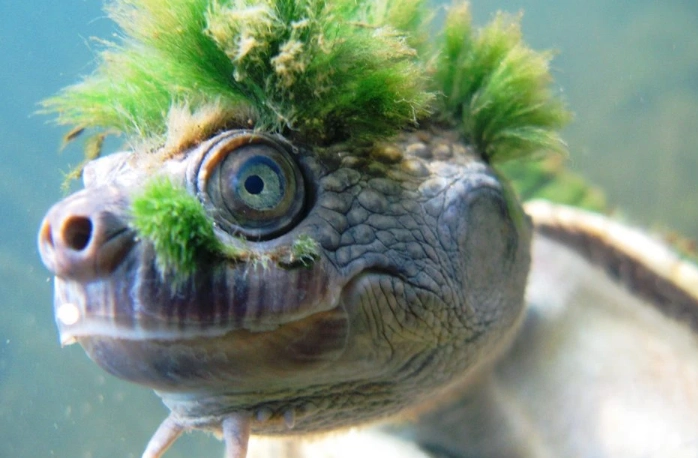
For decades, hatchlings were sold in pet shops around Sydney as "penny turtles." It's a bizarre and sad footnote in its history. People had no idea they were buying a critically endangered, evolutionarily distinct species. That trade stopped, but the damage to wild populations was one of many hits.
Key Facts at a Glance
Scientific Name: Elusor macrurus ("Elusor" meaning evader, "macrurus" meaning long-tailed).
Size: Shell can reach over 40 cm (16 inches) in length.
Lifespan: Potentially up to 100 years, reaching sexual maturity very late (around 25 years).
Diet: Omnivorous – eats aquatic plants, insects, molluscs, and sometimes small fish.
Status: Listed as Endangered under Australia's EPBC Act and Critically Endangered on the IUCN Red List.
What Makes the Mary River Turtle So Unique?
This isn't a list of random trivia. Each of these traits is a specific adaptation to its fast-flowing river home, and each one makes conservation harder.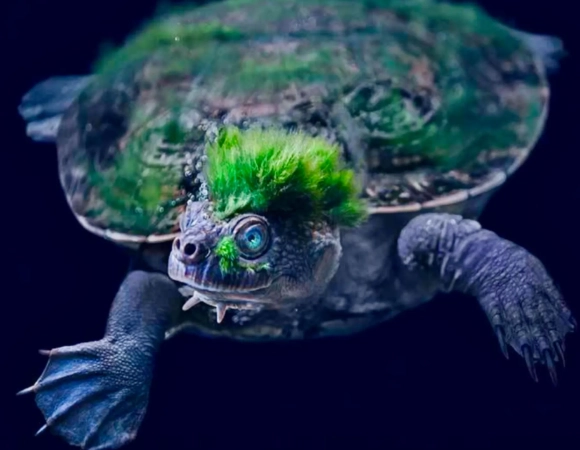
The Famous Green "Hair"
It's not actually hair. It's filamentous green algae (Basicladia spp.) that grows on the turtle's head, shell, and legs. It's a sign of an incredibly slow-moving, sedentary lifestyle. The turtle sits so still on the river bottom that algae takes root. In males, it can form a long, flowing "mane" and even a beard. It's camouflage, plain and simple. But in captivity, without the specific conditions of the Mary River, the algae often doesn't grow the same way.
Bum Breathing (Cloacal Respiration)
This is the party trick. The Mary River Turtle has highly vascularised sacs called cloacal bursae. It can pump water in and out of its cloaca (the multi-purpose rear opening) and absorb oxygen directly from the water. Why? It allows the turtle to stay submerged for up to three days while resting or hiding. It's an adaptation for life in well-oxygenated, flowing water. Think of it as built-in scuba gear. Other turtles like the Fitzroy River Turtle do this too, but the Mary River species is particularly proficient.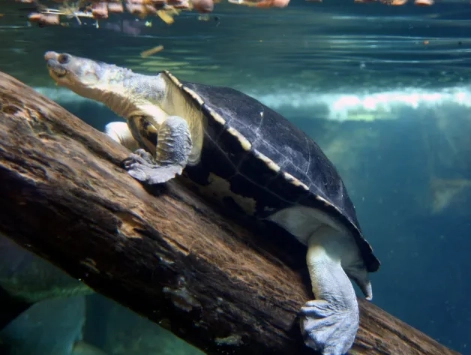
The Whiplash Tail
Males have an exceptionally long, muscular tail, sometimes longer than the length of their shell. It's used for stability and steering in strong currents. Watching one navigate rapids is like watching a kayaker use a rudder.
Temperature-Dependent Sex Determination
Like many reptiles, the temperature of the nest determines the sex of the hatchlings. Warmer nests produce females, cooler nests produce males. This is a massive vulnerability. Climate change, which is raising average temperatures, could skew populations heavily towards females, making recovery nearly impossible.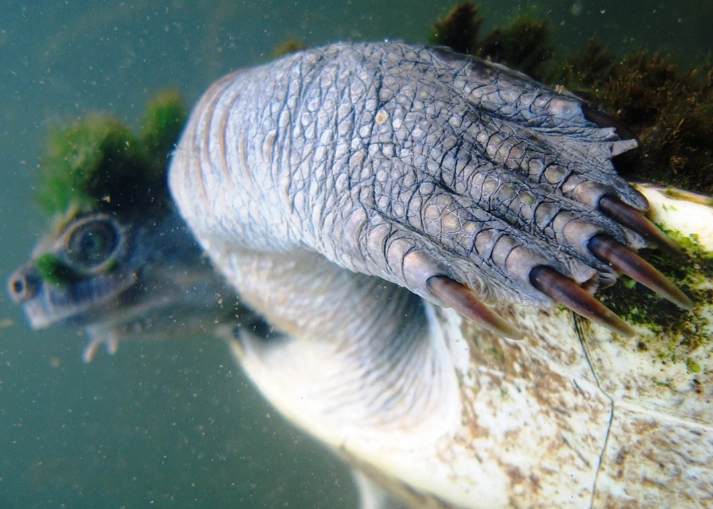
Home Sweet Home: The Mary River Habitat
The Mary River in southeastern Queensland is its entire world. We're talking about a specific stretch from the headwaters near Conondale and Kenilworth down to the tidal influences near Maryborough. This isn't a lazy, muddy creek. It's a dynamic system with deep pools, rocky riffles, sandy bottoms, and riparian vegetation.
The turtle needs three key things here:
- Clean, well-oxygenated water: For its bum-breathing to work.
- Exposed sandy riverbanks: For nesting. Females crawl out at night in spring and summer to lay clutches of 10-30 eggs.
- Log jams and underwater structures: For hiding, basking, and finding food.
Lose any one of these, and the turtle struggles. The problem is, the Mary River catchment is also prime land for agriculture, urban development, and water extraction.
Why Is the Mary River Turtle Critically Endangered? (The Perfect Storm)
Its decline wasn't caused by one thing. It was a cascade of problems, and understanding this is key to saving it.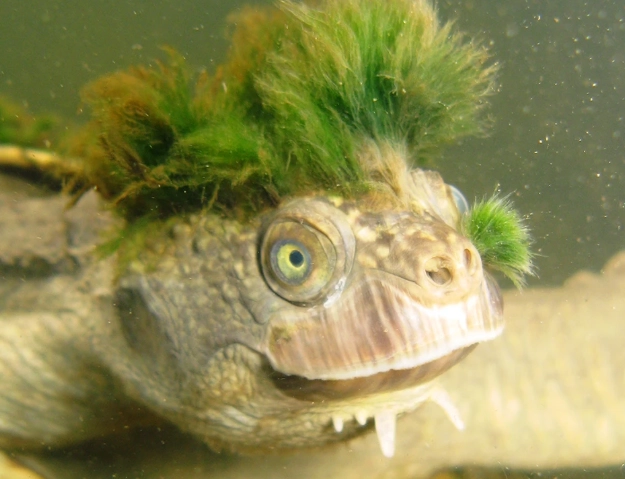
| Threat | Impact | Scale & Detail |
|---|---|---|
| Historical Pet Trade | Mass removal of hatchlings | Between 1960s-1970s, thousands taken from nests. Depleted generations. |
| Nest Predation | Low hatchling survival | Foxes, goannas, and feral pigs dig up and eat over 90% of nests in some areas. |
| Habitat Degradation | Loss of nesting sites, poor water quality | Riverbank clearing, cattle trampling nests, siltation from erosion, pesticide runoff. |
| Water Infrastructure | Altered river flows | Dams and weirs change natural flooding cycles that clean nesting banks and can drown nests. |
| Delayed Maturity | Slow population recovery | A turtle killed at 20 years old never gets to breed. It takes 25+ years to replace it. |
I've spoken to researchers who've monitored nests for weeks, only to find every single one destroyed by foxes overnight. The frustration is palpable. You're fighting against biology (slow growth) and a barrage of human-made pressures.
How Are We Saving the Species? (Beyond Just Awareness)
Thankfully, a lot of smart, dedicated people are on the case. The Australian government has a formal recovery plan in place. Here’s where the real work happens:
Headstarting Programs: This is a big one. Eggs or hatchlings are collected from vulnerable wild nests, raised in predator-proof facilities (like the Australia Zoo Wildlife Hospital or SEQwater's facilities), and released back into the river when they're larger and less vulnerable to predators. It gives them a critical head start in life.
Predator Control: Intensive fox and pig baiting and trapping around known nesting banks during the nesting season. It's grueling, ongoing work.
Habitat Protection & Restoration: Fencing off riverbanks from cattle, replanting native vegetation to stabilize banks and reduce silt, working with landowners on best practices.
Community Science: Groups like the Australian Freshwater Turtle Conservation and Research Association train volunteers to conduct surveys. More eyes on the river mean better data.
The progress is slow, measured in decades, not years. But for a turtle that can live a century, that's the timescale we have to work on.
Can You See a Mary River Turtle? A Responsible Observer's Guide
You can't just go to a zoo and expect to see one (though some facilities like Australia Zoo have them as part of their conservation programs). Seeing one in the wild requires patience, respect, and a bit of know-how.
Best Locations: The towns of Gympie and Maryborough are gateways to the river. Specific public access points with known turtle populations include:
- Tinana Creek (near Maryborough): A major tributary. Try the walking paths along the creek.
- Certain reaches near Gympie: Local canoe/kayak hire companies often know spots.
- Mary River National Park: Offers some river access points.
When to Go: Late spring through autumn (October to April), on warm, sunny days. Turtles are ectotherms—they need the sun to warm up. Aim for mid-morning to early afternoon.
How to Look:
- Be quiet and still. Find a shady spot on the bank and just watch. They are shy.
- Look for basking logs. Scan partially submerged logs and rocks. You might see a dark shape or that distinctive algae-covered head.
- Use polarized sunglasses. They cut the water's glare, making it easier to see into the river.
- Consider a guided eco-tour. Some local operators offer wildlife-spotting tours. They know the river intimately.
What NOT to Do:
- Do not disturb nesting females. If you see one on a bank at night, keep your distance and use no lights.
- Do not try to touch, feed, or catch one. It's illegal and stresses the animal.
- Do not drive vehicles on riverbanks. You'll crush nests.
- Leave no trace. Take all rubbish with you.
Seeing one in the wild, just its head peeking above the water with that algae halo, is a privilege. It feels like a glimpse into a much older, wilder Australia.

Comments
Leave a Comment