Picture a bird whose beak is longer than its own body. It sounds like a cartoon, but in the misty cloud forests of the Andes, it's a daily reality. The sword-billed hummingbird (Ensifera ensifera) isn't just a quirky outlier; it's one of evolution's most precise and fragile masterpieces. I've spent over a decade chasing hummingbirds across the Americas, and the first time I saw a swordbill hover, its needle-like bill probing a deep Datura flower, time stopped. This isn't a bird you just see; it's a biological paradox you experience. Its existence is tied to a handful of specific flowers, and its survival is a tightrope walk in a changing world.
What You'll Find in This Guide
The Anatomy of an Extreme Specialist
Everyone focuses on the beak. It's 4 inches long—often exceeding the length of its body from head to tail. But fixating solely on that is the first mistake amateur birders make. The real story is in the total package.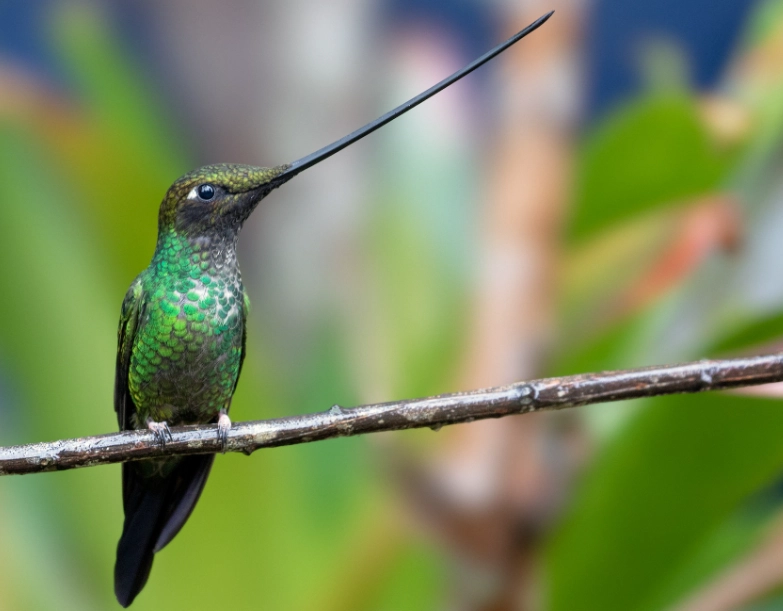
That beak, straight as a rapier with just a hint of a curve at the end, is a perfectly calibrated key. It co-evolved with long, tubular flowers like Datura (angel's trumpet) and certain Passiflora (passionflowers). No other pollinator can reach their nectar. In return, the flower gets exclusive pollination service. It's a locked-door relationship.
But a tool this specialized creates problems. How do you preen? How do you fight? I watched one for an hour once. To preen its chest feathers, it must lift its head almost vertically, rest the base of the bill on a branch, and then painstakingly drag feathers through its beak. It's an awkward, time-consuming ballet.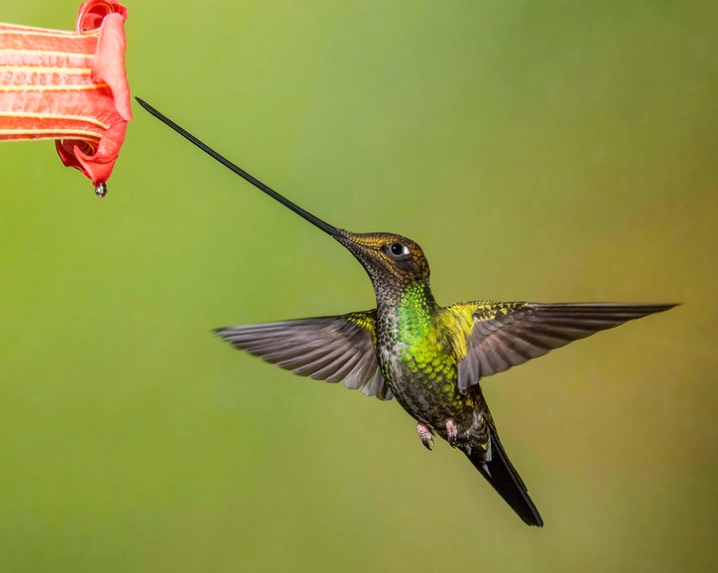
Then there's the engineering. To support this front-heavy load, its skull is modified, and its neck muscles are disproportionately strong. Its wings are relatively shorter and broader than some hummingbirds, providing the powerful lift and precise control needed for hovering with such an uneven load. When it perches, it often tilts its entire body backward, like a person leaning back in a chair, just to keep its balance.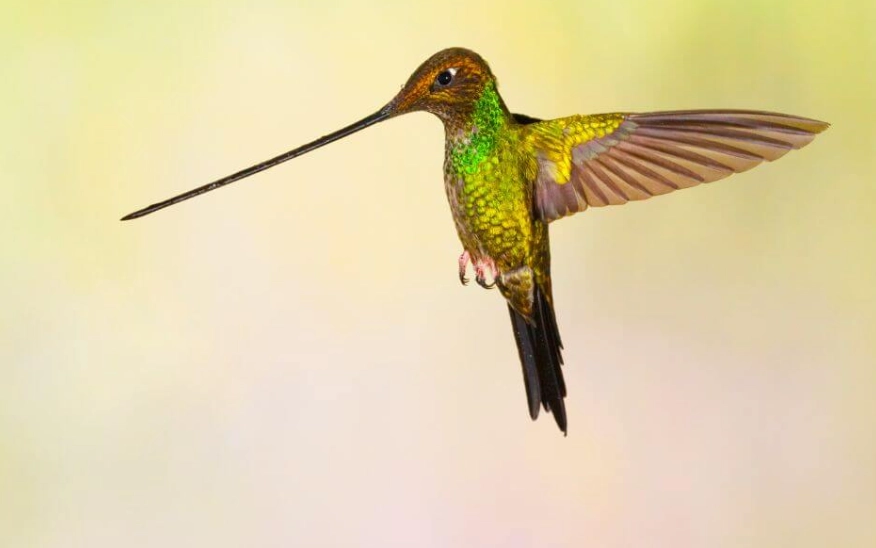
Where and When to See the Sword-Billed Hummingbird
You won't find this bird in lowland jungles or your backyard feeder. It's a creature of the Andean cloud forest, typically between 1,700 and 3,500 meters (5,600–11,500 feet) in elevation. The air is cool, often misty, and draped in moss.
Planning a trip requires targeting specific micro-habitats. They are not evenly distributed.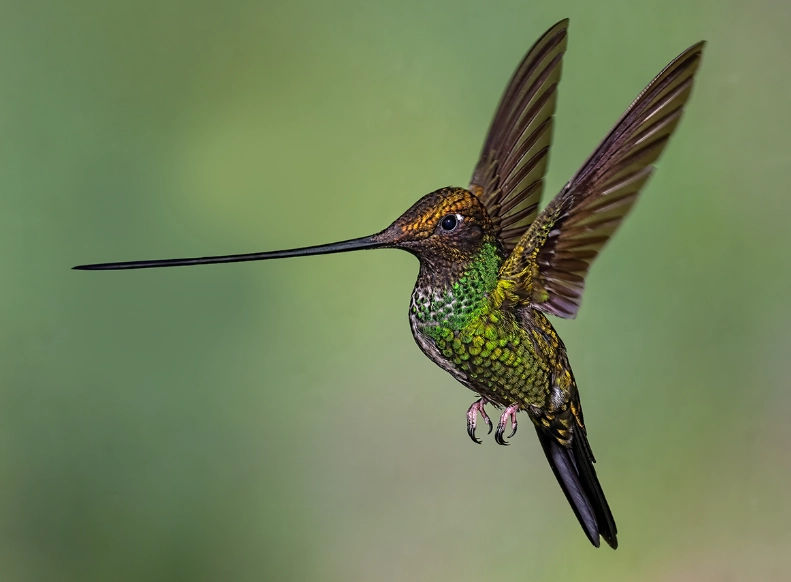
| Country / Region | Prime Locations | Best Season | Key Tip |
|---|---|---|---|
| Ecuador | Mindo Cloud Forest, Yanacocha Reserve, San Isidro Lodge area. | Year-round, but driest & sunnier for photography: June–Sep. | Yanacocha's feeders are legendary, but walk the trails for natural behavior. |
| Peru | Machu Picchu cloud forest (Aguas Calientes), Manu Road, Abra Málaga. | Dry season: Apr–Oct. Fewer rains mean more active birds. | Hire a local guide in Aguas Calientes who knows the specific flowering patches. |
| Colombia | Central Andes near Bogotá (e.g., Observatorio de Colibríes). | Variable; generally drier months Dec–Mar & Jul–Aug. | Research hummingbird observatories with dedicated gardens. |
| Bolivia | Yungas region near Coroico, Cotapata National Park. | May–October (dry season). | Access can be tougher; often part of multi-day trekking tours. |
The secret isn't just the country—it's the right valley with the right flowers. Ask any guide: "Where are the Datura or Brugmansia flowering right now?" That's your target zone. They follow the bloom.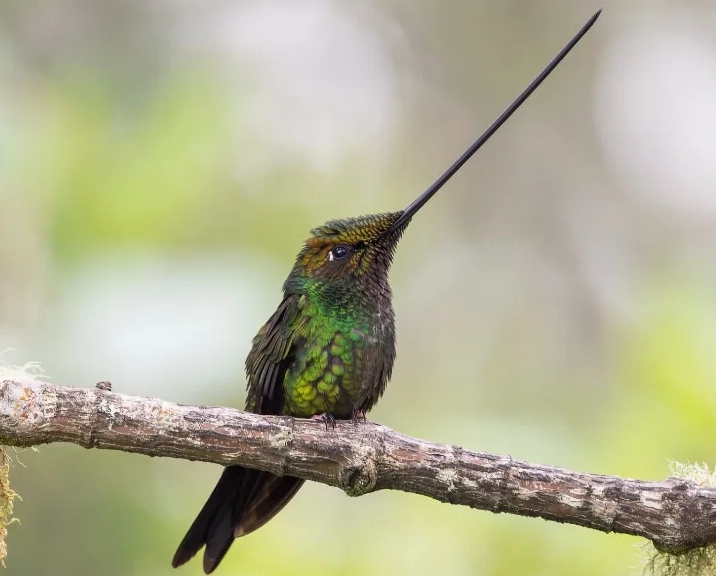
Timing Your Visit for Success
Early morning is non-negotiable. They need to feed heavily after a cold night. Be at a known spot at dawn. The activity window is roughly 6:30 AM to 10:00 AM, with another smaller burst in the late afternoon. On overcast days, they may feed more continuously.
A common frustration for tourists is visiting a famous lodge but missing the swordbill because they only check the main feeder station. Swordbills often avoid crowded feeders dominated by larger, more aggressive species like the Buff-tailed Coronet. You must venture onto the forest trails where their preferred native flowers grow.
Photography Challenges and Solutions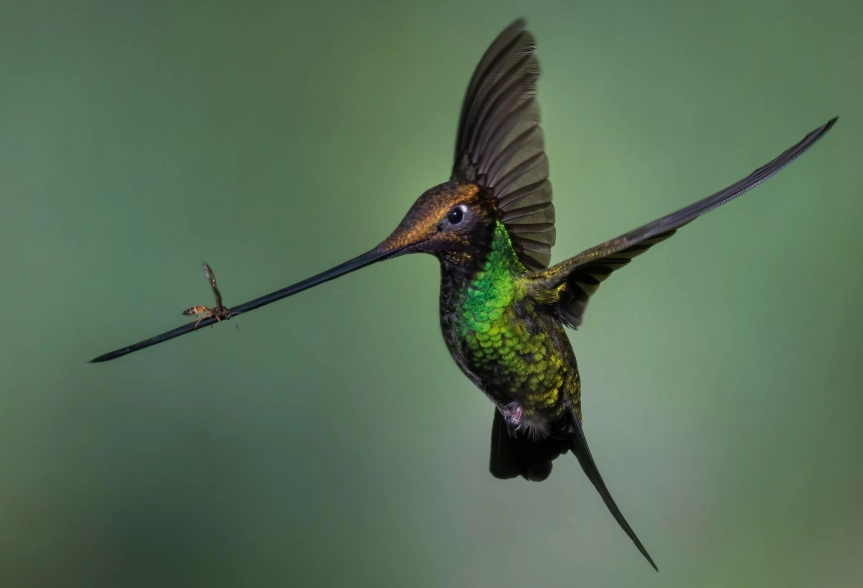
Photographing a swordbill is the holy grail of neotropical bird photography. It's also incredibly hard. The light in cloud forest is often terrible—dim and flat. The bird moves with shocking speed. That long beak becomes a nightmare for achieving sharp focus.
Here’s what most tutorials don't tell you: focus on the eye, not the beak tip. If you let your camera's auto-focus points dance on that long bill, you'll get a sharp tip and a soft bird. Lock focus on the head or eye. Use a single, small autofocus point and be relentless.
Gear Talk: You need a fast lens. A 300mm f/2.8 or a 400mm f/2.8 is ideal. A 100-400mm zoom can work if you get close enough. I never shoot below 1/1000th of a second for hovering shots; 1/1600th is safer. Crank your ISO. A noisy shot is better than a blurry one. A flash with a diffuser can be a lifesaver to fill shadows, but use it subtly to avoid washing out the beautiful iridescence.
The best shot isn't always at a feeder. Wait by a flowering Datura vine. The composition is more natural, telling the true story of its ecological niche. Patience here pays off with unique images.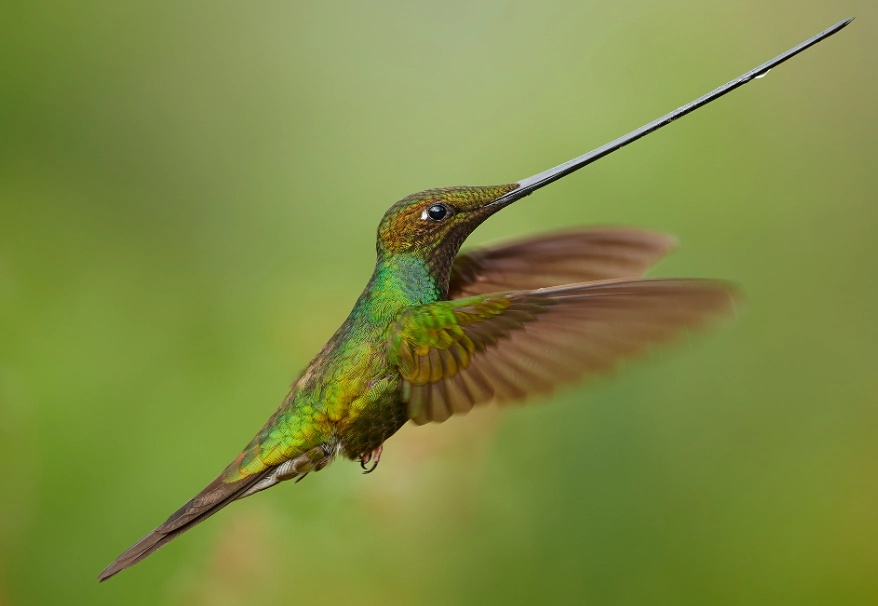
Conservation Status: A Precarious Perch
The IUCN Red List currently classifies the sword-billed hummingbird as Least Concern. That label is dangerously misleading for a hyper-specialist. It means the overall population is still relatively large and widespread, but it tells you nothing about its fragility.
This bird is a canary in the coal mine for cloud forest health. Its survival is a direct function of two things: the presence of its specific food plants and the connectivity of mid-elevation forests. Climate change is shifting temperatures and precipitation patterns, which can disrupt flowering cycles. A mistimed migration or a late bloom could mean starvation.
Deforestation for agriculture and logging fragments its habitat. A swordbill can't cross a large cattle pasture. It needs continuous forest corridors. Organizations like the Rainforest Trust and local Ecuadorian groups like Fundación Jocotoco are critical—they buy and protect key parcels of land exactly where birds like this live.
What can you do? Support conservation NGOs working in the Andes. When you visit, choose eco-lodges that actively reforest with native plants. Ask your guide about their conservation work. Tourism revenue, when directed right, is a powerful conservation tool.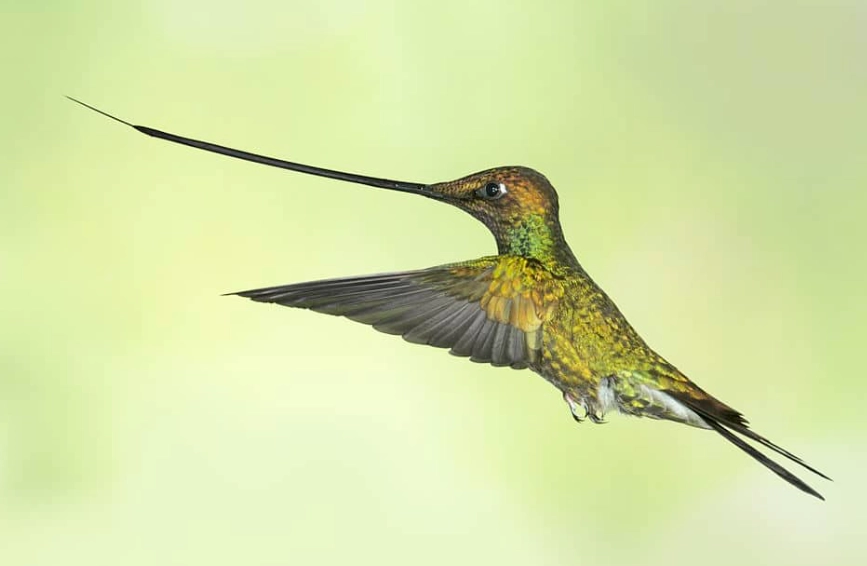
Your Sword-Bill Questions, Answered
Seeing a sword-billed hummingbird is more than a tick on a checklist. It's witnessing a perfect, and perfectly vulnerable, equation of life. That impossibly long beak is a testament to millions of years of fine-tuning between a bird and a flower. It reminds us that the most spectacular things in nature are often the most delicate, existing only where the world is still in balance. Plan your trip, pack your patience, and go see this wonder. Just remember to tread lightly.




Comments
Leave a Comment