Forget everything you think you know about rats. Deep in the heart of Papua New Guinea, inside the crater of a long-extinct volcano, lives a creature that redefines the word "rodent." The Bosavi woolly rat (Mallomys sp.) isn't a pest scurrying in alleyways. It's a lost-world giant, a docile, cat-sized ball of thick fur that remained unknown to science until the 21st century. Its discovery wasn't just about adding a new species to a list; it was a stark reminder of how many secrets our planet still holds in its most remote corners.
I remember the first time I saw a photo from the 2009 expedition. It wasn't the clarity—it was grainy—but the sheer scale. A researcher was holding it, and it looked less like a rat and more like a small, very confused teddy bear. That image stuck with me. This isn't just a big mouse. It's a testament to isolation and evolutionary wonder.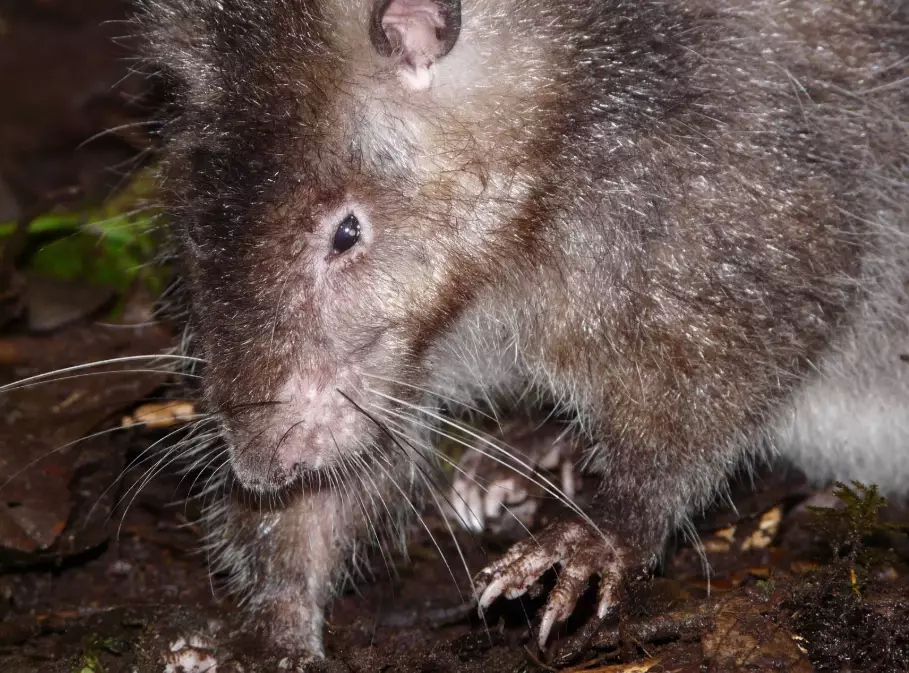
What You'll Find in This Guide
What Exactly is the Bosavi Woolly Rat?
Let's get the basics out of the way. Calling it a "rat" is technically accurate—it's in the family Muridae—but it's like calling a gorilla a "big monkey." It misses the grandeur.
The Bosavi woolly rat is a proposed new species within the genus Mallomys, a group of giant rats endemic to New Guinea. It hasn't been formally described with a full species name yet, which is a common lag in taxonomy for such remote finds. But the scientists who found it are confident it's new.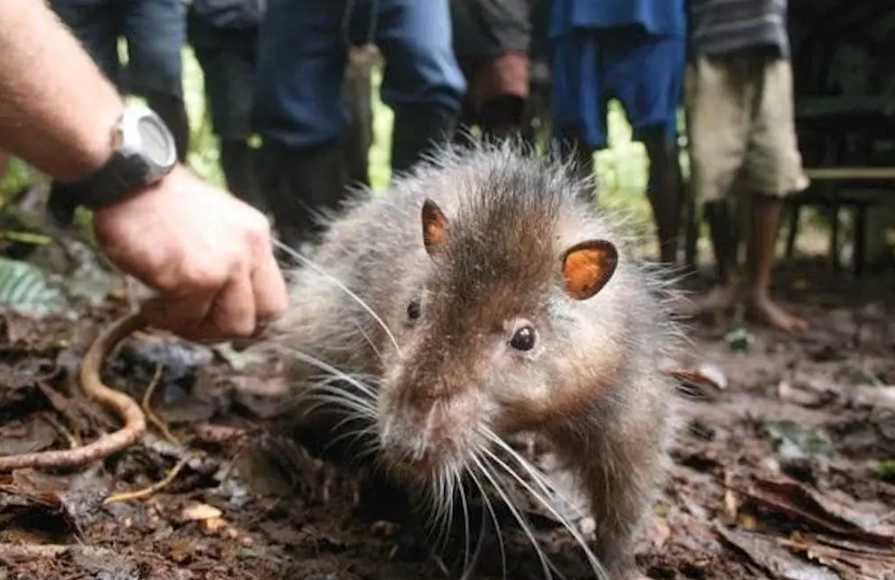
By the Numbers: A Size Comparison That Will Surprise You
| Feature | Bosavi Woolly Rat | Common Norway Rat (for scale) |
|---|---|---|
| Average Weight | Approx. 1.5 kg (3.3 lbs) | 0.3 - 0.5 kg (0.7 - 1.1 lbs) |
| Body Length | Up to 82 cm (32 inches) from nose to tail tip | Up to 40 cm (16 inches) |
| Fur | Dense, silver-grey, woolly undercoat | Coarse brown/grey fur |
| Habitat | Montane rainforest floor, Bosavi crater (1000m elevation) | Global, synanthropic (lives near humans) |
| Diet | Herbivore (roots, stems, fallen fruit) | Omnivore scavenger |
| Disposition | Docile, curious, non-aggressive | Wary, often aggressive |
Its most striking feature, beyond size, is that coat. "Woolly" is no exaggeration. It has a dense, soft underfur that insulates it against the cool, damp climate of the mountainous crater floor. It waddles more than it scampers. The locals, the Bosavi people, have known about it for generations, but to Western science, it was a ghost.
Here's a nuance most articles gloss over: its tameness. Expedition members reported the rats showed almost no fear of humans. This isn't because they're dumb. It's a classic trait of "island giants"—animals that evolve in predator-free environments. With no foxes, cats, or other mammalian hunters to worry about for millennia, flight instincts can fade. It's the same reason dodos were so tame. This behavioral clue is as important as its physical size, telling a deep story about its ecological history.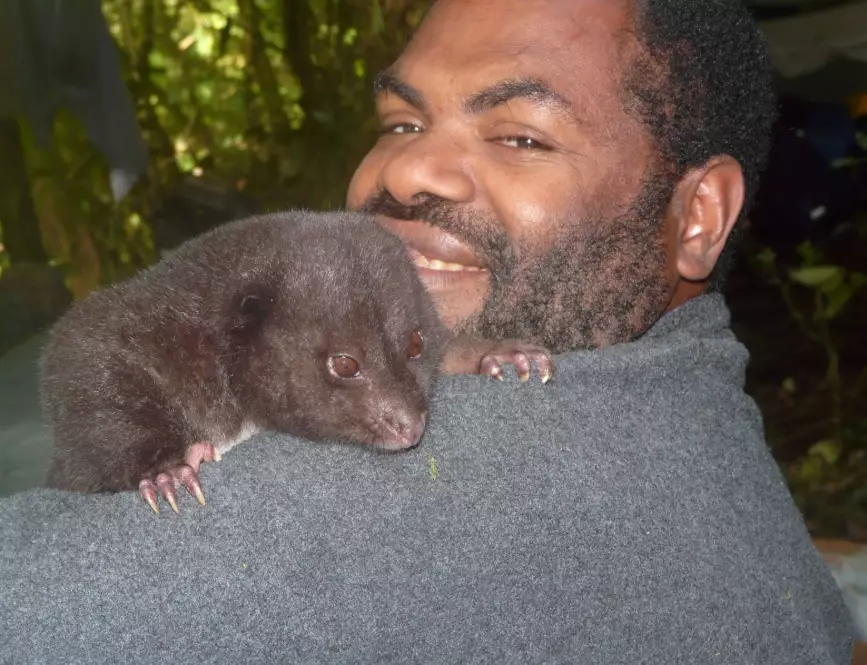
How Was the Bosavi Woolly Rat Discovered?
The story of its "discovery" is a perfect storm of adventure and serendipity. It wasn't a lone biologist stumbling upon it. It was the centerpiece of a major, coordinated media-scientific expedition.
In 2009, a team from the BBC Natural History Unit, in conjunction with scientists from the University of Papua New Guinea and the Smithsonian Institution, ventured into the Mount Bosavi crater. Their goal for the series "Lost Land of the Volcano" was to document the crater's unique ecosystem, which had been isolated for nearly 100,000 years since the volcano last erupted. They were hoping for new species, but I don't think anyone was fully prepared for a rodent of this magnitude.
The crater itself is a fortress. The rim rises over 1,000 meters (3,300 feet) high, creating a natural "lost world" bowl about 4 km wide. Access requires a grueling multi-day trek through some of the world's most difficult terrain, followed by a dangerous descent down steep, muddy crater walls. This isolation is the key to everything found inside.
Camera traps were set. Pitfall traps were dug. And then, one night, the team heard scratching near their camp. They investigated and found the rat. The initial reaction, captured on film, was pure astonishment. One of the scientists, Dr. Kris Helgen (then with the Smithsonian), was immediately certain it was a new species of Mallomys. The footage of them gently handling the placid, giant rodent became an iconic moment in natural history television.
A common misconception is that this was a one-off find. The team documented multiple individuals, confirming a stable, breeding population. They collected morphological data and tissue samples for genetic analysis but did not take a “voucher specimen” (a preserved body) at the time, a decision sometimes debated in scientific circles but made out of respect for the rarity of the find and the filming context.
Why This Discovery Shook the Science World
Finding a new mouse is cool. Finding a new, giant, fluffy mammal the size of a small cat in the 2000s is profound. It challenged our perception of how well we know Earth's megafauna.
1. A Textbook Example of Island Gigantism: This is the big one. Island gigantism is an evolutionary rule of thumb: when small animals colonize islands (or isolated habitats like a crater) with no large predators, they often evolve to larger sizes. More resources, no need to hide. Think of the giant tortoises of the Galápagos. The Bosavi crater acted as a perfect island. The woolly rat's ancestor, a smaller rat, likely entered the crater and, over thousands of generations, grew to its impressive size. It's a live-action case study.
2. A Keystone for an Unknown Ecosystem: An animal this big plays a significant role. Its foraging habits likely help aerate soil and disperse seeds. Its presence influences the population of plants and insects. Understanding its full role is a puzzle just beginning.
3. A Symbol of Undiscovered Biodiversity: Papua New Guinea's jungles are among the least biologically explored places on the planet. The Bosavi woolly rat became a poster child for this hidden wealth. If this large mammal could stay hidden for so long, what about countless insects, frogs, or even smaller mammals? It fueled arguments for increased exploration and, more importantly, protection of these areas before they are lost. As noted in a Smithsonian Magazine article on the expedition, such finds underscore that "the age of discovery is far from over."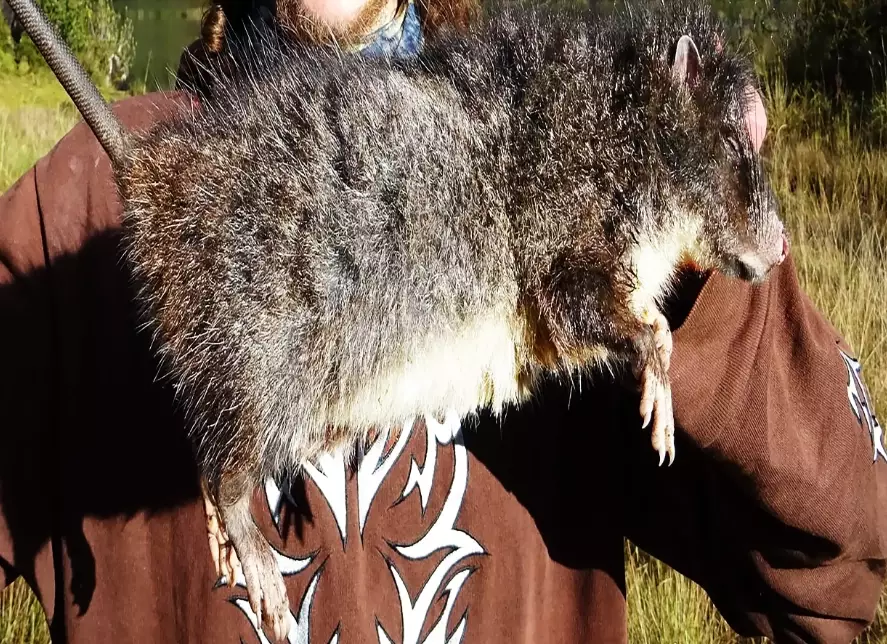
The Silent Threats and an Uncertain Future
Here's the uncomfortable truth that often gets a hopeful gloss. The Bosavi woolly rat is almost certainly critically endangered, even if it's not officially listed. Its entire universe is that one crater. Its population is likely small and incredibly vulnerable.
The threats aren't direct, like hunting. The Bosavi people don't traditionally hunt it extensively. The threat is habitat loss from the edges.
- Logging: Industrial logging operations encircle the highlands of Papua New Guinea. While the crater's rugged terrain offers some protection, access roads creep closer. Deforestation on the crater's slopes could alter the delicate internal climate and water cycles.
- Climate Change: A warmer, drier climate could change the moist, cool forest floor environment the rat depends on. Isolated populations have nowhere to go to escape such shifts.
- Mining Exploration: Papua New Guinea is rich in minerals. Exploratory mining could one day target the region.
There is no captive breeding program. There is no "ark." Its survival is inextricably linked to the preservation of the Bosavi crater ecosystem as a whole. Conservation efforts are grassroots and community-based, focusing on supporting the indigenous Bosavi people's stewardship of their land and promoting sustainable alternatives to large-scale logging. Organizations like the Rainforest Trust have worked on projects in PNG aimed at creating protected areas through community partnerships.
The rat's future hinges on a race between global conservation interest and global economic pressure.
Your Bosavi Woolly Rat Questions Answered
 How does the Bosavi woolly rat compare in size to a common city rat?
The Bosavi woolly rat is more than a curiosity. It's a message in a bottle from a hidden world. It tells us about evolution in isolation, the fragility of unique ecosystems, and the thrilling fact that our planet still has giants waiting to be found. Its continued existence depends on our collective choice to value the mysterious and the wild, not just for what we can take from it, but for the profound stories it has yet to reveal.



Comments
Leave a Comment