In This Article
Let's be honest, when you think of sharks, you probably picture a great white breaching the surface or a hammerhead's weird head. You don't usually think of a grumpy-looking bottom-dweller that seems more like a gristly pancake with fins. But that's exactly what makes the angular roughshark (Oxynotus centrina) so fascinating. It's the oddball of the shark world, and it's been lurking in the deep, dark waters of the northeast Atlantic and Mediterranean for who knows how long, mostly avoiding the spotlight.
I first came across a picture of one years ago in an old marine life compendium. It looked so...un-shark-like. I remember thinking it was a mistake, maybe some deformed skate. But no, it's a genuine shark, and its whole existence is a lesson in how diverse this group of animals really is. Most info online is pretty dry and technical. You get the scientific classification, a basic description, and that's it. I wanted to dig deeper. Where does it actually live? What's its deal? Why does it look so weird? This guide is my attempt to pull all of that together, from the basic facts to the stuff only a real fish nerd would know.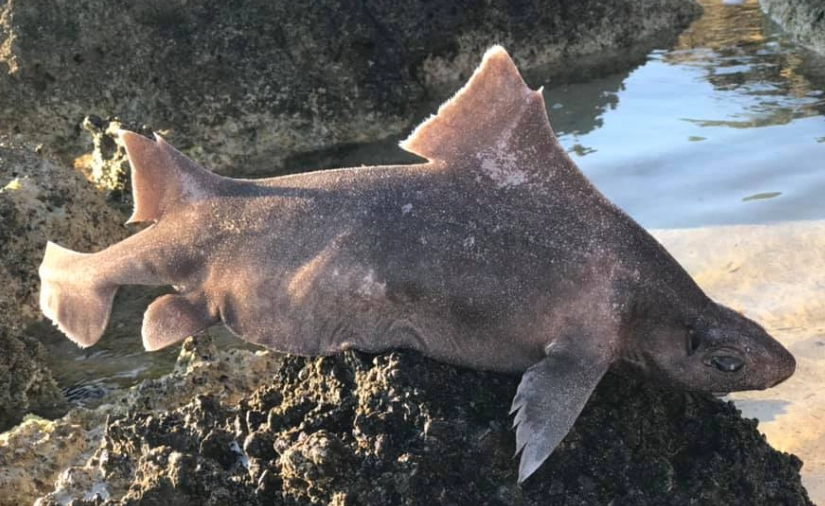
What Exactly Is an Angular Roughshark?
Okay, let's start with the basics. The angular roughshark belongs to the family Oxynotidae, which are commonly called the rough sharks. And the name fits. They're a small family of deep-sea sharks, and every one of them has this distinctive, angular body shape and skin that feels like sandpaper. Our friend Oxynotus centrina is the most widely distributed member of this quirky family.
Its scientific name tells a story too. Oxynotus comes from Greek words meaning "sharp back," which is a perfect description of its profile. Centrina might refer to a type of tool or stake, again hinting at that sharp, angular look. Common names vary by region—you might hear it called the prickly dogfish, the flat iron shark, or the sailfin roughshark. I think "angular roughshark" is the most descriptive, though. It just sounds right.
There's actually some debate among taxonomists. Some studies suggest there might be different population groups or even cryptic species within what we currently call O. centrina. The ones in the Mediterranean might be slightly different from those off the coast of Ireland. It's a reminder of how much we still don't know about deep-sea creatures. For now, we'll stick with the general consensus, but it's a cool bit of scientific drama happening below the waves.
The Anatomy of Weirdness: Key Identifying Features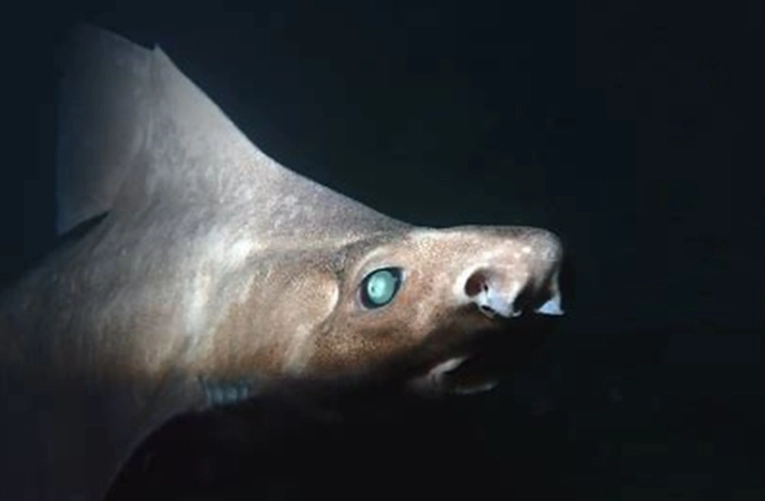
You can't confuse this shark with anything else once you know what to look for. Its body is ridiculously triangular in cross-section. It's not sleek and rounded like most sharks; it's like a shark that got pressed between two plates. This shape is thought to help it stay stable and maneuver just above the seafloor without expending much energy.
The skin is covered in large, plate-like denticles. These aren't your typical tiny shark scales. They're big, rough, and give the skin a texture that's been compared to coarse sandpaper or even a file. Hence, "roughshark." Running down the middle of its back is a prominent ridge, adding to its sharp-edged appearance.
Now, the dorsal fins. They're the shark's most striking feature. Both the first and second dorsal fins are huge, tall, and sail-like. They're almost the same size, which is unusual. They're also thick and fleshy at the base. Researchers think these massive fins might act as hydrofoils or help with stability in the slow currents of the deep sea. They certainly make the shark look like it's always ready for a formal event with its fins up.
The mouth is small and positioned right at the front of its blunt snout (terminal). Inside, you'll find sharp, cutting teeth in the upper jaw and more blade-like teeth in the lower jaw—perfect for its diet. Its eyes are relatively large for a deep-sea dweller, hinting that it might rely on sight more than some of its pitch-black neighbors.
Where in the World Do You Find This Shark?
If you're hoping to spot one on your next beach holiday, you'll be disappointed. The angular roughshark is a creature of the continental shelf and slope. Its range is pretty specific, hugging the eastern Atlantic and the Mediterranean.
In the Atlantic, you can find it from Norway and the British Isles all the way down to South Africa. That sounds like a huge range, but its presence is patchy. It's more commonly reported in some areas than others. Key spots include the waters around the British Isles (especially the Celtic Sea and west of Scotland), the Bay of Biscay, and off the coast of Portugal.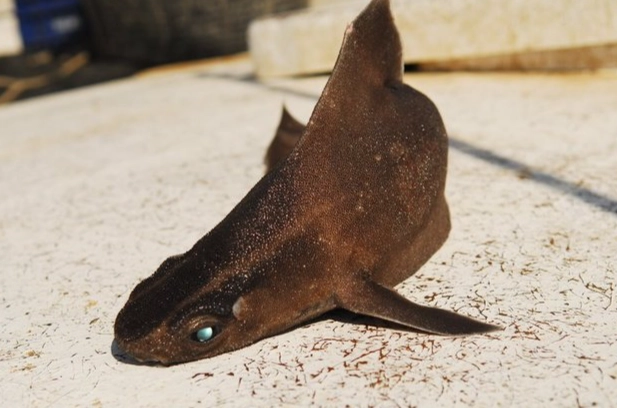
In the Mediterranean Sea, it's found throughout the basin. Records exist from the western Med near Spain, the central areas around Italy, and the eastern Med near Greece and Turkey. It seems to be a consistent, if rarely seen, part of the deep-water ecosystem there.
Depth and Habitat: A Life in the Dim Light
This is not a shallow-water shark. While juveniles might venture up to 60-70 meters, adults are true deep-water inhabitants. They typically live between 200 and 700 meters (roughly 650 to 2300 feet). Some have been caught as deep as 1000 meters. At these depths, sunlight is just a faint glimmer or completely absent. The water is cold, and the pressure is immense.
They have a strong preference for soft, muddy, or sandy bottoms on the upper continental slope. They're demersal, meaning they live and feed on or near the seafloor. You won't find them cruising the open water column. They're down there, patrolling the ooze, using their unique body shape to glide efficiently just above the sediment. Think of them as the submarines of the shark world, specialized for a specific deep-sea environment.
How Does the Angular Roughshark Live and Eat?
Its lifestyle is as specialized as its body. It's a slow-moving, ambush-style predator. It doesn't chase down fast prey. Instead, it likely uses its camouflage—its dark grey or brownish coloration blends into the murky seafloor—to lie in wait or slowly scour the bottom.
So what's on the menu? Stomach content studies (which are rare because so few specimens are caught) tell us it's a dietary specialist. Its favorite food seems to be small benthic invertebrates, especially: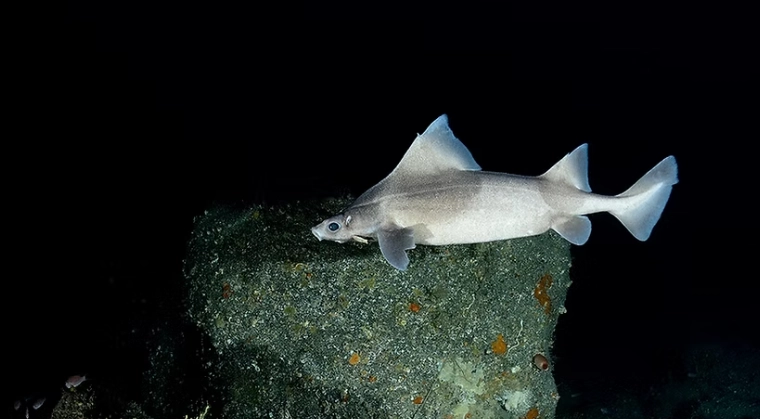
- Polychaete worms: The burrowing worms that live in the mud.
- Small crustaceans: Like isopods, amphipods, and small crabs.
- Egg cases: It's known to eat the egg cases (sometimes called "mermaid's purses") of other sharks and skates. This is a pretty unique dietary item!
- Occasionally, it might snack on small bony fish.
Its small, terminal mouth and sharp teeth are perfect for picking these items off the bottom or digging them out of the mud. It's a shark that essentially acts like a vacuum cleaner for the seafloor, targeting specific, energy-rich morsels.
Reproduction: A Slow and Careful Process
Like other rough sharks, the angular roughshark is ovoviviparous (or aplacental viviparous). This means the eggs hatch inside the female's body, and she gives birth to live, fully-formed pups. The number of pups per litter is small, usually between 7 and 23. The pups are born at a decent size, around 20-25 cm long, which gives them a better chance of survival in the harsh deep-sea environment.
Here's the catch: this reproductive strategy, combined with its deep-water habitat and likely slow growth rate, means the angular roughshark has a very low reproductive potential. It can't quickly bounce back if its population is hit hard. This biological fact is crucial when we talk about the threats it faces.
The Rough Shark Family: How Does It Compare?
The angular roughshark isn't alone in its weirdness. It has cousins in the Oxynotus genus. Looking at them together shows a pattern of deep-sea specialization. Here’s a quick comparison to put O. centrina in context.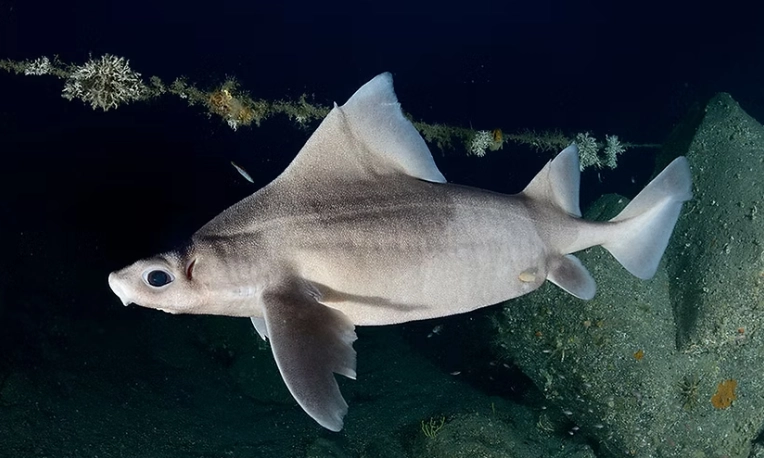
| Species | Common Name | Key Distinguishing Features | Primary Range |
|---|---|---|---|
| Oxynotus centrina | Angular Roughshark | Triangular body, two tall sail-like dorsal fins, wide distribution. | NE Atlantic & Mediterranean |
| Oxynotus bruniensis | Prickly Dogfish | More slender, first dorsal fin much larger than the second, skin exceptionally rough. | Southern Australia & New Zealand |
| Oxynotus caribbaeus | Caribbean Roughshark | Smaller, found in the Caribbean Sea and off Central America. | Western Central Atlantic |
| Oxynotus japonicus | Japanese Roughshark | Known from very few specimens, found in deep waters off Japan. | Northwest Pacific |
| Oxynotus paradoxus | Sailfin Roughshark | Dorsal fins extremely tall and curved, giving a distinctive "sail" appearance. | Eastern Atlantic (Canary Islands, Madeira) |
You can see they all share the family traits but have carved out their own niches in different parts of the world's oceans. The angular roughshark is arguably the most "famous" of the bunch, if any of them can be called famous.
The Biggest Threat: Human Activity
This is the sad part. The angular roughshark is currently classified as Endangered on the IUCN Red List of Threatened Species. You can check the latest assessment for yourself on the IUCN Red List website. This isn't a guess; it's based on observed population declines, mainly in the Mediterranean.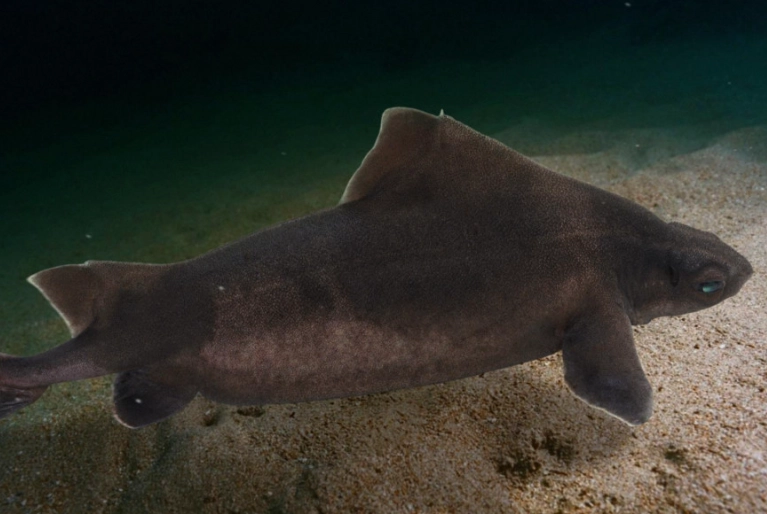
So, what's causing the decline? The primary threat is incidental capture in commercial fisheries. It's not a target species. Nobody is fishing for angular roughshark. The problem is it lives in the same deep-water habitats that are targeted by:
- Bottom trawls: This is the big one. Heavy trawl nets dragged across the seafloor are incredibly destructive to the soft-bottom habitats this shark calls home. The shark gets scooped up as bycatch and is usually dead by the time the net is hauled up.
- Deep-water gillnets and longlines: These static gears also catch them accidentally.
Because of its low reproductive rate, even a modest amount of bycatch can cause a population to decline steadily over time. It's a classic case of a species that can't keep up with modern fishing pressure.
Other potential threats include habitat degradation from pollution (though less direct in the deep sea) and the general impacts of climate change on ocean temperatures and chemistry, which could subtly alter its deep-sea ecosystem.
Is Anything Being Done to Protect It?
There are some glimmers of hope, but action is patchy. In some areas, like parts of the Mediterranean, deep-water trawling has been restricted below certain depths (e.g., 1000 meters). This helps, but the angular roughshark lives well above that limit, so it doesn't offer full protection.
It's listed under several international agreements:
- It's a Protected (Prohibited) Species under the EU's Common Fisheries Policy (CFP), meaning it must be released unharmed if caught in EU waters.
- It's included in the Barcelona Convention for the protection of the Mediterranean.
- It's on the list of the Convention on Migratory Species (CMS), encouraging range states to cooperate on its conservation.
The problem is enforcement and awareness. Many fishers may not recognize this unusual shark or know it's protected. Even if released, survival after the trauma of capture and pressure changes is questionable. More research is desperately needed to understand its exact population structure, critical habitats (like nurseries), and post-release survival rates. Organizations like the Shark Trust work on bycatch identification and advocacy, which indirectly helps species like this one.
Your Angular Roughshark Questions Answered
Why Should We Care About This Odd Shark?
Some might ask, why bother? It's just one weird fish in a vast ocean. But that's exactly the point. The angular roughshark is a piece of the deep-sea puzzle. It plays a role in its ecosystem, likely helping to control populations of bottom-dwelling invertebrates and recycling nutrients. Its unique biology—from its triangular body to its diet of egg cases—tells a story of evolutionary adaptation to one of Earth's most extreme environments.
Losing it would mean losing a unique branch on the tree of life. It would be a quiet loss, unnoticed by most, but it would be a simplification of our planet's biodiversity. In a way, protecting a strange, obscure creature like the angular roughshark is a test of our commitment to conservation as a whole. It's not about saving the cute and charismatic; it's about valuing the entire, intricate web of life, even the grumpy-looking, pancake-shaped parts of it that live in the dark.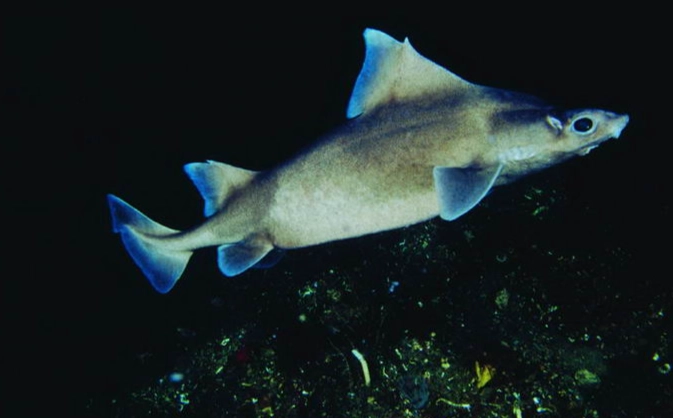
So next time you see a shark documentary, remember there's a whole world of sharks that never make the cut. Sharks that look like they were designed by a mathematician, that live in perpetual night, and that spend their days vacuuming worms off the muddy ocean floor. And one of the most fascinating of them all is the angular roughshark, a true hidden gem of the deep.





Comments
Leave a Comment