In This Guide
You're walking through your garden, maybe you're on a hike, and you see it. A small, menacing-looking snake head staring right at you from a leaf. Your heart skips a beat. But wait... it's not moving. You look closer. That's not a snake at all. It's a caterpillar. A caterpillar that looks like a snake with an almost unbelievable level of detail.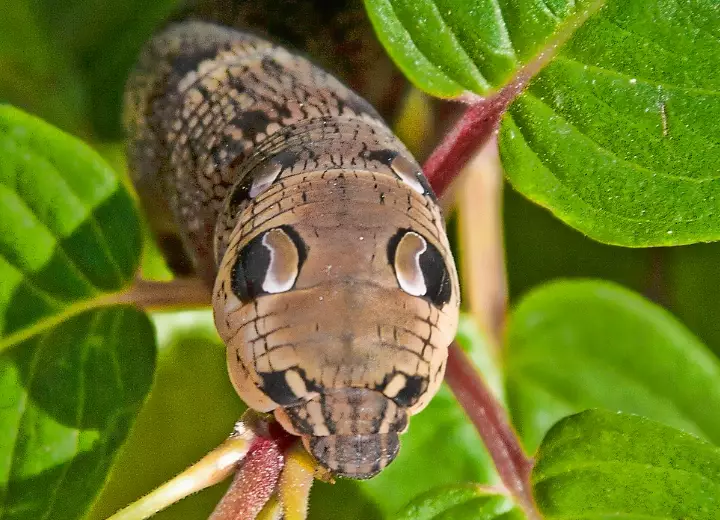
This isn't some rare fantasy creature. It's a real, widespread survival strategy in the insect world called Batesian mimicry. I remember the first time I saw one, a Hemeroplanes triptolemus larva in a photo, I refused to believe it was real. I thought it was photoshopped. It looked too perfect. The fake eyes, the scaled pattern, the threatening posture. It's one of those things nature does that just leaves you speechless.
The Core Idea: These caterpillars have evolved over millions of years to mimic the appearance of snakes, a dangerous predator, to scare off their own would-be attackers like birds and lizards. They don't bite, they aren't venomous, but boy, do they put on a show.
How Does a Caterpillar Pull Off This Disguise?
It's not just one trick. It's a whole suite of adaptations that work together to create the illusion. We're talking about specific body shapes, colors, patterns, and most importantly, behaviors. A static image wouldn't fool anyone for long. The magic happens when the caterpillar moves—or rather, when it performs.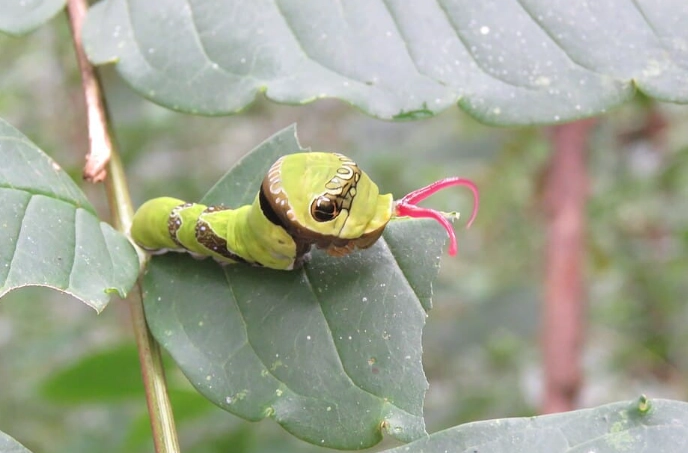
Let's break down the toolkit of a snake mimic caterpillar:
- The Eyespots (Ocelli): This is the star of the show. Many of these caterpillars have large, circular markings on their rear end (the anal segment) that perfectly resemble the eyes of a snake. They're often ringed in a contrasting color, with a dark "pupil" in the center. When inflated, this part becomes the convincing head of the "snake."
- Body Patterning: The skin isn't smooth like many caterpillars. It's textured and colored to look like snake scales. You'll see patterns that mimic vipers or other small, threatening snakes—diamonds, chevrons, blotches in greens, browns, and yellows.
- Behavioral Theater: This is what sells the act. When threatened, the caterpillar doesn't just sit there. It retracts its real head and front segments into its body. Then, it inflates the rear segment with the eyespots, making it swell up like a triangular snake head. It might also sway from side to side in a slow, hypnotic motion, just like a snake assessing a threat. Some even strike forward in a mock lunge.
- The "Tongue" Illusion: Some species, particularly certain hawkmoth caterpillars, have a pair of long, fleshy protuberances called osmeteria. When everted, they look like a forked tongue flicking in and out, adding a chillingly authentic final touch to the performance.
I find the behavioral part the most fascinating. It's pre-programmed performance art. The caterpillar has no idea it looks like a snake. It's just following an ancient genetic script that says, "When scared, do this sequence of actions." And that script has saved countless caterpillars from becoming a bird's lunch.
Why Bother? The Science of Survival (Mimicry 101)
So why go through all this evolutionary trouble? The answer is simple: it works incredibly well. This strategy is a classic example of Batesian mimicry, named after the 19th-century naturalist Henry Walter Bates. In Batesian mimicry, a harmless species (the mimic) evolves to imitate the warning signals of a harmful species (the model) to deter predators.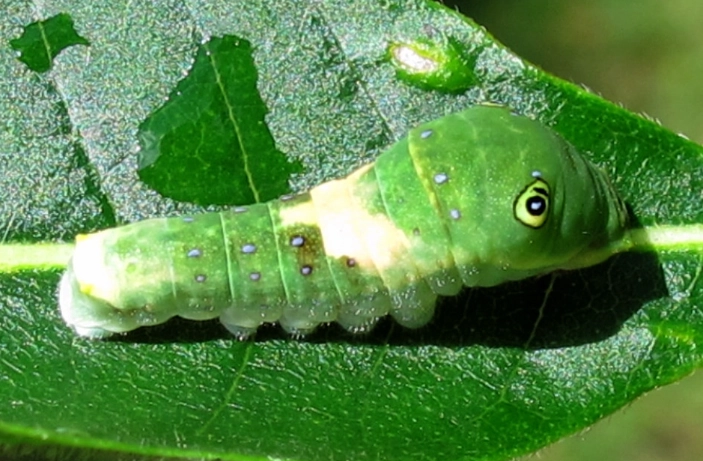
Think of it this way: Birds in an area learn that a creature with a triangular head and specific patterns is a dangerous snake. They avoid it. The caterpillar that looks like a snake is banking on that learned fear. It's freeloading on the snake's nasty reputation. For a deeper dive into the mechanics of mimicry, the work of researchers affiliated with institutions like the Smithsonian Institution provides fantastic resources.
The effectiveness depends on a few things. First, the model (the snake) has to be genuinely dangerous and common enough that predators have learned to fear it. Second, the mimic (the caterpillar) has to be rarer than the model. If there were more fake snakes than real ones, birds would quickly learn the trick and the disguise would lose its power. It's a delicate evolutionary balance.
Honestly, it's a brilliant, low-energy defense. Unlike producing toxins or growing thick armor, which costs a lot of resources, this is mostly about clever packaging and acting. Once the genes for the pattern and behavior are in place, it's a highly effective deterrent.
Meet the Cast: Common Caterpillars That Look Like Snakes
Alright, let's get to the specific stars of this show. You're not likely to see all of these in your backyard (unless you live in a tropical rainforest), but knowing about them helps you understand the scope of this adaptation. Here’s a rundown of some of the most impressive snake mimic caterpillars.
| Common Name / Species | Key Features of the Mimicry | Host Plants & Habitat | Geographic Range |
|---|---|---|---|
| Elephant Hawkmoth Caterpillar (Deilephila elpenor) | When alarmed, retracts head and inflates front segments, revealing four large eyespots that make it look like a small viper. The body is smooth, not scaled. | Feeds on bedstraw, fuchsia, willowherb. Gardens, woodland edges, marshy areas. | Europe and across Asia. |
| Eastern Tiger Swallowtail Caterpillar (late instar) (Papilio glaucus) | Develops prominent yellow and black "eyespots" on a swollen thorax. When disturbed, it rears up and can extrude an orange, forked osmeterium that looks like a tongue. | Cherry, tulip tree, ash, cottonwood. Deciduous forests, parks, suburbs. | Eastern North America. |
| The "Snake-mimic" Hawkmoth Caterpillar (Hemeroplanes triptolemus) | Perhaps the most famous. At rest, looks like a stick. When threatened, hangs upside down, inflates its front to form a perfect viper head with diamond-shaped "scales" and piercing eyespots. It even strikes. | Vines in the grape family (Vitaceae). | Central and South American rainforests. |
| Spicebush Swallowtail Caterpillar (Papilio troilus) | Later stages are green with huge, brilliant yellow and black eyespots on the thorax. The false "face" is incredibly bold and startling. | Spicebush, sassafras. Wooded swamps, forests. | Eastern United States. |
| Vine Hawkmoth Caterpillars (Genus Hippotion) | Many in this genus have a prominent eyespot near the rear (anal horn) that resembles a single, watchful eye. The body patterning enhances the serpentine illusion. | Various vines including grape. | Africa, Asia, Australia. |
Seeing the Elephant Hawkmoth caterpillar in person is a trip. It's common in UK gardens, and that sudden transformation from a boring green tube to a glaring-eyed monster is genuinely startling. The Hemeroplanes from the tropics is in a league of its own, though. It's the method actor of the insect world—completely committed to the role.
What to Do If You Find One (And What NOT to Do)
Let's be practical. You've identified a caterpillar that looks like a snake in your garden or on a hike. Now what? First, don't panic. Remember, the act is for your benefit—it's showing you its best trick because it's scared of you.
Important Reminder: While some caterpillars (like certain asp or puss moth caterpillars) have stinging hairs, the classic snake mimics we're discussing here—hawkmoths and swallowtails—are generally not harmful to humans. They do not bite, sting, or possess any venom. Their defense is purely visual and psychological.
Here's a simple action list:
- Observe and Enjoy: You're witnessing one of nature's coolest magic tricks. Watch the display from a respectful distance. Take a photo if you want—it's a great story.
- Do Not Touch Unnecessarily: While not dangerous, handling can stress the caterpillar and potentially damage its delicate skin. It's also just good practice to avoid touching wildlife you don't know.
- Leave It Be: This caterpillar is eating specific plants to fuel its transformation into a moth or butterfly. Moving it could doom it if you don't know its exact food plant. It's not a pest you need to remove (most eat native plants without causing damage).
- Educate Others: If you're with someone who gets scared, explain what it is! You can turn a moment of fear into a moment of wonder. I've done this with my nieces, and now they look for them instead of running away.
The worst thing you can do is kill it out of fear. You'd be destroying a harmless and fascinating creature that's also a future pollinator. That beautiful Elephant Hawkmoth or Tiger Swallowtail butterfly is the end goal here.
Digging Deeper: Your Questions Answered
Digging Deeper: Your Questions Answered
Are these caterpillars dangerous or poisonous?
Almost universally, no. The snake-mimicking caterpillars we're talking about—primarily hawkmoth and swallowtail larvae—rely on bluff. They have no venom, no stinging hairs (with very few, obscure exceptions), and their mandibles are only strong enough to chew leaves. Their entire strategy is based on looking dangerous, not being dangerous. The University of Florida's Entomology Department has excellent fact sheets that confirm the harmlessness of common species like the Eastern Tiger Swallowtail.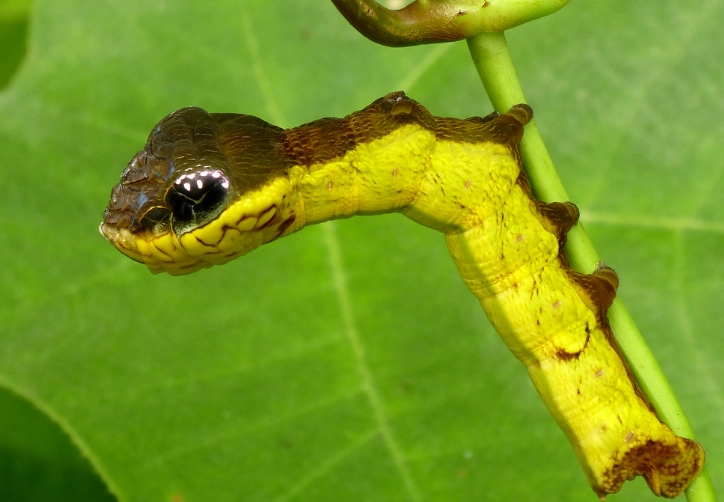
How can I tell a real snake from a caterpillar pretending to be one?
Context is everything. A caterpillar will be found on a plant—on a stem, under a leaf. It will be small, rarely over 3-4 inches long. Look for prolegs (the stubby little legs in the middle of its body) – snakes don't have those. The "head" will often look a bit too perfect, like a cartoon drawing, and it won't have a visible mouth or flicking tongue (the osmeterium is a brief, special effect). Also, watch its movement. A caterpillar's locomotion is a slow, inch-worming crawl. A small snake will move with fluid, muscular contractions.
What's the point of the eyespots being on the back end?
It's a genius bit of misdirection. When a bird pecks at what it thinks is the head (the caterpillar's rear), the caterpillar's actual vital parts—its real head and thorax—are safe at the other end. It's a sacrificial armor. The rear can take some damage, and the caterpillar can survive. If the eyespots were up front and a bird attacked them, it would be a direct hit to the brain and major organs. So, it's not a mistake; it's a calculated defensive gambit.
Do the caterpillars know they look like snakes?
This is a philosophical question, but biologically, the answer is almost certainly no. They have no concept of "snake" or "self-image." They are reacting to stimuli (a shadow, vibration, touch) with a hardwired, instinctual sequence of behaviors. The fact that this sequence mimics a snake is the result of natural selection favoring caterpillars whose random genetic mutations happened to scare predators more effectively. The ones that looked more snake-like survived to reproduce. Over eons, the disguise was refined.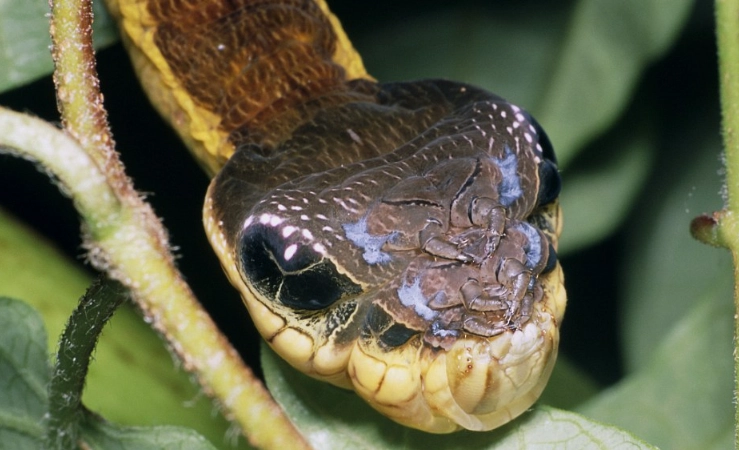
Beyond the Wow Factor: Why This Matters
It's easy to just see this as a neat trick and move on. But understanding the caterpillar that looks like a snake opens a window into much bigger ideas.
It shows us the relentless, creative pressure of predation. The arms race between eater and eaten has spawned some of the most bizarre and beautiful adaptations on Earth. This mimicry is a testament to the power of natural selection—a blind process that can produce designs so clever they seem intentional.
For gardeners and nature lovers, it's a reminder that the insects in our yards aren't just pests or decorations. They are participants in an ancient, complex drama of survival. That weird "snake" on your fuchsia plant is a link in an ecological chain that leads to a beautiful moth that pollinates flowers at night.
Personally, I think the existence of creatures like this makes the world a more interesting place. It's a piece of evidence that reality is often stranger and more inventive than anything we can dream up. In an age where we feel like we've seen everything, a caterpillar can still make you do a double-take and say, "Wait, what is that?"
So next time you're outside, look a little closer at the leaves. You might just be stared down by one of nature's greatest impersonators, a master of disguise that proves sometimes, the best way to survive is to be someone you're not.


Comments
Leave a Comment