Quick Navigation
Let's be honest, when you think of snails, you probably picture the slow, slimy little guys munching on your lettuce. Maybe you remember that one you accidentally stepped on after the rain. Not exactly the most thrilling creature in the animal kingdom, right?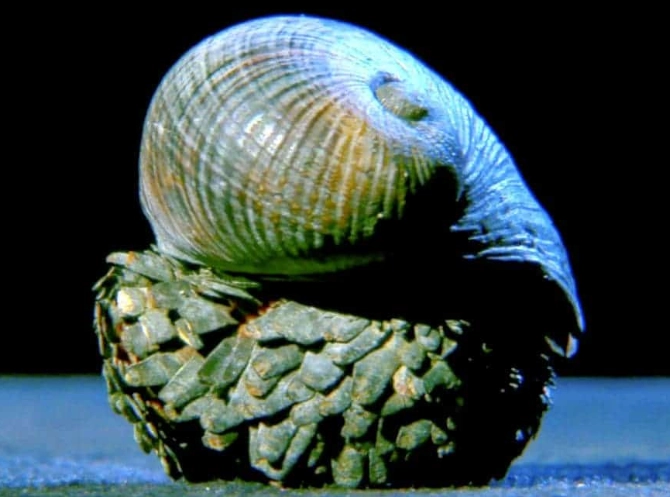
Well, forget everything you think you know about snails. Because miles beneath the ocean's surface, in a world of perpetual darkness, crushing pressure, and toxic chemicals, lives a snail that's more like a tiny, biological knight. It's called the scaly-foot snail, and it's arguably one of the most incredible animals we've ever found. I remember the first time I saw a picture of it – I genuinely thought someone had glued little pieces of metal to a snail's shell as a joke. But no, that's just how it's built.
Its proper, scientific name is Chrysomallon squamiferum, but "scaly-foot snail" or even the cooler-sounding "iron snail" fits it much better. This isn't just another deep-sea oddity. This snail is a living paradox, thriving in an environment that should kill it instantly, and it does so by wearing a suit of armor made, in part, of actual iron. It's the only known animal on Earth to do that.
The Big Three: Before we dive deeper, here's what makes the scaly-foot snail an instant legend: 1) Its foot is covered in hundreds of mineralized, iron-sulfide scales (the "scaly-foot"). 2) Its shell has three unique layers, including an iron-rich middle layer. 3) It lives exclusively around deep-sea hydrothermal vents, one of the most extreme habitats on the planet.
What Makes the Scaly-Foot Snail So Unique?
Okay, so it has scales and iron. Big deal. But the how and why are where things get mind-blowing. This snail didn't just decide to wear metal one day. Its entire biology is a masterpiece of extreme adaptation.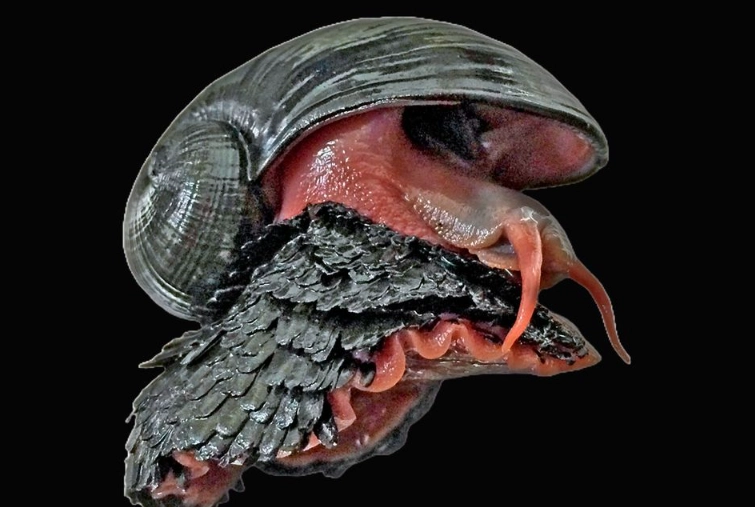
The Iron Suit (Sclerites)
The most striking feature is, of course, the scales covering its fleshy foot. Scientists call these sclerites. They aren't attached to the shell; they're embedded in the foot's skin itself. And they're not just for show. Analysis shows they're composed of iron sulfides – greigite and pyrite. Yep, that's iron pyrite, also known as "fool's gold."
Think about that. This animal biomineralizes iron sulfides from its environment and uses them to build body armor. It's a passive defense system. The scales are hard and brittle, so when a crab (their main predator down there) tries to grab the snail's vulnerable foot, the scales are likely to crack and absorb the impact, protecting the soft tissue underneath. It's like having built-in shatter plates.
The Iron Fortress (The Shell)
If the foot is armored, the shell is a fortified castle. The shell of the scaly-foot snail has a unique three-layer structure that's a huge leap from your garden snail:
| Layer | Composition | Primary Function |
|---|---|---|
| Outer Layer | Conchiolin (a protein) | First line of defense, absorbs initial impact. |
| Middle Layer | Iron sulfides (greigite) embedded in organic matrix | Dissipates energy from crushing attacks, like a crab's claw. The iron makes it incredibly resistant to deformation. |
| Inner Layer | Aragonite (calcium carbonate) | Provides structural strength and protects against acidic conditions from the vent fluids. |
That middle layer is the game-changer. It acts like a sandwich panel in modern armor or car design, dissipating the energy of a pinch or crush across a wider area so the inner, brittle aragonite layer doesn't crack. It's a brilliant piece of natural engineering.
A Complete Mystery (The Lack of a Digestive System)
Here's a twist that still baffles scientists. The scaly-foot snail doesn't have a functional digestive system. No stomach, no intestines, at least not in the way we understand them.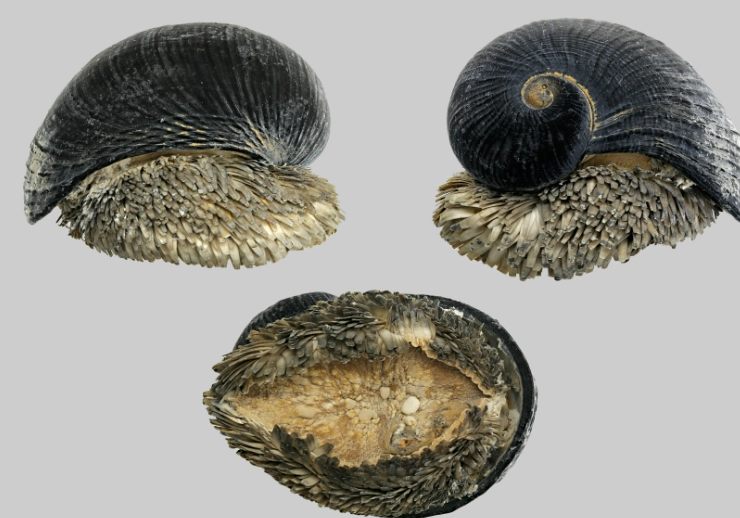
So how does it eat? It hosts billions of symbiotic bacteria in a specialized organ called an enlarged esophageal gland (essentially a huge battery pack of microbes). These bacteria are chemosynthetic. They take the toxic hydrogen sulfide spewing from the hydrothermal vents and convert it into energy, essentially "cooking" food for the snail from poison. The snail gets almost all its nutrition from its bacterial tenants. It's a farmer, and its crop is bacteria that eat toxic gas.
This symbiotic relationship is so central to its survival that the snail is considered a "model organism" for studying symbiosis. You can't talk about the scaly-foot snail without talking about its microbes. They're a package deal.
Where Does This Iron Snail Live? Home is a Toxic Jet.
You won't find this snail on a rocky shore or in a tide pool. Its entire world is the deep-sea hydrothermal vent ecosystem. We're talking about depths of 2,400 to 2,900 meters (around 1.5 to 1.8 miles) down. The pressure is about 250 times what we feel at sea level.
These vents, often called "black smokers," are cracks in the seafloor where superheated water (up to 400°C/750°F!) loaded with minerals and chemicals like hydrogen sulfide gushes out. The water doesn't boil because of the immense pressure. It's pitch black, except for the glow of some weird animals. The environment is highly acidic, toxic, and subject to wild temperature gradients.
The scaly-foot snail has only been found at three vent fields in the Indian Ocean: the Kairei, Longqi, and Solitaire fields. That's it. The entire known population of this miraculous animal lives in three small, deep-sea neighborhoods. This extreme specialization is what makes it so vulnerable.
I find it incredible that life not only exists here but thrives. The scaly-foot snail is a key part of this oasis in the deep, grazing on microbial mats and, through its symbiosis, forming a crucial link in a food web that operates completely independently of sunlight.
Why is the Scaly-Foot Snail So Important to Science?
Beyond being a fascinating creature, the scaly-foot snail is a treasure trove of inspiration and scientific insight. Researchers from materials science to astrobiology are keenly interested in it.
Biomimicry Goldmine: The structure of its shell is being studied for next-generation lightweight armor, better body armor for soldiers and police, and improved impact-resistant materials for everything from cars to sports equipment. The way it combines hard and soft materials, and layers them for specific functions, is a masterclass in design that humans are trying to copy. The U.S. Department of Defense has funded research into its properties.
A Window into Extreme Life: Studying how its proteins can manipulate and control the formation of iron sulfide minerals at low temperatures could revolutionize manufacturing. We currently make these materials in high-temperature, energy-intensive industrial processes. The snail does it at a few degrees above freezing. Unlocking that secret could lead to "green" manufacturing techniques.
Astrobiology: Environments like hydrothermal vents are prime candidates for where life could have originated on Earth, and possibly on other worlds like Jupiter's moon Europa or Saturn's moon Enceladus. Understanding an animal that is so perfectly adapted to such a chemically-driven, sunless ecosystem helps us define what "life" might look like elsewhere in the cosmos.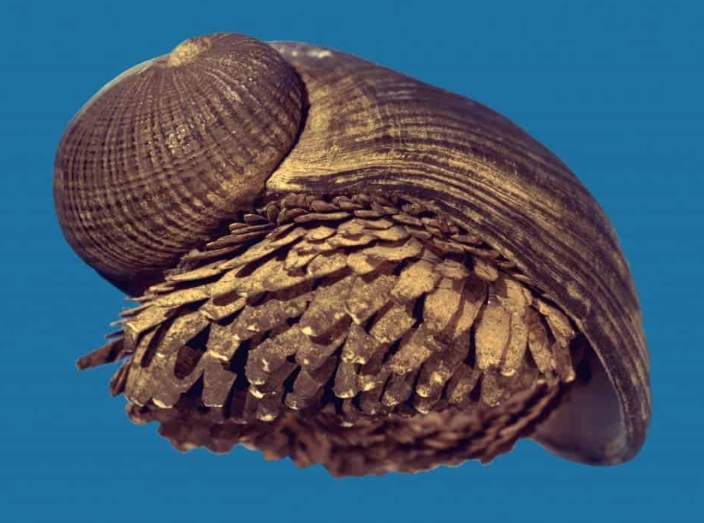
A Sobering Thought: We're risking the loss of this scientific treasure before we even fully understand it. The very adaptations that make the scaly-foot snail a marvel of evolution – its specialized habitat and symbiotic lifestyle – are what make it incredibly fragile in the face of human activity.
The Sad Reality: An Endangered Wonder
This is the part that honestly makes me angry. In 2019, the International Union for Conservation of Nature (IUCN) listed the scaly-foot snail as Endangered on its Red List of Threatened Species. You can read the official assessment on the IUCN Red List website. It was the first species to be assessed as endangered due to the threat of deep-sea mining.
Let that sink in. An animal that lives nearly two miles underwater, in one of the most hostile environments on Earth, is being pushed toward extinction by human activity. Its main threats are:
- Deep-Sea Mining: The hydrothermal vents where it lives are rich in valuable metals like copper, zinc, gold, and silver. Mining companies are actively exploring and developing technology to strip-mine these vent fields. This would completely and utterly destroy its habitat in an instant. The snail cannot live anywhere else.
- Scientific Collection: While done for important research, even limited collection from its tiny populations can have a significant impact. There's a constant ethical tension here between understanding a species and harming it in the process.
- Ocean Acidification & Climate Change: Changes in ocean chemistry could potentially affect its ability to form its shell and sclerites, though this is less studied than the direct mining threat.
The scaly-foot snail's story is a stark microcosm of the deep-sea conservation dilemma. We are making decisions about exploiting an environment we have barely explored, potentially wiping out unique lifeforms we don't yet understand for short-term mineral gain. It feels incredibly short-sighted.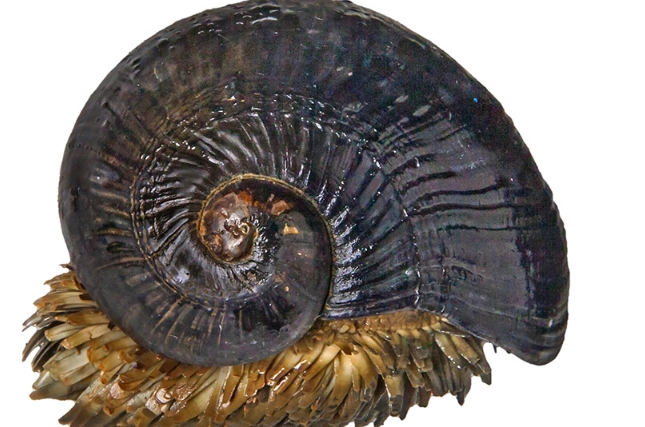
Conservation efforts are tricky. You can't exactly put a fence around a hydrothermal vent 1.5 miles down. The primary focus is on establishing international regulations and Marine Protected Areas (MPAs) that put these sensitive vent fields off-limits to mining. Organizations like the International Union for Conservation of Nature (IUCN) and the Deep Ocean Stewardship Initiative (DOSI) are key players in this fight. But progress is, frankly, slow and mired in politics.
Your Scaly-Foot Snail Questions Answered (FAQ)
I've been reading about this snail for a while, and these are the questions that kept popping up in my head, and that I see other people asking online.
This is a common exaggeration. While its shell is incredibly tough for its size and weight, specifically evolved to resist the crushing force of a crab's claw, it is not "bulletproof" in the human sense. A high-velocity rifle bullet would almost certainly penetrate it. The marvel is in the efficiency of its design, not in providing absolute, unrealistic protection. Its structure inspires bullet-*resistant* materials, not bulletproof ones.
Absolutely not. This is a firm no. First, it's an endangered species, so collecting or trading it is illegal under international agreements like CITES. Second, and more importantly, you cannot replicate its habitat. You would need a pressurized tank that simulates 250 atmospheres of pressure, a system to pump in toxic hydrogen sulfide gas at precise concentrations, and a way to maintain the complex community of symbiotic bacteria it needs to survive. It's impossible in a home aquarium. The only place you'll see one is in a handful of specialized research institutions.
The leading theory is defense, as a mechanical barrier against predators. But there are other intriguing ideas. They might act as a waste management system, sequestering excess sulfur or iron from the snail's system. They could provide some insulation from temperature extremes near the vents. Or, they might even play a role in cultivating different types of surface bacteria that the snail then harvests. The full function isn't 100% settled, which is part of what makes it so cool to scientists.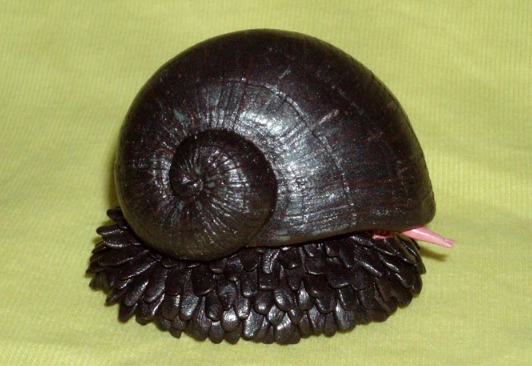
This is the crux of its specialization and its vulnerability. The scaly-foot snail is utterly dependent on two things: 1) The chemical cocktail from hydrothermal vents (specifically hydrogen sulfide) to feed its symbiotic bacteria. 2) The specific mineral composition of the vent fluids to build its iron sulfide scales and shell layer. These conditions don't exist together anywhere else in the ocean. It's like asking a cactus to live in a swamp. Its entire body plan is a solution to a very specific, extreme problem.
It was first discovered in 2001 during a Japanese research expedition to the Kairei hydrothermal vent field in the Indian Ocean. The scientists operating the submersible Shinkai 6500 were the first humans to lay eyes on it. It was formally described as a new species in 2003. Its discovery was a huge reminder of how much we still have to learn about the deep sea. You can find its official taxonomic classification in the World Register of Marine Species (WoRMS).
Final Thoughts: A Tiny Titan Worth Protecting
Writing about the scaly-foot snail is a weird mix of emotions. There's pure wonder at its existence – this little iron-clad snail farming bacteria in the abyss. It's a testament to life's incredible creativity and tenacity.
But that wonder is immediately followed by a deep sense of unease. We found it, we're amazed by it, and now our actions might erase it before my lifetime is over. It's a pattern we've seen too many times.
The scaly-foot snail isn't just a curious oddity. It's a symbol. A symbol of the hidden wonders in the deep ocean that have value far beyond the minerals we can rip from their homes. Its value is in the secrets of its shell, the mystery of its symbiosis, and the simple, profound fact that it exists. Losing it would be like burning a library of unique knowledge we've only read the first page of.
So the next time you hear about deep-sea mining or the mysteries of the ocean, remember the scaly-foot snail. Remember the snail in the iron suit, a tiny titan of the deep, showing us just how strange and brilliant life can be. And maybe, just maybe, that memory will make us think twice about how we treat the last great wilderness on our planet.
Want to Learn More or Help? Supporting marine conservation NGOs that focus on deep-sea issues is the best way for most of us to help. Following and sharing information from science communicators and research institutions like the Smithsonian Ocean Portal helps raise awareness. The story of the scaly-foot snail needs to be told.

Comments
Leave a Comment