What You'll Find Here
Let's be honest, the first thing that grabs you is that crest. It's not just red, it's a fiery, deep crimson that looks like it was painted by an artist who only had the most vibrant colors on their palette. The red crested turaco (*Tauraco erythrolophus*) is one of those birds that makes you stop scrolling. But there's so much more going on beneath those stunning feathers than most people realize. I've spent years talking to breeders, visiting aviaries (the good ones and the not-so-great ones), and digging through research, and what I've found is a bird full of fascinating quirks and some very real challenges for anyone thinking of bringing one into their life.
It's not your typical parrot or finch. This is a bird with a unique biology, a specific set of needs, and a personality that can be both charming and, well, incredibly loud. So whether you're a birder hoping to spot one in the wild, an avian enthusiast curious about their care, or just someone who fell down an internet rabbit hole after seeing a picture, let's get into the real story of the red crested turaco.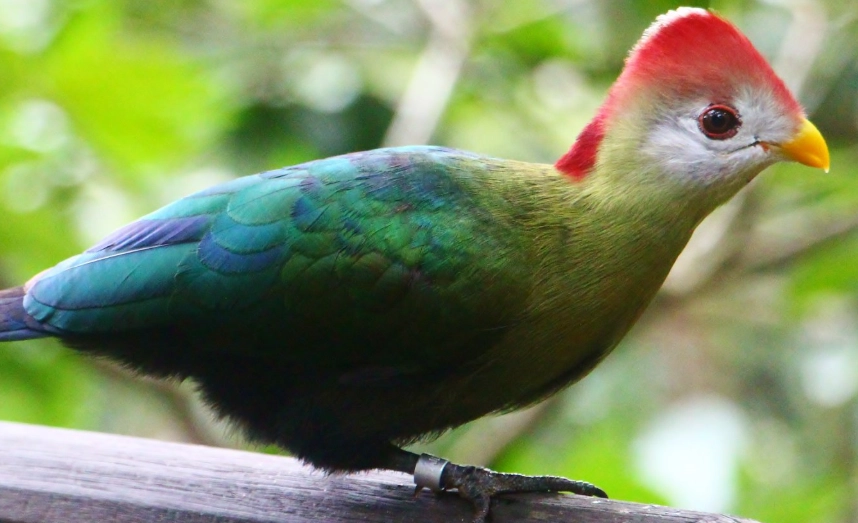
What Exactly Is a Red Crested Turaco? Breaking Down the Basics
Native to the rainforests and woodlands of Angola in Central Africa, this bird is a member of the Musophagidae family. That's a fancy name for "banana-eaters," which is a bit misleading because they don't actually live on bananas. The name comes from their love for fruit, sure, but their diet is way more varied.
What does a red crested turaco look like up close? Imagine a bird about the size of a small crow, but built more elegantly. That brilliant red crest is semi-erectile—it can raise and lower it a bit, which is pretty cool to see. The body is mostly a sleek, glossy green, but here's the wild part: that green isn't from a typical pigment.
Their face is black and white, almost like a mask, which contrasts dramatically with the crest. And when they fly, you get a flash of stunning crimson in the primary feathers of their wings. It's a breathtaking sight.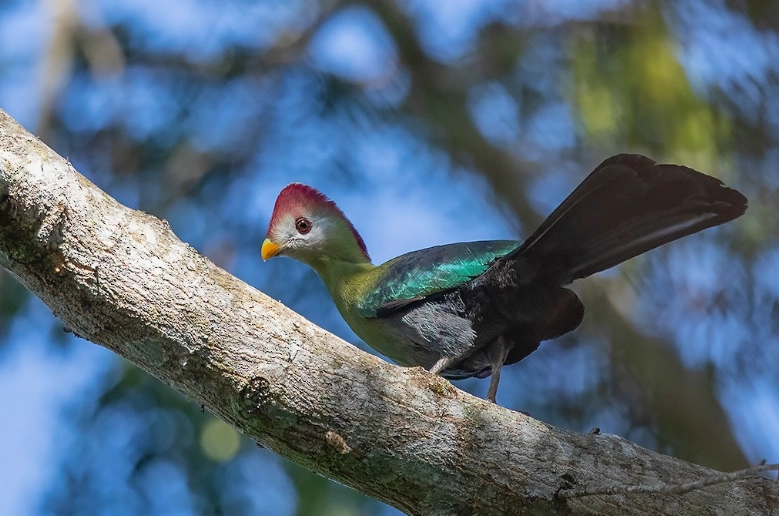
I remember the first time I heard its call, not just saw a picture. I was visiting a specialized aviary, and from across the room, this deep, guttural, almost frog-like "koh-koh-koh-koh" echoed. It's not a melodic songbird tune; it's a primal, resonant call that carries. You'll know a red crested turaco is around long before you see it.
Living with a Red Crested Turaco: The Unvarnished Truth About Care
This is where most searches lead, and it's the part that needs the most honesty. Seeing a picture of a red crested turaco and wanting one is natural. Actually providing for one is a massive, long-term commitment that's not for the faint of heart or the inexperienced bird keeper.
The Space They Need (It's Not a Cage, It's an Aviary)
Forget about keeping one in a standard parrot cage. A red crested turaco is an active, agile bird that loves to hop, climb, and make short, swooping flights. They need space. A large, walk-in aviary is the absolute minimum. We're talking a structure that's at least 10 feet long, 6 feet wide, and 7 feet high. And it needs to be sturdy—these birds have strong legs and beaks.
Inside, you can't just throw in a couple of perches. They need a variety of branches of different thicknesses to exercise their feet, plenty of foliage (real or artificial) for hiding and feeling secure, and multiple feeding stations. The substrate (floor) is important too. Many keepers use a deep layer of orchid bark or similar material because these birds will often jump down to forage. A concrete floor is a recipe for foot and leg problems.
Let's compare the two main housing philosophies to see what might fit your situation.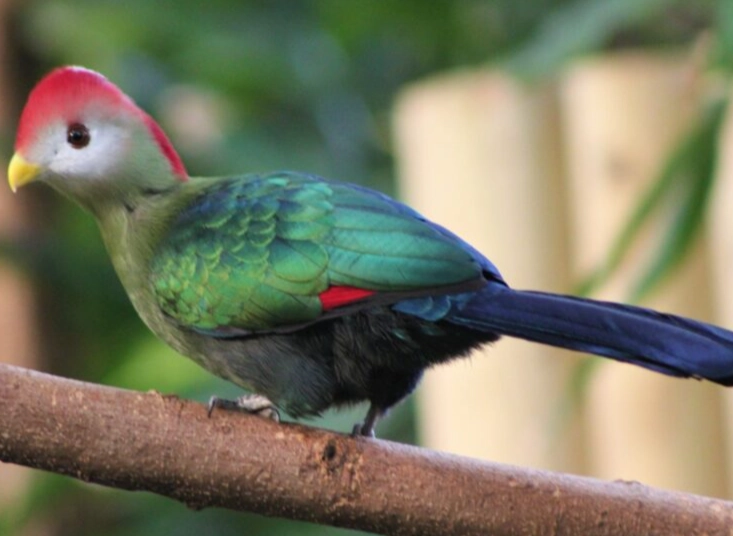
| Feature | Indoor Aviary (Room Conversion) | Outdoor/Greenhouse Aviary |
|---|---|---|
| Space & Enrichment | Easier to climate control. Allows for close interaction. Can feel restrictive for the bird if not huge. | More natural space for flight. Sunlight is beneficial. Requires robust heating/cooling in extreme climates. |
| Cleaning & Maintenance | Mess is contained indoors. Requires excellent air filtration (they are messy eaters!). | Easier to hose down. Natural drainage. Must be predator-proof (rats, raccoons, cats). |
| Bird's Well-being | Great for socialization and monitoring health closely. Risk of boredom if not enriched constantly. | More natural behaviors stimulated (sunbathing, reacting to weather). Can be stressful if exposed to predators. |
| Cost & Setup | High initial cost for room modification, lighting (full-spectrum UVB is crucial), and air purifiers. | High cost for secure, insulated construction. Ongoing costs for temperature management. |
See what I mean? It's a major project. I've seen setups where people dedicate an entire sunroom to their turaco, and even then, they wish they could give it more space.
What's on the Menu? The Red Crested Turaco Diet
This is another area where they differ from parrots. While a high-quality pellet should form a nutritional base (specifically one formulated for softbills or fruit-eating birds), fresh food is non-negotiable.
Their daily plate should look like a colorful fruit salad mixed with a protein source. We're talking diced papaya, mango, berries, figs, and melon. They also need vegetables—peas, sweet corn, beans, leafy greens. But the critical part, and where some new owners slip up, is the animal protein. In the wild, a red crested turaco will happily snatch insects, snails, and even small lizards.
And water! They need fresh water for drinking, but also for bathing. A large, shallow dish for bathing is a must-have item in their aviary. You'll see them splashing around regularly, which helps keep those unique feathers in good condition.
Behavior, Noise, and Can You Really "Bond" With One?
They're intelligent, but not in the same puzzle-solving, talking way as an African Grey parrot. Their intelligence is more about awareness, curiosity, and routine. They can become quite tame, especially if hand-raised, and may take food from your hand or allow head scratches (on their terms).
But here's the personal opinion part: they are not cuddly pets. They are observational pets. The joy comes from watching their natural behaviors—the careful way they hold a berry in one foot, the sudden explosive hop to a new branch, the meticulous preening sessions. If you want a bird to sit on your shoulder for hours, get a cockatoo (and good luck with that, too). A red crested turaco is more like a living piece of wild, elegant art that you are responsible for.
Now, about that noise.
The call of the red crested turaco is not something you can ignore. It's loud, low, and carries. It's most frequent at dawn and dusk. If you live in an apartment or have close neighbors, this is a deal-breaker. Full stop. There's no training it out of them; it's how they communicate. I've spoken to owners who had to install serious soundproofing in their aviary rooms, and even then, on a quiet morning, you can hear it.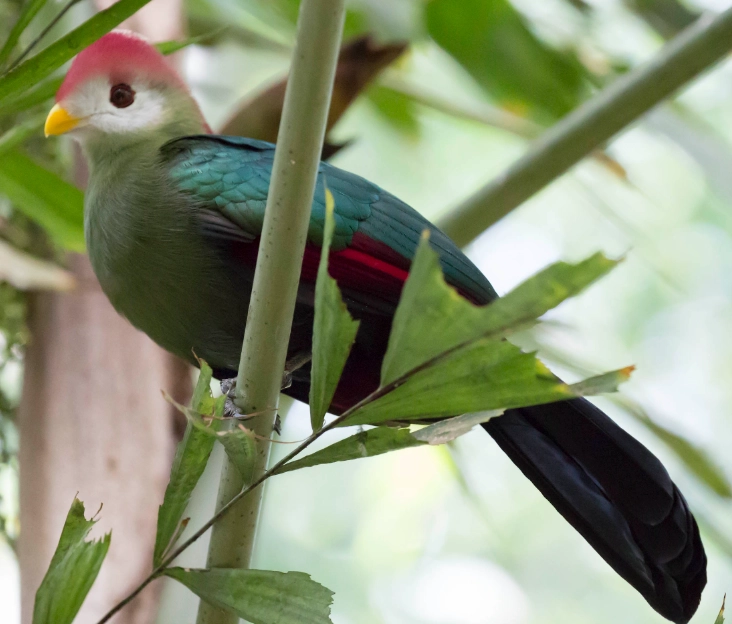
Health and Lifespan: What to Watch For
With proper care, a red crested turaco can live for 15-20 years in captivity, sometimes longer. That's a two-decade commitment. Their health hinges on a few key pillars:
- Diet, Diet, Diet: As discussed, poor nutrition is the root of most health issues.
- Foot Health: Perches must be varied in diameter and texture. Sandpaper perches or dirty, flat surfaces can cause bumblefoot (a painful infection).
- Iron Storage Disease (Hemochromatosis): This is a big one for fruit-eating birds. Their bodies are too efficient at absorbing iron from food. High-iron foods (like red meat, some pellets, spinach) can lead to a toxic buildup of iron in their liver. A diet low in iron and vitamin C (which enhances iron absorption) is critical. Your avian vet must monitor this.
- Parasites: Especially if fed live food or housed outdoors, regular fecal checks are a must.
Which brings up the most important point: you must have an experienced avian veterinarian lined up before you get the bird. Not all vets have experience with turacos. This is a non-negotiable prerequisite. The Association of Avian Veterinarians (AAV) website is a good place to start your search for a qualified professional.
Frequently Asked Questions (The Real Ones People Google)
Can I legally own a red crested turaco?
It depends entirely on your location. In the United States, they are not protected under the U.S. Endangered Species Act, but they are listed under CITES Appendix II. This means international trade is regulated to ensure it's not detrimental to wild populations. You must buy from a reputable, CITES-permitted breeder within your country to get proper documentation. Always, always check your state and local laws. Some places have outright bans on exotic birds.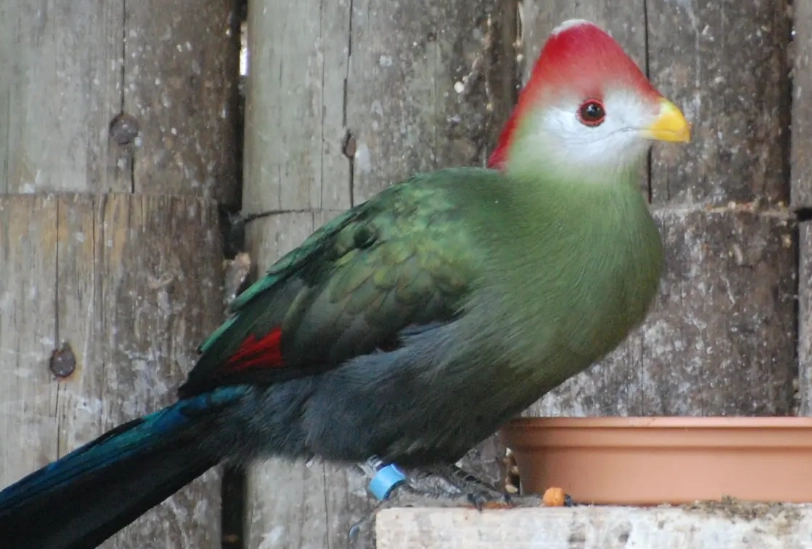
How much does a red crested turaco cost?
The bird itself, from a good breeder, can range from $1,500 to $3,000 or more. But that's the smallest part of the cost. The aviary setup, climate control, lighting, annual vet care, and a steady supply of fresh and live food will dwarf that initial purchase price over the bird's lifetime. If the price of the bird gives you pause, you cannot afford to keep one properly.
Are they endangered?
Currently, the IUCN Red List classifies the red crested turaco as Least Concern. This is good news, but it doesn't mean there are no threats. Habitat loss in Angola is an ongoing issue. You can view their current conservation status on the official IUCN Red List website. Buying from a responsible breeder helps ensure no birds are taken from the wild to supply the pet trade.
Do they make good pets for beginners?
No. I'll be blunt. They are advanced, specialist birds. If you haven't kept other birds successfully for years, starting with a red crested turaco is a disservice to you and a potential death sentence for the bird. Start with something hardier and less demanding to learn the ropes of avian care, nutrition, and behavior.
What's the best way to see one if I don't want to own it?
Excellent question! Many top-tier zoos with dedicated bird houses or aviaries have them. Places like the San Diego Zoo, the Bronx Zoo's World of Birds, or specialized avian parks often have them in beautiful, naturalistic exhibits. This is the best way to appreciate a red crested turaco—seeing it healthy, in a large space, displaying its natural behaviors. Supporting these institutions helps conservation efforts far more than private ownership ever could.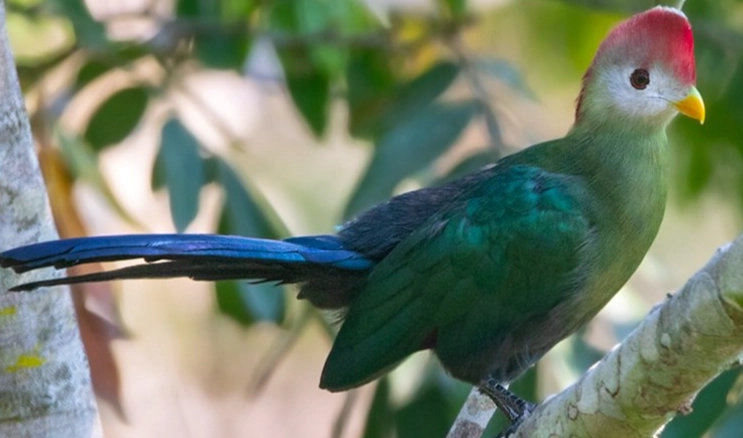
If you take away one thing from all this, let it be this: the welfare of the bird must always come before the desire to own something beautiful and exotic. Do your research, talk to breeders and veterinarians, and be brutally honest with yourself about your resources. The red crested turaco's future, whether in the wild or in captivity, depends on informed and passionate people making responsible choices.

Comments
Leave a Comment