Guide Overview
- Why Does It Look Like That? Unpacking the "Bleeding" Mystery
- Beyond the Looks: Character and Temperament of a Bleeding Heart Dove
- Thinking of Buying a Bleeding Heart Dove? Let's Talk Cost and Ethics
- The Realities of Breeding Bleeding Heart Doves
- Common Health Issues to Watch For
- Frequently Asked Questions (The Stuff You're Actually Searching For)
- Final Thoughts: A Bird to Admire, Not Necessarily to Own
Let's get straight to the point. If you've stumbled upon a picture of this bird and did a double-take, you're not alone. My first reaction was pure disbelief. I thought, "There's no way that's real. Someone must have photoshopped that bright red patch onto a perfectly normal dove." But it is real, and that startling splash of red on its otherwise soft, greyish breast is entirely natural. It's the reason for its dramatic, slightly unsettling name: the Bleeding Heart Dove.
We're talking about a group of ground-dwelling pigeons native to the Philippines. They're not your average city park pigeon, that's for sure. They're shy, forest-dwelling birds with a look that's equal parts beautiful and bizarre. The name can be a bit misleading, though. It's not one single species, but a few closely related ones, with the Luzon Bleeding-heart (Gallicolumba luzonica) being the poster child you most often see. That's the one with the most vivid, sharply defined "bleeding" patch. Others, like the Mindanao bleeding-heart, have a slightly different hue.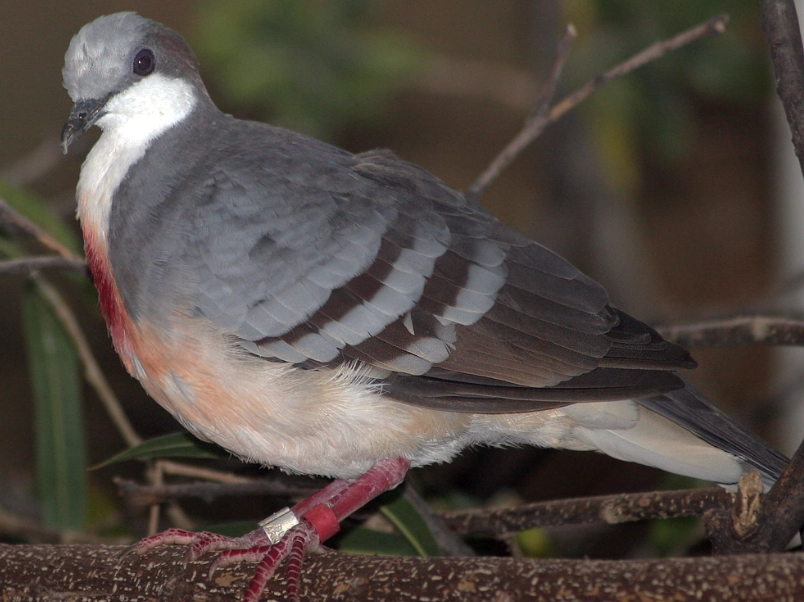
The whole point of this guide is to peel back the layers on this incredible bird. If you're just curious, great. If you're—and I say this with a heavy dose of caution—considering one as a pet, you absolutely need to read this first. There's a lot of misinformation and romanticism around keeping exotic birds. I want to give you the real, unvarnished picture, the good, the challenging, and the downright difficult.
Quick Taxonomy Check: They're doves, which are essentially just a type of pigeon (the terms are interchangeable scientifically). So, "Bleeding Heart Dove" and "Bleeding Heart Pigeon" refer to the same amazing bird. Don't let the different names confuse you.
Why Does It Look Like That? Unpacking the "Bleeding" Mystery
It's the first question everyone has. That brilliant red or orange-red patch isn't a wound, it's not paint, and it's not a trick of the light. It's a patch of specially colored feathers. In the Luzon species, it's a stark, almost heart-shaped crimson spot right in the center of the breast, with a tiny, finer streak of red dropping down from it, enhancing the "bleeding" illusion against the clean white and grey belly.
Scientists believe it plays a role in courtship and signaling. In the dim light of the Philippine forest floor, that bright spot would be a powerful visual cue. Think of it like a badge. For us humans, it's a breathtaking example of how nature's artistry can sometimes be shockingly dramatic. It's a defense mechanism of sorts, too—predators (and humans) might hesitate at the sight of what looks like an injured animal, giving the dove a crucial split-second to escape.
I remember showing a picture to a friend who knows nothing about birds. Her immediate, unfiltered reaction was, "Oh my god, is it okay? Should we help it?" That's the power of its appearance. It triggers a visceral response.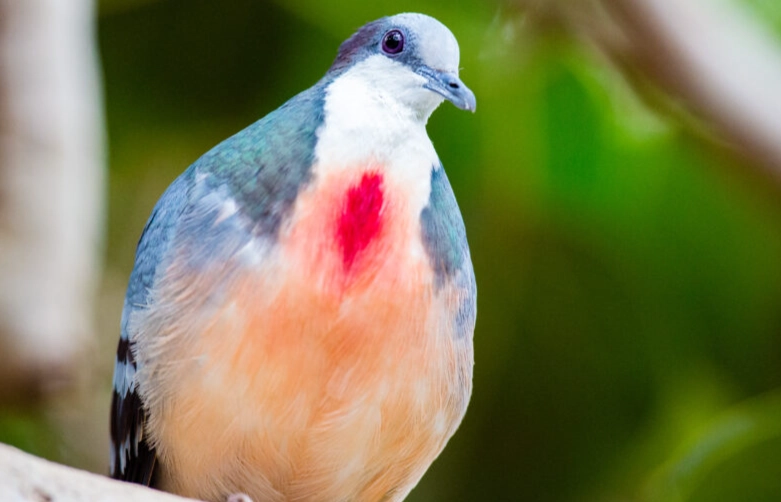
Beyond the Looks: Character and Temperament of a Bleeding Heart Dove
If their look is flashy and dramatic, their personality is the complete opposite. Describing them as "gentle" is an understatement. They are profoundly shy, quiet, and nervous birds. We're not talking about a parakeet that will sit on your finger and sing. A Bleeding Heart Dove is more like a living, breathing piece of delicate forest art.
In captivity, with immense patience and a hands-off approach, they can become calm in the presence of their caregiver. But "tame" is a strong word. They are observant and cautious. Their sounds are soft coos and occasional wing-claps when startled—nothing loud or shrill, which is a plus for potential owners. Their daily routine revolves around foraging on the ground, taking dust baths, and perching quietly. They have a charming, bobbing walk when they move.
Here's a personal observation from talking to a few dedicated breeders: they seem to possess a quiet intelligence. They learn the routines of feeding and cleaning quickly. But they also spook easily. A sudden movement, a new object in the room, or a loud noise can send them into a panic, flying frantically into the aviary walls. This is perhaps the biggest challenge and the source of my main reservation about recommending them as pets. Their sensitivity cannot be overstated.
Housing a Bleeding Heart Dove: It's Not Just a Cage, It's a Sanctuary
This is where most casual interest meets hard reality. You cannot keep a Bleeding Heart Dove in a standard bird cage. It's cruel and will almost certainly lead to a stressed, unhealthy, and short-lived bird. They need space. A lot of it.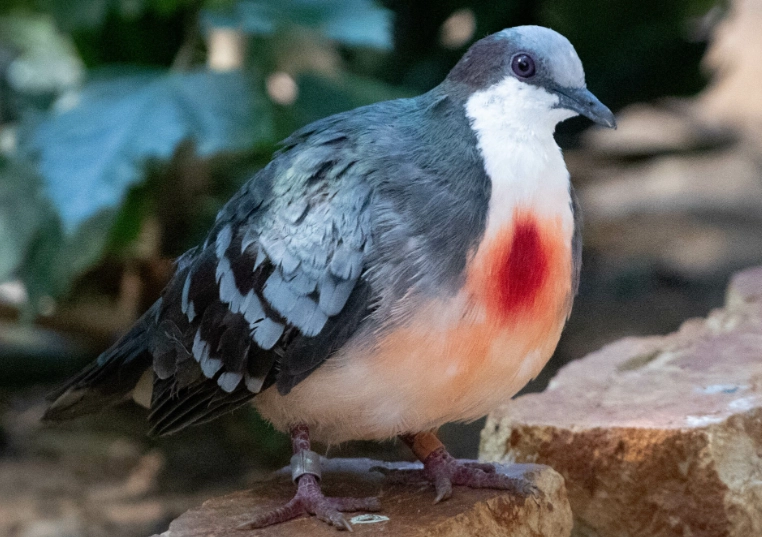
The Non-Negotiable: An indoor aviary or a very large, dedicated flight cage is the absolute minimum. We're talking dimensions measured in feet, not inches. A pair ideally should have an aviary that's at least 6 feet long, 3 feet wide, and 6 feet high. More is always better. They are strong fliers for short distances and need room to move without constantly hitting walls.
The setup inside is crucial. They are ground foragers, so the bottom should be covered with a deep, safe substrate like peat moss, coconut fiber, or untreated soil/leaf litter. This allows them to exhibit their natural scratching behavior. You must provide multiple perches at various heights, but also plenty of hiding places—real or artificial plants, wooden shelters, or half-covered areas where they can retreat and feel secure. Think dense undergrowth. A stressed Bleeding Heart Dove is a bird that will refuse to eat or breed.
Temperature and humidity matter. They come from tropical forests. A steady temperature between 70-80°F (21-27°C) and humidity around 60-70% is ideal. In dry climates, a room humidifier near (not in) the aviary might be necessary. Good, gentle ventilation is key to prevent respiratory issues, but avoid direct, cold drafts.
The Bleeding Heart Dove Diet: What's on the Menu?
Forget just a bowl of seeds. A seed-only diet is a death sentence for these birds, leading to malnutrition and liver disease. They need variety.
In the wild, their diet is a mix of fallen seeds, small fruits, berries, and the occasional insect or invertebrate. We need to replicate that diversity. A high-quality, small-sized commercial pigeon pellet or dove mix should form the base (about 50%). This ensures they get essential vitamins and minerals.
The rest should be fresh offerings: finely chopped dark leafy greens (kale, romaine), grated carrot, broccoli florets, peas, and corn. They also relish small fruits like diced apple, pear, berries, and papaya. A crucial component is animal protein. This is often overlooked. You should regularly offer live food like mealworms, small crickets, or ant pupae (often sold as "bird ants"). Some keepers use a high-quality insectivore diet mix soaked in water. Watching a Bleeding Heart Dove hunt a mealworm is a fascinating glimpse into their natural behavior.
Always have a source of fresh, clean water available, along with grit (specifically for doves/pigeons) to aid in digestion.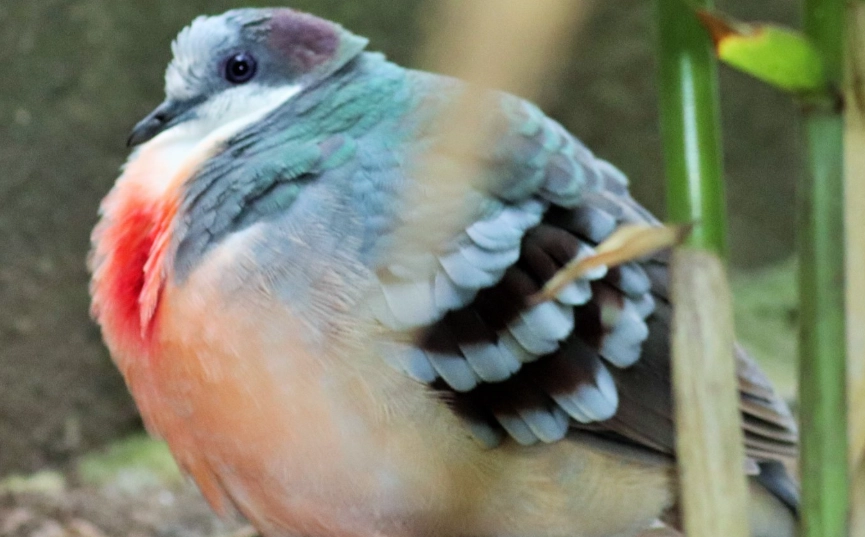
Thinking of Buying a Bleeding Heart Dove? Let's Talk Cost and Ethics
This is the part that makes most people gulp. The Bleeding Heart Dove is not a cheap bird. Due to their specific care needs, relative rarity in captivity, and breeding challenges, the price tag is high.
| Item / Consideration | Estimated Cost (USD) & Notes |
|---|---|
| Bird Itself (Captive-Bred) | $800 - $2,500+ per bird. Price varies by species (Luzon is most common), age, and breeder reputation. Wild-caught birds are cheaper, unethical, and usually sickly. NEVER buy wild-caught. |
| Initial Aviary Setup | $500 - $2,000+. This includes the large cage/aviary, perches, substrates, plants, heaters/humidifiers, food/water dishes, etc. Building your own can save money but requires skill. |
| Ongoing Monthly Costs | $50 - $150. High-quality pellets, fresh produce, live insects, substrate replacement, and utilities. |
| Veterinary Care | **Critical.** An avian-certified vet is mandatory. Initial check-ups, potential parasite treatment, and emergency care can cost hundreds. Find the vet before you get the bird. |
See what I mean? This is a significant financial commitment. The bird's price is just the entry fee. The real cost is in creating and maintaining their world.
Now, the ethics. The Luzon Bleeding-heart is listed as Near Threatened on the IUCN Red List due to habitat loss and trapping. You can check their current status on the official IUCN Red List website. This makes the role of responsible, captive breeding more important than ever. A good breeder will be transparent about their birds' lineage, provide detailed care sheets, and be available for questions. They prioritize the birds' welfare over making a sale. Always ask for proof that the birds are captive-bred, and be wary of online ads with prices that seem too good to be true.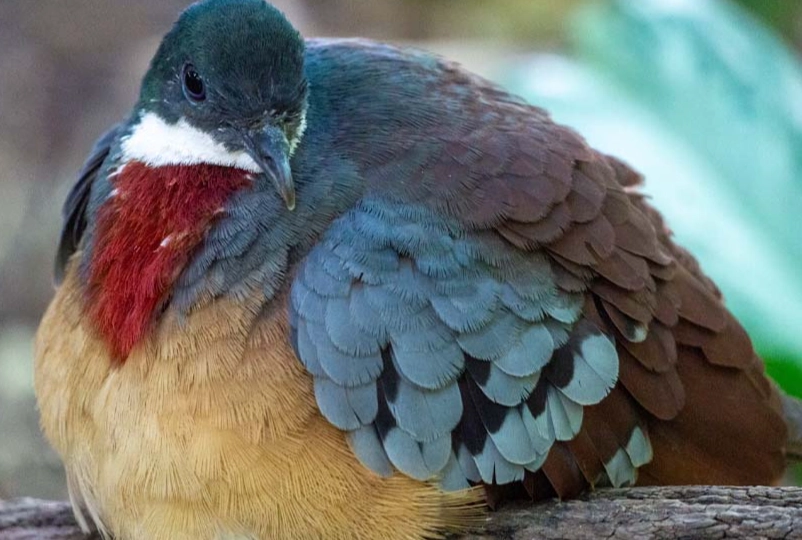
The Realities of Breeding Bleeding Heart Doves
Breeding these doves is considered an advanced avicultural achievement. It's not for beginners. They need to be perfectly settled, in optimal health, and provided with the right triggers. A bonded pair (and they do seem to form strong pair bonds) needs a spacious, planted aviary with nesting options like open-topped baskets or platforms placed in secluded, higher spots.
The female typically lays two small, white eggs. Both parents share incubation duties for about 15-17 days. The squabs (baby doves) are fed "crop milk," a nutrient-rich secretion produced by both parents, a trait shared with all pigeons and doves. They grow surprisingly quickly but will stay in the nest for several weeks.
The challenge? The parents can be easily disturbed. Too much checking, noise, or stress can lead to abandoned eggs or neglected chicks. Successfully raising a pair of Bleeding Heart Dove chicks to independence is a moment of genuine pride for a breeder, but it requires a policy of benign neglect—providing everything they need while interfering as little as possible.
Common Health Issues to Watch For
Even with perfect care, things can go wrong. Being aware of the signs is part of responsible ownership.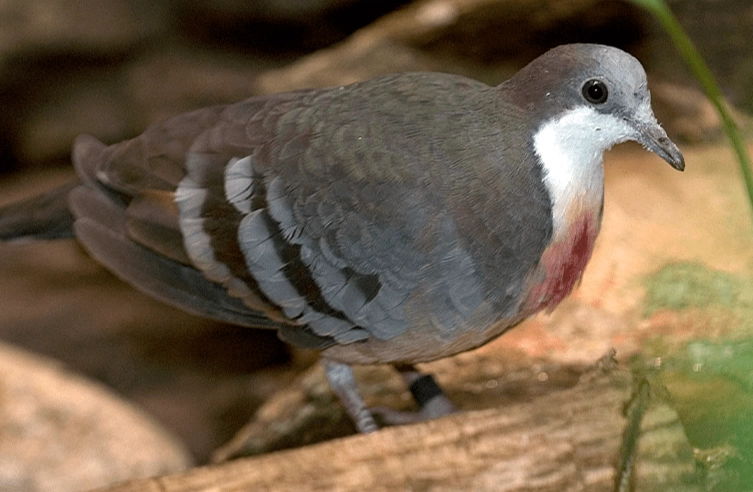
- Parasites: Both internal (worms) and external (feather mites) are common, especially if live food is used. Regular fecal checks by your vet are wise.
- Respiratory Infections: Symptoms include sneezing, nasal discharge, wheezing, and fluffed-up feathers. Often linked to drafts, low humidity, or poor ventilation.
- Injuries from Fright Flights: This is a major one. When panicked, they can fly violently into walls, leading to broken blood feathers, wing injuries, or even fatal head trauma. A calm environment is a health necessity.
- Nutritional Deficiencies: The result of a poor diet. Signs can be lethargy, poor feather quality, or weakness.
The best medicine is prevention: a stress-free, spacious environment, a superb diet, and a relationship with a qualified avian vet.
"Keeping a Bleeding Heart Dove successfully is 90% about managing their stress and 10% about everything else. If they are calm, they will thrive. If they are constantly anxious, nothing else you do will matter." – A sentiment echoed by experienced aviculturists.
Frequently Asked Questions (The Stuff You're Actually Searching For)
Are Bleeding Heart Doves good pets?
This is the big one. I have to be honest: for most people, no. They are not "pets" in the interactive, companion animal sense like a dog or even a parrot. They are specialist aviary birds, best suited for experienced bird keepers who derive joy from creating a naturalistic environment and observing natural behaviors from a respectful distance. If you want a bird to handle and play with, look elsewhere.
How long do they live?
In captivity, with exemplary care, a Bleeding Heart Dove can live 10 to 15 years, sometimes longer. This is a long-term commitment, not a short-lived novelty.
Can they live with other birds?
Extreme caution is needed. They are generally peaceful but very shy. Housing them with more active, aggressive, or even just larger birds is a recipe for disaster. They are often kept in species-specific aviaries or with other similarly gentle, ground-dwelling doves (like certain quail-doves), provided the space is large enough to establish territories.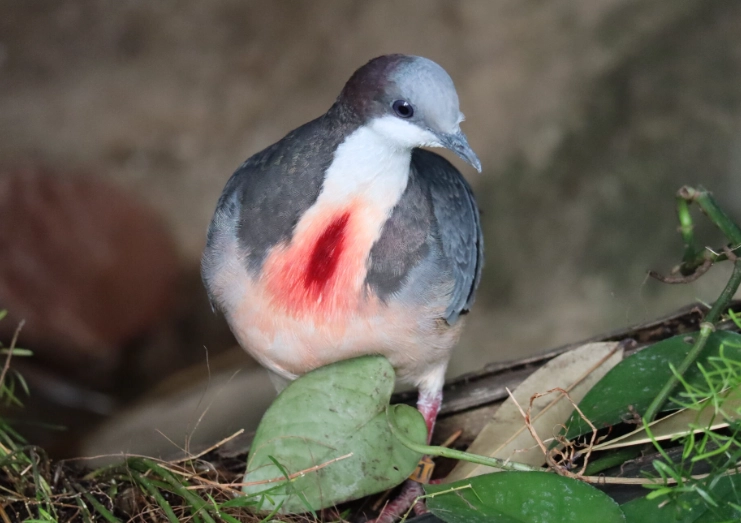
Is the red patch actually blood?
No. It is 100% feathers. The coloration comes from pigments in the feathers themselves. It does not bleed or change based on health.
Where can I see one in person?
Your best bet is a reputable zoological park with a dedicated birdhouse or aviary. Many major zoos keep them because they are such stunning display animals. The Smithsonian's National Zoo or the San Diego Zoo, for example, have excellent bird collections and may house them. Seeing one in a professional, conservation-oriented setting is the best way to appreciate them without the responsibility of ownership.
Final Thoughts: A Bird to Admire, Not Necessarily to Own
Writing this, I keep circling back to that initial shock of their appearance. The Bleeding Heart Dove is a masterpiece of nature. Its value lies in its existence, in the fragile Philippine ecosystems it inhabits, and in the dedication of conservationists and truly expert breeders who work to ensure its future.
For the vast majority of us, the most ethical and rewarding way to connect with this bird is through education, support of habitat conservation, and visiting them in institutions that can provide the scale of care they require. If, after all this, you are still determined to provide a home for one, your journey starts with years of experience with easier birds, extensive research, and building a relationship with the small community of expert breeders. It's a path for the few, not the many.
And maybe that's how it should be. Some of nature's most stunning creations are meant to be wild wonders, not living room decorations. The Bleeding Heart Dove, with its phantom wound and gentle soul, reminds us of that delicate line.



Comments
Leave a Comment