Quick Guide
- What Does a Jacobin Bird Actually Look Like? Spotting the Key Features
- The Life and Times of a Jacobin: Behavior, Diet, and That Famous Cuckoo Trick
- Where in the World Do You Find This Bird? Range and Migration Secrets
- Can You Attract a Jacobin Bird to Your Garden?
- Frequently Asked Questions (The Stuff You Really Want to Know)
- Conservation Status and Final Thoughts
Let's talk about a bird that looks like it just walked out of a bird version of a formal gala. You know the one. Stark black and white, a slicked-back crest that would make any 1950s greaser proud, and a stare that means business. That's the Jacobin bird for you. Its real name is the Pied Crested Cuckoo, or Clamator jacobinus if you want to get scientific about it. But honestly, "Jacobin" just fits its dramatic vibe better, doesn't it?
I remember the first time I saw one. It wasn't in some fancy nature reserve. It was perched on a telephone wire in a dusty suburb, looking completely out of place and utterly majestic. That contrast stuck with me. Most people who spot this black and white cuckoo have a dozen questions right away. Is it a woodpecker? Why does it look so fancy? What's with that call? And the big one – is it the one that leaves its eggs in other birds' nests?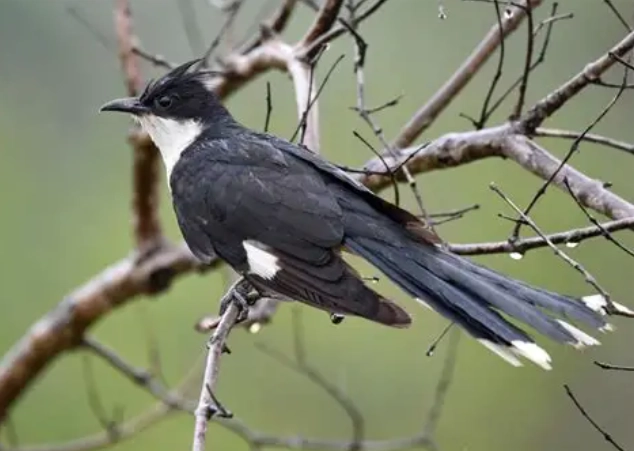
Quick Snapshot: The Jacobin bird is a medium-sized, strikingly patterned cuckoo found across Africa and Asia. It's famous for three things: its bold black-and-white (or sometimes brown-and-white) plumage, its tall, spiky crest, and being a brood parasite – meaning it tricks other birds into raising its young. A real character of the avian world.
What Does a Jacobin Bird Actually Look Like? Spotting the Key Features
Identifying this bird is usually pretty straightforward once you know what to look for. It's not shy about its looks.
The classic adult Jacobin is a study in contrast. Its head, crest, back, and tail are a glossy black. Then, bang, a huge white patch on each wing that's impossible to miss in flight. The underparts are pure white, from the throat all the way down. That crest is the real showstopper, though. It's not always fully erect; sometimes it's just a hint of a peak, other times it's a full-blown punk-rock mohawk. The bill is stout and black, and the eyes are a dark brown that can look almost black from a distance.
Here’s where it gets tricky, and a lot of guides gloss over this. There's a color morph. Not all Jacobin birds are black and white. Some individuals, particularly in drier regions, are a rich chestnut brown on the upperparts instead of black. The first time I saw a brown one, I was completely thrown off. I thought it was a different species! But the pattern is identical – brown instead of black, with the same large white wing patches and white underparts. It’s just a different palette.
| Feature | Description | Why It Matters for ID |
|---|---|---|
| Primary Color (Morph 1) | Glossy black head, back, tail, and crest. | The "classic" look. Creates stark contrast. |
| Primary Color (Morph 2) | Rich chestnut brown head, back, tail, and crest. | Often confused for a different bird. Know the pattern, not just the color. |
| Wing Patches | Large, unmistakable white patches on the wings. | The single best flying-field mark. Visible from below and above. |
| Crest | Prominent, spiky, can be raised or lowered. | Distinguishes it from other black-and-white birds like drongos. |
| Underparts | Clean white from chin to undertail. | No streaking or barring, unlike many other cuckoos. |
| Size & Shape | Slender, about the size of a myna (30-33 cm). Long tail. | Gives a sleek, elongated silhouette on perches. |
Juveniles are a whole other ball game. They lack the crisp contrast. They're mostly brownish-grey above with vague pale edges to the feathers, and their underparts are a dirty white or buff with faint barring. The crest is barely there. Honestly, a young Jacobin bird is one of the most confusing young birds to identify. You almost need to see it with a parent to be sure, or hear its distinctive begging call.
Telling It Apart From Its Look-Alikes
This is crucial. You see a black and white bird with a crest and think "Jacobin!" Hold on. Could be a couple of others.
The Chestnut-winged Cuckoo is the master of disguise. It's incredibly similar but has a few giveaways: a broad white band across the back of its neck (a "nuchal collar"), chestnut wings (not black/brown with white patches), and a graduated tail with white tips. It's also much rarer in many areas. I've mixed them up before in poor light, and it's frustrating.
Then there's the Black Drongo. Common, all black, forked tail, no crest, no white wing patches. But from a distance, a silhouette can fool you. The drongo's tail shape is the dead giveaway.
The Jacobin Cuckoo (same bird, different name) is also sometimes confused with hawks or cuckooshrikes in flight due to its shape, but that bold wing pattern is its ID card.
The Life and Times of a Jacobin: Behavior, Diet, and That Famous Cuckoo Trick
Okay, so you can spot it. What does it actually do?
Let's start with the voice. If you hear a loud, piercing, whistled "pee-pee-pee-pee-piu-piu" or a more rapid "kwi-kwi-kwi-kwi-kwi," look up. That's the Jacobin bird's call. It's insistent, carries for miles, and is often delivered from a high, exposed perch. It's not what I'd call musical, but it's full of character. During breeding season, they get really vocal, and you might hear a duet between a pair.
They're primarily insectivores. Caterpillars are a big favorite, especially the hairy ones other birds avoid. They also take grasshoppers, beetles, and occasionally even small fruits. They forage actively in the canopy of trees and shrubs, sometimes fluttering out to catch a flying insect. I've seen them hopping on the ground after a rain shower, picking off stranded insects, which feels oddly undignified for such a regal-looking bird.
The Brood Parasitism Thing: Yes, it's true. Like many cuckoos, the Jacobin bird is an obligate brood parasite. It doesn't build a nest. The female finds the nest of a host bird – usually babblers, like the Jungle Babbler or the Common Babbler in India – and, in a moment of incredible stealth, lays a single egg in it. She might even remove one of the host's eggs to keep the count right. Then she flies off, leaving the unsuspecting foster parents to do all the work.
The Jacobin chick has a rough start. It usually hatches a bit earlier than the host chicks. And then, in one of nature's harsher strategies, the newborn Jacobin bird chick, blind and mostly naked, will instinctively heave the host's eggs or chicks out of the nest. It's brutal to witness. The host parents, driven by their own instincts, then feed the gigantic, demanding cuckoo chick as it grows to be much larger than them. The chick even mimics the begging calls of a whole brood of babbler chicks to stimulate more feeding. It's a fascinating, if morally ambiguous, survival strategy.
You have to wonder, how do the host birds not notice? Sometimes they do. They may abandon the nest or even build a new floor over the strange egg. But often, the Jacobin's egg is a masterclass in mimicry. It's usually blue-green, closely matching the eggs of its preferred babbler hosts. Evolution is a relentless game of trickery and detection.
Where in the World Do You Find This Bird? Range and Migration Secrets
The Jacobin bird has a huge range, but it's not evenly distributed. It's a bird of two continents.
In Africa, it's widespread south of the Sahara, avoiding only the deepest rainforests and the driest deserts. You can find it from Senegal across to Ethiopia and all the way down to South Africa. Here, it's often a resident or partial migrant, moving locally with the rains and food availability.
In Asia, its story is more dramatic. It's a classic long-distance migrant. The population that breeds in the Indian subcontinent (and possibly further north) undertakes an incredible journey. After breeding around the monsoon season, they fly south across the Indian Ocean to spend the northern winter in Sri Lanka and, astoundingly, all the way to East Africa. Think about that. A bird, not much bigger than your hand, flying over thousands of kilometers of open sea. It's one of the few cuckoos known to make such a trans-oceanic migration. This makes the Jacobin cuckoo a true globe-trotter.
Their habitat is usually open woodland, forest edges, savannas, and well-wooded gardens. They like areas with scattered trees and thick shrubbery. They've adapted pretty well to human-altered landscapes. I've seen them in coffee plantations, large parks, and even on the outskirts of bustling cities, as long as there are enough trees and insects around.
Personal Note on Seasons: If you're in India and want to see one, your best bet is during the summer monsoon months (roughly June to September). That's when they're most vocal and obvious, defending territories and looking for host nests. In southern Africa, they're more visible after the summer rains. Timing is everything.
Can You Attract a Jacobin Bird to Your Garden?
This is a common hope, but we need to be realistic. You can't really "attract" a Jacobin bird in the way you attract sparrows or finches with a feeder. They're insectivorous and parasitic, so birdseed and nest boxes won't work.
But you can make your space more inviting for them to pass through or even hunt in. Think of it as creating a Jacobin-friendly pit-stop.
- Go Pesticide-Free: This is the number one rule. If you spray your garden to kill all insects, you're killing the Jacobin's food source. Let some caterpillars live on your plants. A few chewed leaves are a small price for hosting such a cool bird.
- Plant Native Trees and Shrubs: Native plants support native insects, which in turn support insect-eating birds. Create layers – tall trees for perching and nesting (for their hosts, too!), medium shrubs for foraging, and dense thickets for cover.
- Provide Water: A bird bath or a shallow pond is a magnet for all birds, especially in dry areas. A Jacobin bird will definitely appreciate a drink and a bath.
- Welcome the Hosts: If you have babblers, bulbuls, or other potential host species nesting in your garden, you're increasing the tiny chance a female Jacobin might scope out the area. Don't disturb active nests.
The truth is, seeing a Jacobin is often a matter of luck and being in the right habitat. But by gardening for wildlife, you increase the odds for it and countless other fascinating creatures.
Frequently Asked Questions (The Stuff You Really Want to Know)
Let's tackle some of the most common, and sometimes quirky, questions people have about this bird.
 So, there you have it. More than just a pretty face in black and white.
Conservation Status and Final Thoughts
The good news is, the Jacobin bird is currently listed as Least Concern by the IUCN. Its range is massive, and it appears to be coping reasonably well. But "Least Concern" doesn't mean "no concern." The migratory Asian populations face all the standard hazards: habitat loss in both breeding and wintering grounds, collisions with structures, and the ever-present threat of climate change disrupting the delicate timing of monsoons and insect hatches.
What can you do? Support broader bird conservation efforts. Organizations like BirdLife International work on protecting critical habitats across flyways. Be a mindful observer. If you're lucky enough to have a Jacobin cuckoo in your area, consider reporting your sighting to a local bird atlas or eBird. This citizen science data is invaluable for tracking populations over time.
At the end of the day, the Jacobin bird is a reminder of how intricate and surprising nature is. It's a stunning visual spectacle, a master of vocalization, a transcontinental traveler, and a cunning strategist all rolled into one. It challenges our simple ideas of how birds "should" behave. Whether you admire it or are slightly unnerved by its parenting choices, you can't ignore it. Next time you hear that sharp, whistling call from a treetop, take a moment to look. You might just lock eyes with one of the most charismatic characters in the bird world.

Comments
Leave a Comment