So, you're wondering what is the rarest rat in the world. It sounds like a simple question, right? Just name the one. But here's the thing – the world of rare rodents is messy, complicated, and full of creatures most people have never heard of. It's not like picking the tallest mountain or the biggest ocean. When you dig into it, "rarest" can mean different things. Is it the one with the smallest known population? The one seen the fewest times by scientists? The one clinging to the tiniest fragment of habitat? Pinpointing a single winner is a challenge, and honestly, the candidates are all in such dire straits that arguing over who's "number one" feels a bit beside the point. They all need help.
I remember first getting curious about this. I was reading about island extinctions, and it hit me how many unique rat and mouse species just vanish, often without anyone even noticing. They don't have the star power of a tiger or a panda. They're rodents. To many, they're pests. But that view misses the incredible story of adaptation and survival these animals represent, and the tragedy when they slip away. Finding a clear answer to "what is the rarest rat in the world?" forces you to confront that hidden biodiversity crisis.
Let's get our terms straight: When scientists and conservationists talk about "rats" in a broad sense, they're often referring to various species within the family Muridae, which includes true rats (genus Rattus), but also many other genera of mouse and rat-like rodents from around the globe. Our search for the rarest has to include this wider family. We're not just talking about the brown rat's fancy cousins.
The Challenge of Defining "Rarest"
Before we meet the contenders, we have to acknowledge the hurdle. Saying something is the "rarest" implies we know how many are left. For some of these animals, that's a giant guess. They live in remote, inaccessible places—dense mountain forests, tiny isolated islands, treacherous limestone karsts. Some are known only from a handful of specimens collected decades ago. Have they hung on? Have they dwindled? Nobody knows for sure.
The best tool we have is the IUCN Red List of Threatened Species, the global authority on conservation status. It uses categories like Critically Endangered (CR), Endangered (EN), and Vulnerable (VU). For our purposes, the rarest candidates will almost always be tagged as Critically Endangered (Possibly Extinct) or have population estimates in the mere dozens. But even the IUCN sometimes has to use a question mark. The data is just that sparse.
Another layer is the difference between "rare" and "endangered." A species can have a very small range (be geographically rare) but be relatively secure within that range. The rarest of the rare are those with both a tiny range and a tiny, declining population. That's the danger zone.
A quick reality check: The search for the single rarest rat is ongoing. New species are still being discovered in remote areas (sometimes just before their habitat is destroyed), and others sadly slip towards extinction unobserved. The list below represents the strongest known contenders based on current, albeit often limited, scientific knowledge.
Top Contenders for the Title of World's Rarest Rat
Alright, let's meet the animals. These are the species that make conservationists' hearts skip a beat. I've tried to synthesize information from scientific publications, IUCN assessments, and reports from conservation NGOs. It's a sobering list.
The Vangunu Giant Rat (Uromys vika) – The Elusive Tree-Dweller
This one is a poster child for modern discovery and immediate peril. The Vangunu giant rat was only formally described by science in 2017. Think about that. In the 21st century, we're still finding massive, kilogram-sized rats that were completely unknown to science! It lives on just one island: Vangunu, in the Solomon Islands. Locals knew about it (they called it vika), but scientists searched for years without proof until a single individual was found after a logging operation felled a tree.
Why is it a top contender for what is the rarest rat in the world? Its known habitat is a tragically small patch of forest, estimated at less than 80 square kilometers, and that forest is being aggressively logged. The scientists who described it have struggled to find more individuals. Its entire world is a few hillsides. It's a classic case of a species evolving in isolation on an island, becoming incredibly specialized (it seems to chew into nuts with incredibly hard shells), and then having its tiny home destroyed. The current population is unknown but presumed to be extremely low and declining. If commercial logging continues on Vangunu, this magnificent rodent could be gone almost as soon as we found it.
It's stories like the Vangunu rat's that get to me. We spend billions exploring space (which is cool, don't get me wrong), but we still have giant, charismatic mammals hiding on our own planet, waiting to be found just in time to count them down to zero. It feels like a race against time we're often losing.
Christmas Island's Ghosts: The Bulldog Rat and Maclear's Rat
This is a tale of extinction, and a warning. When discussing the rarest, we must also remember those we've lost, as their stories inform the plight of those still hanging on. Christmas Island, an Australian territory in the Indian Ocean, was once home to two endemic rat species: the Bulldog Rat (Rattus nativitatis) and Maclear's Rat (Rattus macleari). They were abundant when the island was discovered. Then, around the turn of the 20th century, black rats jumped off arriving ships. With them came a trypanosome parasite—a disease to which the black rats were resistant, but the native rats had no defense.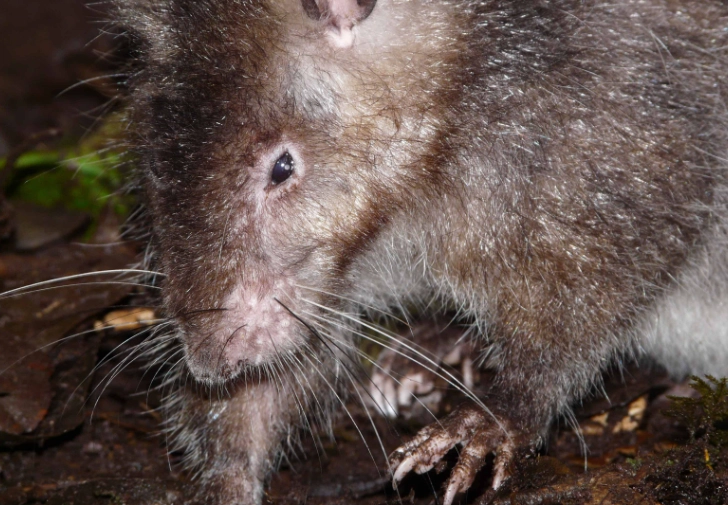
The die-off was catastrophic and fast. Both species were declared extinct by 1908. They're not contenders for the current title of rarest rat, but they are the ultimate cautionary tale. Invasives—other species, diseases—can wipe out an isolated population in a heartbeat. This threat hangs over every single island-dwelling rare rat today.
A sobering thought.
The Cloudrunners of the Philippines (Carpomys spp.) – Canopy Phantoms
Heading to the Philippines, we find another group of elusive, tree-loving rodents. The genus Carpomys, often called cloud rats or cloudrunners, includes some of the world's most mysterious mammals. They are large, fluffy, and arboreal, living high in the mossy, montane rainforests of Luzon. Two species are particularly relevant:
- Luzon Short-nosed Rat (Carpomys melanurus): Known from only a handful of specimens collected over a century ago from Mount Data and Mount Pulag. Despite surveys, it hasn't been reliably recorded in decades. The IUCN lists it as Critically Endangered (Possibly Extinct). Its forest habitat has been severely reduced. Is it still up there, hidden in a remote canopy? No one knows.
- Luzon Hairy-tailed Rat (Carpomys phaeurus): Slightly better known than its cousin, but still incredibly rare. It's been found in a few more locations but always in very low numbers. It remains Critically Endangered due to ongoing habitat loss from logging and agriculture expanding into the highlands.
When you ask an expert about the rarest mammals in Asia, these cloudrunners always come up. They are the definition of elusive. Their potential extinction would mean the loss of a unique evolutionary branch—large, arboreal, herbivorous rodents filling an ecological niche that's just bizarre and wonderful.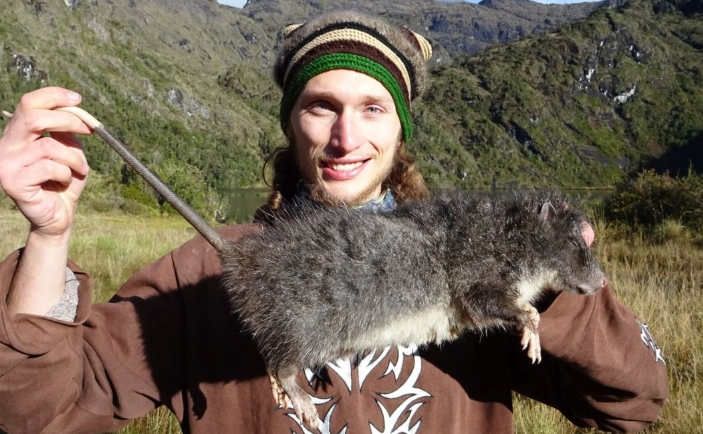
The Santo Stefano Lizard (Podarcis siculus sanctistephani) Wait, No... The Santo Stefano Field Mouse!
Here's a fascinating and slightly weird case. On the tiny Italian islet of Santo Stefano (near Ventotene), there lived a population of field mice, a subspecies of the common European wood mouse (Apodemus sylvaticus). By the 1960s, they were gone, likely outcompeted or predated by introduced black rats. So, they're extinct, right? End of story.
But this story is often twisted in pop science articles. In a classic case of telephone-game error, you'll sometimes see claims that the "Santo Stefano Lizard" was driven extinct by the introduction of mice. They got the predator and prey reversed! The real story is about the mouse being wiped out by invasive rats. It's a minor error, but it highlights how even simple facts about these rare creatures get muddled. The Santo Stefano mouse is gone, but its story is a microcosm of the invasive species problem that threatens so many others.
So, who wins the "rarest" title? If we go by the species with the most precarious, confirmed existence on the smallest sliver of habitat, the Vangunu Giant Rat (Uromys vika) has a very strong claim. It is known from one incredibly threatened location, with a population likely in the low hundreds at best. The Luzon Short-nosed Rat might be rarer (or extinct), but the data is just too old. For a species we know is currently fighting for survival in a quantifiably tiny space, Vangunu's rat is a prime answer to what is the rarest rat in the world.
Why Are These Rats So Incredibly Rare?
It's not a coincidence. The paths to extreme rarity follow a few grim, predictable roads, especially for rodents.
| Threat Factor | How It Works | Example Species Affected |
|---|---|---|
| Extremely Limited Habitat (Endemism) | Evolves on a single island, mountain range, or cave system. Nowhere else to go. | Vangunu Giant Rat (one island), many Philippine cloud rats (single mountains). |
| Habitat Destruction & Fragmentation | Logging, agriculture, mining, or development directly destroys the small home they have. | All of them. This is the number one driver. |
| Invasive Species | Introduced rats, cats, mongooses, and snakes prey on adults and young or outcompete for food. Diseases from invasives can be devastating. | Christmas Island rats (disease), many Pacific island rodents (predation). |
| Natural Disasters | A single hurricane, volcanic eruption, or severe drought can wipe out a population confined to one small area. | Any species on a small tropical island or isolated forest patch. |
| Low Reproductive Rate | Some larger, specialized rodents don't breed like common rats. They may have small litters infrequently, making it hard to recover from population dips. | Giant tree-dwelling rats like Uromys and Carpomys. |
Look at that table. For an animal living on a single island, a logging contract signed in a faraway office is an existential threat. A few pet cats going feral is a catastrophe. Their margin for error is zero. This is why conservation efforts for such species are so intense and so difficult.
What's Being Done to Save Them? (Spoiler: It's an Uphill Battle)
So, is it all doom and gloom? Not entirely, but the work is hard, underfunded, and often relies on dedicated local and international groups.
- Habitat Protection: The absolute first step. Establishing and, more importantly, properly enforcing protected areas is key. For the Vangunu rat, the fight is to get the remaining forest declared off-limits to logging. Organizations like the International Union for Conservation of Nature (IUCN) and local partners lobby governments and work with communities.
- Scientific Research: You can't protect what you don't understand. Researchers use camera traps, acoustic monitors, and careful trapping surveys to try and find these elusive animals, estimate their numbers, and learn about their ecology. This data is crucial for making a conservation case.
- Invasive Species Eradication & Control: On islands, this is a massive but sometimes successful undertaking. Removing rats, cats, or goats from an entire island is a huge logistical operation, but it has allowed native species on many islands globally to rebound. It's less feasible on large, inhabited islands but can work on smaller offshore islets.
- Captive Breeding: A last resort, but sometimes necessary. If the wild population is down to a handful, capturing some to establish a safety-net population in zoos or breeding centers can buy time while habitat is restored. It's expensive and doesn't always work, especially for poorly understood species.
The frustrating part is that rodent conservation rarely gets the spotlight or funding that cuter, furrier megafauna does. I have huge respect for the people in the trenches doing this work. They're fighting for animals most people will never see and many might instinctively dislike.
Common Questions About the World's Rarest Rats
Let's wrap some of the loose ends and related curiosities you might have.
Has the "rarest rat" ever been a pet or in a zoo?
Almost certainly not. These are not, and should never be, pet trade animals. They are wild, often stressed by human contact, and have highly specific dietary and environmental needs. A few of the less-rare-but-still-endangered species, like some of the larger, more stable Philippine cloud rats, are held in a handful of specialist zoos (like the Bristol Zoo Gardens in the UK or the Singapore Zoo) for conservation breeding and education. The contenders for the absolute rarest title are far too vulnerable for that.
What about the "Giant Rat of Flores" or other cryptids?
Ah, folklore and cryptozoology! Places like the Indonesian island of Flores have legends of giant rats. Interestingly, Flores does have a truly giant rodent: the Flores Giant Rat (Papagomys armandvillei), which can weigh over a kilogram. It's large and impressive but is listed as "Near Threatened," not critically endangered. So while giant, it's not the rarest. Cryptid stories often have a kernel of truth—a memory of a real, now-rare or extinct animal. They can sometimes guide scientists to new discoveries, like the Vangunu rat story shows.
Could climate change affect these rare rats?
In a word, yes. For montane species like the Philippine cloudrunners, warming temperatures could push their suitable climate zone higher up the mountain until there's nowhere left to go—a process called "mountaintop extinction." For island species, rising sea levels and increased storm intensity could devastate coastal forests and reduce already tiny habitats further. It's a threat multiplier, making their already precarious situations even worse.
How can I help or learn more?
You're already helping by learning! Awareness is the first step. From there, you can support organizations that do on-the-ground conservation work in hotspots like the Solomon Islands, the Philippines, or on islands globally. Look for groups with a proven track record in habitat protection and community engagement. Avoid sensationalist "save one animal" campaigns. Effective conservation is about saving ecosystems. Reading and sharing accurate information from sources like the IUCN Red List or scientific conservation journals makes a difference.
Every species has a right to exist. Even the ones that scurry.
So, what is the rarest rat in the world? It's a moving target, a title held by a creature most of us will never see, living a secret life in a disappearing forest. It might be the Vangunu Giant Rat, clinging to its last trees. It might be a cloudrunner in Luzon, already gone. The answer is less important than the underlying truth: our planet is still home to astonishing, fragile life forms, and their fate is inextricably linked to our choices. The search for the rarest rat isn't just a trivia question; it's a window into the silent, ongoing struggle for survival happening in the world's forgotten corners.
Comment