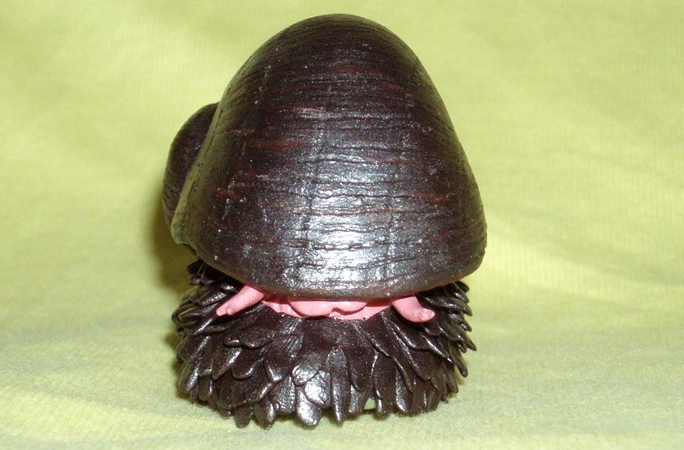
You know, when I first saw a picture of a scaly-foot gastropod – scientists call it Chrysomallon squamiferum, but let's stick with the friendlier name – I was completely stunned. It looks like something a fantasy artist dreamed up. A snail. With a foot covered in iron sulfide scales. Living in one of the most hellish environments on the planet, the deep-sea hydrothermal vents. My first thought wasn't about its diet, honestly. It was "How on earth does this thing even exist?" But then, the question naturally follows. If it's living in pitch darkness, miles under the ocean surface, far away from any sunlight or normal plant life... what does it eat? What's on the menu at the bottom of the sea? The Short Answer (But Stick Around for the Good Stuff): Scaly-foot gastropods don't "eat" in the conventional sense. They don't have a functional gut or digestive system like you or I do. Instead, they rely entirely on billions of symbiotic bacteria living inside a special organ called the trophosome. These bacteria are the real chefs. They take toxic chemicals spewing from the Earth's crust – hydrogen sulfide – and convert it into organic carbon, i.e., food. The snail then absorbs this food directly from its bacterial farmers. So, in a way, you could say a scaly-foot gastropod's diet is... chemical energy, processed by its internal tenants. You can't talk about what something eats without understanding where it lives. Imagine a place with no light. Crushing pressure that would flatten a submarine. Water temperatures that swing from near freezing to over 750°F (400°C) in a matter of inches. And the water is loaded with dissolved metals and poisonous gases like hydrogen sulfide. Sounds like a nightmare, right? For most life, it is. But for the scaly-foot gastropod and its kin, it's home sweet home. These hydrothermal vents, often called "black smokers" or "white smokers," are cracks in the seafloor where superheated, mineral-rich water from beneath the Earth's crust gushes out. The entire food web here is built not on sunlight, but on the chemical energy in these fluids. It's a chemosynthetic ecosystem, standing in stark contrast to every sun-drenched, photosynthetic ecosystem we're familiar with on land and in the shallow seas. This is the critical context. When you ask "what do scaly-foot gastropods eat," you're really asking how an animal survives in a place where the sun's energy is a distant memory. The vent is their sole source of everything. I remember reading about the discovery of hydrothermal vent ecosystems in the late 1970s. It completely overturned the textbook definition of life's requirements. Before that, everyone thought all life ultimately depended on the sun. Finding these lush, weird communities in the abyss was like discovering life on another planet. It still blows my mind. Okay, here's the core of it all. The scaly-foot gastropod has evolved one of the most extreme forms of symbiosis on Earth. It's an obligate symbiosis, meaning the snail cannot survive without its bacteria, and the bacteria have a pretty sweet, protected life inside the snail. The snail's body has been radically redesigned for this partnership. Its digestive system – the parts that would normally process ingested food – has basically been abandoned. It's tiny and non-functional. Instead, a massive, gland-like organ called the trophosome takes up about 10% of the snail's entire body volume. Think of it as a sprawling, internal farm. This trophosome is packed with billions of gammaproteobacteria. These aren't pathogens; they're essential partners. Here’s how the dinner service works: So, the bacteria get a safe, mobile home with a constant, reliable supply of their favorite chemicals. The snail gets a lifetime supply of pre-cooked meals delivered straight to its cells. It's the ultimate win-win, a closed-loop kitchen in the deep dark. Think about the alternative. If a scaly-foot gastropod had to actively graze or hunt for food in the sparse vent environment, it would be a huge energy drain. The vent plumes are unpredictable, food particles are scarce. By farming bacteria inside itself, it has a consistent, efficient, and protected food source. All it has to do is position itself in the right flow of vent fluid – not too hot, not too cold, just the right chemical mix – and its internal chefs do the rest. Let's get specific. If we break down the "diet" of a scaly-foot gastropod into its fundamental components, it looks nothing like a food pyramid you'd recognize. See? No plankton. No detritus. No algae. Their entire nutritional intake is dissolved gases and minerals, processed through a microbial middleman. This is why the question "what do scaly-foot gastropods eat" is so fascinating—it reframes what "food" even means. Since they're not chasing prey or scraping rocks, feeding is more about positioning. Scaly-foot gastropods are usually found clustered on the sides of active vent chimies, in what's called the "mixing zone." This is the narrow Goldilocks region where the scalding, chemical-rich vent fluid meets and mixes with the cold, oxygenated deep-sea water. Too close to the vent orifice, and the fluids are too hot and too toxic (even for them). Too far away, and the concentrations of hydrogen sulfide drop too low to be useful. They use their strong, muscular foot (the one with the iron scales) to cling to the rock in this perfect spot. Their large gill is perpetually sampling the water, absorbing the needed cocktail of sulfide and oxygen. It's a sedentary lifestyle, centered around real estate. The best "feeding ground" is a stable piece of rock in that perfect chemical gradient. Competition for these spots might be fierce, which could explain their impressive armor – it's not for hunting, but for defending their prime dining table from predators like crabs and other snails. Fun (and Slightly Gross) Thought: Some researchers have playfully called this setup the world's most extreme form of "takeout." The snail doesn't move to get food. It stays put, and the "food delivery"—the vent fluid—flows right past it. It just has to reach out (with its gill) and grab the right ingredients from the stream. It's helpful to see how the scaly-foot gastropod's strategy stacks up against its neighbors. Not all vent animals use the same dinner menu. The scaly-foot gastropod sits firmly in the "symbiotic farmer" category. It's not at the top of a food chain; it's part of a foundational, self-contained production loop. Understanding what scaly-foot gastropods eat isn't just a quirky zoology fact. It has profound implications. First, it's a model for extreme biological adaptation. Studying how their hemoglobin handles sulfide, how their cells interface with bacteria, and how they regulate this delicate partnership can teach us about the limits of animal life. It pushes the boundaries of what we consider possible. Second, it has astrobiological significance. If life can thrive on chemical energy in the crushing, dark depths of our own ocean, it raises the possibility of similar life existing in the subsurface oceans of moons like Europa or Enceladus. The scaly-foot gastropod's diet is a blueprint for a sun-independent biosphere. Finally, it highlights the incredible, often hidden, diversity of life on Earth. These snails were only discovered in 2001 near the Kairei vent field in the Indian Ocean. They remind us that we still have so much to learn about our own planet. Their unique status has led to conservation calls. The International Union for Conservation of Nature (IUCN) lists them as Endangered, primarily due to the threat of future deep-sea mining disrupting their fragile, vent-dependent homes. You can read their assessment on the IUCN Red List website (search for Chrysomallon squamiferum). For authoritative, detailed scientific descriptions of the species and its symbiosis, resources like the Smithsonian National Museum of Natural History or deep-sea research portals from institutions like Woods Hole Oceanographic Institution are invaluable. The original species description was published in scientific journals, and much of the ongoing research is documented through such channels. I have to admit, part of me finds the scaly-foot gastropod's existence vaguely reassuring. In a world that often feels fully mapped and understood, here's this armored, iron-clad snail farming bacteria on toxic fumes at the bottom of the sea, completely redefining a basic concept like "eating." It's a wonderful reminder of nature's relentless creativity. So, let's circle back to the burning question we started with: What do scaly-foot gastropods eat? They don't eat a thing. Not in any way we normally mean. They have turned their body into a bio-reactor, a living refinery that partners with bacteria to convert poisonous volcanic chemicals into the substance of life itself. Their diet is hydrogen sulfide, carbon dioxide, oxygen, and minerals—all processed through a symbiotic alchemy we call chemosynthesis. It's a stark, beautiful, and efficient solution to the problem of survival in one of Earth's most extreme environments. The next time you see that iconic image of the iron-shelled snail, you'll know it's not just a cool-looking oddity. It's a testament to the power of partnership and a walking, clinging example of how life finds a way to make a meal out of the most unlikely ingredients imaginable. The deep sea is full of these stories. The scaly-foot gastropod's diet is just one chapter, but it's a chapter that fundamentally changes how we think about food, energy, and animal existence.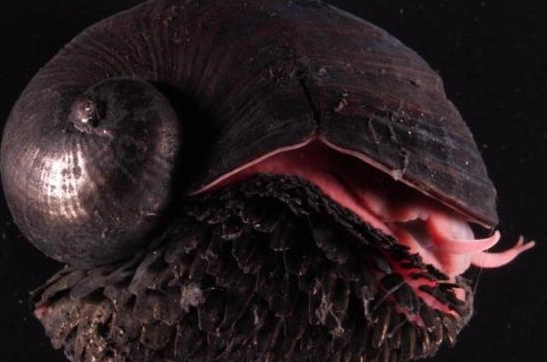
Quick Guide to This Article
The Restaurant at the End of the World: Hydrothermal Vent Ecosystems
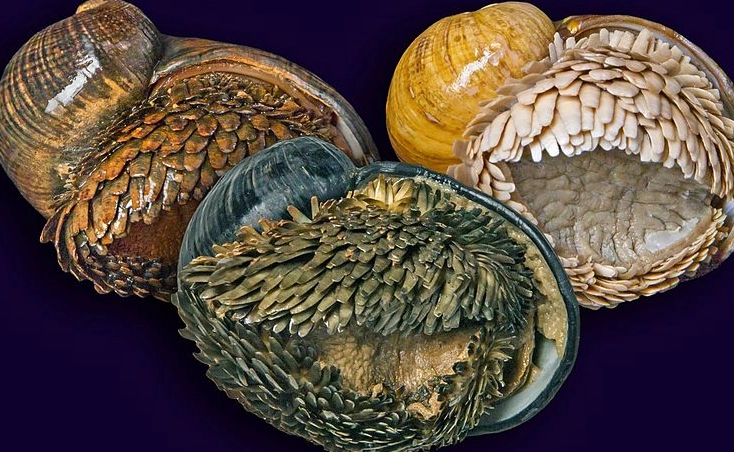
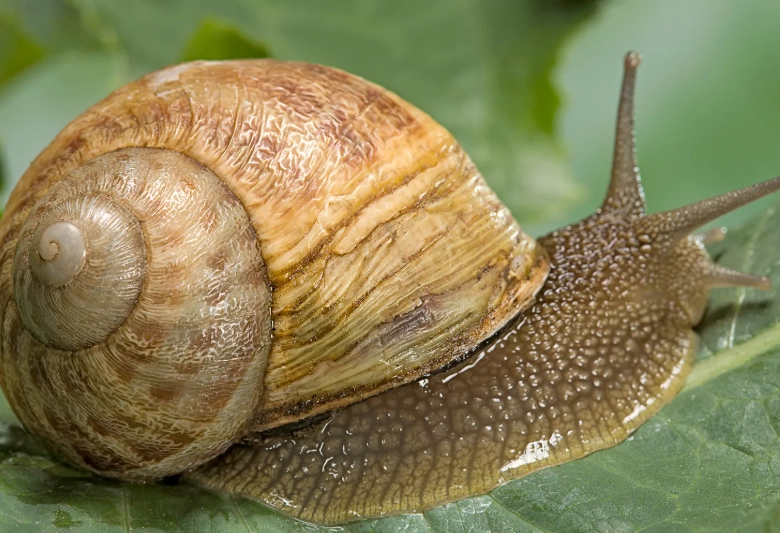
The Real MVPs: Symbiotic Bacteria and the Trophosome
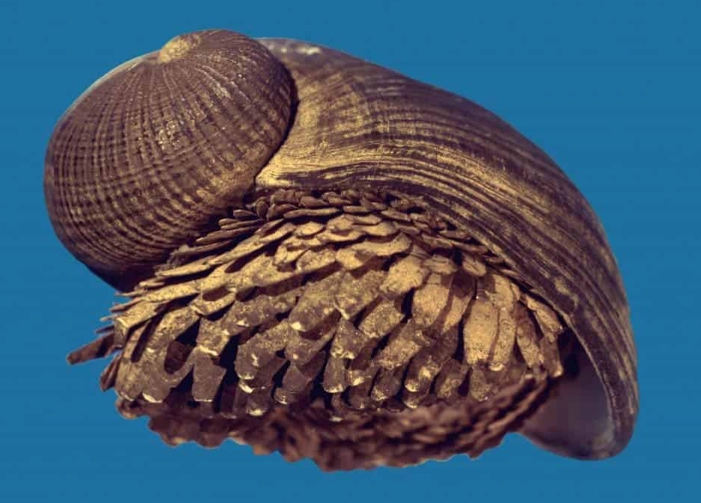
Why This Beats "Normal" Eating
What's On the Menu? A Breakdown of the Scaly-Foot Diet
Dietary Component
Source
Role / Function
Unique Note
Primary Energy Source
Chemical energy from hydrogen sulfide (H₂S) oxidation.
Drives the entire chemosynthetic process performed by the symbiotic bacteria. This is the equivalent of "calories."
The snail itself doesn't metabolize the sulfide; its bacteria do. The snail is just the highly adapted delivery system.
Carbon (The "Building Blocks")
Carbon dioxide (CO₂) dissolved in its blood and tissues.
Raw material used by bacteria to synthesize all organic molecules (sugars, fats, proteins).
This CO₂ comes from the environment and potentially from the snail's own respiration, creating an efficient internal cycle.
Oxygen
Seawater surrounding the vent chimney.
Essential electron acceptor for the bacterial chemical reaction (oxidizing sulfide). Also for the snail's own aerobic respiration.
The snail's hemoglobin is a marvel—it binds oxygen without being deactivated by sulfide, a feat human hemoglobin can't manage.
Nutrients (N, P, trace metals)
Mineral-rich hydrothermal vent fluid.
Used by bacteria for growth and biosynthesis. Elements like nitrogen and phosphorus are crucial for making proteins and DNA.
The vent fluid is a natural mineral soup, providing everything needed in a dissolved form that can be absorbed.
How They "Feed": Behavior and Habitat Choice

Comparing Diets: Scaly-Foot vs. Other Vent Creatures
Common Questions About the Scaly-Foot Gastropod Diet
The Bigger Picture: Why This Diet Matters for Science
Wrapping Up: The Core of the Matter
It's not eating. It's hosting.
Q: Can scaly-foot gastropods eat anything else if their bacteria die?
A: Almost certainly not. Their digestive system is vestigial (greatly reduced). They are obligate symbionts. No bacteria means no way to produce food from vent chemicals, which means starvation. Their survival is inextricably linked to their microbial partners.
Q: Do the baby snails (larvae) eat the same way?
A> This is a fantastic question with a tricky answer. The larvae are planktonic and free-swimming for a period. They likely do not have the full bacterial suite yet and may need to absorb dissolved organic matter from the water or even have a small, functional gut to eat microbes. It's a vulnerable phase. They must find a suitable vent site, settle down, and then acquire their essential bacterial partners from the environment to transform into the adult form. The specifics of larval nutrition are still an active area of research.
Q: How does this relate to their iron sulfide scales? Is that part of their diet?
A> Not directly, but it's connected to their environment. The scales (sclerites) are made of iron sulfides (greigite and pyrite). The iron and sulfide come from the vent fluids. While not a food source, the scales are a byproduct or an adaptation built from the same abundant materials in their "kitchen." They likely serve as armor. It's a brilliant example of using locally sourced materials for construction.
Q: If they rely on vents, what happens when a vent goes cold?
A> It's a death sentence for that local population. Hydrothermal vents are not permanent; they eventually become inactive. This is why dispersal via larvae is so critical. The larvae must find new, active vents to colonize. The entire species' survival depends on a network of active vents within larval swimming range. It's a precarious existence.
Comment