Let's be honest, when you first see a picture of the scaly-foot gastropod (scientists call it Chrysomallon squamiferum), you're not really thinking about its retirement plan. You're staring at this alien snail, covered in iron sulfide plates like some medieval knight's armor, living in total darkness next to superheated water jets at the bottom of the Indian Ocean. It's wild. But once the "wow" factor wears off, a really practical question pops up: what's the lifespan of this thing? How many years does this incredible creature get to wander around its volcanic neighborhood?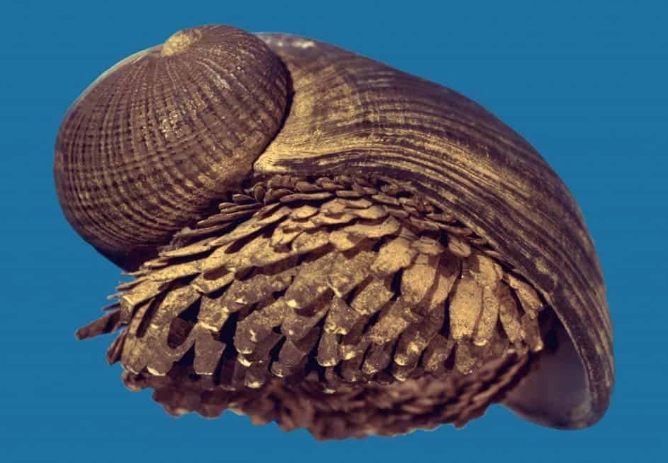
I got obsessed with this question a while back. I was reading a popular science article that called it "the world's most metal snail" (which is a great tagline), but when it came to the scaly-foot gastropod lifespan, the article just shrugged. "Unknown," it said. "Hard to study." That wasn't good enough for me. So, I started digging into the scientific papers, the expedition reports, and chatting with folks who breathe this deep-sea stuff. What I found is a story that's less about a simple number and more about the incredible challenge of deep-sea biology itself.
Figuring out the lifespan of any deep-sea creature is like trying to guess the age of a tree by looking at a single leaf from a drone flying at 10,000 feet. It's really, really hard. For the scaly-foot snail, it's a puzzle wrapped in an enigma, sitting under 2,800 meters of ocean pressure. But we're not completely in the dark. By piecing together clues from its biology, its environment, and comparisons with similar animals, we can make some educated guesses that are far more interesting than just saying "we don't know."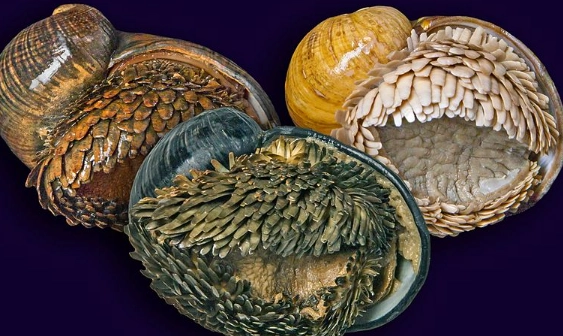
Why Is the Scaly-foot Gastropod Lifespan Such a Tough Nut to Crack?
You can't just drop a birthday cake down to them. Seriously, the obstacles to getting a clear scaly-foot snail life expectancy are huge. It's not like studying lobsters in a tank or tracking elephants on the savannah.
First, the access problem. Their home is ridiculously remote and expensive to reach. We're talking about specialized research vessels like the R/V Falkor or R/V Atlantis deploying submersibles like Alvin or remote-operated vehicles (ROVs). Each dive costs a small fortune and is planned years in advance. You get a few hours of observation or sample collection on a good day. You can't set up a long-term camera to watch generations of snails grow up.
Then there's the biology. These snails don't have growth rings like a tree or a fish otolith that we can easily count. Their iconic iron-sulfide sclerites (the scales) might hold clues, but the process of how they form and whether they record annual cycles is still being researched. You can't tag and recapture them like you do with sharks. The environment is too chaotic, and the tags probably wouldn't survive.
Finally, there's the simple fact that we haven't been able to keep them alive in captivity for extended periods. Recreating the precise conditions of a hydrothermal vent—the pressure (about 280 atmospheres), the specific chemical soup, the temperature gradients, the bacterial symbionts—is a monumental challenge. Aquariums like the Monterey Bay Aquarium Research Institute (MBARI) have done amazing work with deep-sea creatures, but the scaly-foot gastropod remains an elusive guest. Without captive observation, direct lifespan measurement is off the table.
The Best Scientific Clues We Have About Their Life Cycle and Age
So, if we can't watch a snail from birth to death, what can we do? Scientists are clever. They use indirect methods, and for the scaly-foot gastropod, a few key studies give us our best glimpses.
The most important clues come from population studies. Researchers collect samples (ethically and minimally, given their endangered status) and measure them. They look at the size distribution. If you find a population with lots of small individuals and a few large ones, you can start to model growth rates and potential age. Work published in journals like Nature Communications and data from expeditions cataloged by institutions like the Smithsonian Institution and the Woods Hole Oceanographic Institution have been crucial here.
One of the most cited pieces of evidence comes from studies of their reproductive biology. They're slow. Really slow. They have a low reproductive rate. They produce relatively few, large eggs that develop directly into miniature snails (no free-swimming larval stage that gets scattered by currents). This strategy, called lecithotrophy, is often associated with longer-lived, K-selected species. Think elephants or whales—animals that invest heavily in a few offspring. A snail using this strategy in a stable, but extreme, environment like a vent field is a strong indicator that their scaly-foot gastropod lifespan isn't measured in just a couple of years.
Then there's the metabolism argument. Life in the deep sea, away from the sun's energy, is often slow-paced. Food isn't abundant in the classic sense (no phytoplankton blooms here), but it's constant if you're tied to a vent. The snail's entire existence is built around a slow, steady trickle of chemical energy from its symbiotic bacteria. This points to a low metabolic rate. And in biology, low metabolism often correlates with longer life. Naked mole-rats, some deep-sea fish, and giant tortoises are classic examples.
Putting the Pieces Together: A Plausible Lifespan Range
Alright, let's synthesize. We have a snail that:
- Lives in a stable, yet extreme, niche.
- Has a slow, direct-development reproductive strategy.
- Likely has a low metabolic rate.
- Shows population structures suggesting slow growth.
When marine biologists put this puzzle together, the emerging consensus points toward a significantly longer lifespan than your average garden snail. Garden snails might live 2-5 years. The scaly-foot gastropod is playing a different game.
The most common educated estimate you'll find in credible scientific discussions is somewhere in the range of decades. Some researchers cautiously suggest a minimum of 10-20 years, with the potential to live much longer—perhaps even exceeding 50 years or more. A 2019 review on vent fauna in the journal Proceedings of the Royal Society B hinted that many vent endemic species, due to their stable environments and slow life histories, could have lifespans an order of magnitude longer than their shallow-water relatives.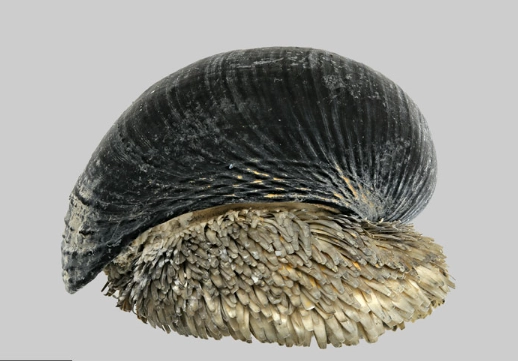
Let's be clear: this is not a proven fact. It is a robust hypothesis based on the best available evidence. The true scaly-foot gastropod lifespan could be 15 years. It could be 80. We just don't have the stopwatch data yet.
What Could Cut the Scaly-foot Gastropod Lifespan Short?
Living next to a natural blowtorch isn't exactly a safe suburban existence. Even if their natural lifespan potential is decades, several factors can cut that life tragically short. This is where the scaly-foot gastropod lifespan intersects directly with modern threats.
Vent Collapse or Shutdown: Hydrothermal vents are not permanent. They can become inactive. The plume of hot, chemical-rich water stops. When that happens, the entire local ecosystem collapses. The bacteria die. The snails starve. A population that might have lived for decades can be wiped out in a relatively short time by a geological hiccup. It's a reminder that their stable environment is stable only on a human timescale; geologically, it's fleeting.
Predation and Competition: Even in the deep, there's a food chain. While their iron armor deters some predators, they are not invincible. Other vent inhabitants, like crabs and some fish, may prey on them. Competition for prime real estate—the perfect spot where warm vent fluid and cold seawater mix—is fierce. Losing your spot could mean death.
The Human Factor - Deep-Sea Mining: This is the big one. The very thing that makes the scaly-foot gastropod unique—its iron-sulfide armor and its mineral-rich home—puts it in the crosshairs. The polymetallic sulfide deposits around hydrothermal vents are targets for potential deep-sea mining. The International Seabed Authority (ISA) has issued exploration contracts for areas containing vent fields. The impact of mining would be catastrophic. It wouldn't just shorten individual lifespans; it would obliterate entire populations instantly through habitat destruction. The noise, sediment plumes, and chemical pollution could affect vast areas. You can read more about the conservation status and threats on the IUCN Red List, where the scaly-foot gastropod is listed as Endangered—the first deep-sea mollusk to receive this status.
It's a sobering thought. We're just beginning to understand what a long, slow life this snail might lead, and we're simultaneously creating the machinery that could end it in an afternoon. The potential scaly-foot gastropod lifespan, a marvel of slow adaptation, meets the instant force of industrial extraction.
Comparing Lifespans: How Does the Iron Snail Stack Up?
To contextualize the scaly-foot gastropod lifespan, it helps to look at its relatives and neighbors. I put together this table to show the spectrum. It's not exhaustive, but it highlights how special our subject is.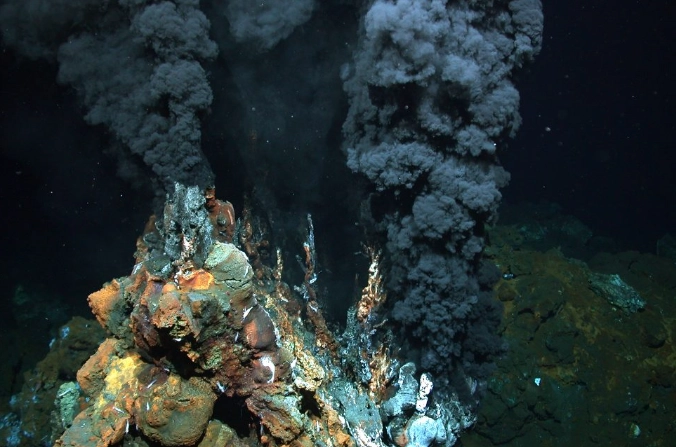
| Animal | Habitat | Estimated Lifespan | Key Notes |
|---|---|---|---|
| Scaly-foot Gastropod (C. squamiferum) | Deep-sea Hydrothermal Vents | Decades (10+ years, likely much longer) | Estimated based on life history; direct measurement impossible to date. |
| Garden Snail (Cornu aspersum) | Land, Gardens | 2-5 years | Well-studied; lifespan varies with climate and predators. |
| Great Pond Snail (Lymnaea stagnalis) | Freshwater Ponds | 1-2 years | Common model organism; shorter, faster life cycle. |
| Deep-sea Clam (Calyptogena magnifica) | Cold Seeps / Vents | 100+ years | Giant, slow-growing clam; age confirmed via shell rings. |
| Vent Tubeworm (Riftia pachyptila) | Hydrothermal Vents | Decades | Another chemosynthetic symbiotic animal; grows rapidly initially, then may live very long. |
| Ocean Quahog (Arctica islandica) | Shallow Seafloor (Cold) | 500+ years (record holder!) | Champion of longevity; age determined by counting annual bands in the shell. |
See the pattern? The deep, cold, and chemically-fed environments seem to be longevity hotspots. The scaly-foot gastropod fits right into this ecological trend. Its lifespan, while probably not matching the 500-year-old quahog, is almost certainly on the "long-lived" end of the snail spectrum. It shares more in common, life-history-wise, with a deep-sea clam than with the snail in your backyard.
That's a mind-bender, isn't it? A snail living longer than most dogs, maybe longer than some people's careers.
Frequently Asked Questions About the Scaly-foot Snail's Life
I've gotten a lot of questions from readers over time. Here are the big ones that keep coming up when people try to pin down the scaly-foot gastropod lifespan.
Have scientists ever directly measured a scaly-foot gastropod's lifespan?
No. Not even close. This is the holy grail, but we haven't achieved it. The challenges of deep-sea observation and captivity make direct measurement currently impossible. All our estimates are indirect, based on the methods described above.
Could they be immortal?
No. That's a sci-fi myth that sometimes pops up around strange deep-sea creatures. There's zero evidence for biological immortality in the scaly-foot gastropod. They age, they get worn down, they eventually die. Their lifespan is just likely much longer than we intuitively expect for a snail.
Does their iron armor help them live longer?
Indirectly, yes. The primary function of the iron-sulfide sclerites is likely defense against predators (like crabs) and possibly against the harsh chemistry of the vent fluid. By providing excellent protection, the armor reduces mortality from predation and injury. Lower mortality rates in a population are a key ingredient that allows for the evolution of longer lifespans. So, the armor doesn't slow aging at a cellular level, but it helps create the conditions where a long scaly-foot gastropod lifespan is an evolutionary advantage.
Why does knowing their lifespan even matter?
This is a great question, and it gets to the heart of conservation. Understanding an animal's life history—its growth rate, age at maturity, reproductive rate, and lifespan—is critical for protecting it. If a snail takes 10 years to reach maturity and only reproduces every few years, a mining operation that wipes out a population is causing a loss that could take centuries to recover from, if recovery is even possible. The potential length of the scaly-foot gastropod lifespan makes it incredibly vulnerable to sudden disturbances. It's not a weed that grows back quickly; it's an old-growth forest of the deep sea.
- The scaly-foot gastropod lifespan is not known precisely and is incredibly difficult to measure.
- Strong scientific evidence points to a long lifespan, likely measured in decades.
- This estimate is based on its slow reproduction, stable vent environment, and low metabolic likely rate.
- Major threats, especially deep-sea mining, could destroy populations long before their natural lifespan is reached.
- The mystery of its exact age is a powerful reminder of how much we have yet to learn about the deep ocean.
Final Thoughts: More Than Just a Number
Chasing the number for the scaly-foot gastropod lifespan teaches you something. It teaches you humility. Our planet still holds mysteries that resist easy answers. This snail, living in darkness, building its own armor from the Earth's fluids, operates on a timescale that challenges our quick-study methods.
Maybe we'll never know the exact number. Maybe a future breakthrough in deep-sea technology or a new method for reading its sclerites will give us the answer. But for now, the enduring uncertainty is part of the creature's magic. It forces us to think in terms of deep time, slow life, and fragile stability.
The most important thing we can do is ensure that whatever that lifespan is—15 years, 50 years, 100 years—these incredible animals have a fighting chance to live it out. Protecting their vent habitats from destructive activities isn't just about saving a cool-looking snail; it's about respecting a life history shaped over millennia to thrive in one of Earth's most extreme corners. The story of the scaly-foot gastropod lifespan is still being written, and we have a responsibility to make sure the next chapter isn't the last one.
The deep sea keeps its secrets well. This is one of them.
Comment