In This Guide
- First Things First: Is It Even Legal?
- Understanding the Golden Brushtail Possum: Not a Cat, Not a Dog
- The Daily Grind: What Does Caring for a Golden Brushtail Possum Pet Actually Involve?
- Behavior and Temperament: Will It Be Your Cuddly Friend?
- The Ethical Question: Should You Even Do This?
- Golden Brushtail Possum Pet: Your Burning Questions Answered
- The Final Verdict: Who Is This Actually For?
That photo. You've seen it, right? A fluffy, wide-eyed creature with fur the color of honey and caramel, staring right at the camera. It looks like a plush toy crossed with a tiny fox. The caption usually says something like "my golden brushtail possum" or "meet our new family member." And just like that, the idea gets planted. Could a golden brushtail possum pet be for you?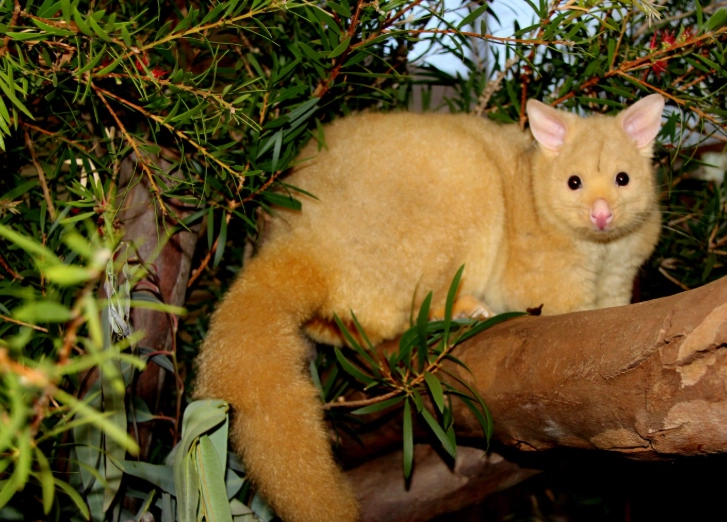
I get it. I've been fascinated by exotic pets for years, and the allure of something so unique is powerful. But here's the thing nobody tells you in those adorable Instagram posts: the gap between the dream and the daily reality of caring for a wild marsupial is about as wide as the Australian outback.
This isn't a guide to selling you on the idea. Frankly, for 95% of people, it's a terrible idea. This is a deep, sometimes messy dive into what it actually means to consider a golden brushtail possum as a pet. We'll cover the legal minefield, the ethical dilemmas, the nocturnal chaos, the specialized diet, and the vet bills that could make your eyes water. My goal isn't to be a buzzkill, but to be the voice of reason you might not find in a pet store or a breeder's ad.
Let's start with the most critical question, the one that overrules all cuteness.
First Things First: Is It Even Legal?
This is the non-negotiable starting point. You cannot just decide to get a golden brushtail possum pet and order one online. In most of the world, it's flat-out illegal. These are native Australian animals, and Australia has extremely strict laws about exporting its wildlife.
Even within Australia, the rules are a complex patchwork that varies by state and territory. You can't just go into the bush and take one. In some areas, like Victoria, keeping native wildlife as pets is generally prohibited without specific permits, usually reserved for wildlife carers or educational institutions. Other states might have slightly more permissive rules for certain species, but the barrier to entry is high.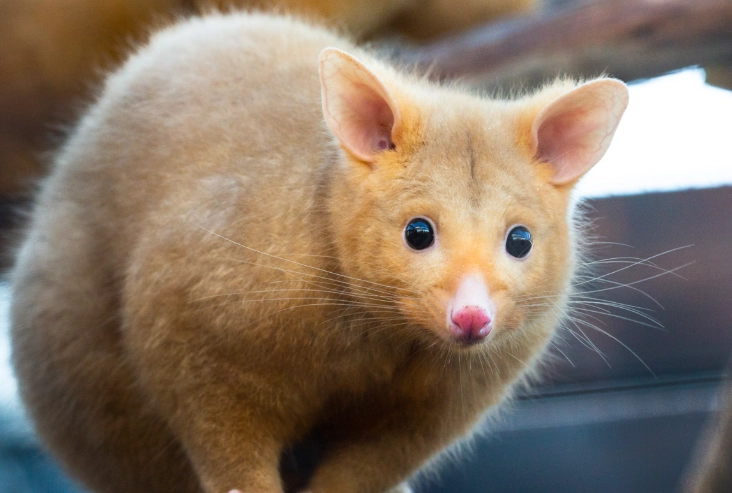
You'll need to check with your state government's Department of Environment or Primary Industries. For example, the NSW Environment website has detailed information on native animal licensing. The Victoria Wildlife website is another crucial resource. This isn't a suggestion; it's a mandatory first step. Getting this wrong means having your beloved pet confiscated and facing significant fines.
Let's assume, for argument's sake, you are in a rare position where it is legal with the correct permits. The next hurdle isn't paperwork; it's biology.
Understanding the Golden Brushtail Possum: Not a Cat, Not a Dog
The common brushtail possum (Trichosurus vulpecula) is a staple of Australian suburbs. The "golden" variety is a color morph, a genetic quirk that gives them that stunning blonde or cream-colored coat instead of the usual grey or black. It's rare in the wild because the light color makes them an easy target for predators.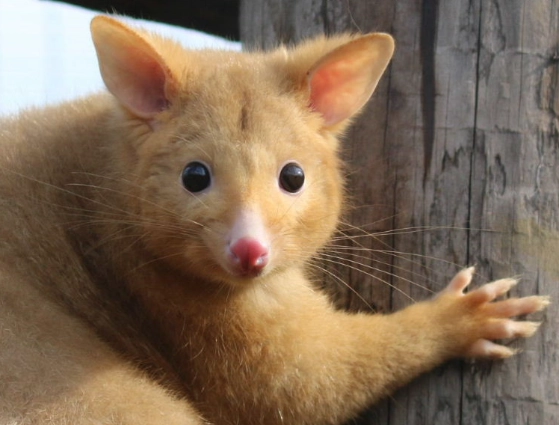
They are marsupials. Babies (joeys) develop in the mother's pouch. They are nocturnal, arboreal (tree-dwelling), and solitary in the wild. Every part of their being is designed for a life in the trees, foraging at night, and avoiding contact with other large animals (like us).
This leads to the first major clash with domestic life: their schedule is your nightmare.
The Nocturnal Lifestyle: Say Goodbye to Quiet Nights
Imagine trying to sleep while a small, energetic toddler with sharp claws is having the time of its life in the next room. That's your new normal. At dusk, your golden brushtail possum pet will wake up. And I mean properly wake up. They are not subtle.
They will run, jump, climb, scratch, and investigate everything. They'll knock things over. They'll use your curtains as a climbing gym. The sound of them thumping across the floor or the ceiling of their enclosure is surprisingly loud. If you're a light sleeper or need absolute quiet to function, this alone is a deal-breaker. I spoke to a wildlife carer who had to temporarily house one, and she said the nighttime activity forced her to move its enclosure to a detached garage after just two nights.
"It's not like a hamster on a wheel," she told me. "It's purposeful, heavy movement. You can't ignore it."
The Daily Grind: What Does Caring for a Golden Brushtail Possum Pet Actually Involve?
Okay, you've accepted the legalities and the nocturnal symphony. Let's get into the nitty-gritty of daily care. This is where the Instagram filter comes off completely.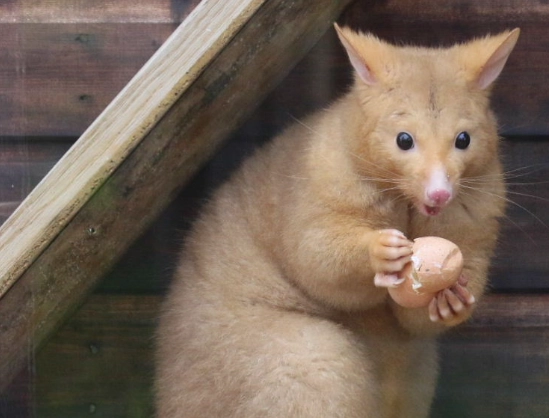
Housing: It's Not a Cage, It's an Aviary
You cannot keep a brushtail possum in a standard pet cage. It would be cruel. They need vertical space—lots of it. We're talking a large, walk-in aviary or a custom-built enclosure that is more like a small room.
Essential enclosure features must include:
- Immense Height: Multiple climbing levels, thick branches of varying diameters, ropes, and shelves. They need to travel vertically, not just horizontally.
- Secure Sleeping Box: A dark, enclosed, cozy nest box high up where they can sleep undisturbed during the day. This is their non-negotiable safe space.
- Escape-Proofing: These are clever, determined escape artists. Latches must be secure, wire mesh must be strong and small-gauge, and there can be no weak points.
- Environmental Enrichment: Puzzle feeders, novel objects to investigate, foraging opportunities. A bored possum is a destructive and stressed possum.
And this enclosure needs regular, thorough cleaning. Their waste has a strong, musky odor. It's just part of the deal.
Diet: Forget Pet Food Aisle
You won't find "Possum Chow" at the local store. Their diet is specific and varied. A poor diet leads to catastrophic health problems like metabolic bone disease (MBD), which is painful and often fatal.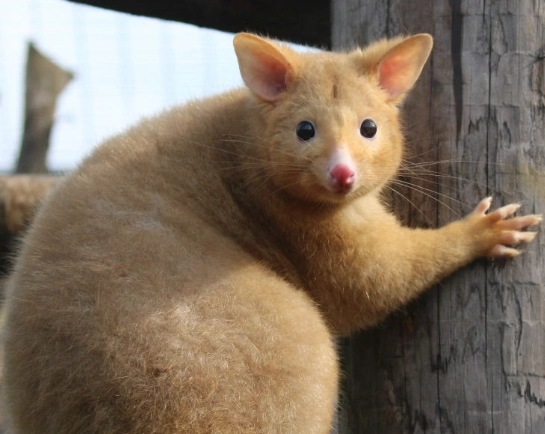
A balanced diet for a golden brushtail possum pet centers on fresh leafy greens and vegetables, supplemented with specific flowers, fruits, and protein sources. Here's a rough breakdown of what that looks like in practice:
| Food Category | Examples | Frequency & Notes |
|---|---|---|
| Staple Leafy Greens | Romaine, kale, bok choy, endive, mulberry leaves, gum leaves (eucalyptus) | Daily basis. Eucalyptus is a natural part of their wild diet and aids digestion. |
| Vegetables | Grated sweet potato, carrot, zucchini, corn, peas | Several times a week, in moderation. |
| Fruits (Treats) | Apple, pear, melon, berries, fig | 2-3 times a week only. High in sugar. |
| Protein Sources | Hard-boiled egg, mealworms, crickets, small amounts of lean cooked meat | A few times a week. Crucial for growth and maintenance. |
| Calcium Supplement | Calcium powder (phosphorus-free) | Essential. Dusted on food regularly to prevent MBD. |
| Absolutely Avoid | Avocado, onion, garlic, chocolate, caffeine, dog/cat food, high-phosphorus foods (like spinach) | These are toxic or cause severe nutritional imbalances. |
See what I mean? This isn't scooping kibble from a bag. It's daily food prep, sourcing specific leaves, and ensuring nutritional balance. It's time-consuming and requires real knowledge.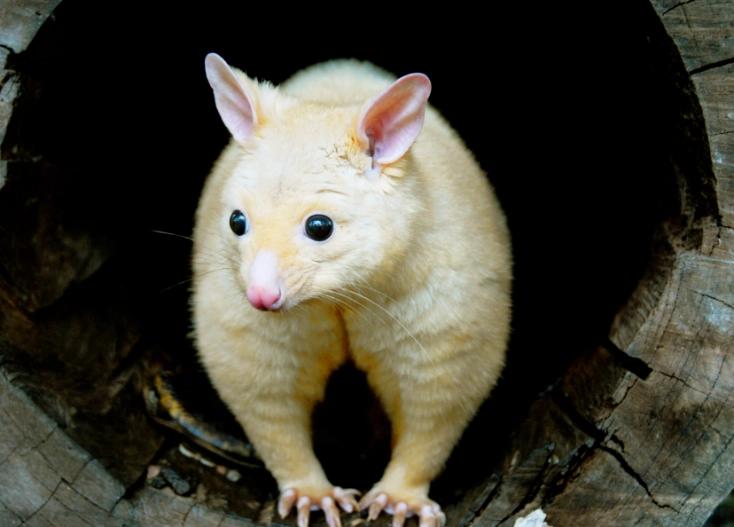
Health and Veterinary Care: Finding a Vet is Half the Battle
Your average dog-and-cat vet will not be equipped to handle a golden brushtail possum. You need an exotic animal veterinarian with specific experience in marsupials. These vets are rare, their consultations are expensive, and emergency care in the middle of the night might simply not exist in your area.
Common health issues you need to watch for include:
- Metabolic Bone Disease (MBD): From incorrect diet. Symptoms include weakness, tremors, fractures.
- Dental Problems: Their teeth grow continuously. They need tough foods to wear them down.
- Obesity: Easy to do in captivity if diet and enclosure size aren't managed.
- Stress-Related Illness: From improper housing, lack of hiding places, or too much daytime disturbance.
- Parasites: Both internal and external, requiring specialized treatments.
You must have a vet lined up before you get the animal. Full stop. The Australian Veterinary Association can be a starting point to find specialists.
Behavior and Temperament: Will It Be Your Cuddly Friend?
This is the biggest fantasy versus reality gap. A golden brushtail possum is not a domesticated animal. It is a wild animal in your home. Domestication takes thousands of generations; a hand-raised possum is simply habituated, not domesticated.
Their personality can range from timid to bold, but they are not inherently cuddly. They may tolerate handling, especially if raised from a joey, but they don't seek it out like a cat. They are more likely to see you as a strange, large source of food and sometimes-scary giant.
They have sharp teeth and claws used for defense. If scared or cornered, they will bite, and it will hurt. They can also "play dead" (enter a torpor-like state) when terrified, which is incredibly stressful for them.
They are fascinating to observe. Watching a golden brushtail possum pet navigate its environment, use its prehensile tail, and forage for food is genuinely captivating. But that's a different relationship than the one you might have with a dog.
The Ethical Question: Should You Even Do This?
This is the heavy part. Beyond legality and practicality, there's an ethical weight to keeping a wild animal as a golden brushtail possum pet.
Even with the best care, are you meeting its innate needs? Can your enclosure ever truly replicate the complexity of a home range in the bush? Are you prepared to care for this animal for its entire 10-15 year lifespan? What happens if you move, have children, or your life circumstances change?
There's also the conservation angle. While the common brushtail is not threatened, focusing on the rare golden morph for the pet trade could potentially put pressure on wild populations if not managed incredibly carefully. Your demand as a consumer has consequences.
Often, the most ethical way to engage with these animals is to support conservation efforts, volunteer with licensed wildlife rescue organizations (like WIRES in NSW), or create a possum-friendly garden. You get to help the species without taking an individual out of its natural context.
Golden Brushtail Possum Pet: Your Burning Questions Answered
Let's tackle some of the specific questions swirling in your head right now.
The Final Verdict: Who Is This Actually For?
After all this, is there anyone for whom a golden brushtail possum pet is a good fit? Possibly. It's an incredibly niche commitment for a very specific type of person.
You might be a candidate IF you:
- Live in a jurisdiction where it is 100% legal and you have secured all necessary permits.
- Have extensive prior experience with exotic, nocturnal, or arboreal animals.
- Have the financial resources for a massive custom enclosure, specialized diet, and exotic vet care for 15+ years.
- Have a lifestyle that accommodates (or even enjoys) nighttime activity and noise.
- Seek a fascinating animal to observe and care for, without expecting dog-like companionship.
- Have a backup plan for its care in your will/life plan.
For everyone else—which is almost everyone reading this—the answer is clear. The dream of a golden brushtail possum pet is best appreciated from afar. Support wildlife sanctuaries, watch documentaries, and enjoy the photos. The animal's welfare, your sanity, and your wallet will thank you.
Their beauty is undeniable. But sometimes, the most responsible way to love a wild thing is to let it stay wild.
Comment