Let's be honest, when most people picture a Basset Hound, they think of that one classic, droopy-eared, sad-eyed dog from movies or cartoons. You know the one. But here's the thing – that image usually only represents one of several distinct types. If you're asking yourself "What are the 4 types of Basset Hounds?", you've probably already noticed that not all Bassets look the same. Some have more wrinkles, some are taller, and some just have a... different vibe. It's not just your imagination.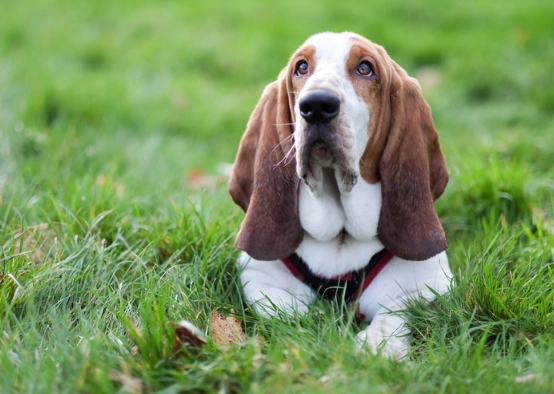
I remember talking to a friend who was devastated after bringing home a Basset puppy, only to find its personality and care needs were nothing like the older, calmer Basset her grandparents had. Turns out, they were likely different types. That's a tough lesson to learn the hard way. So, let's clear up the confusion once and for all. The four generally recognized types are the American Basset Hound, the European (or English) Basset Hound, the Basset Artésien Normand, and the Petit Basset Griffon Vendéen (often grouped in discussions, though technically a separate but closely related breed).
1. The American Basset Hound: The Classic TV Star
This is the fellow you're most familiar with. The American Basset Hound is the poster child for the breed in the US and much of the world, thanks largely to popular culture. Think of the dog from the old Hush Puppies ads or the loyal companion in cartoons. Developed primarily for show and companionship in the United States, this type was refined from European stock with a focus on a specific look.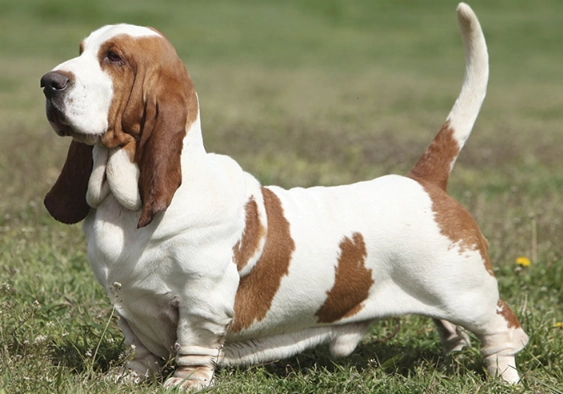
Physical Traits & The "American" Look
The American Kennel Club (AKC) sets the standard here. American Bassets are known for their extreme features. They have the most pronounced loose skin, creating those adorable wrinkles and folds, especially around the face and neck. Their ears are exceptionally long, sometimes dragging on the ground if not kept tidy. Their bone structure is heavy and substantial, giving them a more massive, ponderous appearance compared to their cousins. The front legs are often quite crooked (a trait called "crook-fronted"), which is a breed hallmark, though it requires monitoring for joint health.
Temperament & What Living With One Is Really Like
They're famously laid-back, gentle, and good-natured. They're fantastic with children and other pets due to their patient and tolerant nature. But don't mistake "laid-back" for "obedient." These dogs are scent hounds through and through. That nose rules their world. Once they catch an interesting smell, their ears seem to close up and all recall training flies out the window. They are stubborn. Not maliciously, just... determinedly independent. Training requires patience, consistency, and really good treats.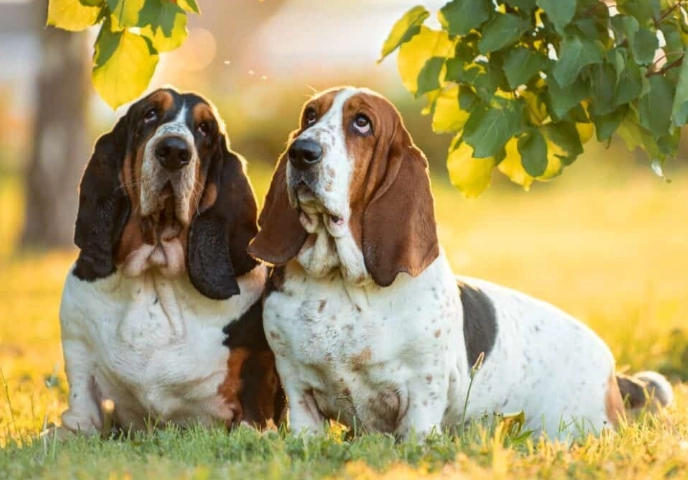
Their exercise needs are moderate. A couple of good walks on leash (always on leash – recall is not their strong suit) and some playtime will suffice. The bigger challenge is often mental stimulation. A bored Basset might express itself through howling (that deep, melodious bay) or chewing.
2. The European (English) Basset Hound: The Original Working Hound
Now, if you were to see an American and a European Basset side by side, you'd spot the difference immediately. The European type, often governed by the UK Kennel Club's (KC) standard, is generally less exaggerated. This is the type that more closely resembles the original French hunting Bassets from which all others descend.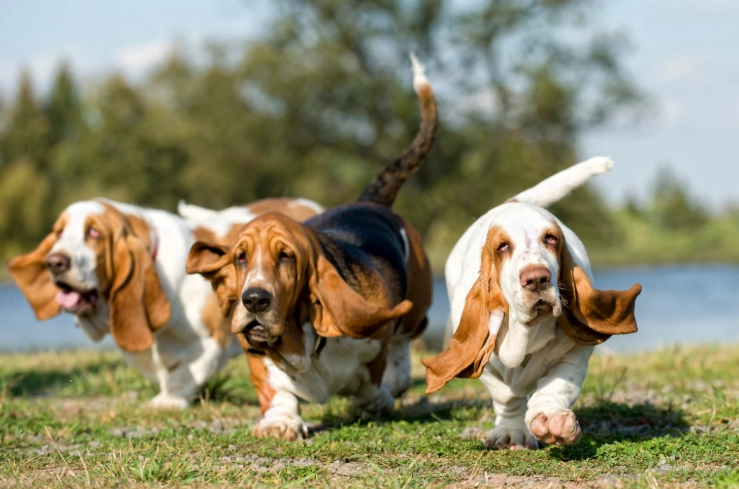
Built for Function Over Form
The European Basset is often described as more "racy" or athletic in build. They have less loose skin and wrinkling, a slightly taller stance (though still well under 15 inches), and straighter front legs. The overall impression is of a dog that is built to move efficiently over ground for long periods, which was its original job – hunting small game like rabbits and hares in packs. The head is less domed and the expression, while still gentle, is often more alert.
Temperament: A Bit More "Go" in the Slow-Mo
Because they were bred with a stronger emphasis on field work, European Bassets can sometimes display a slightly higher energy level and more persistent hunting drive than the American show lines. They are every bit as friendly and good-natured, but that scent-hound independence and perseverance might be a notch higher. This isn't a universal rule, as individual personality varies wildly, but it's a trend noted by many breeders and enthusiasts on that side of the pond.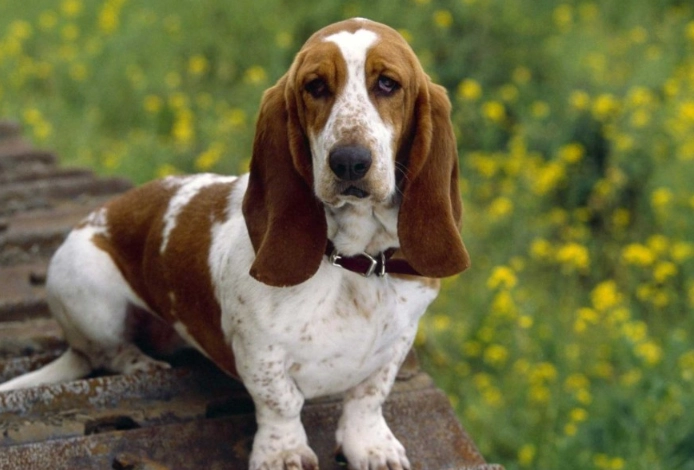
They still make wonderful companions, but an owner might need to provide a bit more structured activity and scent-work games to satisfy their instincts. A secure yard is even more critical, as their desire to follow a trail can be intense.
So, when exploring what are the 4 types of Basset Hounds, understanding this split between the heavily stylized American show type and the more functional European type is the first major fork in the road.
3. The Basset Artésien Normand (BAN): The Refined French Ancestor
Here's where we get into the roots. The Basset Artésien Normand (Artésien Normand Basset) is a direct descendant of the old French hunting bassets. In fact, it's one of the key foundation breeds that went into creating both the modern American and European Basset Hounds. The Société Centrale Canine (SCC), France's kennel club, recognizes it as a separate breed. It's less common outside of France but is cherished for its elegance and working ability.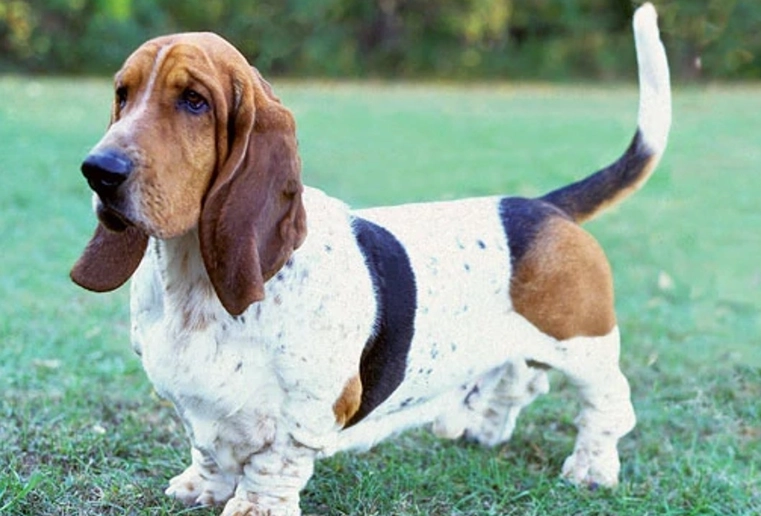
Elegance and Lightness of Build
The BAN is the most "fine-boned" and elegant of the basset types. They are lighter in structure, with a longer neck, a less massive head, and minimal wrinkling. Their legs are straighter, and their overall appearance is more streamlined. They look like what they are: a efficient, long-lasting hunting hound built for the French countryside. Their coat is typically short, fine, and comes in two-color combinations like orange and white or fawn and white.
A Hunter at Heart
Temperamentally, the BAN is first and foremost a pack hunting dog. They are lively, vocal, and possess an extremely strong hunting instinct. They are friendly but can be more reserved with strangers than the overtly gregarious American Basset. They thrive on having a job to do, even if that "job" is a long, sniff-filled hike. They are not typically recommended for first-time dog owners or those seeking a purely sedentary companion. They need an active lifestyle that engages their mind and nose.
4. The Petit Basset Griffon Vendéen (PBGV): The Shaggy Cousin
Okay, I can hear some purists saying, "The PBGV isn't a *type* of Basset Hound, it's its own breed!" And technically, they're right. The AKC and other kennel clubs classify it separately. But in any honest discussion about what are the 4 types of Basset Hounds, it must be included. Why? Because the name literally means "Small, Low, Wire-coated Griffon of the Vendée region." It shares the same low-to-the-ground build, the hunting purpose, and the general hound family traits. For a potential owner comparing low-scent hounds, leaving it out would be a disservice.
Unmistakable Appearance: The "Roughcoat"
The most obvious difference is the coat. The PBGV sports a rough, wiry, and tousled double coat that requires regular brushing and occasional hand-stripping, unlike the easy-care short coat of the other three. They have prominent eyebrows and a beard, giving them a charmingly disheveled, expressive look. They are small (13-15 inches tall) but surprisingly sturdy and agile.
Personality: A Big Dog in a Small, Scruffy Package
If the American Basset is a contemplative philosopher, the PBGV is the cheerful, mischievous adventurer. They are famously happy, bold, confident, and brimming with energy. They are less prone to the stubborn, plodding resistance of the smooth-coated Bassets and more likely to bounce around with persistent curiosity. They are incredibly social, love everyone, and have a voice that is higher-pitched but no less enthusiastic.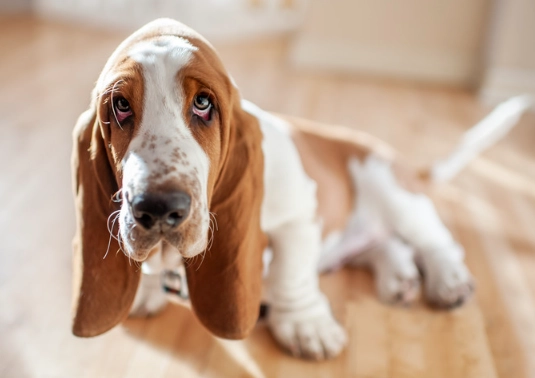
Their exercise and mental stimulation needs are the highest of the four. A PBGV left to its own devices in a boring environment will find trouble, guaranteed. They are brilliant escape artists and relentless explorers. But for an active person or family who wants a portable, funny, and engaging hound, they are hard to beat.
Side-by-Side Comparison: Choosing Your Basset Type
Let's put it all together. This table breaks down the core differences to help you visualize which of the four types of Basset Hounds might align with your life.
| Trait | American Basset Hound | European Basset Hound | Basset Artésien Normand | Petit Basset Griffon Vendéen |
|---|---|---|---|---|
| Primary Origin/Purpose | US Show & Companion | UK/Europe Show & Field | France, Field Hunting | France, Field Hunting (Small Game) |
| Build & Look | Heaviest, most wrinkled, crook-fronted, very droopy | More athletic, less wrinkle, straighter legs | Lightest, most elegant, fine-boned, minimal wrinkle | Small, sturdy, rough/wire coat, bearded, expressive |
| Energy & Drive | Low to Moderate. Champion napper. | Moderate. Can switch to "hunt mode." | Moderate to High. Persistent hunter. | High. Cheerful, busy, always exploring. |
| Trainability | Stubborn. Motivational (food) training needed. | Stubborn. Slightly more biddable in field. | Independent. Trains best for hunting tasks. | More biddable but easily distracted. Fun to train. |
| Grooming Needs | Low (brush weekly, clean ears/folds often) | Low (brush weekly, clean ears/folds) | Low (brush weekly, clean ears) | High (regular brushing, hand-stripping 2-3x/year) |
| Ideal For | Families, relaxed homes, first-time hound owners seeking a mellow friend. | Active families, those interested in scent work, less exaggerated look. | Active, experienced owners, hunting/sport homes, purists. | Very active owners/families, those who enjoy grooming, want a "clown." |
| Potential Challenge | Stubbornness, obesity, ear/back issues. | Strong scent drive, potential for escape. | High prey drive, may be vocal/reserved. | High energy, vocal, grooming commitment. |
Looking at this, it becomes clear that answering "what are the 4 types of Basset Hounds" isn't just about listing names. It's about understanding four different canine lifestyles packaged in a low-slung body.
Common Questions & Concerns (The Stuff You Really Want to Know)
Which of the 4 types of Basset Hounds is best for apartment living?
The American Basset often gets this nod because of its lower energy. They are quiet indoors (barring the occasional bay) and are happy with shorter walks. However, their potential for loud baying can be an issue in thin-walled buildings. The PBGV, with its higher energy, is generally a poorer fit unless you have an exceptionally active daily routine.
Are all Basset Hounds prone to the same health problems?
Generally, yes, but severity can vary. All share a risk due to their structure: intervertebral disc disease (IVDD) in the long back, hip/elbow dysplasia, ear infections (those glorious ears trap moisture), and bloat. The heavier-built American type may be more prone to joint issues and obesity. The straighter-legged European and BAN types might have a slight edge in joint health. Responsible breeding from health-tested parents is critical for any type.
Which type is the easiest to train?
"Easy" is a relative term with scent hounds. They are all independent thinkers. The PBGV is often considered the most willing to engage and please, making training feel more cooperative, even if they are easily distracted. The American Basset's famous stubbornness can make basic obedience a test of patience. For all types, short, positive, reward-based sessions work best. Forget harsh methods; they'll just shut down.
I want a Basset for hunting/field trials. Which type should I look for?
Look directly at lines bred for that purpose. In the US, this would be field-bred American Bassets or European imports. The Basset Artésien Normand is the specialist here. A show-bred American Basset from pet lines will likely lack the drive and stamina for serious field work. Connect with hunting clubs and specialized breeders.
Is shedding a big problem with all four types?
The three smooth-coated types (American, European, BAN) shed moderately year-round, with seasonal "blowouts." Regular brushing helps manage it. The PBGV's wiry coat sheds less visibly, but the dead hair can get trapped in the undercoat, causing mats if not brushed out. So, the PBGV requires more active grooming input to prevent problems, even if you see less hair on your sofa day-to-day.
Ultimately, the question of what are the 4 types of Basset Hounds leads you to a more important one: which of these wonderful, nose-driven, charismatic characters is the right partner for the next 10-12 years of your life? It's not about finding the "best" one, but the best match.
Do your homework. Meet breeders of different types. Talk to owners. See the dogs in person. That soulful gaze might be universal, but the life behind it can be surprisingly different. Whether it's the dignified couch potato, the athletic hunter, the elegant ancestor, or the shaggy little comedian, one of them is waiting to leave paw prints on your heart and probably a trail of drool on your floor.
Comment