Quick Guide
- What Exactly Is a Glaucus Atlanticus? Breaking Down the Basics
- The Blue Dragon's Diet and Its Incredible (and Dangerous) Defense
- Habitat and Distribution: Where to Find the Blue Dragon
- The Life Cycle and Reproduction of Glaucus Atlanticus
- Glaucus Atlanticus in the Home Aquarium: A Terrible Idea
- Comparing the Blue Dragon: A Quick Look at Similar Creatures
- Frequently Asked Questions About the Blue Dragon Sea Slug
- Conservation Status and Ecological Role
Let's be honest, the first time you see a picture of the Glaucus atlanticus, your brain short-circuits a little. Is it a tiny, forgotten dragon from a fantasy novel? A piece of elaborate jewelry washed ashore? Nope. It's a sea slug. But calling it just a "sea slug" feels like calling the Sistine Chapel "a painted ceiling." This creature, better known as the blue dragon sea slug or the blue angel, is one of the ocean's most breathtaking optical illusions and biological marvels. I remember scrolling past a photo years ago and immediately falling down a rabbit hole. What was this thing? Where did it live? Could you touch it? The answers were far more fascinating, and frankly, more alarming, than I expected.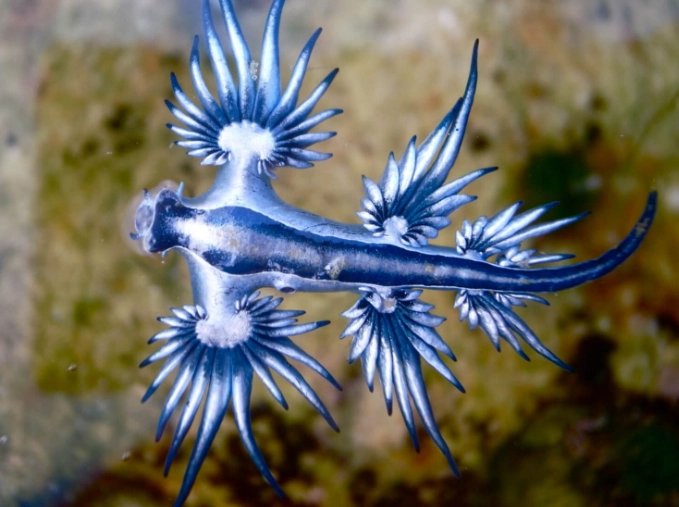
This isn't just a pretty face floating in the sea. The Glaucus atlanticus is a master of deception, a concentrated packet of stolen venom, and a creature that lives its entire life upside down. If you've landed here, you're probably buzzing with the same questions I had. Is it dangerous? Can I have one as a pet? Why does it look like that? We're going to dig into all of that, moving past the viral photos to the real, sometimes gritty, biology of this animal. Forget the dry, textbook descriptions. Let's talk about the blue dragon sea slug like we're discovering it for the first time, because in many ways, we are.
What Exactly Is a Glaucus Atlanticus? Breaking Down the Basics
Right off the bat, let's clear up the name game. "Glaucus atlanticus" is its scientific, Latin name. "Blue dragon sea slug," "blue dragon," "blue angel," and "sea swallow" are all common nicknames it's picked up over the years, mostly thanks to its stunning appearance. Scientifically, it belongs to a group of sea slugs called nudibranchs, which are essentially snails that have evolved away their shells. They're the rockstars of the mollusk world—colorful, diverse, and often chemically armed.
Taxonomy Check: Kingdom: Animalia > Phylum: Mollusca > Class: Gastropoda > Order: Nudibranchia > Family: Glaucidae > Genus: Glaucus > Species: G. atlanticus. Its closest relative is Glaucus marginatus, found in the Pacific and Indian Oceans, which is sometimes considered the same species but is generally treated as separate by marine biologists.
So, what makes the blue dragon sea slug look so alien? It's all about adaptation to a life spent drifting on the ocean's surface. Unlike most sea creatures that live in the water column or on the seafloor, Glaucus atlanticus is pelagic. It spends its life floating upside down at the air-water interface, buoyed by a gas-filled sac in its stomach. This upside-down life explains its wild coloration. Its back (which is technically its foot, the side facing down in the water) is silvery-grey. This provides camouflage from fish looking up, blending with the bright water surface. Its true underside (facing the sky) is a brilliant blue and white. This countershading camouflages it from birds looking down, blending with the dark ocean depths.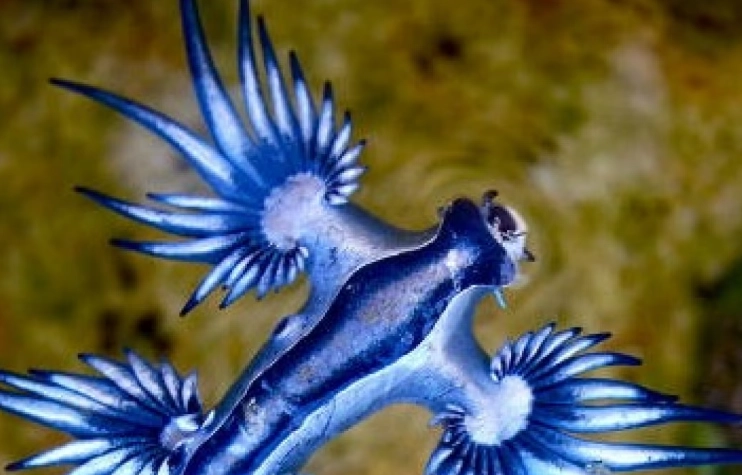
It's a perfect, living lesson in natural selection. Every part of its form has a function.
The Anatomy of a Surface Dweller
Let's get up close and personal with its physique. An adult Glaucus atlanticus is small, typically reaching only about 3 centimeters (1.2 inches) in length. What it lacks in size, it makes up for in appendages. Its body is adorned with six finger-like structures called cerata (singular: ceras). These aren't just for show; they're multi-tools. They dramatically increase the animal's surface area, aiding in floatation. More critically, they are its primary digestive and defensive organs.
The cerata are where the blue dragon sea slug stores the stinging cells, or nematocysts, it steals from its prey. We'll get to that terrifyingly brilliant strategy in a second. The head has small sensory tentacles, and its mouth is a specialized structure perfect for its particular diet.
The Blue Dragon's Diet and Its Incredible (and Dangerous) Defense
This is where the story gets really good. The Glaucus atlanticus is a specialist predator. It doesn't hunt fish or scrape algae. It feeds almost exclusively on larger, venomous pelagic hydrozoans. Its favorite meals include:
- The Portuguese man o' war (Physalia physalis)
- The by-the-wind sailor (Velella velella)
- The blue button (Porpita porpita)
- Other related siphonophores
Think about that for a second. It eats creatures that are notorious for their painful, even dangerous, stings. The Portuguese man o' war can hospitalize a human. So how does a tiny slug manage it?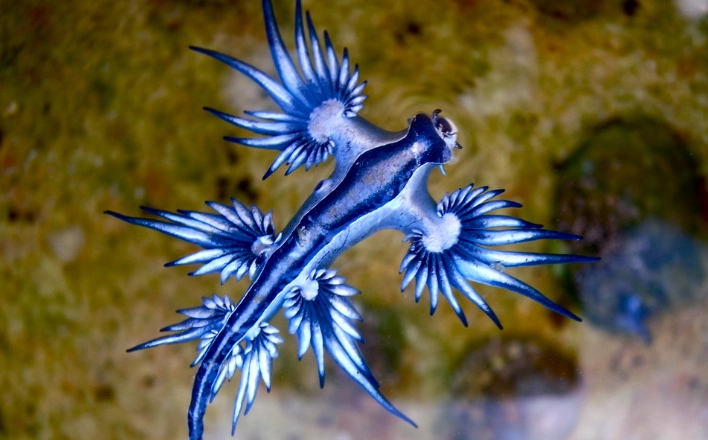
It uses its radula (a sort of toothed tongue) to grasp and consume chunks of its prey's stinging tentacles. Here's the genius part: it doesn't digest the powerful stinging cells (nematocysts). Instead, it transports them through its digestive system and stores them in the tips of its own cerata. It even concentrates them, selecting the most potent nematocysts. A study published in the journal Ethology detailed this process, showing how the slug can incorporate and store these foreign weapons.
This means the sting of a Glaucus atlanticus can be more potent and concentrated than the sting of the man o' war it fed on. It's a classic case of "you are what you eat," taken to an extreme level. This stolen arsenal is its primary defense against predators.
Hands-Off Warning: This is the most critical practical takeaway. Never, ever handle a Glaucus atlanticus, whether you find it washed up on a beach or see one in the water. Its sting can cause intense, localized pain, nausea, vomiting, and in rare cases, more severe allergic reactions. It packs a serious punch for its size. The Australian Museum's information on marine stingers lists nudibranchs like Glaucus as creatures to avoid handling for this exact reason.
Habitat and Distribution: Where to Find the Blue Dragon
You can't just go to any beach and expect to see a blue dragon sea slug. Its distribution is tied to its prey and ocean currents. It's found in temperate and tropical waters worldwide. I've seen the most reliable reports and photos from:
- The east coast of Australia (a real hotspot)
- The coasts of South Africa
- Mozambique
- The Atlantic coasts of Europe and the United States
- Occasionally in the Pacific around Hawaii and Japan
They are open ocean creatures, so sightings are often associated with strong onshore winds or currents that push them and their prey (like swarms of man o' war) toward land. Finding them on a beach is usually a sign that the local oceanographic conditions have shifted. It's not uncommon to see dozens washed up after a storm. The National Oceanic and Atmospheric Administration (NOAA) notes that sightings of these and other pelagic species can be indicators of current patterns and prey availability.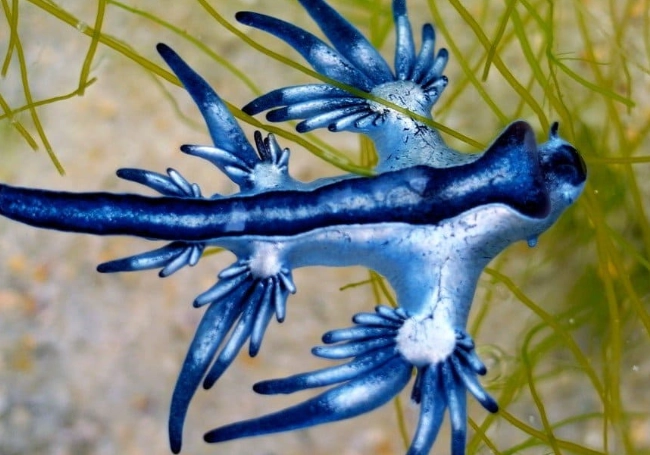
They are not deep-sea creatures. They live right at the surface, which is why beachgoers sometimes encounter them. But remember, a beached blue dragon is still a fully armed blue dragon. Its stinging cells remain active even after death.
The Life Cycle and Reproduction of Glaucus Atlanticus
The blue dragon sea slug is a hermaphrodite, meaning each individual possesses both male and female reproductive organs. However, they cannot self-fertilize; they need to mate with another individual. When they do mate, both partners can lay egg strings after the exchange.
Their reproduction strategy is as adapted to a drifting life as everything else. They lay long, coiled strings of eggs, often on floating debris or even on the carcasses of their prey (like a spent man o' war float). This gives the eggs a stable platform in the open ocean. The larvae that hatch are planktonic, drifting until they mature into the recognizable adult form.
Their lifespan in the wild isn't precisely known, but for nudibranchs of this size, it's likely measured in months to a year under ideal conditions. It's a fast-paced life in the slow lane of ocean drifting.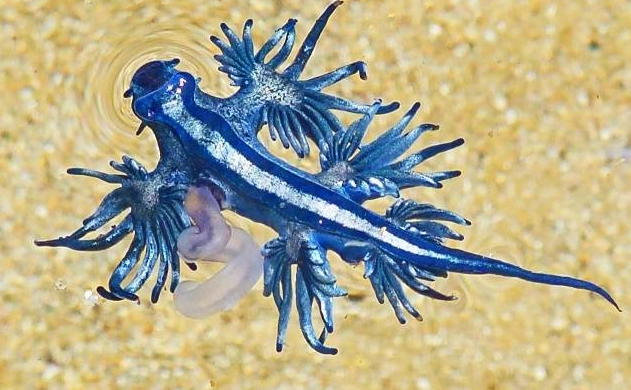
Glaucus Atlanticus in the Home Aquarium: A Terrible Idea
This is a big one. After seeing pictures, the immediate thought for many hobbyists is, "I need one of these in my tank." I get it. I've kept marine aquariums for years, and the allure of a unique, stunning creature is powerful. But here's my blunt, experienced opinion: keeping a Glaucus atlanticus is a spectacularly bad idea, bordering on impossible for 99.9% of people, and ethically questionable.
Let's break down why:
- The Sting: This is the non-negotiable safety issue. Maintaining a tank means you will eventually have to put your hands in the water. A sting from a blue dragon sea slug in the confined space of an aquarium could be a medical emergency. It's an unacceptable risk.
- Specialized Diet: You cannot feed it fish flakes or brine shrimp. It requires a constant supply of live, venomous hydrozoans like Portuguese man o' war. Sourcing this food is incredibly difficult, expensive, and introduces the same stinging risk into your tank.
- Pelagic Habitat: They are not reef or rock dwellers. They need open water to float. A standard aquarium is a horrible simulation of their natural environment. They would constantly be battered against the glass or sucked into filters.
- Collection and Stress: Specimens sold are almost always wild-caught, often as bycatch. The collection process and transition to captivity are immensely stressful and usually fatal for these delicate, specialized animals.
Organizations like the Woods Hole Oceanographic Institution emphasize the importance of understanding an animal's natural history before even considering captivity. For Glaucus atlanticus, the gap between nature and tank is unbridgeable for a hobbyist. Appreciate them through photography and research, not through a glass box.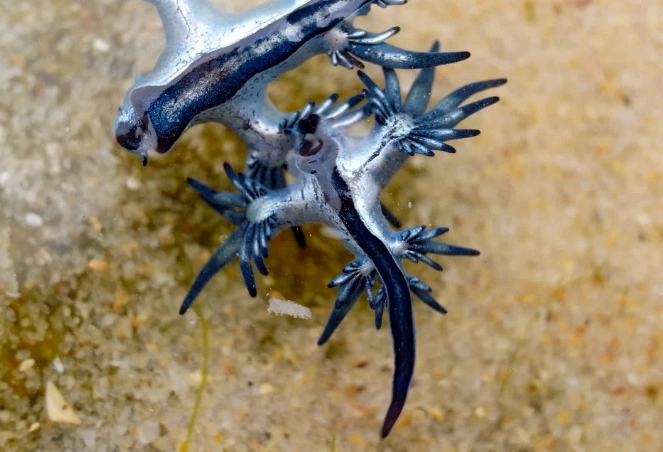
Comparing the Blue Dragon: A Quick Look at Similar Creatures
It's easy to get confused. The ocean is full of blue, floaty things. Here’s a quick table to distinguish the Glaucus atlanticus from some common look-alikes.
| Creature | Scientific Name | Key Differences from Glaucus Atlanticus | Sting? |
|---|---|---|---|
| Blue Dragon Sea Slug | Glaucus atlanticus | 6 finger-like cerata, silvery/blue countershading, 3 cm long. | YES (Potent) |
| Portuguese Man o' War | Physalia physalis | Large gas-filled float (pneumatophore) with long trailing tentacles; a colonial organism, not a single animal. | YES (Very Potent) |
| By-the-Wind Sailor | Velella velella | Flat, oval blue float with a clear "sail" on top; also a colonial hydrozoan. | Mild (usually harmless to humans) |
| Blue Button | Porpita porpita | Round, button-like float with radiating tentacles; another colonial hydrozoan. | Mild |
| Other Nudibranchs | Various | Thousands of species; most are benthic (live on the seafloor), not pelagic. Wide variety of shapes/colors. | Some, via diet like Glaucus |
Frequently Asked Questions About the Blue Dragon Sea Slug
Did you know? The genus name "Glaucus" comes from Greek mythology. Glaucus was a fisherman who became a sea god after eating a magical herb. The species name "atlanticus" references the ocean where it was first formally described.
Conservation Status and Ecological Role
The International Union for Conservation of Nature (IUCN) has not evaluated the Glaucus atlanticus for a Red List status. The lack of data is common for small, widespread pelagic invertebrates. However, lack of data doesn't mean lack of threats.
Potential threats include:
- Plastic Pollution: They can mistake microplastics for prey or get entangled in debris.
- Climate Change: Changes in ocean temperature, acidity, and current patterns could disrupt the distribution of both the blue dragon and its prey.
- Bycatch: They can be accidentally caught in fine-meshed nets used for scientific sampling.
Ecologically, they play a role in controlling populations of abundant hydrozoans like the Portuguese man o' war. They are also a food source for some specialized predators, like certain species of sea turtles and pelagic fish that have developed a tolerance to their venom.
Their greatest value to us right now is scientific and educational. They are a model for studying chemical ecology, predator-prey coevolution, and adaptation to a pelagic lifestyle. Every photo and research paper adds to our understanding of the open ocean, one of the least explored parts of our planet.
So, the next time you see that mesmerizing image of a blue dragon sea slug floating in a serene blue sea, you'll see more than just beauty. You'll see a master thief, an upside-down drifter, a concentrated warning, and a brilliant example of life's endless creativity. The Glaucus atlanticus is a reminder that the ocean's most stunning treasures often come with a very sharp edge. Enjoy it from a distance—a very safe, respectful, and admiring distance.
The ocean keeps its best secrets well hidden, and sometimes, well armed.
Comment