In This Article: Key Sections
- Bush Viper Venom: A Chemical Cocktail Designed for Efficiency
- The Bite Experience: What Actually Happens?
- What to Do (and NOT Do) If Bitten
- Bush Viper Safety: Your Guide to Coexisting (From a Distance)
- A Closer Look at Different Bush Viper Species
- Common Questions About Bush Viper Poison
- Wrapping It Up: Respect, Not Fear
So you've seen a picture of a bush viper. Maybe it was that stunning electric green one, or the fiery red and black one that looks like it crawled out of a fantasy novel. Your first thought was probably "wow," followed quickly by "and how dangerous is that thing?" It's a good question, and one that doesn't always get a straight answer online. You'll find a mix of awe for their beauty and stark warnings about their danger. Let's cut through the noise. How poisonous is a bush viper, really? The short, blunt answer is: very. These are not snakes to trifle with. But as with most things in nature, the full picture is more nuanced than just a danger rating. It involves understanding their venom, their behavior, and crucially, what a bite would actually mean for a human.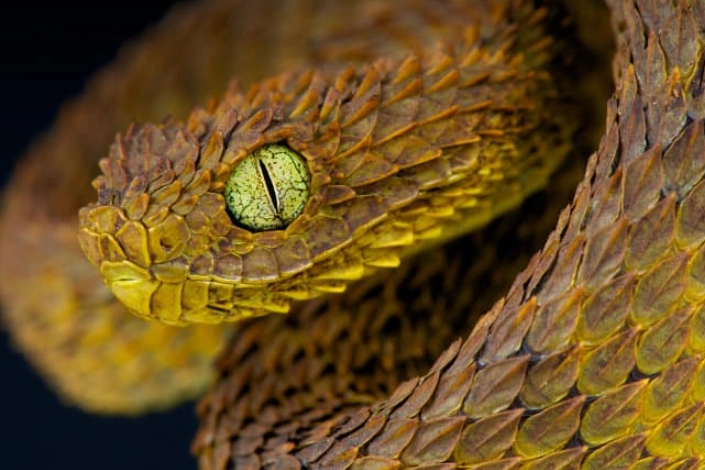
I've spent a lot of time reading research papers and accounts from herpetologists, and the consensus is clear. While they aren't the absolute top-tier killers of the snake world (think black mambas or taipans), underestimating a bush viper is a serious, potentially fatal mistake. Their venom is specifically designed to be highly effective on their prey, and those same mechanisms can cause severe medical emergencies in people.
Bush Viper Venom: A Chemical Cocktail Designed for Efficiency
To truly grasp how poisonous a bush viper is, we need to look under the hood at what's in their venom. They belong to the viper family (Viperidae), specifically the subfamily Atheris. Like other vipers, they have long, hinged fangs that deliver venom deep into tissue. Their venom isn't a single substance but a complex mixture of enzymes and proteins, each with a specific job.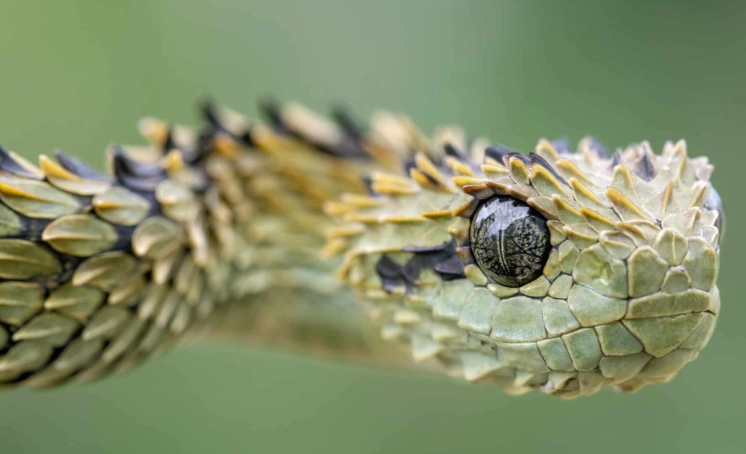
The primary components you need to know about are the ones that affect us. The venom is predominantly haemotoxic and cytotoxic.
- Haemotoxins target the blood and circulatory system. They can prevent blood from clotting, leading to internal bleeding, or conversely, cause excessive clotting that blocks small blood vessels. This disrupts the body's ability to manage injuries and can lead to organ damage.
- Cytotoxins are cell-killers. They destroy the cells around the bite site, leading to massive swelling, blistering, and necrosis—where the tissue literally dies and turns black. This is one of the most feared outcomes of a viper bite.
Now, you might hear the term "neurotoxic" thrown around sometimes in casual discussions about snake venom. Neurotoxins attack the nervous system, causing paralysis. For most bush vipers, neurotoxic effects are not the main event, though some research suggests minor neurotoxic elements might be present in certain species. The main show is the havoc wreaked on blood and tissue.
How does this potency stack up? Scientists measure venom strength using a metric called LD50 (median lethal dose), which indicates how much venom per kilogram of body weight is needed to kill 50% of test subjects (usually mice). It's a lab measure, not a direct human translation, but it gives a comparative scale. Bush viper LD50 values are in the range that categorizes them as having potently toxic venom. For perspective, they are generally considered more venomous than many common pit vipers but less so than elapids like cobras or mambas in terms of sheer speed of systemic kill. However, what they might "lack" in pure neurotoxic speed, they more than make up for in the devastating local tissue destruction and painful, complex medical picture they create.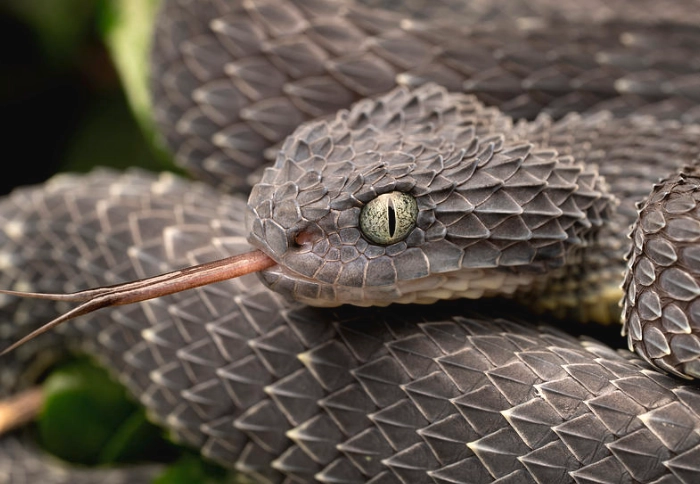
The Bite Experience: What Actually Happens?
Let's get practical. If someone is bitten by a bush viper, what unfolds? It's not like the movies. Symptoms can progress over hours.
- Immediate Pain: A sharp, often severe pain at the bite site is common. The puncture wounds from the long fangs might be visible.
- Rapid Swelling: Swelling (edema) begins quickly, often spreading up the limb. It can become massive and tense.
- Local Effects: Discoloration (bruising), blistering, and bleeding from the wound site. Over the following days, if severe, the area may become necrotic.
- Systemic Symptoms: As the venom spreads, the person may experience nausea, vomiting, headache, dizziness, and sweating. The big systemic danger is coagulopathy—the blood's clotting mechanism goes haywire, which can be detected by medical tests.
I read a case report of a herpetologist who was bitten by a captive bush viper. The description of the progressive swelling and pain, followed by weeks of recovery and concern over tissue damage, really drove home the point. This wasn't a "dry bite" or a minor incident. It was a full-blown medical crisis that required hospital monitoring. So, when we ask "how poisonous is a bush viper?", the answer lies in this potential timeline of suffering and medical complexity.
Bush Viper Safety: Your Guide to Coexisting (From a Distance)
Okay, so they're dangerous. But are they aggressive? This is a crucial distinction. Bush vipers are generally not aggressive toward humans. They are ambush predators, content to sit coiled on a branch waiting for a frog or small mammal. Their first line of defense is camouflage. If disturbed, they will often give a warning by hissing or adopting a defensive coil. They bite as a last resort.
The problem is their perfect camouflage. Most bites happen because someone accidentally touches or steps near one without seeing it. A hiker pushing through dense foliage, a gardener reaching into a shrub, or an unwary photographer getting too close for the perfect shot. This is the real risk scenario.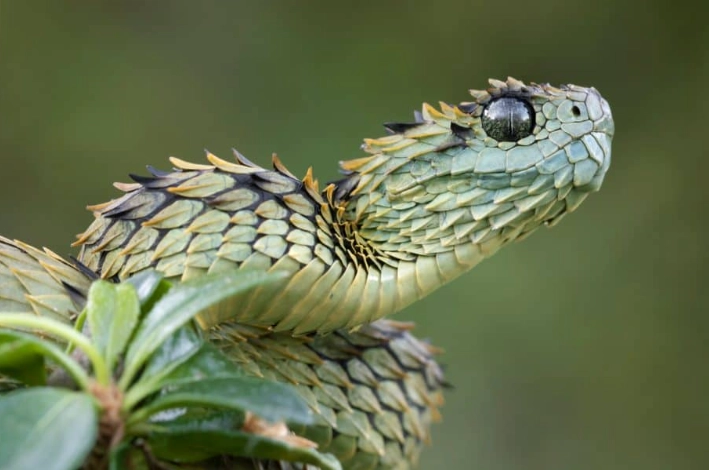
- Watch Your Hands and Feet: Never put your hands where you can't see (e.g., into leaf litter, onto branches above you). Use a stick to probe ahead.
- Stay on Trails: Avoid wading through thick undergrowth where they might be camouflaged.
- Wear Protective Clothing: Sturdy boots and long pants offer some (limited) protection.
- Look, Don't Touch: Admire from a safe distance. No attempt to handle, catch, or provoke one is ever justified for a non-expert.
- Assume Every Snake is Venomous: This is just a good rule of thumb for any wilderness area.
What to Do (and NOT Do) If Bitten
This is the most important information here. Forget the Hollywood myths.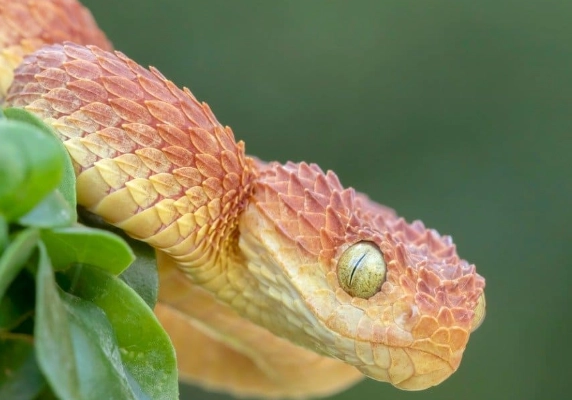
DO:
- Get the victim to a hospital or medical facility IMMEDIATELY. Time is tissue (and possibly life). Call for emergency help.
- Keep the victim as calm and still as possible. Movement accelerates venom spread.
- If possible, and safe to do so, take a photo of the snake from a distance for identification. Do not waste time or risk another bite trying to catch or kill it.
- Remove tight clothing or jewelry near the bite site before swelling starts.
- Position the bite area, if on a limb, at or slightly below heart level.
DO NOT:
- Do NOT cut the wound. You'll cause more damage and infection.
- Do NOT try to suck out the venom. It doesn't work and introduces mouth bacteria.
- Do NOT apply a tourniquet. This can trap venom in one area and cause severe tissue damage when the venom is cytotoxic.
- Do NOT apply ice or immerse in water.
- Do NOT give the victim alcohol, caffeine, or pain medication unless directed by a medic.
Treatment at the hospital will be supportive. There is polyvalent antivenom available in Africa that covers some viper species, and its use may be considered by doctors depending on the severity of envenomation. However, antivenom is not a magic bullet; it carries its own risks (allergic reactions) and must be administered in a controlled setting. The cornerstone of treatment is managing pain, swelling, infection risk, and monitoring and correcting any blood clotting abnormalities. The World Health Organization (WHO) lists snakebite as a neglected tropical disease and provides guidelines for management, underscoring its seriousness in regions like Africa.
A Closer Look at Different Bush Viper Species
"Bush viper" refers to the genus Atheris, which contains several species. Their toxicity isn't identical across the board, though all are medically significant. Here's a quick rundown of some of the most well-known ones and what's reported about their bites. It's a bit like asking "how poisonous is a bush viper?" and realizing there are a few different models with slightly different specs.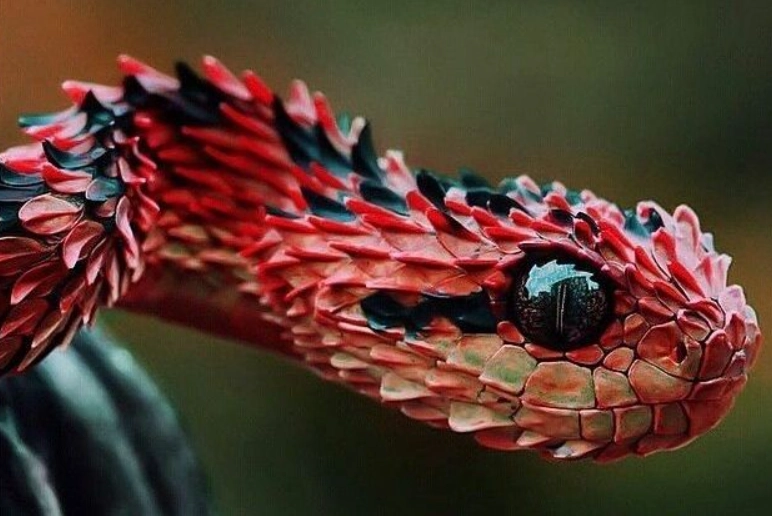
| Species (Common Name) | Key Characteristics | Notes on Venom & Bites |
|---|---|---|
| Atheris squamigera (Variable or Green Bush Viper) | Most common in captivity. Colors range from brilliant green to yellow, orange, or even bluish. | Considered highly venomous. Bites have resulted in severe envenomations with significant local effects and systemic coagulopathy. Often the species referenced in case studies. |
| Atheris chlorechis (Western Bush Viper) | Typically green with a yellow belly. | Potent venom. Descriptions of bites include intense pain, swelling, and hematological disturbances. |
| Atheris nitschei (Great Lakes Bush Viper) | Large, with a pronounced horn-like scale on its snout. | Less common, but its size means a potentially larger venom yield. Treated with extreme caution by experts. |
| Atheris hispida (Rough-scaled or Hairy Bush Viper) | Unique keeled scales giving a "shaggy" or "hairy" appearance. Often a striking yellow or olive color. | Venom is potently cytotoxic. Its unusual appearance makes it a photo favorite, but its bite is reported to be particularly painful and damaging to tissue. |
Note: This table is a summary based on herpetological literature and case reports. Individual reactions to any snakebite can vary based on the snake's age, the amount of venom injected ("dry bites" with little venom are possible but not reliable), and the victim's health.
Looking at this, you can see a pattern. Whether it's the common green one or the exotic hairy one, the message is consistent: respect their medical potential. The African Snakebite Institute provides excellent, region-specific resources on African snakes, including vipers, and their management.
Common Questions About Bush Viper Poison
Can a bush viper kill a human?
Yes, it is possible, especially without prompt and proper medical treatment. Fatalities have been documented, though they are not the most frequent outcome with modern care. The risk of death is significant from complications like uncontrolled bleeding, secondary infection from necrosis, or adverse reactions. Children, the elderly, or those with pre-existing conditions are at higher risk. So while not a guaranteed death sentence, it's absolutely a life-threatening situation.
How fast can a bush viper kill you?
This isn't a fast-acting neurotoxic venom that stops your breathing in 30 minutes. Death, if it occurs, would likely come from the systemic complications over hours or even days. However, the local damage begins within minutes, and severe pain and swelling can be debilitatingly quick. The "kill" speed is slower than a mamba, but the path to that point is agonizing and destructive.
Are they kept as pets?
Unfortunately, yes, due to their incredible beauty. This is, in my opinion, a terrible idea for 99.9% of people. They require expert-level husbandry, are delicate, and most importantly, pose a constant, serious danger to the keeper and anyone nearby. A bite requires immediate access to a hospital familiar with exotic envenomations and possibly specific antivenom—resources not available in most places. Keeping them is legal in some areas but ethically and practically fraught with risk. The fascination shouldn't override common sense.
How does their poison compare to a rattlesnake?
It's a different cocktail but in the same ballpark of danger. Both are vipers with primarily haemotoxic/cytotoxic venoms. Some rattlesnakes (like the Mojave) have a neurotoxic component. The effects—severe local tissue damage, pain, swelling, coagulopathy—are similar. Potency varies by species on both sides. You wouldn't want to be bitten by either. A key difference is that rattlesnakes often (but not always!) give a warning rattle, while a bush viper relies on stillness and camouflage, potentially making accidental encounters more likely.
What's the survival rate?
With immediate and appropriate medical treatment, the survival rate is high. This is the critical factor. The morbidity rate (suffering long-term damage like tissue loss, scarring, or functional impairment to a limb) can be significant due to the cytotoxic nature of the venom. So survival isn't the same as walking away unscathed. Without treatment, the odds get much, much worse.
Wrapping It Up: Respect, Not Fear
So, after all this, how poisonous is a bush viper? The definitive answer is that it possesses venom that is unequivocally dangerous to humans, capable of causing severe local destruction and systemic medical issues that require urgent hospital care. Their placid, ambush nature means they aren't out to get you, but their perfect camouflage makes them a hidden hazard.
The goal isn't to make people irrationally afraid of these remarkable animals. They are a vital part of their ecosystem. The goal is to foster a deep respect. If you're lucky enough to be in their habitat, enjoy the possibility of seeing one from a safe, respectful distance. Marvel at their otherworldly beauty. And let that be enough. Understanding the real answer to "how poisonous is a bush viper?" is the first step in ensuring both your safety and their conservation—they face threats from habitat loss, not from informed humans giving them the space they deserve.
If you remember nothing else, remember this: Admire with your eyes, keep your distance, and if the worst happens, get to a hospital—fast. Don't play hero with folk remedies. Modern medicine is the only answer to the potent question posed by a bush viper's venom.

Comments
Leave a Comment