Quick Guide
You're scrolling online, maybe on social media or a weird facts page, and you see it. A tiny spider, but on its back is a perfect, cartoonish smiley face. Yellow, beaming, unmistakable. Your first thought is probably, "No way. This has to be photoshopped." I had the exact same reaction. It looks too good, too cheerful, to be a real creature crawling around in the wild. So, let's cut to the chase and answer the burning question: is the smiley face spider real?
It absolutely is. And that's the simple, wonderful truth. The smiley face spider, often called the happy face spider, isn't some internet hoax or a clever artist's creation. It's a genuine, living arachnid with the scientific name Theridion grallator. Its home isn't in some generic forest; it's a unique resident of the Hawaiian Islands, specifically the lush, wet forests on islands like Maui, Oahu, and the Big Island. The first time I saw a verified photo from a researcher, I just stared. It feels like nature decided to have a little joke.
But that simple "yes" opens up a whole world of much cooler questions. Why does it have that pattern? How did it evolve? Can you find one if you go to Hawaii? And honestly, is it as friendly as it looks? We're going to dig into all of that. I've spent a good while falling down this particular rabbit hole, pulling together info from scientific papers, conservation sites, and the accounts of people who've actually seen them. Some of the details are even stranger than the initial picture.
Beyond the Smile: The Science of Theridion Grallator
Okay, so we've established the happy face spider is real. Now let's move past the initial shock and look at what it actually is. Calling it just a "smiley face spider" is like calling a Picasso "some blue paint." There's a fascinating biological story here.
Quick Facts at a Glance
- Scientific Name: Theridion grallator. "Grallator" means "stilt-walker," likely referring to its long, thin legs.
- Size: Tiny. Females are about 5mm long (roughly the size of a pencil eraser), and males are even smaller.
- Family: Theridiidae, the cobweb spider family. Relatives include the common house spider and the notorious black widow (but don't worry, this one is harmless).
- Diet: Primarily small insects like flies and moths that get caught in its loose, messy-looking web.
- Status: Not officially classified as endangered, but its existence is tightly linked to the health of Hawaii's native forests, which are under threat.
The most mind-blowing part isn't just that the pattern exists. It's the incredible variation. Not every Theridion grallator sports the classic yellow smiley. That's where things get really interesting. The pattern is a spectacular example of polymorphism – where a single species has multiple, distinctly different color forms. Some have the full smiley face. Others have just part of it – maybe two dots and a dash. Some have patterns that look more like a grimace, a series of lines, or even just splotches of color. And some are completely patternless, just a plain reddish or brownish color.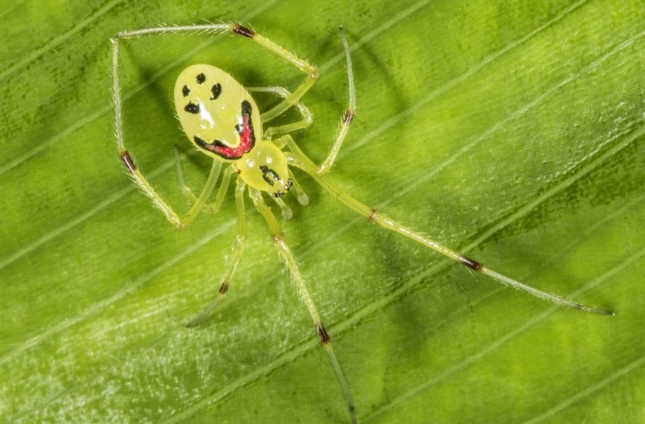
Why this crazy variety? Scientists have a compelling theory. The leading idea is that it's a form of defense called "aposematic polymorphism." Think of it this way: if you're a bird hunting for spiders, and you learn that the ones with a specific red-and-black pattern taste bad, you'll avoid that pattern. But if all the spiders looked identical, birds would quickly learn the one pattern to avoid. If the spiders look wildly different, the bird can't form a single, easy search image. It's like the spiders are playing a shell game with their appearance, and it keeps the predators confused. Pretty clever for a creature with a brain smaller than a pinhead.
| Common Pattern Type | Description | What It Might Look Like |
|---|---|---|
| Classic Smiley | The iconic pattern: two black oval "eyes" and a wide, curved "smile." Usually on a bright yellow or orange background. | ? The poster child for the species. |
| Red Morph | Lacks the distinct facial pattern. The abdomen is mostly a solid red, orange, or reddish-brown color. | A tiny, plain red bead. Very common. |
| Partial Face / Abstract | Has elements of the pattern—maybe just the eyes, or just the mouth, or scattered black markings that don't form a clear face. | Like a smiley face that's partially erased or a modern art piece. |
| Dark Morph | Darker overall coloration with muted or blended patterns, often found in specific microhabitats. | More camouflaged, less cartoonish. |
Where and How to (Maybe) See One in Hawaii
This is the part that turns the internet curiosity into a real-world quest. You're convinced the spider is real, and now you want to know if you can see it. I get it. I started looking at flight prices to Maui after my first deep dive (I haven't gone yet, but the temptation is real).
First, the reality check. You can't just walk into any backyard in Honolulu and find one. Theridion grallator is a creature of specific, native Hawaiian ecosystems. They thrive in the moist, high-elevation rainforests. Think places like the Waikamoi Preserve on Maui or the Kokee State Park on Kauai. They're often found on the undersides of leaves of specific native plants, where they build their small, irregular webs. They're nocturnal, which adds another layer of difficulty to spotting them.
Your best bet for a confirmed sighting? Joining a guided naturalist hike in one of these native forest reserves. Guides often know specific spots and have the trained eye to spot these tiny, camouflaged masters. Trying to find one on your own is like looking for a specific, patterned grain of rice in a vast, green warehouse. Possible, but don't get your hopes up.
Honestly, the challenge is part of the appeal. It turns the smiley face spider from a meme into a little natural treasure hunt.
Dispelling Myths and Answering Your Burning Questions
Once you know the smiley face spider is real, the questions start piling up. I've seen all sorts of wild claims online. Let's tackle the most common ones head-on, separating fact from pure fiction.
Here's the kicker. Some people ask if the pattern is painted on by humans. That idea falls apart the second you learn about the spiderlings. Baby smiley face spiders hatch with their color patterns already developed. They're born with their unique "face," proving it's genetically encoded.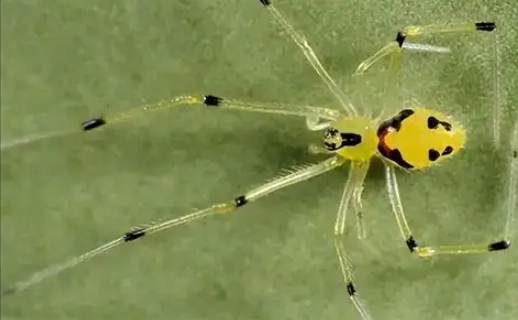
The Bigger Picture: Why This Little Spider Matters
It's easy to get stuck on the "wow" factor and treat Theridion grallator as just a novelty. But its existence tells a much deeper story about ecology, evolution, and conservation.
This spider is what scientists call an "endemic" species. It evolved in Hawaii and is found nowhere else on Earth. Hawaii, being extremely isolated, is a hotspot for this kind of unique evolution. The happy face spider is a product of millions of years of isolation, adapting to the very specific conditions of the island chain. It's a living piece of natural history.
Its polymorphic patterns are also a textbook example of evolutionary biology in action. Researchers study it to understand how genetic variation is maintained in populations and how predator-prey relationships shape physical appearance. Every paper published on it adds a piece to the puzzle of how life diversifies. Institutions like the University of Hawaii at Manoa have researchers whose work contributes to this global understanding.
Common Misconceptions to Avoid
Let's clear the air on a few things I see repeated online that just aren't true.
- "They're only found on one island." False. While populations vary, they have been documented on several main Hawaiian Islands.
- "The smile is a warning of deadly venom." False, as we covered. It's likely a defense, but not against humans, and the spider is harmless.
- "You can find them on tropical plants shipped from Hawaii." Highly unlikely and irresponsible to suggest. They have a very limited range within native forests.
- "All of them have the smile." Absolutely false. The polymorphism means you're just as likely, if not more so, to find a plain red one.
Wrapping your head around the full story of whether the smiley face spider is real means accepting all these layers—the amazing coincidence of its pattern, the sophisticated evolutionary strategy behind its variations, and its role as a symbol of fragile island ecologies.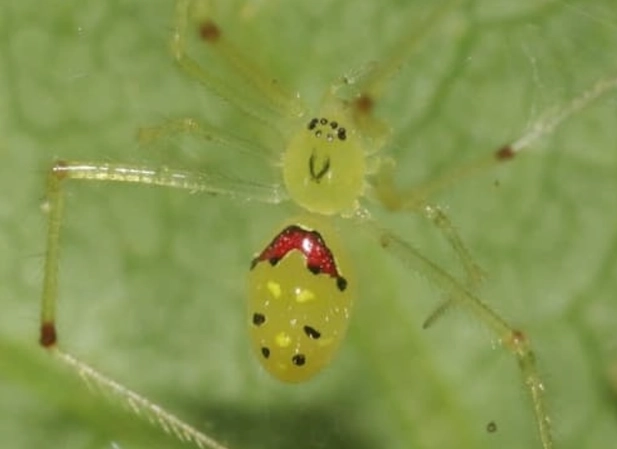
Final Thoughts: From Internet Wonder to Natural Wonder
So, where does that leave us? We started with a simple question born of internet skepticism: Is the smiley face spider real? We've journeyed through the science, the habitat, the myths, and the conservation realities. The answer is a resounding, fascinating yes.
It's not a Photoshopped prank. It's not a painted pet. It's Theridion grallator, a tiny, harmless, and incredibly variable spider that calls the Hawaiian rainforests home. Its cheerful pattern is a happy accident of nature that captures our imagination, but its true story is one of evolutionary ingenuity and ecological specificity.
You can appreciate it not just as a funny image, but as a reminder of how bizarre, beautiful, and intricate the natural world can be. And maybe, just maybe, it'll inspire a bit more care for the hidden, tiny wonders that don't get as much attention as the fluffy or the fierce. They're all part of the picture.





Comments
Leave a Comment