In This Article
- Venom vs. Poison: Getting Our Terms Straight
- The Bite Reality: What If a Smiley Face Spider Bit You?
- Beyond the Bite: What You Really Need to Know About These Spiders
- Clearing Up the Myths: Your Questions Answered
- What To Do If You're Lucky Enough to See One
- Final Verdict: Are Smiley Face Spiders Poisonous?
So you've seen a picture online. A tiny spider, its back adorned with a pattern that looks uncannily like a smiling face. It's cute, it's bizarre, and the first question that pops into anyone's head is a straightforward one: are smiley face spiders poisonous? I remember the first time I stumbled across one of these images. My reaction was a mix of delight and instant caution. A smiling spider? That's nature's perfect joke. But as with most things in nature, the cute exterior often leads us to wonder about what's underneath. Is that smile hiding a nasty bite?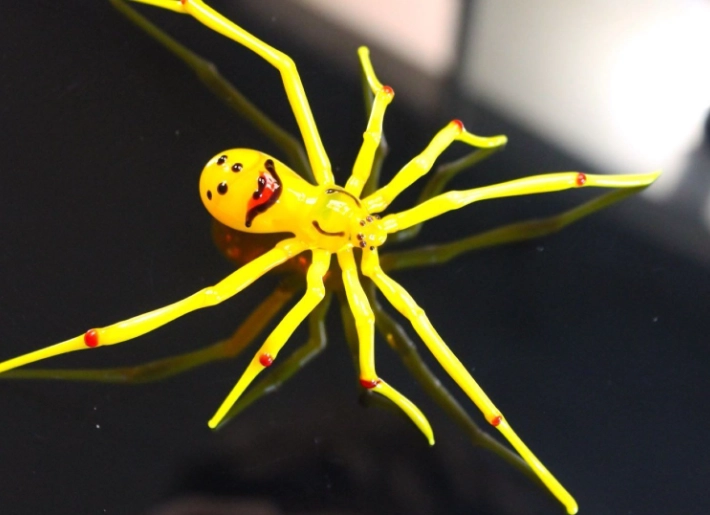
The short, simple answer—the one you're probably here for—is no, not really. Not to humans, anyway. But if we stop there, we miss the whole fascinating story. The real answer is more nuanced, and honestly, way more interesting than a simple yes or no. It involves tiny fangs, venom evolved for a specific purpose, and one of the most unique creatures in the insect world. Let's ditch the quick headline and actually understand what's going on with the Hawaiian happy-face spider, scientifically known as Tetragnatha grallator (formerly Theridion grallator).
Quick Identification: The smiley face spider is a small, long-legged orb-weaver found almost exclusively in the rainforests of the Hawaiian islands, particularly on Maui, Oahu, and the Big Island. Its claim to fame is the vivid red, yellow, and black pattern on its pale abdomen that, from the right angle, resembles a smiling human face or a grinning mask. The pattern is highly variable, acting as camouflage.
Venom vs. Poison: Getting Our Terms Straight
Before we go any further, we need to clear up a common mix-up. People often use "poisonous" and "venomous" interchangeably, but in biology, they mean different things. This is crucial for answering "are smiley face spiders poisonous?" accurately.
- Venomous: An organism that injects toxins (venom) into you, usually through a bite or sting. Think snakes, scorpions, or most spiders.
- Poisonous: An organism that is toxic if you touch it, eat it, or absorb it. Think poison dart frogs or certain plants.
So, the more precise question is: are smiley face spiders venomous? And the answer is yes, technically. Almost all spiders are venomous. They use venom to subdue their prey—tiny insects. But—and this is a huge but—the potency, composition, and delivery mechanism of that venom is what determines the danger to a large animal like a human.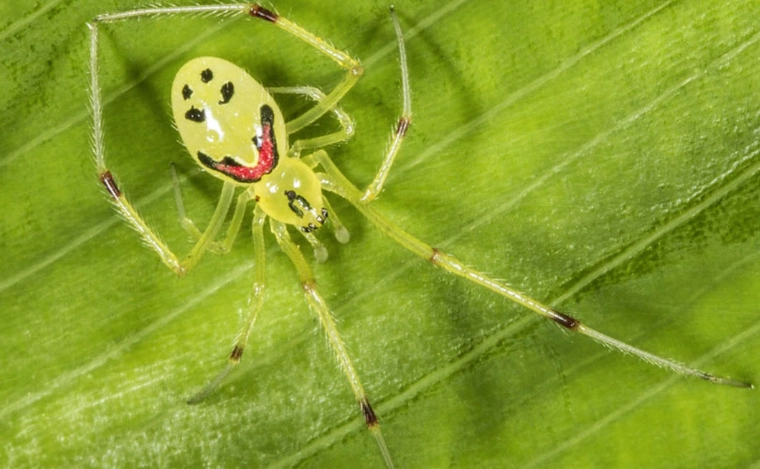
Spider venom is a complex cocktail of enzymes and neurotoxins designed for a specific job: liquefying the insides of a fly or a moth. It's not designed for us. For the vast majority of spiders, including our smiling friend, their fangs are often too small and fragile to even pierce human skin effectively. And even if they could, the volume of venom is minuscule, and its composition is not geared towards affecting mammalian systems in a significant way.
"The primary function of spider venom is prey immobilization and pre-digestion. The venoms of most orb-weaving spiders, like Tetragnatha, pose no medical threat to humans." – This is a widely accepted principle in arachnology, reflected in resources from institutions like the American Arachnological Society.
The Bite Reality: What If a Smiley Face Spider Bit You?
Let's play out the scenario, even though it's extraordinarily unlikely. You're in a Hawaiian rainforest, you accidentally brush against a leaf where a Tetragnatha grallator has its web, and it feels threatened enough to bite.
First, you might not even feel it. Their fangs are tiny. If you did feel it, it would probably be a sensation no worse than a pinprick or a fleeting itch. The most likely physical reaction? Possibly a tiny, red bump that goes away in a few hours, similar to a mild mosquito bite. There might be some localized, minor irritation.
I've spoken to folks who study spiders in the field, and the consensus is that these little guys are not aggressive. Their first and only line of defense is to drop from their web and hide. Biting a giant (you) is a last resort. So, while asking are smiley face spiders poisonous is natural, the follow-up question about the bite's impact has a very reassuring answer: negligible.
Important Note: Individual reactions can vary. A very small number of people might have a slight allergic reaction to any insect or spider bite, leading to more pronounced itching or swelling. This is not due to the venom's inherent toxicity but to an individual's immune response. If you experience severe symptoms like difficulty breathing, dizziness, or spreading redness after any bite, seek medical attention immediately. That's just good sense.
Comparing the Smiley to Other Spiders
To really put the risk in perspective, it helps to see where Tetragnatha grallator sits on the spectrum. The table below breaks it down. It's not about fear-mongering, but about context.
| Spider Type | Venom Potency (to Humans) | Likelihood & Effect of Bite | Notes |
|---|---|---|---|
| Smiley Face Spider (Tetragnatha grallator) | Extremely Low / Negligible | Extremely rare. Pinprick sensation, possible tiny red mark. | Venom is for small insect prey. Fangs likely cannot penetrate skin. |
| Common House Spider (e.g., Parasteatoda tepidariorum) | Very Low | Uncommon. Minor, localized itching or redness. | Similar profile. More likely to be encountered but medically insignificant. |
| Black Widow (Latrodectus species) | High (Neurotoxic) | Painful bite. Can cause muscle cramps, nausea, sweating. | Requires medical attention. Antivenom exists. |
| Brown Recluse (Loxosceles reclusa) | High (Cytotoxic) | Can cause necrotic skin lesions in some cases. | Wound care is crucial. Misdiagnosis is common. |
| Hawaiian Cane Spider (Heteropoda venatoria) | Low | Can bite if provoked. Moderately painful like a bee sting. | Large and startling, but not medically dangerous. |
See the difference? The smiley face spider is in the safest category. It's not even in the same conversation as spiders that have medically significant venom. This comparison should permanently settle the core worry behind "are smiley face spiders poisonous."
So, breathe easy.
Beyond the Bite: What You Really Need to Know About These Spiders
Now that we've addressed the safety concern, the story gets cooler. Focusing only on are smiley face spiders poisonous misses their true marvel. They are a fantastic example of evolution and adaptation.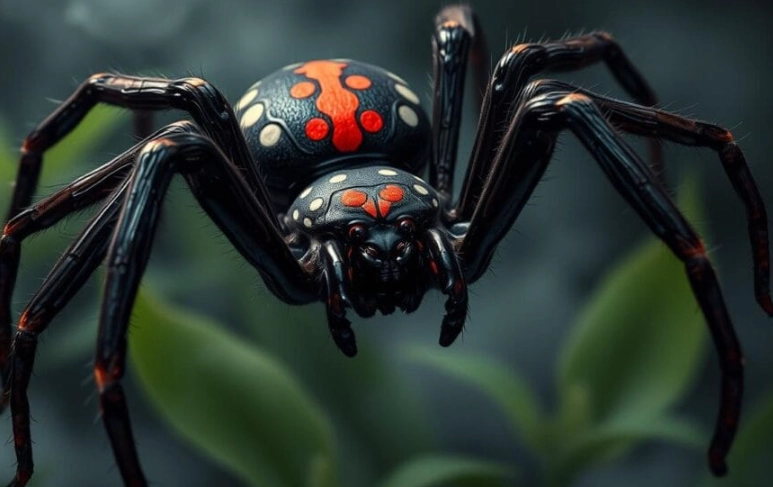
The "Smile" Isn't for Fun – It's Camouflage
This is the best part. That iconic smiley face pattern? It's not for our amusement. Researchers believe it serves as disruptive camouflage. The bold, contrasting colors and patterns break up the spider's outline when it sits on a leaf, making it harder for its predators (mainly birds) to spot it. It's like military camouflage, but with a quirky twist. The pattern is wildly variable too—some look like grinning devils, others like surprised faces. It's nature's abstract art project.
Habitat and Behavior: Why You Probably Won't See One
These are not house spiders. They are endemic to the remote, wet rainforests of Hawaii. They build their small, orb-shaped webs on the undersides of leaves in pristine native forests. Their entire world is that leaf and the immediate airspace around it. This specialization makes them vulnerable. Habitat loss from invasive species and development is a real threat to their population. Organizations like the U.S. Fish & Wildlife Service are involved in conserving the unique ecosystems these spiders call home.
Their behavior is shy and reclusive. They are active at night, resting during the day. If disturbed, they'll either freeze, relying on their camouflage, or drop to the ground. They are not interested in you.
The Real Concern: Conservation, Not Venom
If there's any alarm bell to ring about the smiley face spider, it's not about its bite. It's about its survival. Endemic species on islands are incredibly fragile. The real question we should be asking isn't "are smiley face spiders poisonous," but "how can we ensure smiley face spiders survive?" Their existence is a testament to the unique evolutionary path of Hawaii's isolation. Losing them would mean losing a truly one-of-a-kind piece of natural history.
Clearing Up the Myths: Your Questions Answered
What To Do If You're Lucky Enough to See One
If you find yourself hiking in the Hawaiian rainforests and spot one of these rare gems, consider yourself lucky. Here's the responsible approach:
- Observe, don't touch. This is for the spider's safety, not yours. Their bodies are delicate. Enjoy the view from a respectful distance.
- Take a photo (without flash). Document the incredible pattern. The variation is part of what scientists study.
- Leave it and its web undisturbed. That web is its home and its livelihood. A damaged web costs the spider precious energy to rebuild.
- Report your sighting (optional but helpful). Some local conservation groups or citizen science projects (like those on iNaturalist) track sightings to understand population health. Your observation could contribute to science.
The bottom line is that your encounter should be passive. You are a visitor in its home.
Final Verdict: Are Smiley Face Spiders Poisonous?
Let's wrap this up with a clear, definitive summary.
No, smiley face spiders are not poisonous in the way people fear. They are technically venomous, like almost all spiders, but their venom is harmless to humans. Their fangs are not designed to penetrate our skin, and the tiny amount of venom they produce is tailored for insects, not mammals. The risk of a bite is vanishingly small, and the effect of a bite would be medically insignificant for the vast, vast majority of people.
So, the next time you see that charming image, you can appreciate it without an ounce of worry. The smiley face spider is a harmless, fascinating, and fragile wonder of evolution. The question "are smiley face spiders poisonous" leads us to a wonderful conclusion: they are one of the most benign and intriguing spiders on the planet. Our energy is better spent wondering at their strange beauty and ensuring the rainforests they live in are protected, rather than fearing a bite that will never come.
I think that's a much happier ending, don't you?



Comments
Leave a Comment