Quick Navigation
If you've ever been snorkeling or diving on a coral reef, you've probably seen them. Parrotfish. Those colorful, chunky fish that seem to be constantly munching on coral. And if you looked closely, especially at the bigger ones, you might have asked yourself: what is the bump on the head of a parrotfish?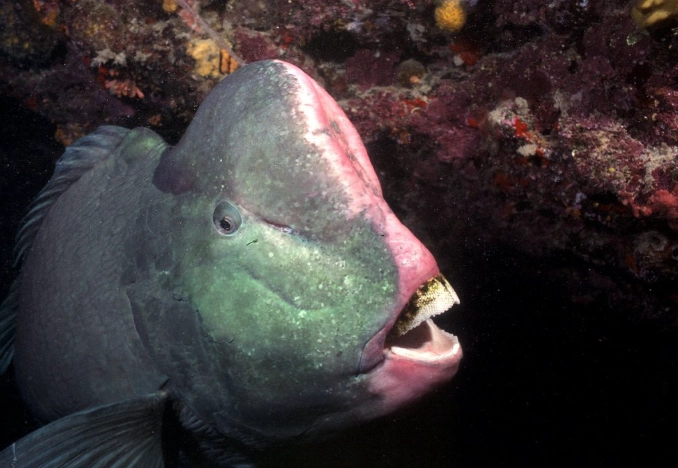
I remember the first time I saw a massive bumphead parrotfish in the Philippines. I was so focused on its size and its weird, fused beak-like teeth that I almost missed the most obvious feature—this huge, bulbous forehead that made it look like it had a helmet on. It was impossible to ignore. My dive buddy just shrugged when I pointed at it later. "No idea," he said. "Maybe it's for ramming things?" That guess wasn't totally wrong, but it's only a tiny part of the story.
That bump isn't a random growth or a tumor. It has a proper name—the nuchal hump (nuchal just means relating to the back of the neck or head)—and it's one of the most fascinating pieces of fish anatomy on the reef. For years, even scientists weren't entirely sure about all its functions. But now, thanks to a lot of patient underwater observation, we have a much clearer picture. It turns out that bump is a multi-tool, crucial for the fish's survival, social life, and even for the health of the entire coral reef ecosystem.
More Than a Helmet: The Real Jobs of the Nuchal Hump
Let's get the ramming idea out of the way first. For the famous bumphead parrotfish (Bolbometopon muricatum), the largest of all parrotfish species, the hump does act as a battering ram. They use it literally to smash into coral to break off large chunks, making their feeding more efficient. It's a spectacular sight. But here's the thing—most of the 90+ species of parrotfish don't feed like that. They scrape algae off coral or nibble on it. So for them, the hump isn't for demolition.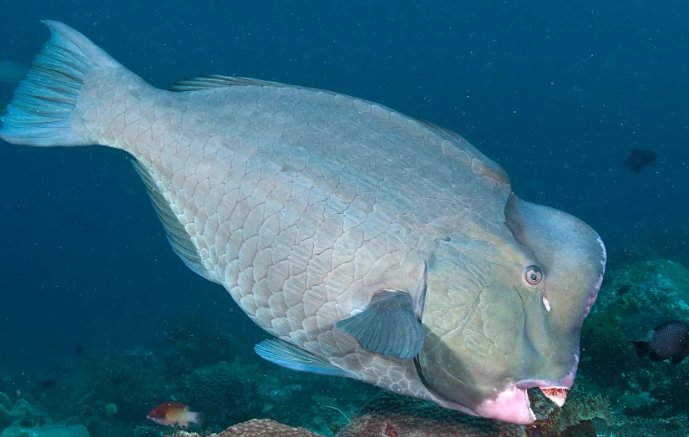
For the vast majority of parrotfish, the nuchal hump serves three main purposes, and they're all about life on a busy, competitive reef.
1. The Feeding Cushion (A Built-in Hard Hat)
This is the most direct, physical function. Parrotfish are grazers. They spend up to 90% of their day eating. To do this, they scrape, nip, and bite at hard, abrasive surfaces—coral rock, dead coral, and live coral skeletons. This is tough work for their skulls.
Imagine headbutting a limestone wall repeatedly for hours. You'd get a headache, at the very least. The nuchal hump acts as a shock absorber. It cushions the skull from the constant impacts and vibrations of feeding. It's their personal hard hat, allowing them to feed aggressively and for extended periods without injuring themselves. Without it, they'd probably suffer from serious wear and tear, maybe even brain damage over time. Not a great evolutionary strategy.
2. The Social Status Symbol (A Fishy Fitness Display)
This is where it gets really interesting. On the reef, size matters. For many parrotfish species, the size of the nuchal hump is directly linked to the fish's age, size, and social status. A bigger, more prominent bump typically signifies a larger, older, and more dominant male.
Think of it like the mane of a lion or the antlers of a stag. It's a visual signal that's hard to fake. A fish with a large hump is saying, "I'm strong, I'm healthy, I've survived a long time, and you probably don't want to challenge me." This helps reduce physical fights over territory or mates. Other fish can assess each other from a distance and often avoid costly conflicts. For females, a male with a pronounced hump might be a more desirable mate because it signals good genes and resilience.
I've noticed this while diving. The parrotfish with the most impressive bumps always seem to have the best grazing patches and move with a certain confident, unhurried pace. The smaller ones with barely-there bumps are more skittish.
3. The Species Identifier (A Name Tag on Their Forehead)
For us humans trying to tell parrotfish apart (which can be a nightmare because they change color and sex!), the nuchal hump is a fantastic clue. Its shape, size, and color pattern are often species-specific.
A marine biologist friend once told me, "When the color pattern book fails, look at the head shape." The hump's profile can be steep, rounded, angular, or almost nonexistent. This is incredibly useful for accurate identification, especially since many species have similar body colors. So when you're wondering what is the bump on the head of a parrotfish in front of you, you might also be learning exactly *which* parrotfish it is.
Hump Variations: A Guide to Who's Who
Not all bumps are created equal. Let's look at how the nuchal hump varies across some well-known species. This table should make the differences crystal clear.
| Parrotfish Species | Hump Characteristics | Primary Function & Notes |
|---|---|---|
| Bumphead Parrotfish (Bolbometopon muricatum) | Massive, vertical, bulbous forehead. The defining feature. | Battering Ram. Used to smash coral. Also a major status symbol. This is the species that makes everyone ask, "What is that bump?" |
| Stoplight Parrotfish (Sparisoma viride) | Males (terminal phase) develop a prominent, rounded, green hump. Females/initial phase have little to no hump. | Status & Identification. A clear visual marker of a dominant terminal male. The hump color is bright green. |
| Queen Parrotfish (Scarus vetula) | Males develop a distinct, steeply sloping, bluish or greenish hump on the forehead. | Status Symbol. Indicates a large, sexually mature male. Very noticeable against their colorful bodies. |
| Rainbow Parrotfish (Scarus guacamaia) | Large males have a significant, rounded hump that is often a different color (orange/bronze) than the body. | Shock Absorption & Status. Given their large size and vigorous feeding, the cushioning function is likely important here too. |
| Princess Parrotfish (Scarus taeniopterus) | Very small or indistinct hump. The forehead is relatively flat. | Minimal. In smaller, less aggressive species, the hump is less developed, emphasizing that its size correlates with ecology and behavior. |
Looking at this, you start to see the pattern. The big, coral-crunching species or the highly territorial ones have the most dramatic bumps. It's a perfect example of form following function in evolution.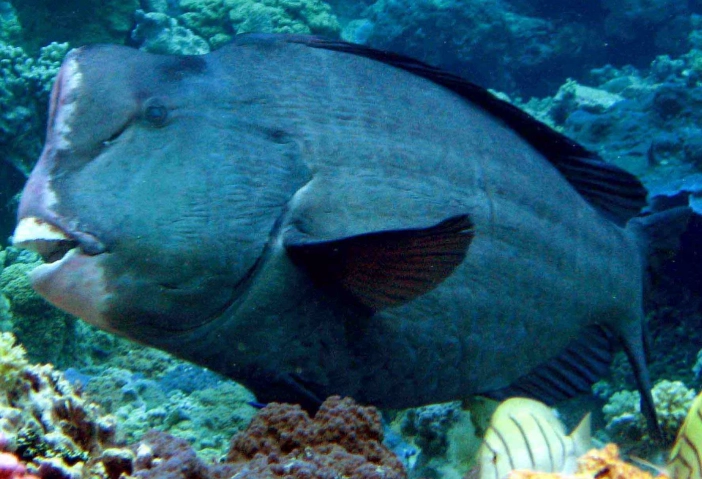
The Hump and the Life Cycle: Growth, Sex, and Change
Here's a twist that adds another layer to the question of what is the bump on the head of a parrotfish. For many species, the hump isn't static. It changes as the fish grows and, crucially, as it changes sex.
Most parrotfish are sequential hermaphrodites. They start life as females (this is called the "initial phase") and later, some of the largest females transform into males (the "terminal phase"). This supermale phase is often when the most vibrant colors and the most prominent nuchal humps develop.
So, the development of a large hump is frequently tied to this sex change. It's part of the physical transformation into a dominant, terminal-phase male. The hump grows along with the change in color and behavior. This is why you often see the biggest, most colorful parrotfish with the most pronounced bumps—they are the terminal males. A fish with a small hump might be a female, a juvenile, or a less dominant initial-phase male.
Your Parrotfish Hump Questions, Answered
Why Should We Care? The Hump's Role in Reef Health
This might seem like a deep dive into a weird fish feature, but understanding the nuchal hump matters for coral reef conservation. Parrotfish are keystone species. Their grazing is critical for keeping algae in check, which allows young corals to settle and grow. Without parrotfish, reefs can get smothered by algae and die.
The hump is central to their feeding efficiency. A healthy, dominant male with a large hump can graze more effectively and hold a territory that includes prime algal turf. This makes him a more effective "lawnmower" of the reef. Protecting these large, terminal-phase fish is therefore extra important for ecosystem function. Unfortunately, they are often the first targeted by fishermen because of their size.
Organizations like the International Union for Conservation of Nature (IUCN) list the bumphead parrotfish as Vulnerable, partly due to this targeting. Their unique head structure makes them easily identifiable and, sadly, more vulnerable. Research published through the Smithsonian Ocean Portal highlights how the loss of such key grazers cascades through the entire reef system.
Spotting Them in the Wild: A Quick Guide
Next time you're on a reef, use this knowledge. Don't just see a "bumpy fish." Look closer.
- Size it up: Is the hump huge and bulbous? You're likely looking at a bumphead parrotfish, a true giant. Treat it with respect and give it space.
- Check the color: Is the hump a different, brighter color than the body (like a green hump on a redfish)? That's a classic terminal male signal in species like the stoplight parrotfish.
- Note the profile: Is it a steep slope or a gentle rounded curve? This can help you narrow down the species with a good field guide.
- Watch the behavior: The fish with the biggest bumps are often the least bothered by your presence (within reason). They're confident. They might be leading a small harem of females.
It changes the experience. From just seeing colorful fish, you start to read their stories—their age, their sex, their role on the reef. It makes snorkeling or diving so much richer.
So, the next time someone points at a parrotfish and asks, "What is that bump on its head?" you can tell them. It's a shock absorber, a badge of honor, a name tag, and a vital tool for one of the reef's most important inhabitants. It's a perfect little example of how evolution crafts elegant solutions to the challenges of life, even if that solution is a big, funny-looking lump on a fish's forehead.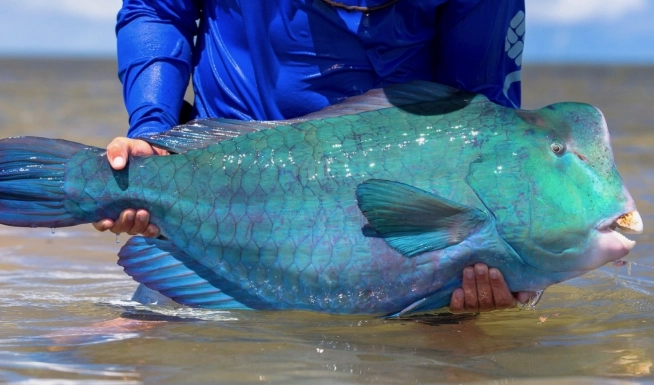
It's not just a bump. It's the key to their world.



Comments
Leave a Comment