Explore This Guide
- Meet the Contenders: The Two True "Bumphead" Fish
- Why Are These Fish Disappearing? The Real Conservation Crisis
- The Million-Dollar (and Terrible) Question: Can You Keep a Bumphead Fish?
- What Can You Actually Do to Help Bumphead Fish?
- Your Bumphead Fish Questions, Answered (FAQ)
- The Final Word: More Than Just a Funny Face
You know, I remember the first time I saw one of these guys on a dive in the Philippines. I was just hovering over a reef, minding my own business, and this absolute unit of a fish, with a forehead that looked like it had run into a wall, just casually swam by, munching on coral like it was popcorn. It was a humphead wrasse, one of the fish that often gets called a bumphead. And that's where things get tricky right off the bat. The term "bumphead fish" isn't scientific—it's a common name that gets slapped on a couple of very different fish that share one hilarious and brilliant feature: a massive, bulbous forehead, or a "bump."
It's mostly used for two stars of the coral reef: the Bumphead Parrotfish (*Bolbometopon muricatum*) and the Humphead (or Napoleon) Wrasse (*Cheilinus undulatus*). They're both big, they're both crucial for the reef's health, and they both look like they're ready to headbutt something. But they're from different families and have totally different lifestyles. A lot of websites just mash them together, which does a disservice to anyone trying to understand them. So let's pull them apart and see what makes each of these bump-headed celebrities tick.
Quick Reality Check: If you're here because you're thinking about putting one of these magnificent creatures in a home aquarium, I've got to be straight with you from the start. It's a terrible idea for about 99.9% of people. We'll get into the brutal "why" later, but just know you're more likely to successfully keep a pet dolphin in your swimming pool. These are wild, massive, complex animals, not pets.
Meet the Contenders: The Two True "Bumphead" Fish
Alright, let's get to know our subjects. Think of this as a VIP backstage pass to the reef's heavyweight division.
The Bumphead Parrotfish: The Reef's Landscape Gardener
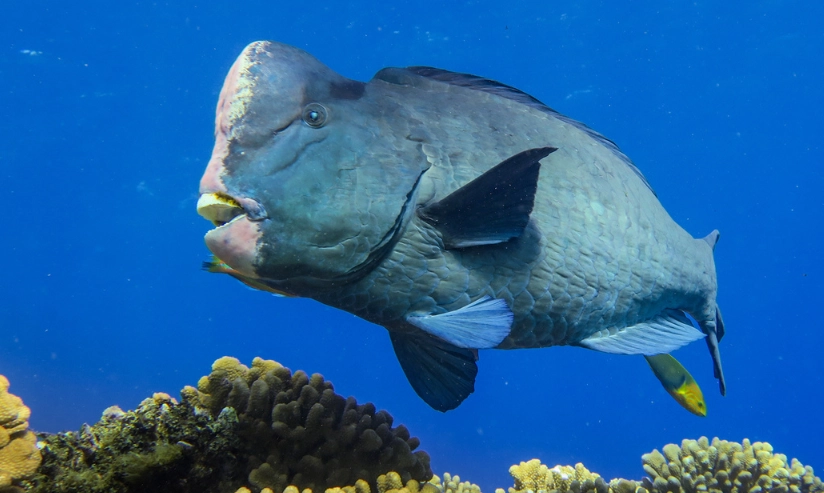
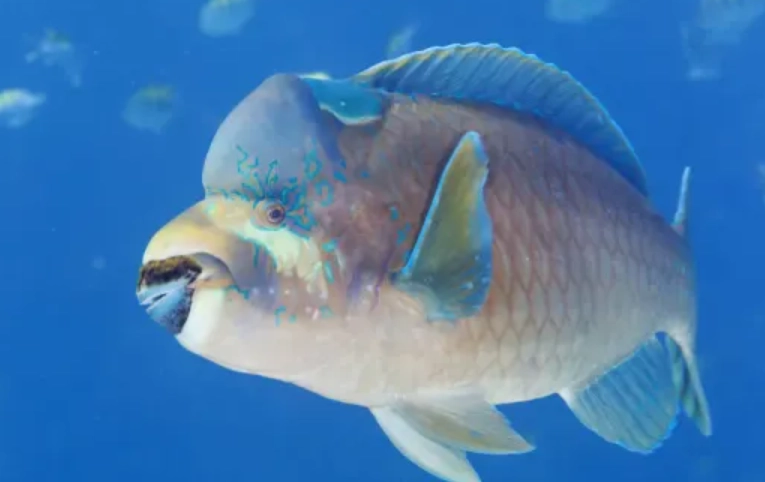
If the coral reef had a construction and cleanup crew, the bumphead parrotfish would be the foreman driving the bulldozer. This is the world's largest parrotfish, growing over 4 feet long and weighing more than 100 pounds. Its bump isn't just for show—it's thought to be used like a battering ram during head-to-head clashes with rivals. But the real magic is in its mouth.
It has a beak made of fused teeth that's strong enough to bite straight through solid coral. I mean, you can sometimes actually hear them crunching from several meters away underwater. They're not eating the coral polyps, though. They're after the tiny algae living inside the coral skeleton. As they grind up the rock-hard coral with plates in their throat (called pharyngeal teeth), they excrete it as the pure, white sand that makes up those beautiful tropical beaches. A single large bumphead parrotfish can produce over a ton of sand per year. Wrap your head around that! They literally shape coastlines.
Their behavior is fascinating too. They often move in huge schools, especially when juveniles, which is pretty rare for big reef fish. Seeing dozens of these giant, bump-headed fish moving together is a spectacle. Sadly, that also makes them terribly easy to hunt.
No really, they are the ultimate sand machines.
The Humphead (Napoleon) Wrasse: The Reef's Gentle Giant & Predator
Now, the humphead wrasse is a different kind of legend. It's the largest member of the wrasse family and can live for over 30 years. The big, fleshy bump on its forehead becomes more pronounced as it ages, especially in males—like a wise old man of the sea. Unlike the vegetarian parrotfish, the Napoleon wrasse is a predator. And its diet is a big reason it's so important.
It eats crown-of-thorns starfish. For those who don't know, these starfish are like locusts for coral reefs. They swarm, they eat live coral, and they can decimate whole sections of reef. The humphead wrasse is one of the few natural predators that can tackle these spiny, toxic pests. It also eats other invertebrates, mollusks, and even small fish. It's a keystone species, meaning the whole reef ecosystem feels its presence (or its absence).
They're known for being remarkably curious and docile around divers. Many divers have stories of a huge Napoleon wrasse calmly approaching them, looking them right in the mask. That trusting nature, unfortunately, is a big part of why they're endangered. A spear fisherman can just swim right up to one.
Side-by-Side: Bumphead Parrotfish vs. Humphead Wrasse
| Feature | Bumphead Parrotfish | Humphead Wrasse |
|---|---|---|
| Scientific Name | Bolbometopon muricatum | Cheilinus undulatus |
| Primary Diet | Live coral (for the algae inside) | Carnivore (starfish, mollusks, crustaceans) |
| Key Ecological Role | Bio-erosion, sand production, algae control | Predator controlling pest species (e.g., crown-of-thorns) |
| Social Behavior | Often found in large schools | Usually solitary or in small groups |
| Notable Feature | Beak-like fused teeth for crushing coral | Thick, fleshy lips and powerful jaws for crushing shells |
| Biggest Threat | Spearfishing, fishery bycatch | Live reef food fish trade, spearfishing |
Why Are These Fish Disappearing? The Real Conservation Crisis
This is the part that genuinely frustrates me. Both of these bumphead fish species are listed as Endangered on the IUCN Red List of Threatened Species. Their populations have been slashed, in some areas by over 90% in just a few decades. It's not one thing; it's a perfect storm of problems.
The main culprits:
- Overfishing: This is the big one. They're large, slow-growing, and late to mature. A bumphead parrotfish might take 5-7 years to reach breeding age. You can wipe out a whole generation of breeders in one night of fishing.
- The Live Reef Food Fish Trade (LRFFT): This is especially brutal for the humphead wrasse. They are highly prized in some parts of Asia for luxury restaurant displays and banquets. Fish are often caught using cyanide, which stuns them but also kills the coral around them—a double environmental whammy. The trade is a major driver of their decline, and international trade is regulated under CITES (Appendix II), but enforcement is a huge challenge.
- Habitat Destruction: Coral reefs are dying worldwide due to climate change (bleaching), pollution, and coastal development. No reef, no home for bumphead fish.
- Their Life History: Their biology works against them. They gather in predictable spots to spawn, making them easy targets for fishers. It's like knowing exactly when and where a bank deposits its money.
I once spoke to a marine biologist who had been surveying the same reef for 20 years. She said the silence was the worst part. The constant crunching of parrotfish, the presence of the large, curious wrasses—it was all fading. The reef was becoming quieter, and in turn, less healthy. The loss of these ecosystem engineers has a cascading effect. Less sand production, more algae smothering corals, and outbreaks of destructive starfish.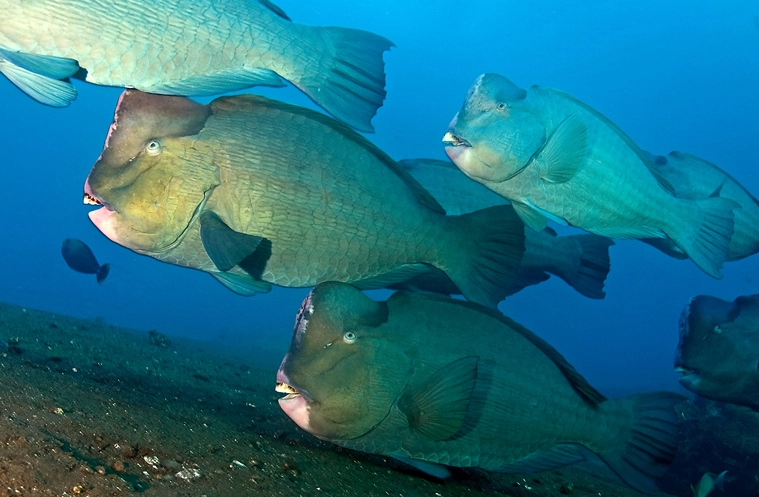
The Million-Dollar (and Terrible) Question: Can You Keep a Bumphead Fish?
Let's address the elephant in the room—or rather, the giant fish in the (tiny, inadequate) tank. Online forums are full of people asking, "Can I keep a humphead wrasse?" or "Is a bumphead parrotfish a good pet?" The short, unequivocal answer is NO.
Here's Why It's a Disaster Waiting to Happen:
Size: These fish grow to over 4 feet long. You need a tank measured in the thousands of gallons, essentially a public aquarium-scale system. Your 200-gallon "monster" tank is a bathtub to them.
Diet & Behavior: The bumphead parrotfish needs a constant supply of live, hard coral to graze on. Are you prepared to buy and grow acres of coral just to feed one fish? The humphead wrasse will eat most of your other tank inhabitants and requires a varied, expensive diet of high-quality seafood.
Legality: In most places, it's illegal to own them without special permits due to their endangered status. The humphead wrasse is on CITES, making international trade for private aquariums highly restricted and unethical.
Ethics: Taking a wild, endangered, ecologically vital animal from a reef and sticking it in a glass box for personal amusement is, in my opinion, indefensible. These are not domesticated animals.
Let's be clear: they are not pets.
If you are a professional public aquarium with a dedicated conservation and education mission, vast resources, and the goal of breeding them for potential reintroduction (like the work done by the Shedd Aquarium or New England Aquarium), that's a different story. But for a hobbyist? Forget it. The very idea highlights the disconnect between loving a creature's appearance and understanding its needs.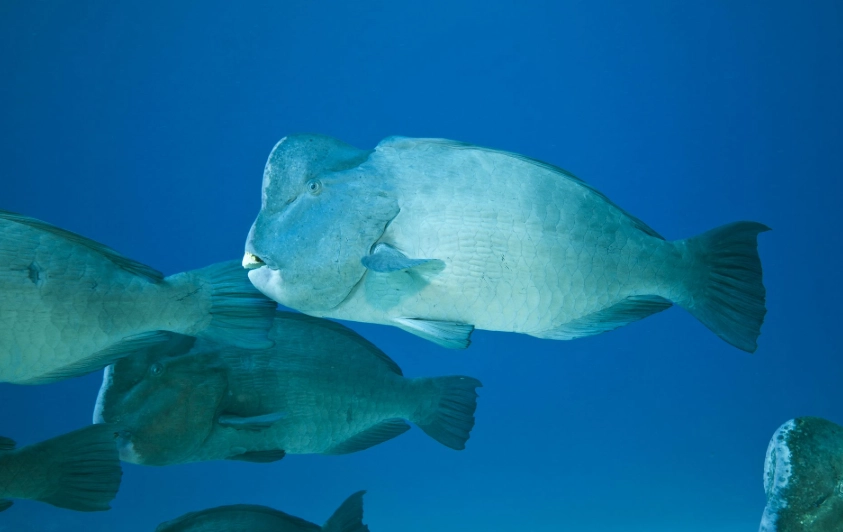
What Can You Actually Do to Help Bumphead Fish?
Feeling a bit hopeless after all that? Don't. You can make a real difference, even if you never go near a coral reef.
1. Be a Smart Consumer. Never, ever order humphead wrasse or bumphead parrotfish from a restaurant menu. If you see it, ask the manager about its source. Consumer demand drives the live fish trade. Support restaurants with sustainable seafood policies.
2. Support the Right Organizations. Donate to or volunteer with groups doing on-the-ground conservation and policy work. Wildlife Conservation Society (WCS) and IUCN are involved in research and protection. Project AWARE focuses on shark and ray conservation, which overlaps with reef protection.
3. Choose Sustainable Tourism. If you do go diving or snorkeling, pick operators with strong eco-credentials. Don't touch or chase marine life. A good operator will brief you on responsible behavior, especially around vulnerable species like these bumphead fish.
4. Reduce Your Carbon Footprint. Climate change is killing coral reefs through ocean warming and acidification. Anything you do to reduce CO2 emissions helps the long-term survival of the entire reef ecosystem, including our bump-headed friends.
5. Spread the Word. Just talking about how amazing and important these fish are raises awareness. Share articles (like this one!), documentaries, or social media posts about them. The more people know, the more they care.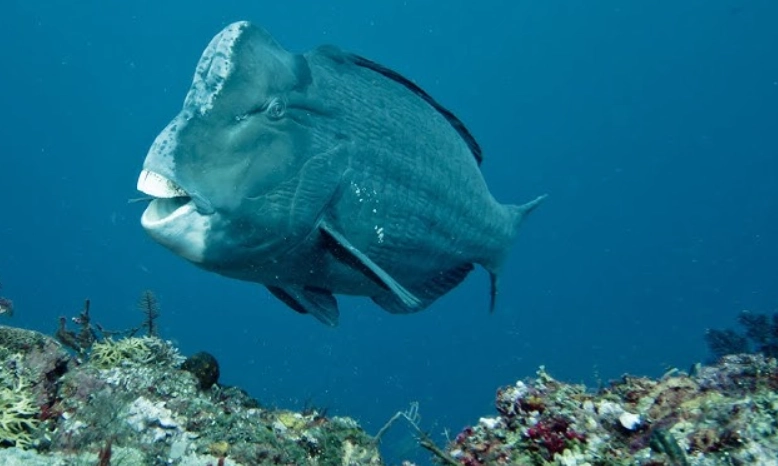
Your Bumphead Fish Questions, Answered (FAQ)
I've scoured forums and questions, and here are the real things people are asking.
The Final Word: More Than Just a Funny Face
Looking at a picture of a bumphead fish, it's easy to just see a goofy-looking animal with a weird forehead. But I hope by now you see them for what they truly are: linchpins of a complex and fragile world. The bumphead parrotfish, grinding reefs into beaches. The humphead wrasse, patrolling for destructive pests. They are architects and guardians.
Their decline is a direct alarm bell for the health of coral reefs everywhere. Saving them isn't just about saving one or two charismatic fish species; it's about holding together an entire ecosystem that millions of people depend on for food, livelihoods, and coastal protection.
So next time you see that photo or video of a majestic, bump-headed fish gliding over coral, remember the crunch of coral becoming sand, the control of a starfish outbreak, and the silent fading of their presence. They're not just fish. They're a living, swimming measure of whether we're getting things right in our oceans.
And we still have a chance to turn things around. It starts with knowing, and it continues with caring enough to act.

Comments
Leave a Comment